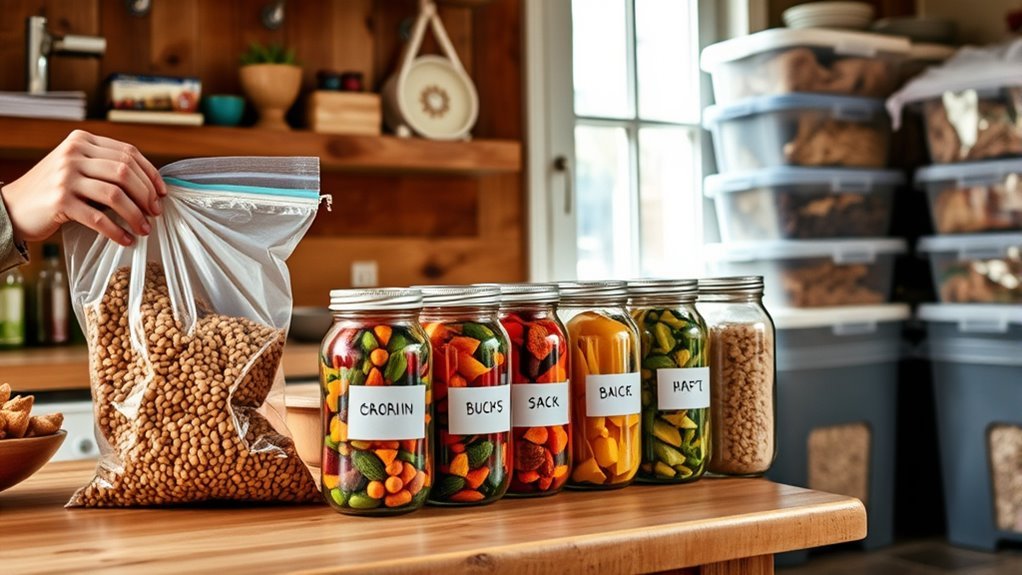
How to Make Your Own Long Term Food Storage in 3 Simple Steps
To make your own long-term food storage, start by choosing nutrient-dense, non-perishable items like rice, beans, canned meats, and freeze-dried foods. These foods are not only filling but also packed with essential nutrients that can sustain you during emergencies.
Having a variety of these staples ensures you get a balanced diet even when fresh food isn’t available.
Next, store them in airtight containers in a cool, dry, and dark place to extend shelf life and keep pests out. This simple step can make a huge difference in how long your food stays fresh and safe to eat.
Plus, it helps prevent spoilage and contamination.
Finally, label and organize your supplies so you can rotate them regularly, using older items first. This helps reduce waste and keeps your storage fresh.
Keep going, and you’ll find even more tips to build a dependable, well-maintained food reserve.
Key Takeaways
- Choose nutrient-dense, non-perishable foods like rice, beans, canned meats, and freeze-dried items with long shelf lives. These foods will keep you nourished for a long time without spoiling.
- Store foods in cool, dry, dark places using airtight containers such as Mylar bags with oxygen absorbers. This helps preserve freshness and prevent damage.
- Organize and label supplies by purchase or pack dates to track expiration and rotate older items first. That way, nothing goes to waste and you always use the oldest stock first.
- Protect storage from pests and moisture by sealing containers tightly and maintaining low humidity levels. Keeping those unwanted critters and dampness out is key.
- Regularly inspect and replenish stock, buying in bulk or on sale to maintain a consistent, reliable food supply. Staying on top of your inventory means you’re always prepared.
Select and Purchase Nutrient-Dense, Non-Perishable Foods
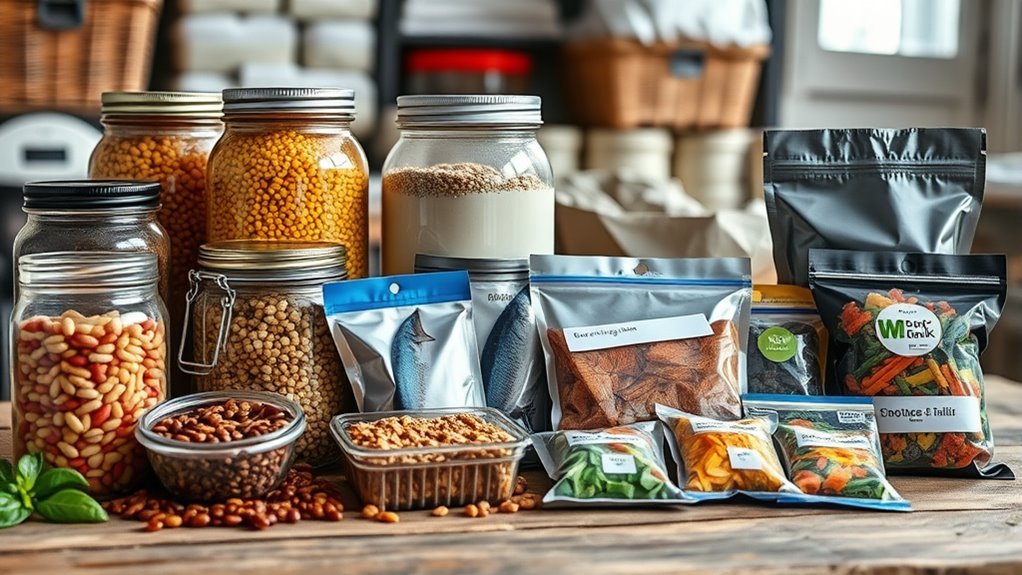
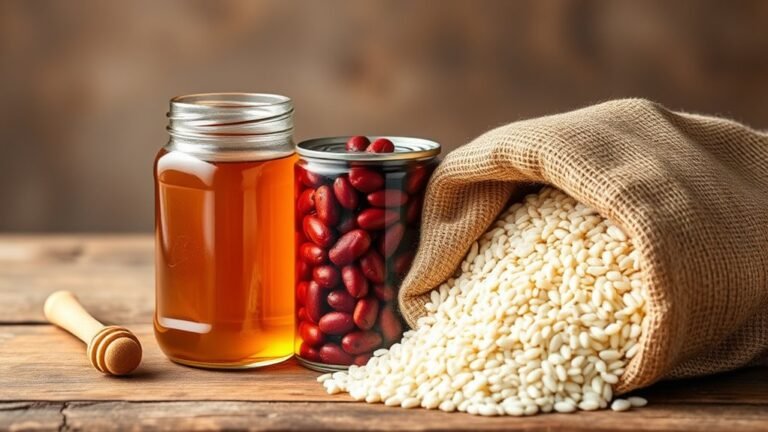
When choosing foods for long-term storage, focus on nutrient-dense, non-perishable items like rice, beans, oats, dried fruits, and canned meats that can last for years without spoiling. Prioritize organic or high-quality staples such as Himalayan salt and whole grains to enhance shelf life.
Buying bulk food during sales helps stock your food storage pantry affordably. Include freeze-dried foods for lightweight, long-lasting options.
Use Mylar bags and airtight containers to protect your supplies. Always check expiration dates to avoid wasted food, and select items your family enjoys and knows how to prepare.
Incorporate long-keeping produce like potatoes and onions for variety. By carefully selecting nutrient-dense, non-perishable foods, you’ll build a reliable, efficient long-term storage system that meets your needs.
Prepare an Optimal Storage Environment
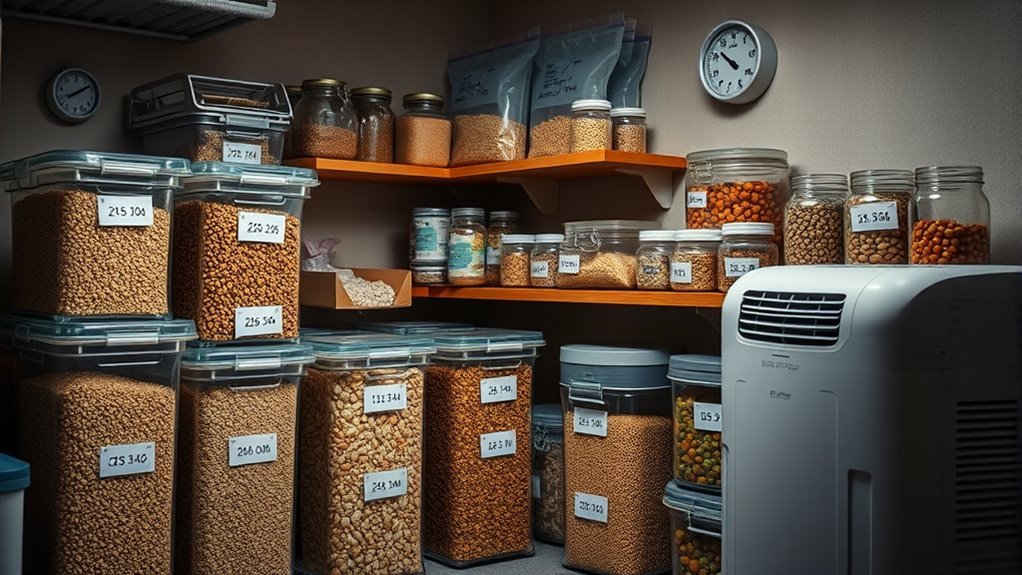
Choosing the right foods is only part of building a dependable long-term storage system—you also need to create conditions that keep those foods safe and fresh. Store your supplies in a cool, dry, and dark place, ideally with a temperature between 50-70°F.
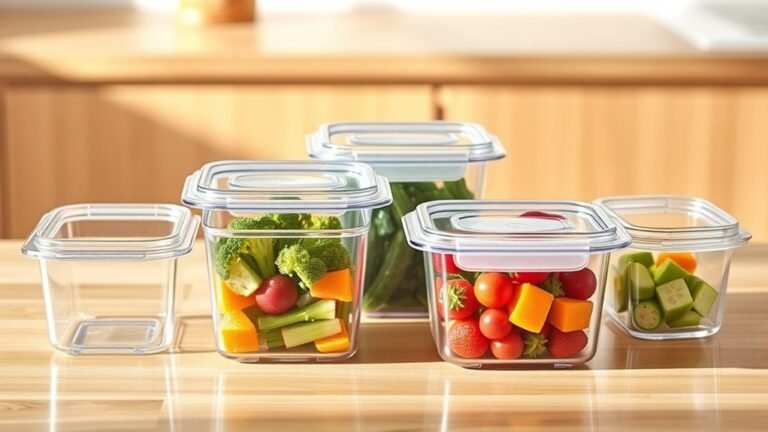
Keep humidity low and consistent to prevent mold and spoilage. Use airtight containers like Mylar bags with oxygen absorbers or sealed food-grade buckets to maintain a pest-free environment and extend shelf life.
| Storage Factor | Ideal Condition |
|---|---|
| Temperature | 50-70°F |
| Humidity | Low and consistent |
| Environment | Cool, dry, dark, pest-free |
Regularly check your setup to guarantee these conditions stay ideal. It’s a simple step that makes a big difference in keeping your food fresh longer.
Organize and Rotate Your Food Supplies Regularly
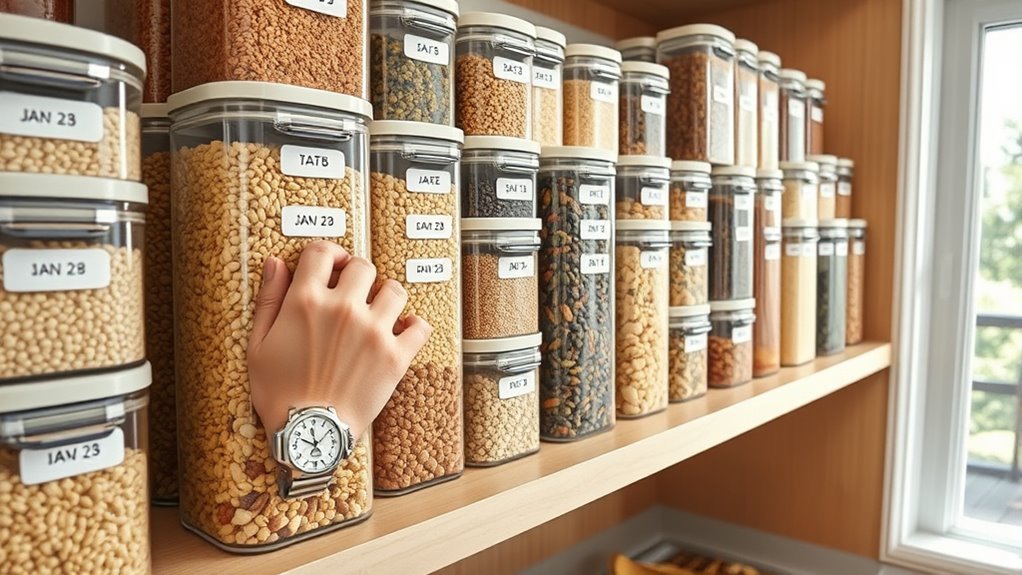
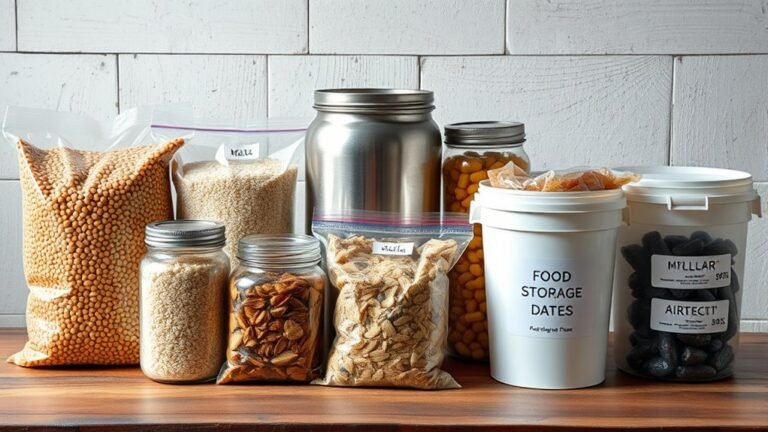
Although storing food properly is essential, regularly organizing and rotating your supplies makes certain nothing goes to waste. Start by labeling all containers with purchase or pack dates to track expiration and plan consumption.
Maintain an organized storage system using bins or shelves to keep food supplies visible and accessible. Set a schedule—monthly or quarterly—to review your inventory, identify older items, and use them first. This rotation prevents spoilage and keeps your stock fresh.
When you refresh your supplies, replace or add new stock gradually to maintain consistency. By staying on top of organization and rotation, you ensure your long-term food storage remains reliable, efficient, and ready when you need it most.
Frequently Asked Questions
How to Make Long Term Food Storage?
You start by choosing quality foods, then seal them airtight with oxygen absorbers.
Store your containers in a cool, dry place, label everything clearly, and rotate supplies regularly to keep your long-term food storage fresh and ready.
What Should I Stock up on if WW3 Happens?
You should stock up on staple foods like rice and beans, canned meats, water, and essentials like salt and sugar—like building a fortress, these basics shield you from hunger and uncertainty during WW3’s chaos.
Think of it like this: having these essentials on hand is your way of staying safe and secure when things get unpredictable. It’s all about being ready for whatever comes your way.
What Is the 2-2-2 Rule for Food Storage?
The 2-2-2 rule means you’ll store two weeks of food, two quarts of water per person daily, and two months’ worth of essential supplies.
It helps you build manageable, balanced emergency storage over time.
Think of it as a simple way to cover your bases without getting overwhelmed. Just take it step by step!
What Are 20 Foods That Should Be Stockpiled and Never Expire?
You should stockpile white rice, white beans, pasta, honey, pure salt, powdered milk, wheat, oats, dried herbs, spices, sugar, vinegar, soy sauce, gelatin, cornmeal, dried lentils, baking soda, powdered eggs, instant coffee, and hard candy.
These foods are super handy because they last forever. Plus, they can be used in lots of different recipes, so you won’t get bored. It’s smart to keep them on hand for emergencies or just to save trips to the store.
Conclusion
By choosing nutrient-dense, non-perishable foods, creating the perfect storage environment, and regularly rotating your supplies, you’ll build a food storage system that stands the test of time. Think of it as planting a seed today that grows into a reliable harvest tomorrow.
With these simple steps, you’re not just preparing for emergencies—you’re investing in peace of mind and self-reliance for the long haul. Keep it steady, and your future will thank you.
Long term food storage isn’t just about stocking up; it’s about smart planning and maintenance. When you focus on quality foods, proper storage conditions, and frequent rotation, you ensure your supplies remain fresh and nutritious. This approach helps you stay prepared for unexpected situations while promoting sustainability and health. So, start building your own long term food storage today, and enjoy the confidence that comes with knowing you’re ready for whatever tomorrow brings.