5 Safest Food Storage Containers You Should Use
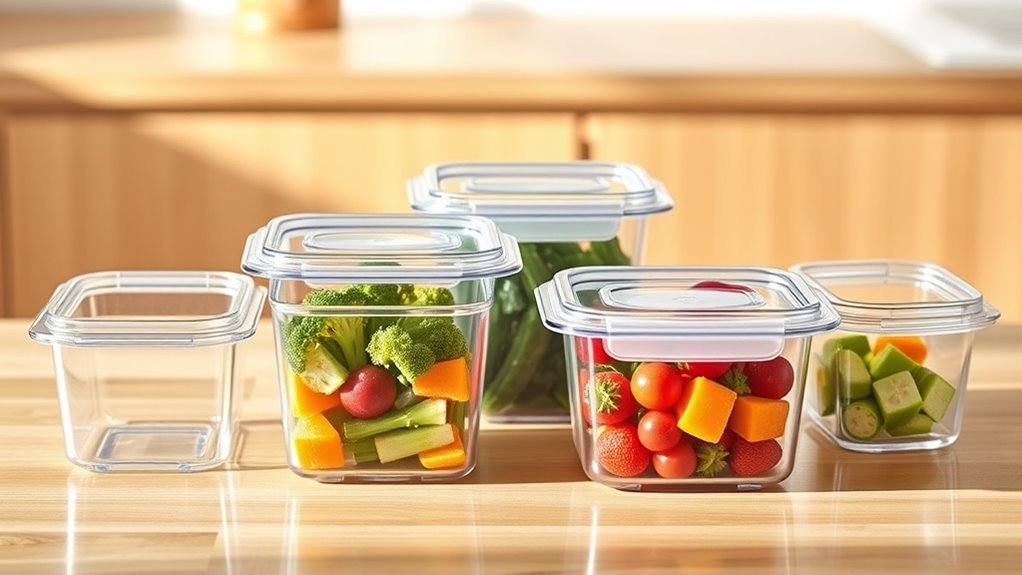
You should use food storage containers made from safe, non-toxic materials like borosilicate glass, BPA-free silicone, and stainless steel. These options resist stains, odors, and chemical leaching while protecting your food’s freshness.
Choosing the right containers is key to keeping your food safe and fresh for longer.
Look for airtight seals and FDA-certified products to avoid contamination and spoilage. Avoid plastics with harmful recycling codes, as they can pose health risks over time.
Plus, proper maintenance and careful handling of your containers will extend their lifespan and keep your food secure.
Keep exploring to discover which specific brands and features make these containers the best choice for your needs. Trust me, once you find the perfect container, food storage will become much easier and safer!
Key Takeaways
- Choose containers made from food-grade, FDA-certified materials like borosilicate glass, stainless steel, or BPA-free silicone for safety and durability. These materials ensure your food stays safe and the containers last longer.
- Use borosilicate glass containers with airtight, leak-proof lids to resist stains, odors, and handle heat safely. They’re great for keeping your food fresh and can go from fridge to oven without any worries.
- Opt for stainless steel containers that are rust-proof, non-reactive, and equipped with secure locking lids for leak prevention. They’re sturdy and perfect if you want something that won’t break easily.
- Select food-grade silicone containers that are flexible, heat-resistant, and safe for microwave, freezer, and dishwasher use. These are super convenient because they’re easy to store and clean.
- Maintain containers by cleaning lids thoroughly, avoiding microwaving sealed containers, and replacing damaged ones to prevent contamination. Taking care of them properly keeps your food safe and your containers in good shape.
Criteria for Choosing Safe Food Storage Containers
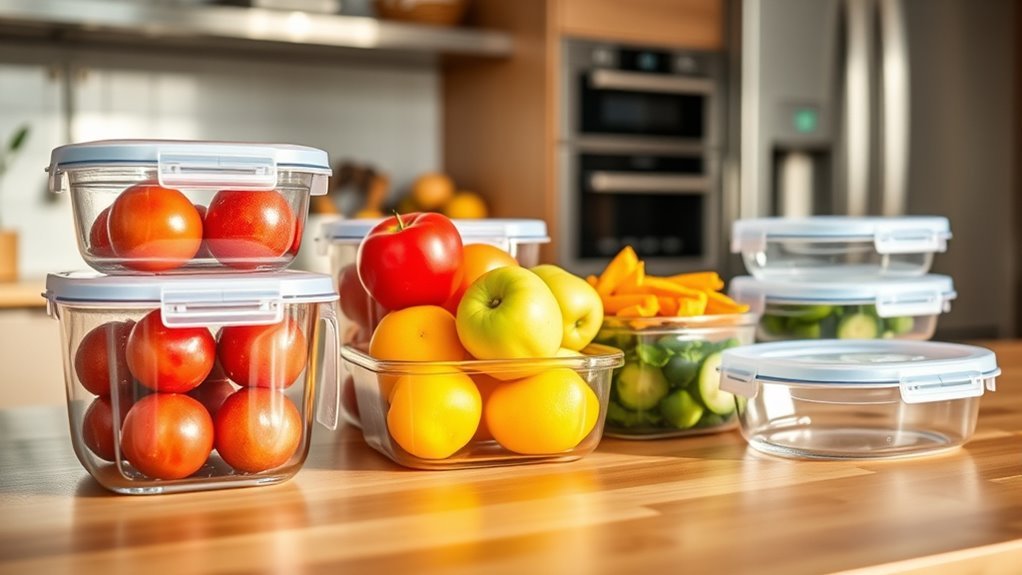
When choosing safe food storage containers, you want to pick those made from food-grade materials like glass, stainless steel, or BPA-free silicone. All of these are certified by the FDA as safe.
These materials are non-reactive, stain resistant, and minimize odor retention. That helps keep your food stored safely.
Look for containers with airtight seals to prevent contamination and spoilage. This also helps protect your food from damage during transport or storage.
Choose airtight containers to keep your food safe from contamination, spoilage, and damage during storage or transport.
Avoid plastics with recycling codes 3, 6, or 7 because they might leach harmful chemicals into your food. Regulatory certification makes sure the container won’t cause chemical leaching that could compromise food safety.
Make it a habit to regularly inspect and replace any containers that show damage, stains, or odors. Doing this helps prevent bacterial growth and keeps your food fresh.
Choosing containers with these criteria ensures your food stays fresh and safe. It’s definitely worth taking the time to pick the right ones!
Top Glass Food Storage Containers for Safety
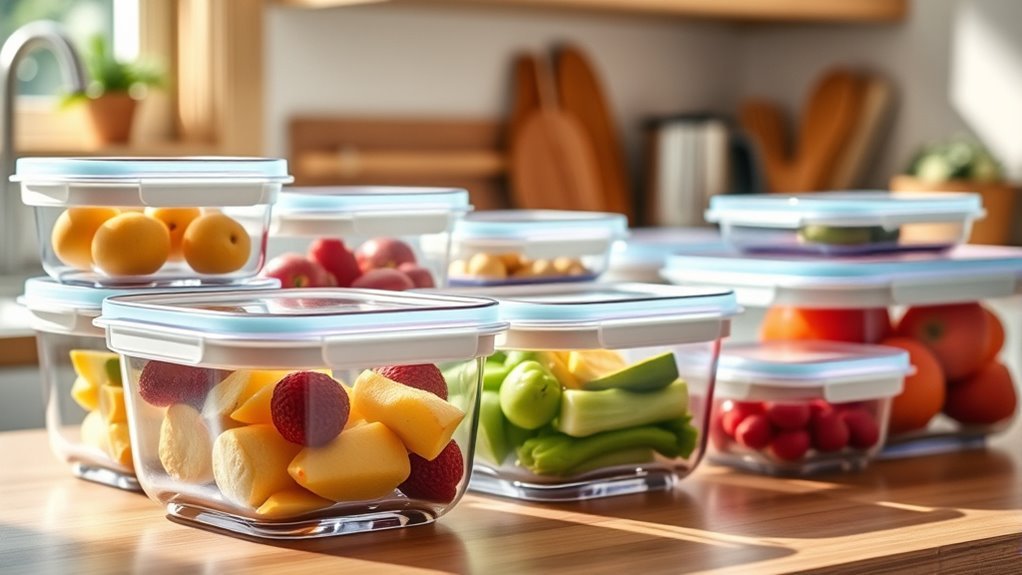
Choosing glass food storage containers offers a reliable way to keep your food safe and fresh. Top options like Pyrex and Snapware use durable, non-shattering borosilicate glass that’s both microwave safe and dishwasher safe.
Their airtight lids with removable gaskets provide leakproof seals, which are vital for maintaining food safety and preventing spills. You’ll appreciate that these containers resist stains and odors, even from acidic foods, preserving clarity and integrity.
When choosing glass storage containers, focus on these key features:
- Durable glass construction that’s non-shattering and heat resistant
- Leakproof, airtight lids to lock in freshness and prevent leaks
- Stain and odor resistant materials that ensure lasting cleanliness
This combination ensures safe, convenient storage without chemical leaching or damage over time. It’s a smart choice for anyone who wants food storage that really lasts.
Best Stainless Steel Options for Food Storage
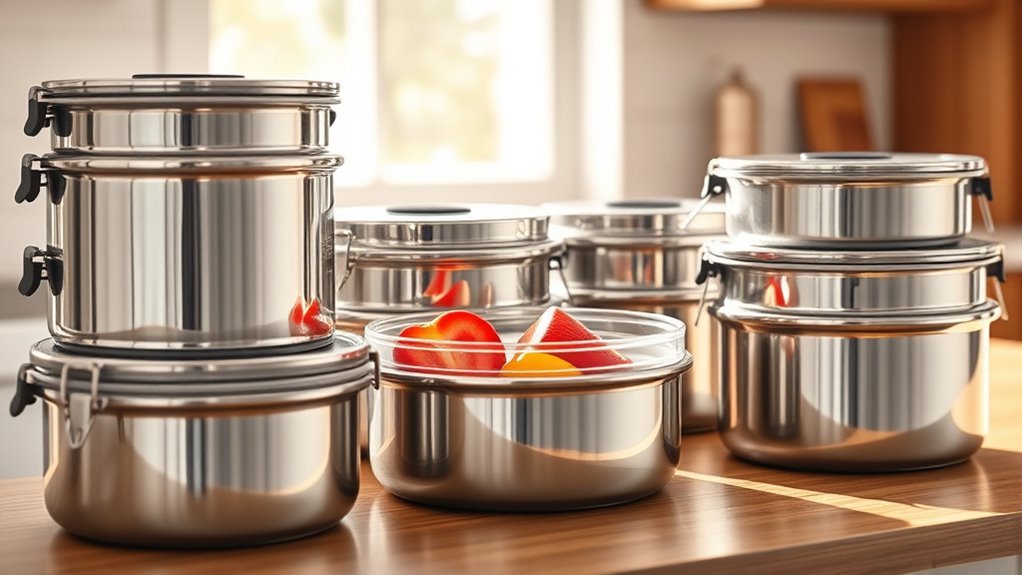
Although stainless steel containers aren’t microwave-safe, you’ll find they’re incredibly durable and resistant to impacts, making them perfect for everyday food storage. Their impact-resistant and rust-proof nature guarantees they hold up well over time.
You can safely use many stainless steel containers in the oven, adding versatility to your kitchen. Look for sets like Lille Home’s 6-piece option, which offers multiple sizes with leak-proof lids featuring secure locking mechanisms.
This design prevents spills and keeps your food fresh during transport. Stainless steel is also non-reactive and chemical-free, meaning it won’t leach harmful substances into your meals.
Choosing stainless steel containers with tight-sealing lids guarantees safe, reliable food storage that’s both practical and long-lasting.
Safe Silicone Food Storage Containers to Consider
Since food-grade silicone containers don’t leach chemicals even when heated, you can confidently use them for a variety of storage needs.
Food-grade silicone containers remain safe and chemical-free even when heated, perfect for versatile storage needs.
Silicone food storage containers offer non-toxic storage that’s BPA-free silicone, ensuring safe kitchen storage without harmful chemicals. These flexible food containers are lightweight and durable, able to withstand extreme temperatures.
When choosing silicone food containers, consider these benefits:
- Microwave safe containers and dishwasher safe silicone for easy reheating and cleaning.
- Food-grade silicone certified by FDA for chemical safety.
- Versatility for freezer, oven, and daily use without warping or breaking.
Opting for silicone food storage containers gives you peace of mind with non-toxic, durable, and flexible solutions. Plus, they outperform many plastics in safety and convenience.
Tips for Maintaining and Using Food Storage Containers Safely
To keep your food storage containers safe and effective, you should always check that they’re labeled food-safe and free from BPA, phthalates, and other harmful chemicals before using them.
Focus on cleaning lids thoroughly to avoid bacterial growth and maintain proper sealing. Never microwave sealed containers; vent lids or use paper towels to ensure microwave safety.
| Maintenance Tips | Best Practices |
|---|---|
| Replace damaged containers | Prevent bacterial growth |
| Allow glass to cool before stacking | Avoid cracks and stress |
| Use chemical-free cleaners | Ensure safe stain removal |
Frequently Asked Questions
What Is the Healthiest Container to Store Food In?
The healthiest container for storing food is tempered, food-grade glass because it’s non-reactive and won’t leach chemicals.
You can also safely use stainless steel or food-grade silicone containers for durability and chemical-free storage. These options are great if you want something sturdy and long-lasting.
What Food Storage Containers Are Non-Toxic?
Glass and stainless steel stand tall like guardians, while silicone bends with grace—these non-toxic containers keep your food pure.
BPA-free plastics, if used wisely, also protect your meals without hidden harm or chemical whispers. It’s all about choosing the right kind and using them properly.
Which Container Material Is Safest for Storing Food?
You should choose glass or stainless steel containers since they’re non-reactive and free from harmful chemicals. They won’t leach toxins into your food, making them the safest options for storing anything you plan to eat later.
Honestly, these materials are really your best bet if you want to keep your food safe and fresh without worrying about nasty stuff sneaking in. Plus, they’re pretty durable and easy to clean, which is a nice bonus!
What Are the Safest Plastic Containers for Food Storage?
You should choose BPA-free, food-grade plastics labeled 2, 4, or 5 for safe food storage. These types are generally considered the safest options for keeping your food fresh and free from harmful chemicals.
Avoid containers with poor seals or recycling codes 1, 3, 6, and 7. Using those can increase the risk of chemical exposure and leaks, which is something you definitely want to steer clear of.
Conclusion
Choosing the safest food storage containers starts with smart selections and simple steps. By picking glass, stainless steel, or silicone, you secure your snacks and save your health.
Remember, regular rinsing and responsible handling keep your containers clean and contamination-free. So, stay savvy, stay safe, and savor every stored snack with confidence.
Your careful choices create a cleaner, healthier kitchen, making mealtime more mindful and magically mess-free. Using the right containers not only protects your food but also supports your well-being. When you choose safe food storage containers, like glass or stainless steel, you reduce exposure to harmful chemicals and keep your meals fresh longer. It’s all about making smart, safe choices that benefit you and your loved ones every day.