Why Is Proper Food Storage Important for Health?
You need to store food properly to keep harmful bacteria from growing and causing illness. Proper food storage is crucial for maintaining your health and preventing foodborne diseases. It helps keep your food fresh and safe to eat, reducing the risk of contamination.
Keeping perishable items below 5°C in the fridge and hot foods above 60°C during serving prevents contamination.
Avoid thawing food at room temperature to stop rapid bacteria growth. Proper wrapping and separating raw from cooked foods also reduce risk.
Following safe storage habits protects your health and keeps food fresh longer. Understanding these basics helps you maintain a safe kitchen environment.
So, taking a little extra care with how you store food really pays off in the long run!
Key Takeaways
- Proper food storage prevents harmful bacteria growth by maintaining safe temperatures below 5°C or above 60°C.
- Storing raw and cooked foods separately reduces the risk of cross-contamination and foodborne illnesses.
- Refrigerating leftovers promptly within two hours preserves freshness and prevents spoilage.
- Using airtight wrapping minimizes exposure to contaminants and extends food shelf life.
- Consistent temperature monitoring ensures appliances maintain safe conditions to protect health.
It might seem like a lot, but these simple steps really make a difference in keeping your food safe and healthy!
The Role of Temperature Control in Preventing Foodborne Illness
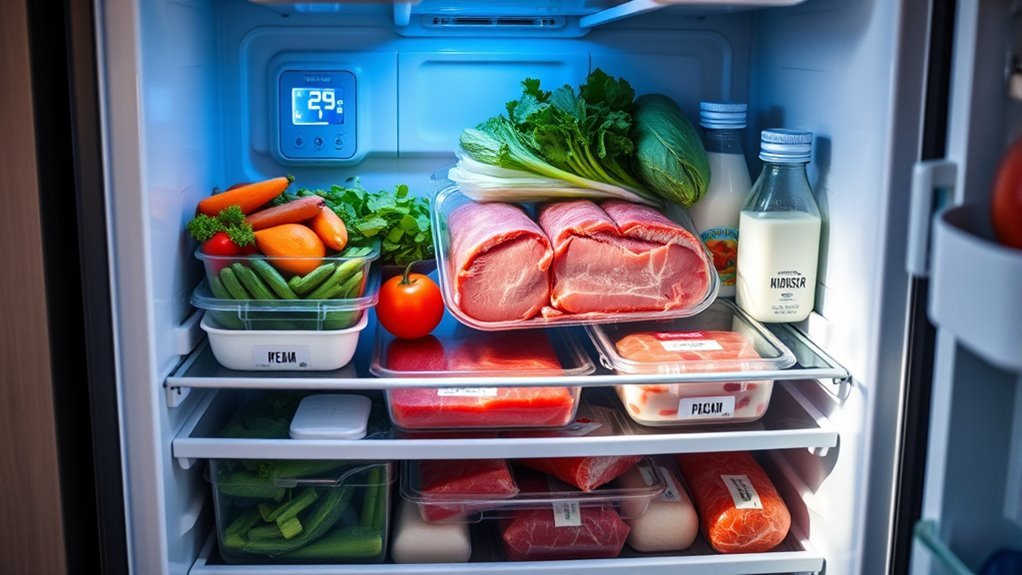
Because bacteria multiply quickly between 5°C and 60°C, controlling temperature is essential to prevent foodborne illness. This range is known as the danger zone, where bacteria growth accelerates, increasing the risk of contamination.
To guarantee food safety, you need proper temperature control during food storage. Keep perishable items in the refrigerator below 5°C or in the freezer to inhibit bacteria growth and promote food preservation.
Hot foods should be maintained above 60°C to prevent bacteria from thriving during serving. Avoid thawing foods at room temperature, as this encourages rapid bacterial multiplication, compromising safety.
Best Practices for Safe Food Storage and Handling
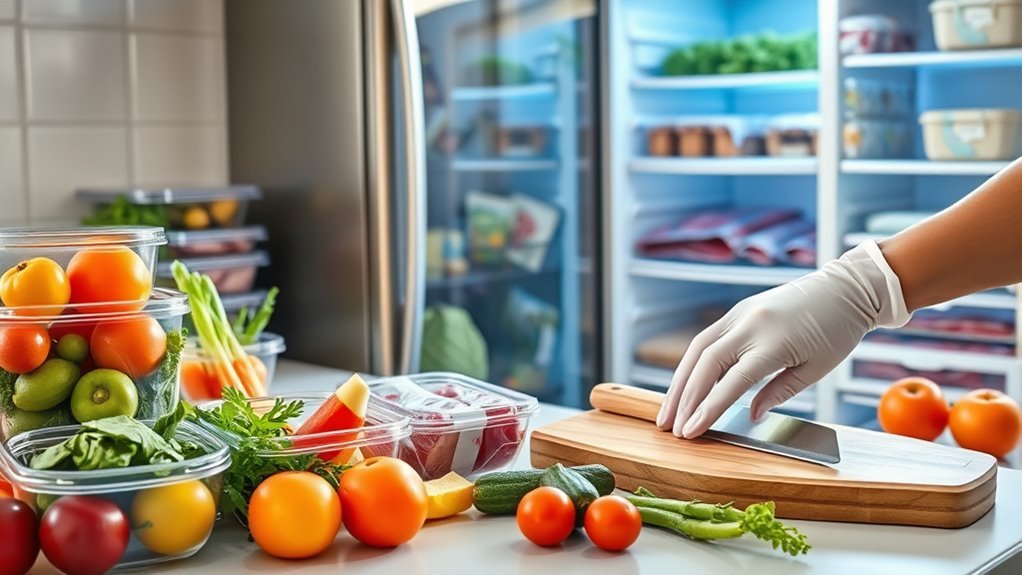
When you store and handle food properly, you reduce the risk of contamination and keep your meals fresh longer. Maintaining the correct refrigerator temperature—at or below 40°F—and freezer temperature is key for food safety and preventing foodborne illness.
Always practice proper storage by wrapping and sealing foods tightly to minimize cross-contamination and support food preservation. Keep raw meats on lower shelves to avoid dripping onto cooked foods, which helps prevent cross-contamination and food spoilage.
Use a thermometer to monitor temperature control regularly, ensuring appliances stay in safe ranges. Promptly refrigerate or freeze leftovers within two hours to maintain quality and safety.
Following these best practices in food handling guarantees safe food storage and protects your health effectively. It’s easier than you might think to keep your food safe!
Frequently Asked Questions
What Is the Importance of Proper Storage?
Proper storage keeps your food safe by preventing bacteria growth and cross-contamination. It preserves flavor, nutrition, and texture while extending shelf life.
This helps you avoid waste and stay healthy by reducing the risk of foodborne illnesses. So, it’s really worth paying attention to how you store your food!
What Foods Should Never Be Refrigerated?
You shouldn’t refrigerate tomatoes, potatoes, onions, bread, honey, certain oils, peaches, avocados, bananas, coffee, or chocolate. Keeping them at room temperature preserves flavor, texture, and prevents spoilage or undesirable changes.
It’s pretty simple, really. When you chill these foods, they can lose their taste and texture, which is a bummer. So, just leave them out and enjoy them at their best!
What Are 5 Important Food Storage Tips?
Imagine your fridge as a fortress: keep it below 5°C, store raw meats beneath cooked foods, seal everything airtight.
Don’t refreeze thawed items, and regularly check temperatures to keep your food fresh and safe.
These simple steps really help make sure your food stays good longer and stays safe to eat!
What Are the 5 Importances of Food Preservation?
You preserve food to prevent harmful bacteria and extend its shelf life. This way, your food stays safe and lasts longer.
It also helps reduce waste, which is great for both your wallet and the environment. Plus, preserving food keeps nutrients intact, so you get the most out of what you eat.
And let’s not forget about taste and texture — preservation helps maintain those too. Following these steps means you’re sticking to safety standards, protecting your health, and saving money in the long run.
Conclusion
By keeping your food at the right temperature and following safe storage practices, you’re giving yourself a little extra peace of mind. It’s not just about avoiding unwanted surprises on your plate—it’s about nurturing your well-being every day.
When you handle food with care, you’re quietly protecting yourself and those you love from potential health hiccups. Proper food storage helps prevent the growth of harmful bacteria that can cause foodborne illnesses.
So, treat your food thoughtfully; it’s a simple way to keep your health quietly flourishing. Maintaining good food storage habits plays a crucial role in overall health by reducing risks and ensuring the food you eat is safe and nutritious. Remember, good food storage isn’t just about safety—it’s about caring for your body and those around you every single day.