
Why Do Mormons Have Food Storage?
You keep food storage to protect your family during emergencies and to embrace your faith’s principle of self-reliance. It’s about gradually building a supply of non-perishable food and water so you’re prepared for disasters, economic hardships, or other uncertainties.
Having a food storage plan is a way to stay ready for whatever life throws your way.
This practice balances practical readiness with spiritual stewardship. It helps you care for your loved ones and also supports your community in times of need.
As you explore further, you’ll discover helpful guidelines on how much to store and smart ways to do it wisely. It’s all about being prepared while living your values.
Key Takeaways
- Mormons store food to promote self-reliance and preparedness in line with Church teachings on provident living.
- Food storage helps members plan for emergencies, disasters, and economic hardships through faith-based readiness.
- The practice encourages gradual accumulation of non-perishable staples following prophetic counsel and biblical principles.
- Food storage builds spiritual stewardship by caring for families and being ready to assist others in need.
- It fosters confidence and peace of mind, blending practical readiness with trust in God during uncertain times.
Religious and Practical Reasons for Food Storage

Although not required by doctrine, Mormons store food to promote self-reliance and preparedness, following Church teachings on provident living. You’ll find that food storage in the Church of Jesus Christ is both a practical and spiritual practice.
Mormons embrace food storage as a practical, spiritual practice promoting self-reliance and provident living.
It encourages you to prepare for emergencies, disasters, and economic hardships through faith-based planning. This isn’t about hoarding but gradual accumulation, reflecting biblical principles and prophetic counsel.
By maintaining a recommended three-month supply, you take on spiritual stewardship, caring for your family and being ready to serve others in need. This approach builds self-reliance and aligns with the Church’s emphasis on provident living—planning wisely while trusting God.
Food storage helps you face uncertainties confidently, blending practical readiness with religious values.
Guidelines and Recommendations for Preparedness
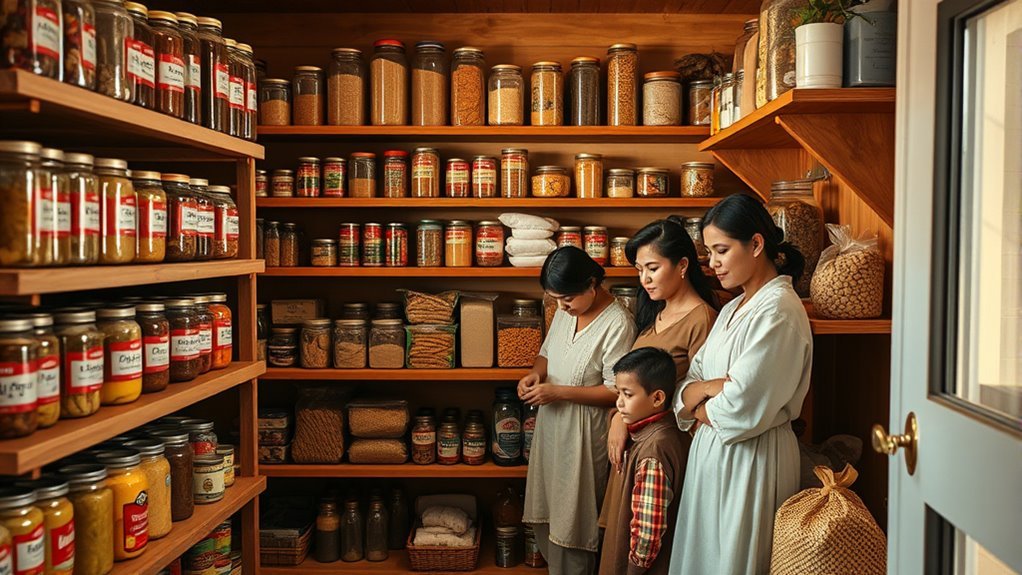
When you begin building your food storage, start small with a one-week supply and gradually work up to the recommended three months. The Church welfare program encourages members to have a three-month supply of food and water for emergency preparedness.
Focus on non-perishable staples like wheat, rice, beans, and pasta, which last for decades when kept in cool, dry, airtight containers. Don’t forget proper water storage in sturdy, leak-proof bottles away from heat and sunlight.
Careful planning helps you spread costs over time, avoiding debt while strengthening your home storage. This preparation guarantees you’re ready to face adversity with confidence, supporting both your family and community during emergencies.
Following these guidelines reflects the Church’s emphasis on self-reliance and collective welfare. It’s all about building safety and peace of mind, one step at a time.
Frequently Asked Questions
Why Can Mormons Have Coke but Not Coffee?
You can have Coke but not coffee because the Word of Wisdom specifically prohibits “hot drinks,” interpreted as coffee and tea.
Coke isn’t considered a “hot drink,” so it’s allowed, though some choose to avoid it personally.
It’s more about the temperature and the specific drinks mentioned rather than caffeine itself.
Is Chick-Fil-A Owned by Mormons or Christians?
Like a beacon shining on Sunday, Chick-fil-A is owned by devout Christians, not Mormons.
You’ll find their values rooted in Southern Baptist faith, guiding their decisions and traditions, such as closing on Sundays.
Can Mormons Be LGBTQ?
Yes, you can be LGBTQ and a Mormon. The church welcomes you with love but encourages following its teachings, which define marriage as between a man and a woman.
At the same time, it promotes kindness and respect for everyone. So, while the beliefs about marriage are clear, the emphasis on treating others with love is strong too.
Can Mormons Wear Deodorant?
Yes, you can wear deodorant as a Mormon. The church doesn’t prohibit it, and most members use it regularly to stay clean and respectful.
You’re free to choose products that suit your personal preferences and health needs. So, go ahead and pick whatever works best for you!
Conclusion
So, you think food storage is just about hoarding cans in a dusty basement? Think again. For Mormons, it’s a blend of faith and foresight—like preparing for a surprise party that might actually be a natural disaster.
While others scramble when shelves empty, they calmly open their well-stocked pantries. Ironically, their secret isn’t just about food; it’s about peace of mind.
Being “overprepared” might just be the smartest kind of normal. Food storage for Mormons is deeply tied to their values of self-reliance and community support. It’s more than just emergency supplies—it’s a spiritual practice that helps handle unexpected challenges with calm and confidence. This practical approach to preparedness shows why Mormons prioritize food storage: it’s about faith, resilience, and taking care of one another when times get tough.