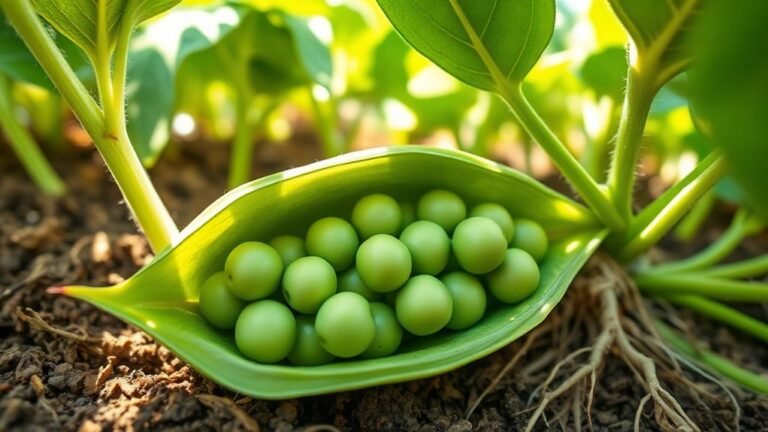
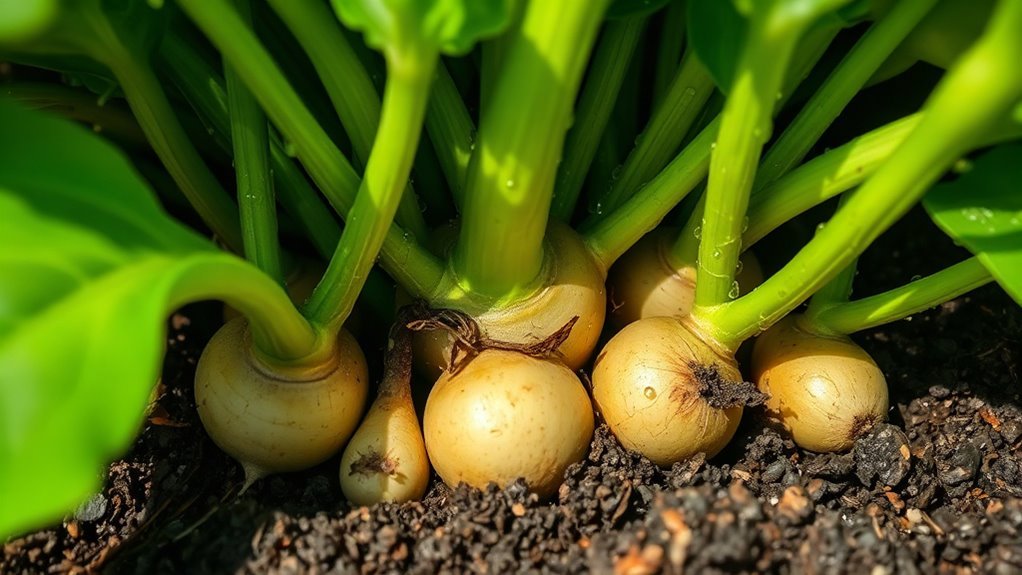
What Is Food Storage in Plants?
You store excess energy in specialized plant organs like roots, stems, and leaves to help plants survive tough conditions such as droughts or cold winters. These organs hold starch, sugars, or oils, supporting the plant’s metabolism and new growth when photosynthesis slows down.
Underground storage protects these reserves from harsh weather and herbivores. This way, the plant stays viable during dormancy and quickly regrows once conditions improve.
Keep exploring to uncover how these storage systems work and their forms. It’s fascinating to see how plants manage food storage to stay alive and healthy through changing seasons!
Key Takeaways
- Food storage in plants involves accumulating starch, sugars, lipids, or proteins in specialized organs for survival during adverse conditions. Plants do this to make sure they have enough energy when things get tough.
- They store excess energy underground in roots, stems, or modified leaves. This helps support their metabolism when photosynthesis slows down.
- Stored food reserves enable plants to maintain energy and regrow shoots and leaves after drought or cold winters. It’s like their way of bouncing back when conditions improve.
- Common storage organs include tubers (potatoes), swollen roots (carrots), and bulbs (onions). These act as energy backups for the plant.
- Keeping food underground protects these reserves from harsh weather and herbivores. This way, plants can quickly regrow when favorable conditions return.
Why Plants Store Food
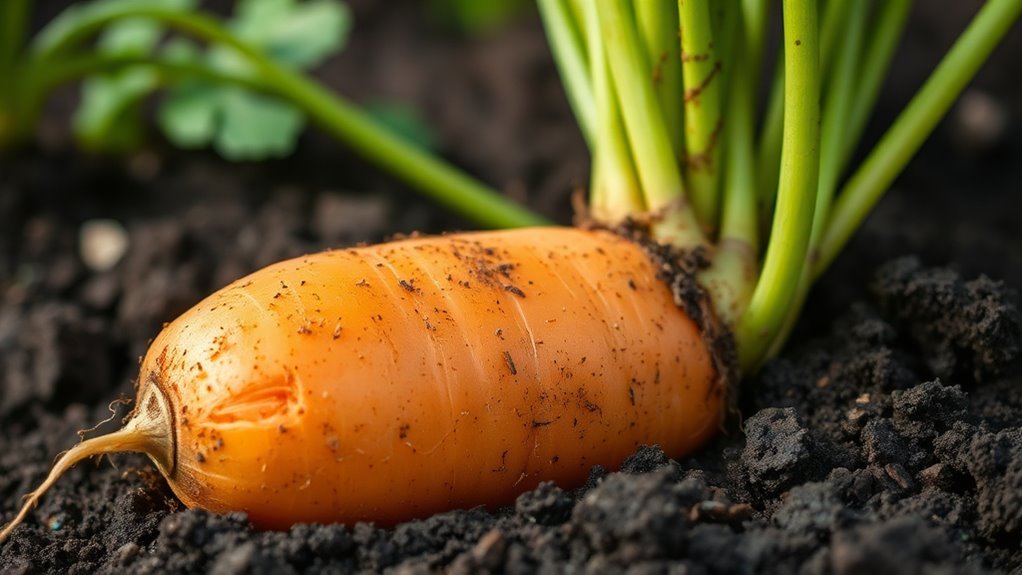
Although plants produce food through photosynthesis, they store excess energy to survive tough times like droughts or cold winters. This food storage happens by accumulating starch, sugars, lipids, or proteins in specialized organs.
When conditions are harsh, like during drought or cold seasons, these reserves supply the energy needed to maintain metabolism and support new growth. You’ll find that the first year biomass often acts as a critical storage source, allowing shoots or leaves to re-emerge when conditions improve.
Food storage also helps plants maintain homeostasis by providing a steady internal resource, ensuring life processes continue even when photosynthesis slows down. Additionally, these reserves fund reproduction efforts, supporting flowering and seed development to secure the plant’s future.
Plant Organs That Store Food and Their Differences
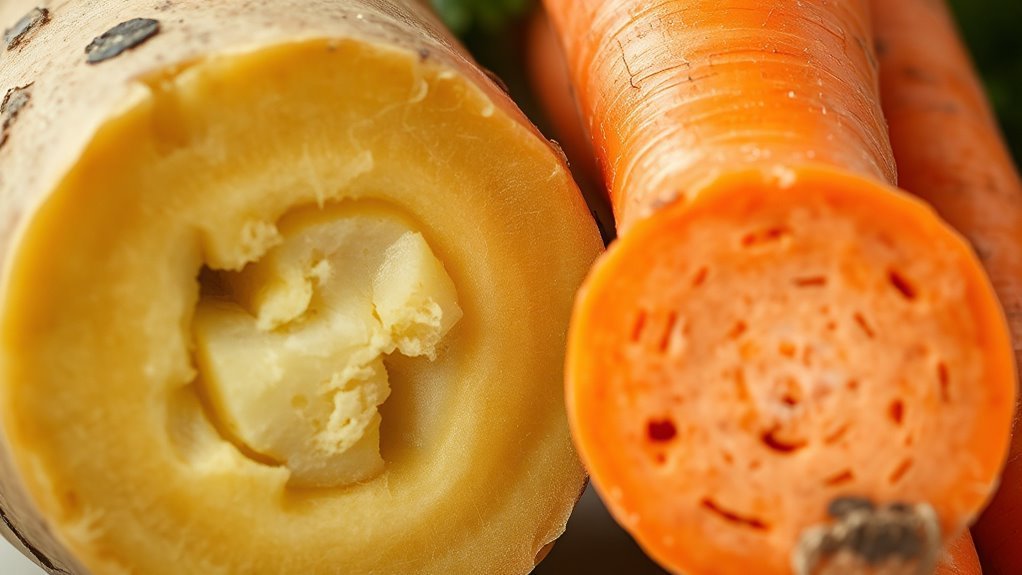
Plants rely on specific organs to store the surplus food they produce, each adapted to hold nutrients in ways that best support survival and growth. Roots like carrots and sweet potatoes store starch or sugars underground. This protects the first year biomass from herbivores and harsh conditions.
Stems, as in potatoes, act as underground storage organs. They supply energy for regrowth after the aerial parts die back.
Leaves in some plants store food mainly as starch or sucrose. This helps sustain the plant during periods of low production.
Seeds and fruits also serve as storage organs but differ. Seeds hold starch, proteins, and oils for embryo growth, while fruits store mostly sugars to provide energy and assist seed dispersal.
Understanding these differences helps you appreciate how plants manage their energy efficiently. It’s pretty fascinating how each part plays its own important role!
How Storage Organs Store Energy: Starch, Sugars, and Oils
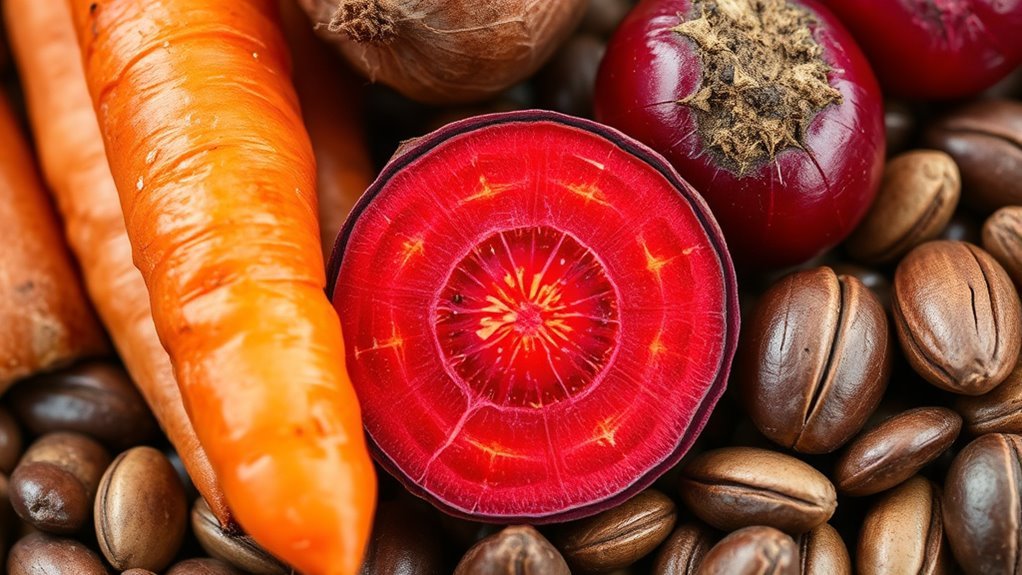
When storage organs hold energy, they do so mainly as starch, sugars, or oils. These serve as important reserves during times when photosynthesis slows down.
You’ll find that different plants store energy in forms best suited to their needs. For example, potato tubers store mostly starch, conserving carbohydrates to fuel new growth during unfavorable seasons.
Carrot and beet roots store starch and sugars. These provide soluble carbohydrates to support respiration and budding after dormancy.
Seeds contain starch, proteins, and oils. They supply energy for the embryo until it can photosynthesize.
How Storage Organs Help Plants Grow and Survive
You rely on storage organs to tap into energy reserves when conditions get tough, like during drought or winter. These organs not only protect essential nutrients underground but also stay active even when the plant looks dormant.
Understanding how they work helps you see how plants keep growing and surviving through challenges. It’s pretty amazing how these hidden parts keep everything going, isn’t it?
Energy Reserve Utilization
Although photosynthesis drives a plant’s growth under favorable conditions, energy reserves stored in organs like roots, stems, and seeds become crucial when sunlight or water is scarce. When photosynthesis slows during drought or winter, these reserves provide the energy needed for respiration and growth.
You’ll see this especially in geophytes, where underground storage organs remain active while aerial parts die back, ensuring regrowth later. The stored food helps not only survival but also rebuilding leaves, shoots, flowers, and fruits once conditions improve.
By constantly mobilizing these reserves, plants maintain energy balance and metabolic regulation.
- Potatoes store starch in stems to fuel new growth
- Carrots and beets keep sugars and starch in roots for energy
- Seeds hold starch, proteins, or oils to support initial growth stages
Protection From Harsh Conditions
Because storage organs lie underground, they shield plants from harsh conditions by safely holding energy and nutrients when the environment turns cold, dry, or nutrient-poor. When aerial parts die back during drought or winter, underground storage organs stay protected and ready to regrow shoots once conditions improve.
You can think of these organs as a secure pantry, storing starches, sugars, and lipids that the plant taps into to keep essential processes running when photosynthesis pauses. Being underground also reduces exposure to herbivores and physical damage, boosting the plant’s chances of survival.
Continuous Organ Activity
While the above-ground parts of a plant may die back during tough seasons, the underground storage organs stay active, sensing environmental changes and adjusting their functions. You might not realize it, but these organs don’t just sit idle—they keep the plant alive and ready to grow again.
Here’s how they help:
- They store biomass and gradually send resources back to support new shoots after the initial buildup.
- They remain protected underground, safe from herbivores, yet fully functional during dormancy above ground.
- In plants like cacti, specialized water-storage cells adjust their volume, supporting buds and fruit development.
Underground Storage Organs and How They Protect Plants
You’ll find different types of underground storage organs like tubers and root storage that hold energy-rich starches and sugars. These organs protect plants by staying safe beneath the soil, away from herbivores and harsh weather.
When aboveground parts die back, these hidden stores keep the plant alive and ready to grow again. It’s like the plant’s own secret stash, helping it bounce back year after year.
Types Of Underground Storage
If you want to understand how plants survive tough conditions, you need to look below the surface at their underground storage organs. These structures store excess food like starch and sugars, which the plant uses to regrow after adverse periods.
You’ll find three main types of underground storage: roots, stems, and modified structures.
Roots, such as carrots and sweet potatoes, store nutrients directly within their tissues. Stems, like potatoes, thicken and hold energy reserves underground.
Modified structures, including bulbs and tubers, act as specialized storage units.
During dormancy, while the aerial parts die back, these organs stay active, sensing the environment and preserving energy. When conditions improve, they quickly fuel new growth, ensuring the plant’s survival and reproduction.
Understanding these types helps you appreciate how plants endure and thrive despite harsh surface challenges.
Protective Advantages Underground
The underground storage organs you learned about don’t just hold food—they also protect it in ways that help plants survive tough times. Since they’re buried in soil, tubers and roots keep starches and sugars hidden from herbivores.
Soil acts like a natural shield, buffering temperature extremes and maintaining moisture, which safeguards the stored nutrients. Even when droughts or cold kill the above-ground parts, these organs stay functional underground.
Because they’re not dormant, they actually sense their environment and supply resources for quick regrowth once conditions improve.
| Protective Feature | Benefit |
|---|---|
| Hidden in soil | Shields from herbivores |
| Stable temperature & moisture | Reduces nutrient damage |
| Active sensing & resource supply | Enables rapid regrowth after stress |
Role In Plant Survival
Because underground storage organs like tubers and roots hold critical starches and sugars, they play an essential role in helping plants survive harsh conditions such as winter cold or drought. When the aerial parts die back, these organs remain active beneath the soil, avoiding physiological dormancy.
This underground position shields them from herbivores and extreme weather, ensuring they stay viable. Once favorable conditions return, stored energy fuels new growth and shoot development.
You can see their survival advantages in how:
- They provide a secure energy reserve for regrowth after adverse weather.
- Their soil coverage protects them from physical damage and consumption.
- They enable plants, especially geophytes, to endure resting stages with above-ground parts gone.
This strategy makes underground storage organs crucial for plant survival. It’s like having a hidden backup plan that keeps the plant ready to bounce back no matter what.
What Happens Inside Storage Organs During Dormancy?
Although the aerial parts of a plant enter dormancy, you should know that the storage organs beneath the soil stay metabolically active. Even when shoots and leaves die back due to temperature extremes or drought, these organs continue sensing the environment and managing resources.
While aerial parts rest, underground storage organs remain active, sensing conditions and managing resources.
They don’t shut down; instead, they constantly reorganize stored starches, sugars, and other reserves to maintain necessary functions. This ongoing activity ensures the plant can quickly resume growth when conditions improve.
So, while the above-ground parts rest, the storage organs work behind the scenes, supporting survival and regrowth. The resting stage mainly reflects the aerial dieback, not a true dormancy of the storage tissue itself.
This strategy keeps the plant ready for life when favorable conditions return.
Specialized Storage Cells in Succulents for Water
While storage organs keep plants ready to grow after dormancy, some plants have developed unique cells to handle another vital resource: water. In succulents, specialized water-storage cells found in the cactus cortex and leaves store water to survive drought.
You’ll notice these cells have flexible, elastic walls that change shape and volume as they absorb or release water. When water returns, stored reserves support nearby photosynthetic cells, buds, and young fruits, maintaining growth despite scarcity.
These cells’ ability to expand and contract repeatedly helps regulate water and prevents dehydration.
Key features include:
- Undulating, scarcely lignified cell walls for flexibility
- Water supply to critical growing tissues
- Support for continual growth during drought
This adaptation lets succulents thrive where water is limited. Pretty clever, right?
How to Identify and Draw Common Food Storage Organs
To identify common food storage organs, focus on underground plant parts like stems, roots, and leaves that have adapted to store excess nutrients such as starches, sugars, or oils. Look for stem tubers like potatoes, swollen roots like carrots or sweet potatoes, and modified leaves like onion scales.
When drawing, create a longitudinal section for bulbs to reveal internal layers, and label key external features like the “eyes” and skin on potatoes or the tapering root tip of carrots. Use correct magnification by comparing paper measurements with actual specimen size and note the scale.
In your annotations, connect each organ to its stored food type—for example, onions store starch and sugars—showing how their structure supports food storage and plant survival during tough seasons. This way, you can clearly see how these plants manage to keep going when conditions get tough.
Frequently Asked Questions
What Are Geophytes?
Geophytes are plants you rely on underground storage organs to survive tough seasons. When above-ground parts die back, these hidden organs keep you alive and ready to regrow once conditions get better.
Basically, they’re like nature’s way of hitting the pause button during hard times. Once things improve, these plants spring back to life, all thanks to those underground parts.
How Should I Store Food to Keep It Fresh?
You shouldn’t store food like it’s the Renaissance; keep onions, potatoes, and carrots cool, dark, and ventilated. Avoid airtight containers, maintain humidity to prevent shriveling, and refrigerate cut parts quickly to slow spoilage.
Just think about it—these veggies like a bit of breathing room. So, give them that cool, dark spot and some air circulation to stay fresh longer. And if you’ve already cut into them, pop them in the fridge to keep things from going bad too fast.
What Is Food Stored as in Plant Cells?
You’ll find plant cells store food mainly as starch, sucrose, proteins, and oils. Roots and stems hold starch.
Leaves store sucrose or starch, and seeds pack proteins and oils to fuel growth during germination. It’s pretty neat how plants manage their energy, right?
What Is the Place Where Food Is Stored?
Think of plants as treasure chests—roots, tubers, and seeds are where food hides safely. You’ll find energy stored underground in roots and stems, or tucked inside seeds and fruits.
It’s all ready to fuel future growth and survival. Pretty cool, right?
Conclusion
Now that you know how plants store food, imagine this: a single potato tuber can hold up to 80% of its weight in starch. It acts like a natural battery powering new growth.
These storage organs aren’t just energy reserves—they’re survival hubs, helping plants thrive through tough times. By understanding this, you’ll see plants not just as green beings but as incredible strategists.
They store life’s fuel underground, ready to burst into growth when conditions are just right. Food storage in plants is truly amazing, showing how plants manage energy efficiently to survive and grow.