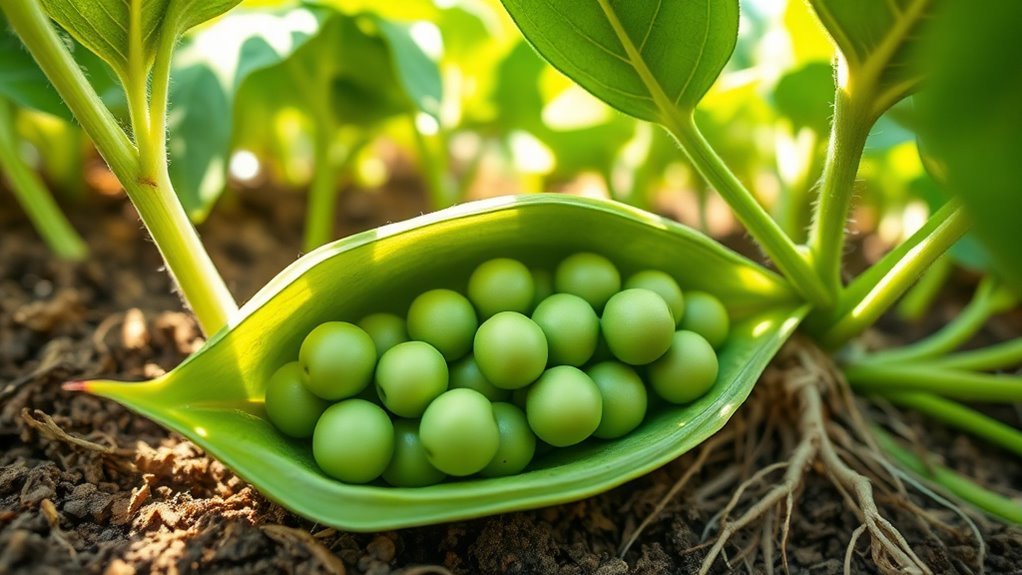
What Involves Food Storage in Plants?
Food storage in plants involves specialized organs designed to hold nutrients and energy reserves. These organs include swollen tap roots, stem tubers, bulbs, and thickened leaf petioles. They store important food materials like starch or sugars, which plants use when conditions get tough.
For example, carrots store food in their tap roots, potatoes in stem tubers, onions in bulbs, and celery in leaf petioles. These storage sites help plants survive harsh weather and regrow after periods of dormancy.
Knowing about these organs gives you a clearer picture of how plants manage their energy to support growth and reproduction over time. It’s pretty fascinating how plants have developed these clever ways to store food!
Key Takeaways
- Plants store food in specialized organs like roots, stems, leaves, and bulbs. This helps them survive harsh environmental conditions.
- Tap roots, such as in carrots and turnips, swell up to store nutrients. These nutrients are used later for growth and reproduction.
- Stem tubers, like potatoes, are modified underground stems. They store starch, which acts as energy reserves for regrowth.
- Bulbs have thickened fleshy leaves surrounding a small underground stem. This setup protects stored nutrients that help new growth.
- Modified leaf petioles in plants like celery and rhubarb become fleshy too. They store food and help the plant survive during stressful times.
What Are Food Storage Organs in Plants?

Although you might not notice them at first, plants have specialized organs designed to store food efficiently. These food storage organs help plants survive harsh conditions and support new growth.
For example, potatoes form underground stem tubers that store starch, a crucial food source. Bulbs, like those in onions and tulips, contain swollen fleshy leaves around an apical bud to store food.
You’ll also find food storage in modified leaf petioles, such as in celery and rhubarb, where the petioles become thickened to hold nutrients. These various organs allow plants to store food safely underground or within their structures.
This way, they have energy reserves ready when needed. Understanding these adaptations helps you appreciate how plants manage their food storage smartly.
How Tap Roots Store Food in Plants Like Carrots and Turnips

When you look at plants like carrots and turnips, you might not realize their tap roots do more than just anchor them in the soil—they actually store essential food reserves. These dicot plants develop V-shaped tap roots that penetrate deep into the ground, supporting the plant and absorbing water.
In carrots and turnips, the tap root swells and becomes fleshy as it stores food. This thickened tap root acts as a storage organ, holding energy reserves the plant uses later to produce flowers, seeds, and fruits the following year.
How Potato Stem Tubers Store Starch Underground
Because potato plants develop underground stems that swell at their tips, they create storage organs known as stem tubers. These stem tubers are not roots but modified stems that store starch.
When you look at a potato, you’re actually seeing an underground stem filled with energy reserves. The plant deposits starch in these swollen tips, allowing it to save food safely beneath the soil.
This stored starch supports the plant’s growth when conditions become favorable again. Later, the potato uses this energy to produce new shoots and leaves, helping it regenerate.
How Bulbs Store Food Using Swollen Leaves
You’ll find that bulbs store food in thick, fleshy leaves swollen with nutrients, all attached to a small underground stem. These leaves are wrapped in dry, protective scales that shield the bulb from damage and drying out.
This clever structure keeps the plant ready to grow again when the season returns. It’s like the bulb is taking a little nap, resting up until it’s time to wake and bloom.
Structure of Bulb Leaves
Although bulbs might look simple from the outside, their structure is quite specialized to store food efficiently. You’ll find an underground stem that’s much smaller than usual, with swollen, fleshy leaves attached.
These leaves aren’t just for show—they’re modified specifically to store nutrients, helping the plant survive tough conditions. Right at the center of the bulb sits the apical bud, surrounded tightly by these storage leaves, ready to grow when the time is right.
Bulbs like onions, garlic, daffodils, and tulips rely on these fleshy leaves to keep energy reserves. This clever design allows the plant to store food in a compact space underground, ensuring it can thrive again when favorable conditions return.
Protective Outer Layers
When you look closely at a bulb, you’ll notice its outer layers play an essential role in protecting the swollen, fleshy leaves inside. These outer layers are old, dry, scaly leaves that form a tough protective covering.
They shield the bulb’s underground, shortened stem and its food-storing leaves from damage, pests, and harsh environmental conditions. Inside, the swollen leaves store nutrients, while the central apical bud remains safe and ready to grow when conditions improve.
This combination of protective outer layers and fleshy storage leaves ensures the bulb can survive underground during unfavorable times. Together, they create a durable, efficient system that supports the plant’s regrowth and development.
It’s what makes bulbs a reliable food-storage structure in many plants like onions, garlic, and tulips. Pretty neat, right?
How Celery and Rhubarb Store Food in Leaf Petioles
Since plants need to store food in various parts to survive tough conditions, celery and rhubarb have developed a unique method by using their leaf petioles. These petioles, which connect the leaves to the stem, become thick and fleshy to act as food storage organs.
When you look at celery or rhubarb stalks, you’re actually seeing these modified petioles packed with stored nutrients. This stored food supports the plant’s growth during unfavorable conditions, like drought or winter.
Unlike many plants that store food in roots or stems, celery and rhubarb rely on these leaf petioles. So, when you eat celery or rhubarb stalks, you’re consuming the plant’s energy reserves that help it survive and thrive over time.
How Root, Stem, and Leaf Storage Organs Differ
You’ll notice that roots, stems, and leaves store food in unique ways. Some roots swell to hold nutrients, while stems like potatoes form tubers. Leaves or their petioles adapt for storage too.
Understanding these differences helps you see how plants manage energy for growth and reproduction. It’s pretty fascinating how each part plays its role!
Root Storage Variations
Although all plants store food to survive and grow, the organs they use vary widely depending on their structure and function. When it comes to root storage variations, you’ll find that some dicots develop deep, V-shaped tap roots that not only anchor the plant but also store nutrients.
For example, carrots, turnips, and sugar beets have swollen tap roots packed with food reserves. These reserves support flowering and fruiting in the next season.
Here’s a quick look at root storage types:
| Root Type | Example Plants |
|---|---|
| Swollen Tap Root | Carrots, Turnips, Sugar Beet |
| Deep Anchoring Tap Root | Many dicots |
| Underground Stem Storage | Potatoes (stem tubers) |
You’ll notice roots focus mainly on deep nutrient storage, unlike stems or leaves. It’s pretty interesting how plants have different strategies, isn’t it?
Stem Tubers Explained
Roots aren’t the only plant parts that store food; stems play a big role too. Stem tubers are underground stems with swollen tips that store starch, like in potatoes.
Unlike roots, these tubers are enlarged stem tissues designed specifically for food storage. When you see a potato, you’re looking at a modified stem, not a root.
These stem tubers serve as food reserves, helping the plant grow new shoots during the next growing season. This storage function is different from bulbs, which are underground stems with fleshy leaves, and tap roots, which are swollen roots.
Because stem tubers contain stored starch, they’re not only crucial for the plant’s survival but also edible and widely harvested for human consumption.
Leaf Petiole Adaptations
A key way plants store food is through modified leaf petioles, as seen in celery and rhubarb. Here, the leaf stalks become fleshy storage organs, holding nutrients for future growth instead of relying on roots or stems.
This adaptation shows that leaves aren’t just for photosynthesis; their petioles can serve as crucial storage sites. Unlike tap roots like carrots or stem tubers like potatoes, celery and rhubarb keep their reserves in the leaf stalk region.
This contrasts with bulbs, where swollen fleshy leaves around an underground stem store food. By understanding these differences, you see how plants use various parts—roots, stems, or leaf petioles—to store food efficiently, adapting to their environment and growth needs.
Why Stored Food Is Vital for Plant Growth and Reproduction
When conditions become unfavorable, stored food gives plants the energy and materials they need to continue growing and reproducing. You’ll see this in swollen tap roots like carrots, turnips, and sugar beets, where stored nutrients fuel the production of flowers, seeds, and fruits the following year.
Potato stem tubers hold starch reserves that support regrowth and reproductive growth after dormancy. Bulbs, such as onions and tulips, store food in fleshy leaves around an apical bud. These bulbs protect their reserves with dry outer scales to ensure survival and new growth.
Even modified leaf petioles in celery and rhubarb store food, providing essential energy when the plant faces stress. Without these food reserves, plants wouldn’t sustain growth or successfully reproduce during tough periods. So, you can see, stored food is really vital for plant survival and reproduction.
How to Identify Common Food Storage Organs in Your Garden
Identifying common food storage organs in your garden starts with observing the plant’s structure closely. Look for tap roots in many dicots; these V-shaped, deep roots anchor the plant and absorb water.
Swollen, fleshy tap roots like carrots, turnips, and sugar beets store food for future growth. In potato plants, the storage organ is a stem tuber—swollen underground stem tips packed with starch.
Swollen tap roots and stem tubers like potatoes store vital food reserves for plant growth.
Bulbs, such as onions, garlic, daffodils, and tulips, have a short underground stem with thickened storage leaves. These are surrounded by dry, scaly outer layers for protection.
Finally, in celery and rhubarb, food is stored in thickened leaf petioles. By recognizing these distinct structures, you can easily identify food storage organs and better understand plant development in your garden.
Frequently Asked Questions
What Is Food Stored as in Plant Cells?
You store food in plant cells mainly as starch, a carbohydrate that’s easy to break down for energy later.
Plants convert sugars into starch and keep it in specialized structures like plastids for future use.
It’s pretty clever how they save energy this way, isn’t it? That stored starch can be turned back into sugar when the plant needs a quick boost.
What Are Geophytes?
Think of geophytes as nature’s underground treasure chests. You’ll find they’re plants storing food in hidden parts like bulbs, tubers, or roots.
This clever storage helps them survive tough seasons and bloom anew when conditions improve. It’s like they’re patiently waiting for the perfect moment to show off their beauty again!
What Is the Place Where Food Is Stored?
The place where food is stored depends on the plant—it could be swollen tap roots like carrots, underground stem tubers like potatoes, fleshy leaves in bulbs, or even modified leaf stalks as in celery and rhubarb.
Plants have different ways of keeping their food. So, it really varies from one plant to another. For example, carrots store food in their roots, while potatoes use underground stems. Then, you have plants like onions with fleshy leaves for storage. And don’t forget celery and rhubarb—they store food in their leaf stalks.
What Is a Storage Organ?
A storage organ stores sustenance; it’s a swollen stem, root, or leaf that saves starch or sugar.
You’ll find these handy helpers in potatoes, carrots, and bulbs. They keep plants powered for future flourishing and flowering.
Conclusion
You’ve seen how plants cleverly stash food in tap roots, tubers, bulbs, and even leaf petioles—each a unique vault of life’s energy. Just like a well-packed suitcase ready for a journey, these storage organs fuel growth and reproduction when times get tough.
So next time you dig into a carrot or admire a potato, remember: you’re witnessing nature’s silent promise of survival, wrapped in layers of starch and sweetness. Food storage in plants isn’t just about holding nutrients; it’s about preparing for the future.
These storage organs play a crucial role in keeping plants alive through harsh conditions. They provide energy reserves that support new growth and help plants reproduce successfully. Isn’t that a delicious kind of magic?