How Thick Should Mylar Bags Be for Food Storage
For food storage, you’ll want Mylar bags that are at least 5 mil thick to protect against moisture, oxygen, and light. These factors can spoil your food quickly if not properly sealed.
Thicker bags—around 6 to 7 mils—offer better durability, especially for long-term storage or foods with sharp edges like jerky.
If you’re storing lighter, short-term items like herbs, thinner bags can work just fine. It’s all about matching your bag thickness to your specific food and how long you plan to store it.
Doing this helps keep your food fresh longer and prevents damage from punctures or air exposure. Keep going to find the best fit for your needs and make your food storage more reliable!
Key Takeaways
- Use 2.5-4 mil thick Mylar bags for short-term storage of lightweight foods like herbs or spices. They’re perfect when you don’t need to store things for too long.
- Choose at least 5 mil thickness for long-term storage of grains, beans, and dried foods. This thickness gives you better durability and peace of mind.
- Opt for 6 mil or thicker bags when storing foods with sharp edges, such as jerky or dried fruits. This helps prevent those annoying punctures.
- For maximum protection and extended shelf life, use 7 mil thick Mylar bags combined with oxygen absorbers. It’s the best way to keep your food fresh for a long time.
- Match bag thickness to the food type, storage duration, and environmental exposure. Doing this ensures optimal preservation and barrier performance every time.
Understanding Mylar Bag Thickness and Its Impact on Food Storage
Although Mylar bags come in various thicknesses measured in mils, understanding how thickness affects food storage is crucial for choosing the right option. Mylar bag thickness typically ranges from 2 to 7.5 mils, where 1 mil equals 0.001 inches.
Thicker bags (5-7 mils) offer superior puncture resistance, light blocking, and oxygen barriers. These features are indispensable for long-term preservation and environmental protection. They help extend your storage duration by preventing moisture and oxygen from compromising your food.
Thicker Mylar bags provide excellent protection against punctures, light, and oxygen for long-term food preservation.
On the other hand, thinner bags (around 2-3.5 mils) provide flexibility but less durability. This makes them better suited for short-term storage or lightweight items.
When you focus on Mylar bag thickness, you directly influence the effectiveness of your food storage. You can guarantee your items stay safe over time.
Choosing the Right Thickness Based on Food Type and Storage Duration
Picking the right Mylar bag thickness depends largely on the type of food you’re storing and how long you plan to keep it. For short-term storage of lightweight items like herbs or spices, 2.5 to 4 mil Mylar bags provide adequate moisture barrier and food protection.
If you’re considering long-term storage, especially for grains, beans, or dried foods, opt for bags at least 5 mil thick to ensure better shelf life and resistance to environmental factors. Foods with sharp edges, like jerky or dried fruits, need thicker bags—6 mil or more—for puncture resistance.
For highly sensitive or valuable items, 7 mil Mylar bags paired with oxygen absorbers maximize durability and extend shelf life. Always match thickness to storage duration and food type to maintain superb quality.
Frequently Asked Questions
What Foods Cannot Be Stored in Mylar Bags?
You shouldn’t store fresh fruits, vegetables, raw meats, dairy, or fatty foods in Mylar bags because they trap moisture and lack temperature control. This increases the risk of mold and spoilage.
Always dehydrate or freeze-dry these foods before using Mylar storage. That way, you can keep your food safe and fresh for longer.
What Are the Best Mylar Bags for Storing Food?
You want Mylar bags from trusted brands like Wallaby or Symynelec with features like resealable zippers and tear notches.
Choose thick, multi-layered, food-grade bags to protect your food from moisture, light, and pests effectively.
These features really help keep your food fresh for longer. Plus, the resealable zipper makes it easy to open and close without wasting the bag.
Is It a Good Idea to Store Food in Mylar Bags?
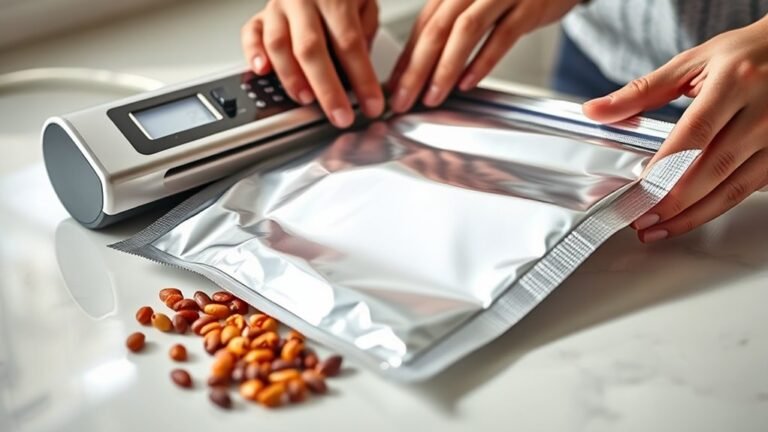
Imagine you’ve sealed dried beans in Mylar bags; they’ll stay fresh for years.
Yes, it’s a great idea to store food in Mylar bags because they block oxygen, moisture, and pests. This helps preserve the quality of your food long-term.
Are Mylar Bags Better Than Ziploc Bags?
Yes, Mylar bags are better than Ziploc bags for long-term food storage because they create an airtight, durable barrier against oxygen, moisture, and light.
You’ll get superior protection and longer shelf life with Mylar bags. So, if you’re thinking about storing food for a long time, Mylar is definitely the way to go.
Conclusion
Think of Mylar bags as the armor for your food’s journey through time. Just like a knight chooses armor based on the battles ahead, you pick your bag’s thickness based on what your food will face—humidity, light, or air.
Thicker bags shield longer, thinner ones suit quick trips. By matching your Mylar armor wisely, you guarantee your food remains fresh, safe, and ready, no matter how long the adventure lasts.
Choosing the right thickness for Mylar bags is key in food storage. Thicker Mylar bags offer better protection against moisture and air, which helps preserve your food’s quality for years. Meanwhile, thinner bags might be fine for shorter storage but can’t keep out elements as effectively. So, when deciding how thick your Mylar bags should be for food storage, think about how long you want your food to last and the conditions it will face. Pick wisely, and your food will stay fresh and safe for a long time. Choose well, protect well.