Are Ziploc Bags Safe for Food Storage and Use?
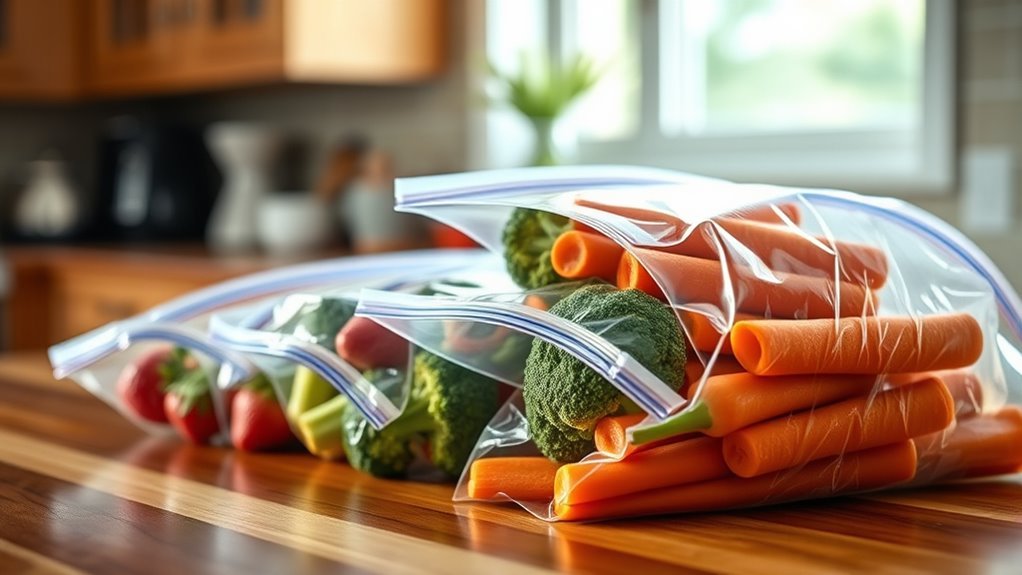
You can safely store and reheat food in Ziploc bags if you follow proper guidelines for food storage and use. It’s important to choose BPA-free, microwave-safe bags to keep your food safe and avoid chemicals leaching.
Always vent steam when reheating to prevent the bag from bursting.
Avoid exposing standard Ziploc bags to boiling water or extreme heat since they can melt or degrade. Keep in mind, these bags aren’t biodegradable, so they add to plastic waste and environmental concerns.
If you want to learn about safer handling tips and eco-friendly alternatives, there’s plenty more to explore to protect both your food and the planet’s health.
Key Takeaways
- Ziploc bags are made from BPA-free plastics, so they’re generally safe for storing food.
- You can use them in the microwave for defrosting or reheating, but make sure to vent them properly to let the steam escape.
- Just a heads up, don’t expose standard Ziploc bags to boiling water or temps above 230°F, or they might melt.
- When handling, it’s best to open them gently from the middle to avoid damaging the bag or contaminating the food.
- Even though they’re safe for food, remember that Ziploc bags do add to plastic pollution. So, try to use them thoughtfully.
Usage Guidelines and Safety Considerations
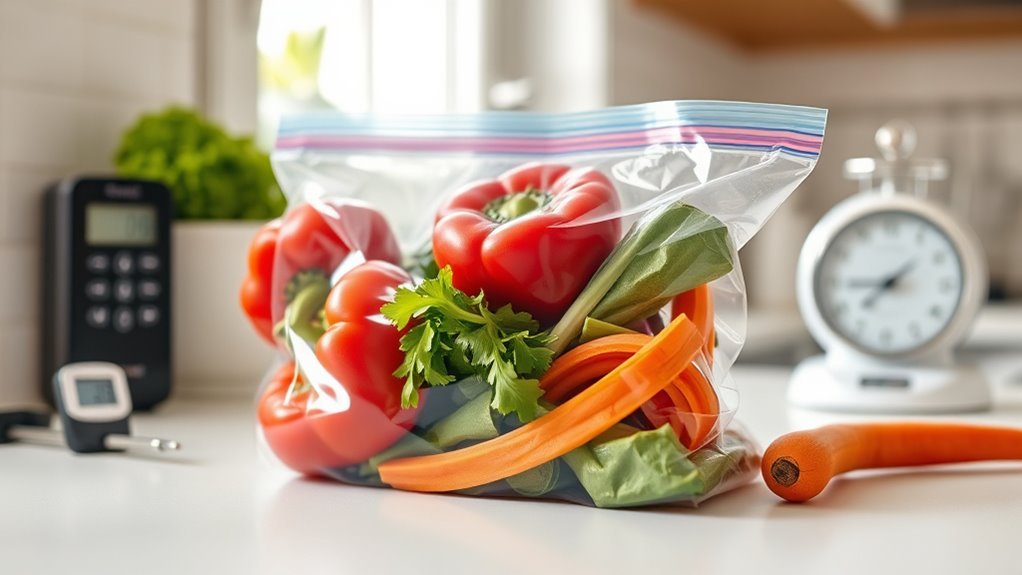
Although Ziploc bags are made from BPA-free plastics and are generally safe for food storage, you should follow specific guidelines to use them safely. These plastic materials offer good temperature resistance but vary by type.
Ziploc bags use BPA-free plastics and are safe for food when used according to specific temperature guidelines.
For food safety, use Ziploc bags designed for microwave safe defrosting and reheating. Always leave the zipper open at least an inch to vent steam.
Avoid boiling water with standard polyethylene bags since their softening point is near 230°F, which risks melting or tearing. When handling these food containers, open pinch-n-seal bags gently from the middle to prevent damage.
Only Ziploc Endurables, made with platinum silicone, withstand higher temperatures up to 425°F and are suitable for sous vide. Following these safe handling practices guarantees your food stays fresh and contamination-free.
Environmental Impact and Alternatives
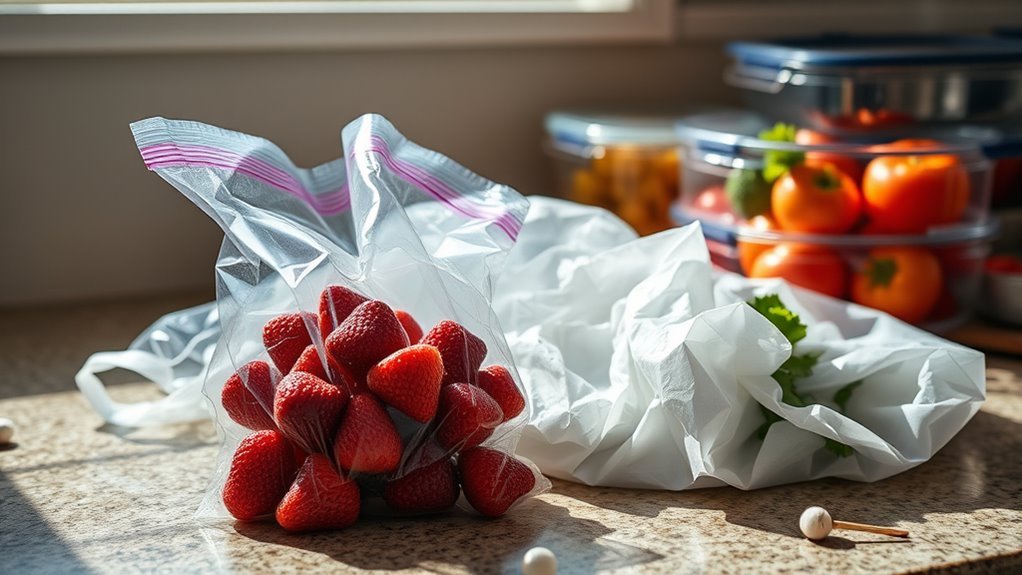
Since Ziploc bags are made from polyethylene and polypropylene, they don’t break down easily and contribute substantially to plastic pollution. You should know that these single-use bags often end up in landfills, where they take hundreds of years to degrade, worsening the environmental impact by releasing microplastics into soil and oceans.
While recycling or reuse helps reduce waste, many programs don’t accept them due to contamination. For better sustainability, consider switching to eco-friendly alternatives like silicone storage bags or glass containers.
These options are reusable, durable, and biodegradable, markedly lowering your plastic footprint. By choosing these alternatives, you actively support reducing plastic pollution and promoting a healthier planet.
Making this change benefits ecosystems and wildlife by minimizing harmful waste and advancing responsible food storage. It’s a simple step with a big positive impact!
Frequently Asked Questions
Do Ziploc Bags Leach Microplastics Into Your Food?
Yes, Ziploc bags can leach microplastics into your food, especially if you heat them or reuse them often.
To reduce risk, avoid microwaving and limit repeated use to keep your food safer.
It’s a good idea to keep these bags for short-term storage and cooler uses whenever possible.
That way, you’re cutting down on the chance that tiny plastic particles end up in your meals.
What Is the Safest Plastic to Store Food In?
You’ll want to use plastics labeled #2 HDPE or #5 PP for food storage since they’re stable and unlikely to leach harmful chemicals.
Always avoid PVC (#3) and polystyrene (#6) plastics to keep your food safer. It’s better to be cautious with those!
What to Use Instead of Ziploc Bags to Avoid Microplastics?
You should switch to silicone freezer molds, reusable silicone bags like Stasher, glass containers with airtight lids, beeswax wraps, or compostable food wraps.
These options avoid microplastics and keep your food safe and eco-friendly. It’s a simple change that can make a big difference for the environment. Plus, many of these alternatives are super easy to use and clean.
What Is Safer Than Ziploc Bags?
Like a trusty shield, glass containers keep your food safer than Ziploc bags by avoiding chemical leaching.
You’ll also want to try BPA-free silicone bags, stainless steel containers, or beeswax wraps for healthier, eco-friendly storage.
Conclusion
So, you want to keep your food fresh but also save the planet? Using Ziploc bags seems like the perfect solution—until you realize they’re single-use plastics disguised as convenience heroes.
Sure, they’re safe for food storage, but don’t be fooled; your trash bin won’t thank you. If you care about the environment, maybe it’s time to swap those disposable bags for reusable options. Ironically, the easiest choice might just be the hardest on Earth.
In conclusion, while Ziploc bags are safe for food storage and offer convenience, their environmental impact is a major downside. If you’re aiming to be eco-friendly, consider alternatives like silicone reusable bags or glass containers. These options keep your food fresh without contributing to plastic waste. So, next time you reach for a Ziploc bag, remember that choosing reusable food storage solutions is better for both your food and the planet.