How to Safely Use Plastic Bags for Food Storage
To safely use plastic bags for food storage, it’s important to choose BPA-free, food-grade bags with recycling codes #2, #4, or #5. These codes help you avoid harmful chemicals that could leach into your food. Using the right kind of plastic bags keeps your food fresh and safe.
Always wash your bags with warm, soapy water and let them dry completely before you reuse them. This step helps prevent bacteria buildup and keeps your food clean. Plus, it’s a simple habit that can make a big difference.
Before using a plastic bag again, check it carefully for tears, stains, or weird odors. If you find any damage, it’s best to toss the bag. And remember, avoid reusing bags that have stored raw meat or dairy to keep your kitchen safe.
Proper cleaning, handling, and disposal aren’t just good for your health—they also help reduce environmental impact. Want to learn how to optimize these practices even more? Keep exploring safe food storage tips!
Key Takeaways
- Choose plastic bags labeled with recycling codes #2, #4, or #5 and food-grade approval for safe food storage. This helps ensure the bags won’t leach harmful chemicals into your food.
- Use BPA-free, silicone, or PEVA bags to minimize chemical exposure and keep your food storage safer. These options are a great way to avoid unwanted toxins.
- Wash bags with warm water and mild soap, then dry them thoroughly before reuse. This step is important to prevent any bacterial growth.
- Always check your bags for tears, stains, or odors before using them again. If you spot any damage or smell something off, it’s best to toss the bag to keep your food safe.
- Whenever you can, opt for reusable bags and be sure to follow your local recycling rules. This helps cut down on waste and is better for the environment overall.
How to Choose Safe Plastic Food Storage Bags
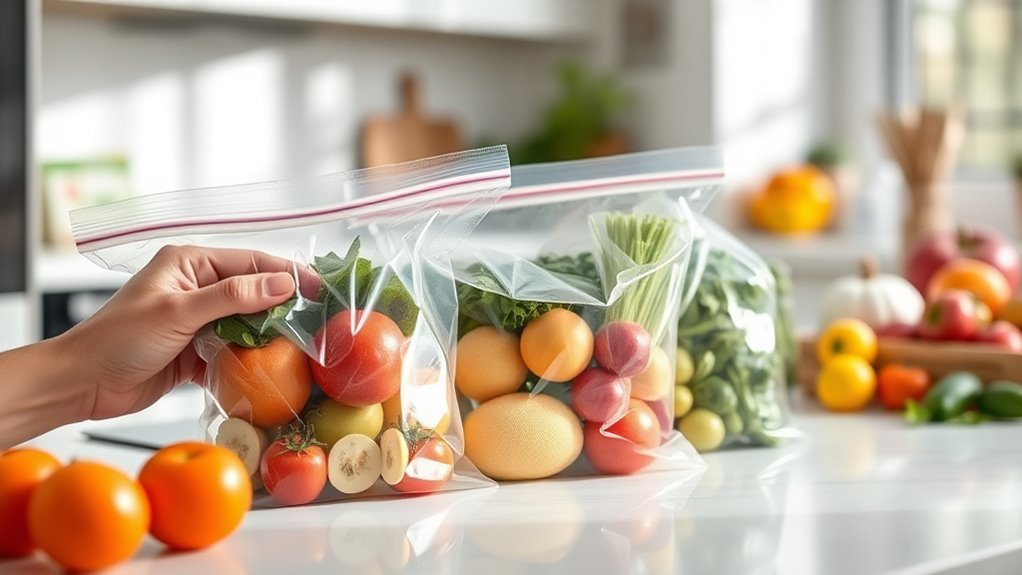
When choosing plastic food storage bags, you should prioritize those labeled with recycling codes #2, #4, or #5. These are safer and less likely to leach harmful chemicals. Always check the plastic bag labeling to confirm it’s food-grade and approved for food contact.
Avoid bags without clear material information to reduce the risk of chemical leaching. Opt for BPA-free options, especially those made from silicone or PEVA, to minimize exposure to toxins like BPA and PFAS.
Selecting bags made from durable material and thick plastic ensures they resist tearing, stains, and odors. This supports storage safety and safe reuse. Using sturdy bags also helps maintain food freshness and prevents contamination.
Safe Handling, Cleaning, and Disposal of Plastic Food Bags
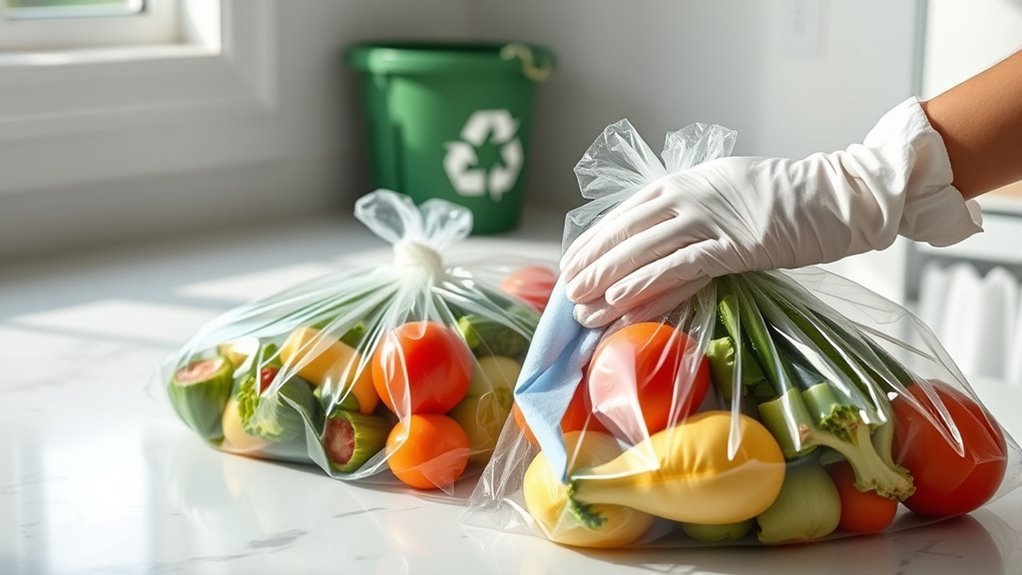
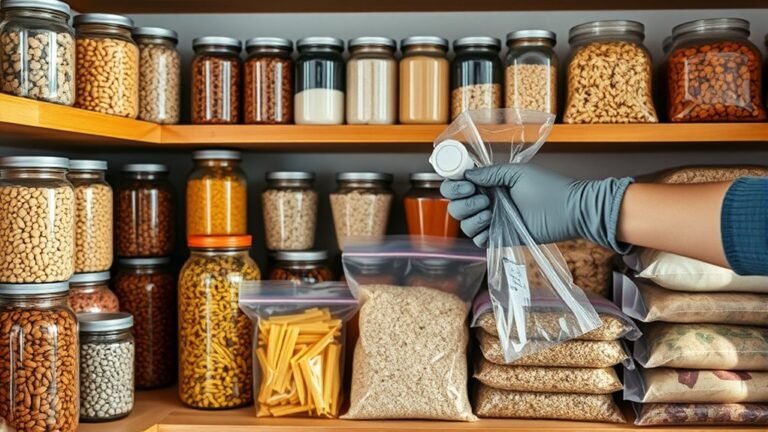
How can you guarantee plastic food bags stay safe and hygienic for reuse? Start by washing them thoroughly with warm water and mild dish soap, then let them dry completely to prevent bacteria growth.
If your bags are dishwasher-safe, follow the manufacturer’s instructions, but hand washing is usually better for delicate or non-dishwasher-safe ones to extend their lifespan. Avoid reusing bags that held raw meat, fish, or dairy, as bacteria can linger despite cleaning.
Inspect bags carefully before reuse—discard any with tears, holes, stains, or persistent odors. These signs compromise food safety, so it’s best not to take any chances.
For single-use plastic bags, follow your local recycling rules for disposal to minimize environmental impact. Whenever possible, opt for reusable bags, which reduce waste and help protect the planet.
Proper cleaning, handling, and disposal of plastic bags ensure they stay safe for food storage while also supporting sustainability. It’s a simple way to keep your food safe and do your bit for the environment!
Frequently Asked Questions
Is Storing Food in Plastic Bags Safe?
Yes, you can safely store food in plastic bags if you choose food-grade, BPA-free types. Just make sure to avoid hot or acidic foods.
Also, reuse bags carefully and clean them well. This helps prevent bacteria and chemical contamination.
Do Ziploc Bags Give off Microplastics?
Yes, Ziploc bags can release microplastics, especially when reused, washed, or exposed to heat.
It’s a good idea to limit how often you use them. You might want to consider alternatives to help reduce microplastic contamination.
This way, you can protect your health over time without much hassle.
What Is Safer Than Ziploc Bags?
Think of Ziploc bags as fragile paper boats; reusable silicone bags and glass containers are sturdy ships sailing safely through your kitchen.
You’ll avoid harmful chemicals and keep your food fresh by choosing these stronger, safer vessels.
It’s a simple swap that makes a big difference for your health and the environment.
Plus, they last way longer and clean up easily, so you’re saving money in the long run too.
What Vegetables Should Not Be Stored in Plastic Bags?
You shouldn’t store leafy greens, tomatoes, cucumbers, root vegetables, broccoli, cauliflower, berries, or zucchini in plastic bags. They trap moisture or gas, causing mold, spoilage, or bruising.
Instead, use breathable containers. This helps keep your veggies fresh longer and prevents them from going bad too quickly.
Conclusion
Now that you know how to pick and use plastic bags safely for your food, you might think you’re all set. But wait—are you really handling them the right way to avoid hidden risks?
Don’t rush to toss those bags without thinking. Proper cleaning and disposal can make all the difference.
Follow these simple steps, and you’ll protect your food—and yourself—in ways you never imagined.
Ready to make the change? Using plastic bags safely for food storage means more than just choosing the right bag. It’s about proper handling, cleaning, and disposal to prevent contamination and keep your food fresh. By adopting these easy habits, you reduce health risks and help the environment too. So, next time you store food, remember—it’s not just about convenience, but also about safety and responsibility. Taking care with plastic bags ensures your food stays safe, and you stay worry-free.