
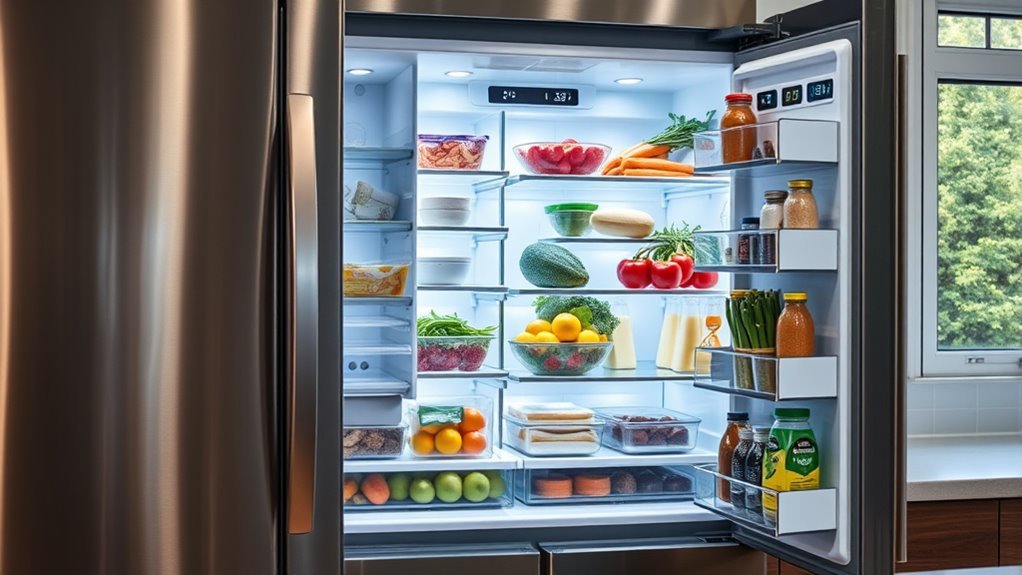
How Do Smart Refrigerators Improve Food Storage?
Smart refrigerators improve food storage by using built-in cameras and sensors to track what you have and their expiration dates. This technology helps you keep food fresher for longer by monitoring every item inside.
They also automatically adjust temperature and humidity, ensuring your groceries are stored under the best conditions.
You can control settings remotely, so you don’t need to be in the kitchen to make changes. Plus, these refrigerators send alerts if something’s wrong, like a door left open.
They even suggest recipes based on what’s inside and create grocery lists to reduce waste and save money. It’s like having a smart assistant for your kitchen!
These features work together to transform your kitchen experience and make food storage easier than ever.
Key Takeaways
- Built-in cameras keep an eye on your food items and track expiration dates. This helps with precise inventory management and cuts down on spoilage.
- Automated controls adjust temperature and humidity to keep storage conditions just right. That way, your food stays fresh longer.
- You can control your fridge remotely and get alerts if the temperature changes or the door is left open. It’s a great way to keep your food safe.
- Food management systems can whip up grocery lists and suggest recipes based on what you already have. This helps minimize waste and makes meal planning easier.
- Smart diagnostics keep an eye on the fridge’s performance and energy use. They catch problems early and make sure cooling stays consistent.
Smart Refrigerator Features That Enhance Food Storage
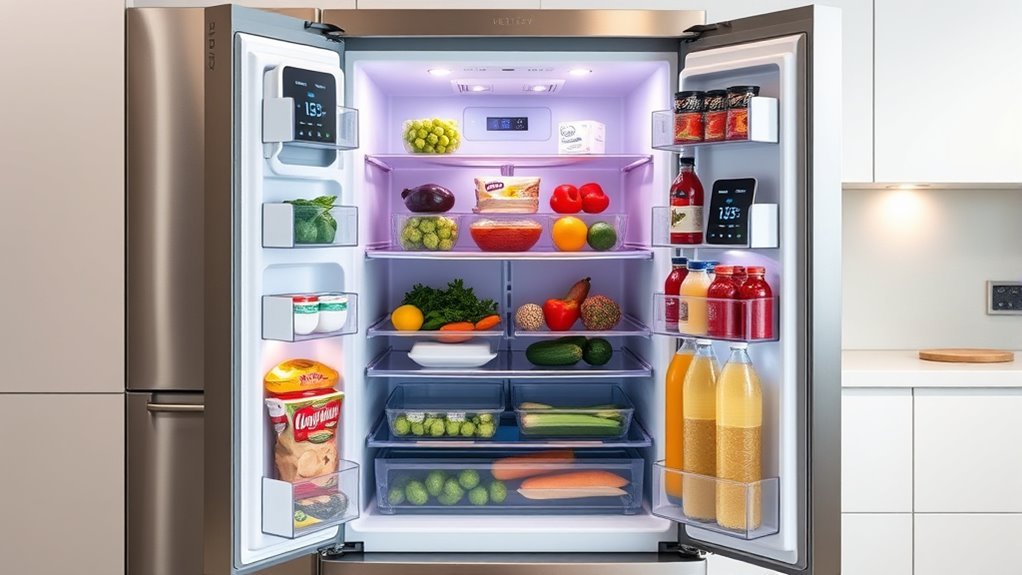
While you might not always notice, smart refrigerators actively enhance how you store food by using built-in cameras and real-time inventory tracking to monitor your items and their expiration dates. These smart refrigerator features provide you with precise food management, helping you keep track of what’s inside without opening the door.
Advanced sensors adjust temperature control and humidity levels automatically, optimizing storage conditions to maintain food freshness longer. You can remotely control settings and receive alerts about any temperature fluctuations or open doors, ensuring your food stays safe.
This precise monitoring not only extends the life of your groceries but also boosts energy efficiency by maintaining consistent cooling. With these features, your food storage becomes smarter, reducing waste and improving overall freshness.
Benefits of Advanced Food Management Systems
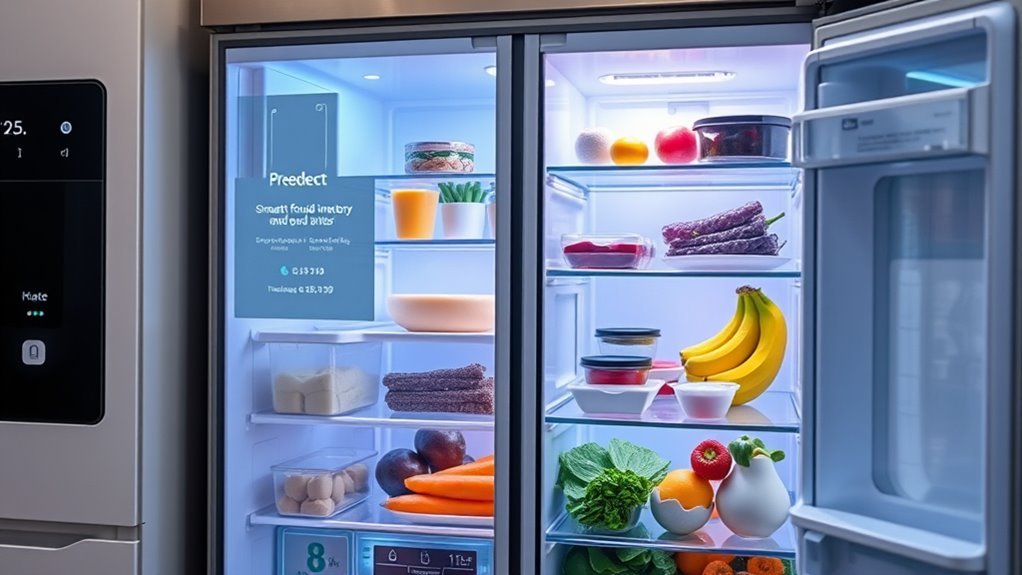
Because smart refrigerators monitor your food in real-time, they offer advanced food management systems that bring significant benefits. Using internal cameras and inventory tracking, these systems keep tabs on your food quantities and expiration dates, helping you avoid spoilage.
They automatically create grocery lists based on what you have and need, promoting food waste reduction and preventing unnecessary purchases. Recipe suggestions tailored to your current ingredients maximize food usage, ensuring nothing goes to waste.
With remote access, you can check your fridge’s contents and adjust temperatures from anywhere, enhancing food preservation. This advanced technology also provides smart diagnostics, alerting you to potential issues before they affect your food.
Frequently Asked Questions
What Are the Disadvantages of a Smart Fridge?
You’ll face higher costs, potential hacking risks, and privacy concerns with smart fridges.
They can glitch or need repairs, and their complex features might overwhelm you if you prefer simple, straightforward appliances.
What Are the Benefits of a Smart Refrigerator?
You’ll enjoy reduced food waste, better organization, and fresher items with smart fridges. They alert you about expiration dates, let you control temperatures remotely, and optimize storage conditions.
This all makes meal planning and grocery shopping easier. Plus, it’s just super convenient to manage your fridge from your phone!
What Is the Average Lifespan of a Smart Refrigerator?
Think of your smart refrigerator as a reliable marathon runner—it typically lasts 10 to 15 years. With proper care, you can stretch its life, but technological updates might leave it behind after about a decade.
It’s kind of like your phone or computer. Even if it still works great, newer features and improvements might make you want to upgrade sooner. But don’t worry, a well-maintained smart fridge can keep running smoothly for many years.
Is a Smart Refrigerator Worth It?
Yes, a smart refrigerator’s worth depends on your lifestyle. If you want convenience, reduced waste, and remote control, it’s a great investment.
Just consider the higher cost and Wi-Fi reliance before deciding. Make sure it fits your needs and budget!
Conclusion
When you embrace a smart refrigerator, you’re not just storing food—you’re upgrading your entire kitchen experience. With features like precise temperature control and inventory tracking, you’ll reduce waste and keep your groceries fresher longer.
Think of it as having a personal assistant who never forgets what’s inside or when it’s time to restock. It makes meal planning and grocery shopping so much easier and more efficient.
So, why settle for an ordinary fridge when smart technology can turn your fridge into a food-saving superhero? Smart refrigerators improve food storage by optimizing conditions and helping you stay organized, which saves money and reduces food waste. Embracing this technology means fresher food, less spoilage, and a smarter kitchen overall.