NHS How-To: How Long for Homemade Baby Food Freezer Storage
You can safely freeze your homemade baby food for up to eight months when you store it in airtight containers at 0°F (-18°C) or below. Freezing homemade baby food is a great way to prepare meals in advance and reduce daily cooking time.
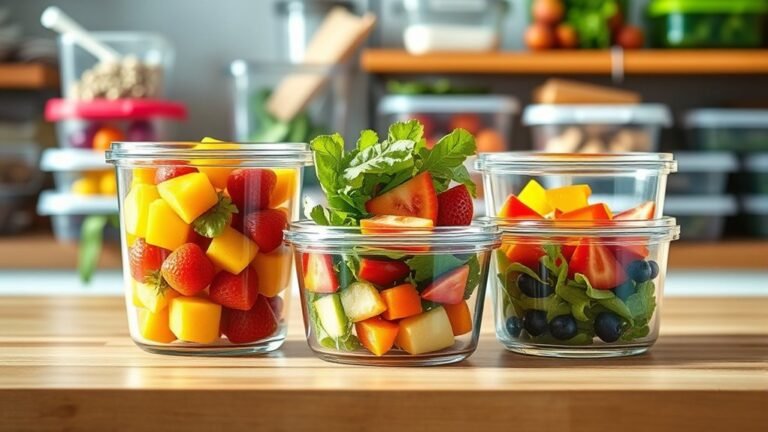
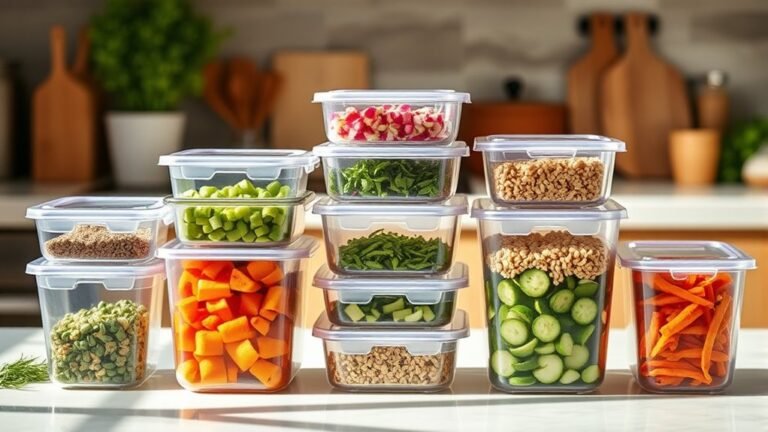
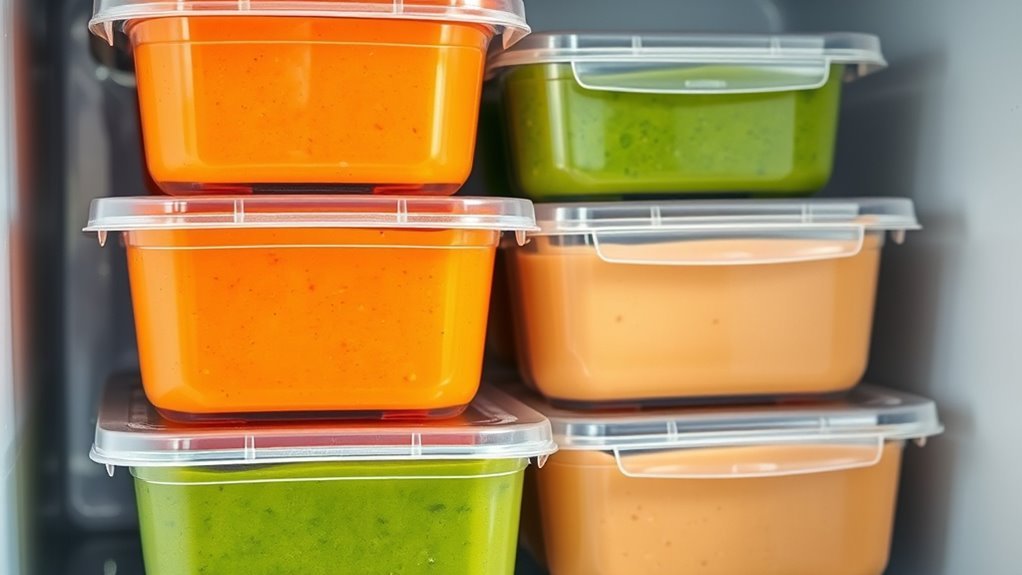
Using airtight containers helps keep the food fresh and preserves its nutrients.
Use ice cube trays for portioning to thaw just what you need. This method makes it easy to defrost small amounts without wasting food.
Always thaw in the fridge or use your microwave’s defrost setting, never at room temperature. This keeps the food safe from harmful bacteria.
Reheat until steaming hot and never refreeze leftovers.
Keeping these tips in mind will help you manage your baby’s frozen meals safely and conveniently. You’ll find more helpful ways to handle your baby’s frozen food ahead.
Key Takeaways
- Freeze homemade fruit and vegetable baby food for up to 6-8 months for best quality and safety.
- Store homemade meat or fish purees in the freezer for no longer than 1-2 months.
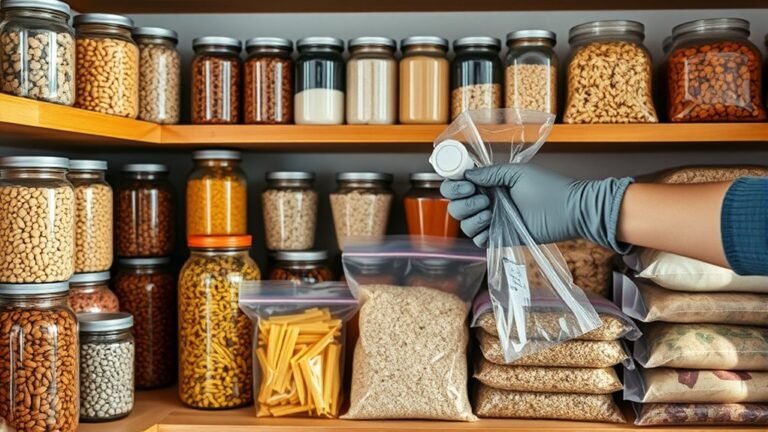
- Use airtight containers or freezer bags with clear date labels. This helps prevent freezer burn and makes it easy to track how long the food has been stored.
- Keep your freezer temperature at or below 0°F (-18°C). This is important to make sure the food stays safe and lasts as long as possible.
- If baby food has been frozen longer than the recommended times, it’s best to throw it away. That way, you avoid nutrient loss and any chance of spoilage.
Guidelines for Freezing Homemade Baby Food
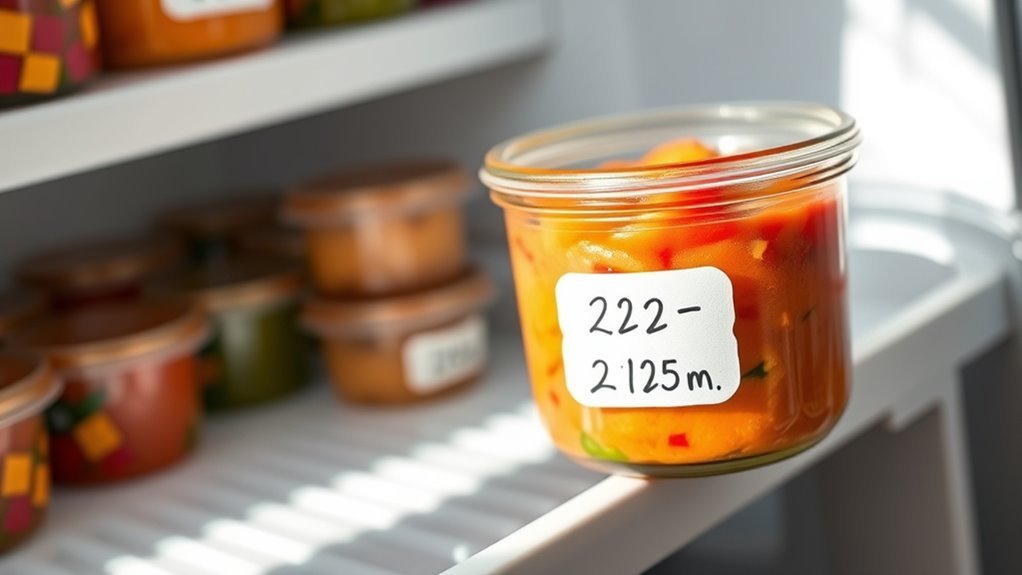
When you freeze homemade baby food, you should portion it out using sanitized ice cube trays or parchment-lined trays to guarantee easy thawing and storage. This method helps you create small food portions that thaw quickly, maintaining food quality.
After the baby food cubes freeze solid, transfer them into labeled airtight containers or freezer bags to protect against freezer burn and ensure proper food storage. Keep your freezer temperature at or below 0°F (-18°C) to preserve frozen baby food safely.
Follow storage guidelines by freezing fruits and vegetables for up to 6-8 months, and meat purees for 1-2 months. Also, avoid using glass containers to prevent breakage.
Tips for Thawing and Reheating Frozen Baby Food
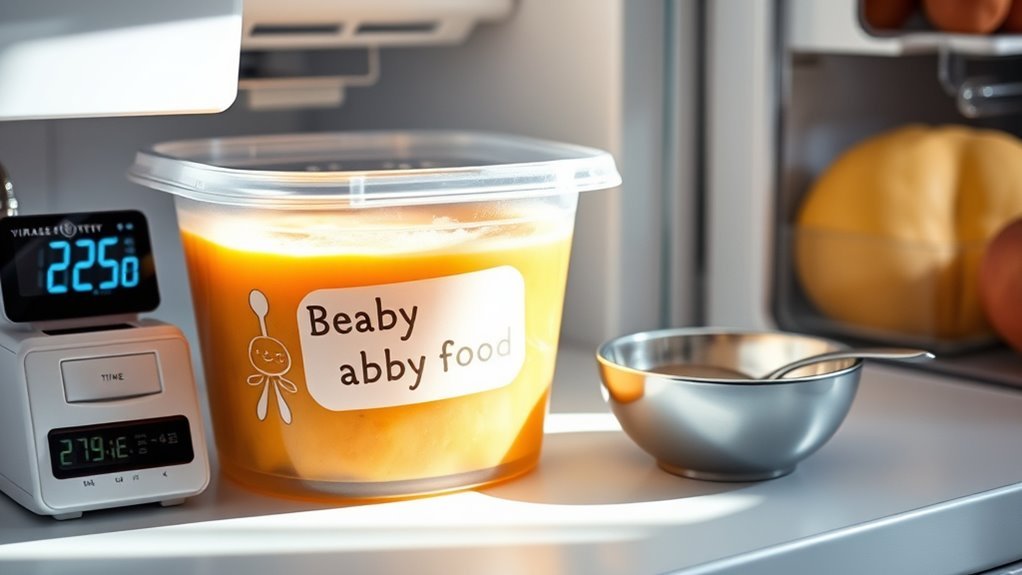
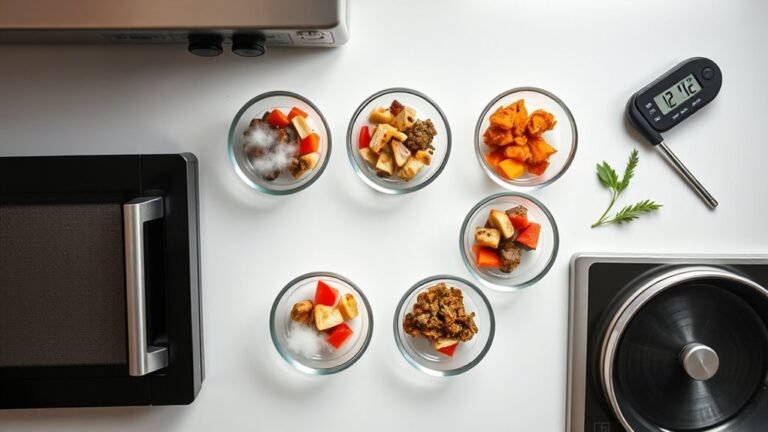
Proper thawing and reheating are just as important as freezing when it comes to homemade baby food. To thaw frozen food safely, place it in the refrigerator overnight or use your microwave’s defrost setting. Avoid thawing at room temperature to prevent bacteria growth.
When you reheat food, warm it thoroughly until steaming hot and stir well to ensure even temperature. Never re-freeze thawed food and discard any leftover reheated portions to avoid foodborne illness.
| Step | Method | Tip |
|---|---|---|
| Thaw frozen | Refrigerator overnight | Use airtight container |
| Thaw frozen | Microwave defrost | Defrost small amount only |
| Reheat food | Microwave or stovetop | Heat food thoroughly |
| Storage | Refrigerator | Use within 24 hours |
Frequently Asked Questions
How Long Can Homemade Baby Food Stay Good in the Freezer?
You can keep homemade baby food in the freezer for 1 to 2 months to guarantee safety and quality. Use airtight containers, label with dates, and discard any food frozen beyond recommended times to avoid risks.
It’s a good idea to keep track of when you froze the food. That way, you won’t accidentally serve something that’s been sitting too long. Always play it safe when it comes to your little one’s meals!
How to Store Homemade Baby Food in the Freezer?
Think of your freezer as a treasure chest. You’ll want to freeze baby food in small, airtight containers or ice cube trays.
Label them with dates, and keep them organized for easy access and freshness.
This way, you can quickly find what you need and always know how fresh the food is.
What Is the 3 Day Rule for Baby Solids?
You should use homemade baby solids within three days when refrigerated to avoid spoilage and bacteria.
If you don’t finish them in that time, it’s safer to discard or freeze leftovers promptly.
This way, you keep your baby safe and ensure their food stays fresh.
How Long Can Homemade Food Last in the Freezer?
You can store homemade pureed fruits and veggies in the freezer for 6-8 months. Meat and poultry purees, however, should be used within 1-2 months.
Always make sure to use airtight containers. Label them with dates to keep track of how long they’ve been stored.
Conclusion
Freezing your homemade baby food is a smart way to save time and keep meals fresh, but remember — it’s best used within one to three months to guarantee nutrients and taste stay intact.
Think of your freezer as a time capsule, preserving the vibrant colors and flavors you carefully crafted. When you thaw and reheat, you’re opening a little moment of magic, serving up nourishment that’s just as loving as when you made it.
Keeping homemade baby food in the freezer helps maintain its quality and ensures your baby enjoys every bite packed with essential nutrients. Just be sure to label and date your portions, so you know exactly when to use them.
By following these simple freezer storage tips, you can confidently prepare and store homemade baby food that stays fresh, tasty, and nutritious for up to three months. This way, you’re always ready to serve wholesome meals that support your baby’s growth and development.