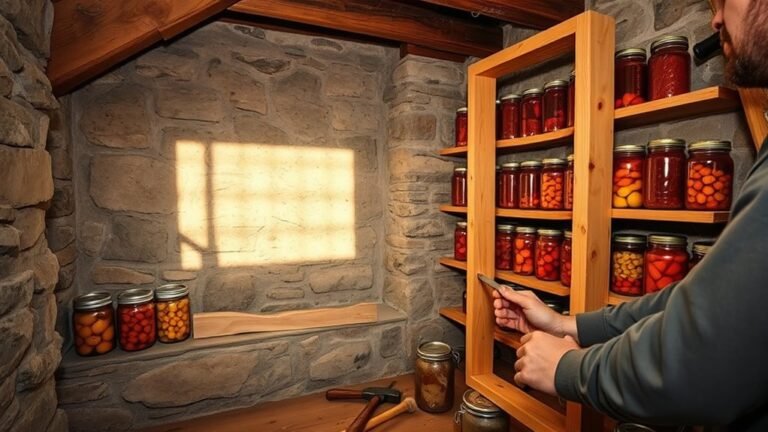
10 Key Factors That Affect Food Storage
To store food safely and keep it fresh longer, you need to understand the 10 key factors that affect food storage. Managing microbial growth is a big one—temperature control is crucial. Keep your fridge at 40°F or below and always thaw foods properly to avoid bacteria growth.
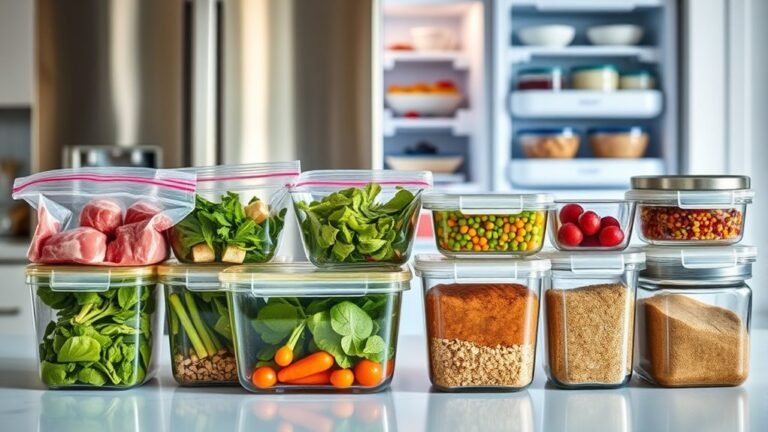
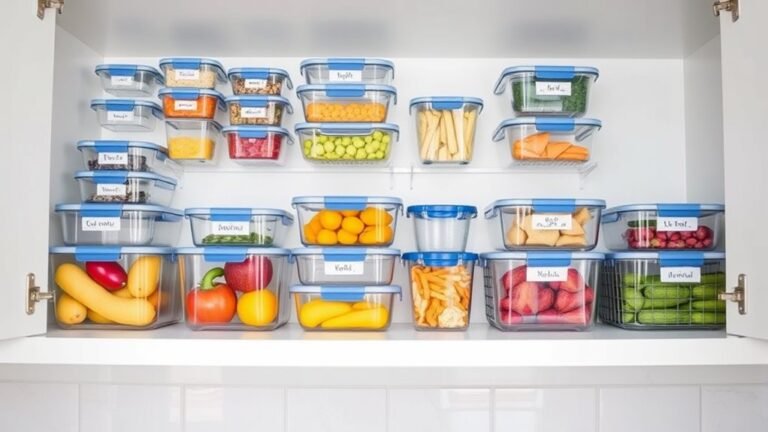
Moisture levels also play a huge role. Too much moisture encourages bacteria and mold, so airtight containers are your best friend here.
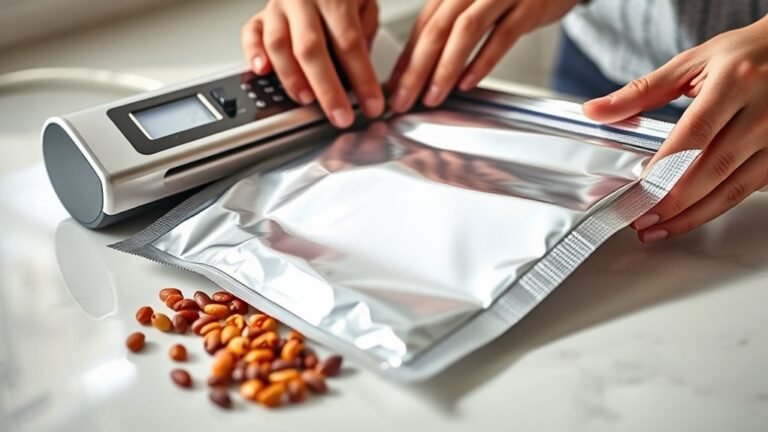
Oxygen exposure speeds up spoilage, which is why vacuum sealing can really help extend shelf life.
Ingredients like salt and acid naturally slow down spoilage.
But don’t forget about humidity and light—they can degrade the quality of your food over time.
By paying close attention to these storage conditions, you can make sure your food stays fresh and safe to eat.
There’s a lot more to learn about each factor, but these basics will get you started!
Key Takeaways
- Temperature control is crucial; keep refrigeration at or below 40°F and freezing at or below 0°F to inhibit microbial growth. This helps slow down the bad stuff that can make food unsafe.
- Moisture levels affect shelf-life; store foods in airtight, moisture-impermeable packaging to prevent mold, clumping, and chemical deterioration. Nobody wants soggy or spoiled food, right?
- Oxygen exposure accelerates spoilage by promoting oxidation and aerobic microbial growth; use vacuum or modified atmosphere packaging to reduce exposure. Cutting down on oxygen can really extend how long food stays good.
- Cross-contamination risks require separating raw and ready-to-eat foods, sanitizing surfaces, and practicing good hand hygiene to prevent bacterial spread. It’s all about keeping things clean and organized in your kitchen.
- Storage time limits and safe thawing methods, like refrigerator or cold-water thawing, help maintain food safety and quality during storage. Taking your time with thawing keeps your food safer and tastier.
Understanding Microbial Growth in Food Storage
Microbial growth plays a critical role in food spoilage, and understanding it can help you store food safely. Microorganisms like bacteria, yeasts, and molds go through different phases: lag, exponential, stationary, and death.
At first, during the lag phase, microbes adapt slowly to their environment. But once conditions like temperature and acidity become favorable, they enter the exponential phase, multiplying rapidly. This fast growth accelerates spoilage and increases your risk of foodborne illness.
To combat this, manufacturers use hurdle technology, combining temperature control, acidity adjustments, water activity reduction, and preservatives to slow microbial growth. Knowing how microbes behave helps you avoid giving them the perfect conditions to thrive.
This way, you keep your food safer and reduce the chances of illness caused by spoiled food.
How Temperature Controls Microbial Growth
Temperature plays a major role in slowing down the rapid growth phase of microbes that spoil food. To maintain food safety, controlling temperature is essential because microbes multiply quickly during the exponential phase if conditions are favorable.
Temperature control is vital to slow microbial growth and ensure food safety during critical spoilage phases.
You can protect your food by following these key guidelines:
- Keep refrigerated foods at 40°F (4°C) or below and frozen foods at 0°F (-18°C) or below to inhibit microbial growth.
- Refrigerate perishable food within 2 hours of preparation, or within 1 hour if ambient temperatures exceed 90°F.
- Always thaw food in the refrigerator to maintain a safe temperature and prevent rapid microbial multiplication.
How Moisture Levels Impact Food Shelf-Life
Although moisture is essential for many foods, too much of it can drastically shorten their shelf-life by encouraging spoilage organisms like bacteria, yeasts, and molds to grow. You should store dried foods in low-humidity, airtight containers to keep moisture levels low and prevent microbial growth.
Moisture-impermeable packaging also helps protect against clumping, mold, and off-odors caused by condensation. Even invisible moisture absorption speeds up chemical reactions, leading to faster nutrient loss. So, keep moisture-sensitive items away from steam and humidity sources to extend shelf-life.
| Moisture Level | Effects on Food | Recommended Action |
|---|---|---|
| High | Promotes microbial growth | Use airtight, moisture-proof packaging |
| Moderate | Speeds chemical reactions | Store in cool, dry places |
| Low | Extends shelf-life | Maintain low humidity, avoid condensation |
How Oxygen Exposure Shortens Food Shelf-Life
Oxygen plays a major role in speeding up food spoilage by encouraging oxidation and the growth of aerobic microbes. When fats and oils react with oxygen, they develop off-flavors and odors that cut shelf-life short.
To keep your food fresher longer, use packaging that limits oxygen exposure. Also, airtight containers once opened really help.
Role Of Oxygen
Exposure to oxygen accelerates food spoilage by fueling the growth of aerobic microorganisms, especially during their rapid logarithmic phase. Oxygen plays a pivotal role in food preservation because it supports spoilage organisms and propels chemical changes that degrade quality.
To protect your food, focus on these key points:
- Constrain oxygen exposure using vacuum packaging or Modified Atmosphere Packaging (MAP) to slow microbial growth and extend shelf-life.
- Ensure airtight sealing to prevent even small oxygen amounts from causing gradual oxidative damage, especially in oils, nuts, and ready-to-eat products.
- Integrate oxygen control with other preservation methods, like temperature regulation, for effective shelf-life extension.
Oxidation And Spoilage
When you leave food exposed to air, oxidation quickly sets in. It breaks down fats and oils, causing rancid flavors that cut shelf-life short. Oxygen fuels this process and promotes the growth of aerobic spoilage bacteria, which thrive in its presence.
Moisture combined with oxygen makes spoilage worse by encouraging chemical reactions and microbial activity on food surfaces. To combat this, effective food preservation methods focus on reducing oxygen exposure. This slows oxidative rancidity and inhibits microbial growth.
Also, protecting food from light along with oxygen helps minimize oxidative damage. By understanding how oxidation and spoilage work together, you can better manage storage conditions. This way, you extend food freshness and keep your products safe and tasty for longer.
Packaging To Limit
Because oxygen drives the chemical reactions and microbial activity that spoil food, controlling its presence is essential for extending shelf-life. When you limit oxygen exposure, you slow down oxidative spoilage and microbial growth, preserving quality longer.
Here’s how effective packaging helps: Vacuum sealing and oxygen-barrier films reduce reactive oxygen, protecting fats and oils from rancidity. Modified Atmosphere Packaging (MAP) lowers oxygen levels inside the package, inhibiting aerobic spoilage organisms.
Airtight, leak-resistant packaging prevents oxygen and moisture ingress, which together accelerate spoilage. Even with canned food, which is sealed to block oxygen, any damage or poor sealing can increase oxygen transfer, leading to faster spoilage.
How Formulation Ingredients Extend Storage Time
Although many factors influence food storage, the ingredients you choose in a formulation play a key role in extending shelf life. By carefully selecting components that reduce water activity, increase acidity, or add preservatives like lactic acid, you actively support preserving food and delaying spoilage.
Balancing humectants also controls moisture, which slows oxidation and microbial growth. When you combine these ingredients with hurdle technology, you maximize storage time more effectively than relying on just one factor alone.
| Ingredient Type | Effect on Storage Time |
|---|---|
| Sugar and Salt | Reduce water activity, inhibit microbes |
| Acidity (low pH) | Inhibit microbial growth |
| Lactic Acid/Lactate | Suppress spoilage microorganisms |
| Humectants/Solutes | Control moisture, slow chemical deterioration |
| Hurdle Controls | Combine factors for enhanced preservation |
How Proper Handling Prevents Cross-Contamination
You can stop cross-contamination by washing your hands thoroughly before and after handling raw foods. Always keep raw meats separate from ready-to-eat items and use different utensils and surfaces for each.
Don’t forget to sanitize your cutting boards and countertops regularly to keep harmful bacteria at bay. It’s a simple step, but it makes a big difference in keeping your food safe.
Handwashing Techniques
When you wash your hands with soap and warm water for at least 20 seconds before and after handling food, you remove harmful germs that could spread to surfaces and other ingredients. Proper handwashing techniques are essential to prevent cross-contamination and keep your food safe.
It’s pretty simple, really. Just follow these steps:
- Scrub all parts of your hands, including between fingers and under nails, for at least 20 seconds.
- Rinse thoroughly under running water to wash away loosened germs.
- Dry your hands with a clean towel or air dryer to avoid transferring bacteria back onto your skin.
Doing this every time you handle food makes a big difference in keeping things safe and clean!
Separate Raw Foods
Proper handwashing sets the foundation for safe food handling, but keeping raw foods separate takes food safety a step further by preventing harmful bacteria from spreading.
You should separate raw foods like meat, poultry, and fish from ready-to-eat items both in your fridge and during prep. Store raw foods on the lowest shelf in leak-proof containers to avoid drips.
Use dedicated cutting boards and knives, or wash them thoroughly with hot, soapy water after use.
| Action | Purpose | Tip |
|---|---|---|
| Separate raw foods | Prevent cross-contamination | Store on lowest fridge shelf |
| Use dedicated tools | Avoid bacteria transfer | Clean after each use |
| Proper storage | Stop drips/spills | Use leak-proof containers |
Following these steps helps you keep food safe and fresh. Easy, right? Just a few habits can make a big difference!
Sanitizing Surfaces
Although separating raw foods reduces contamination risks, thoroughly sanitizing surfaces after handling them is essential to stop harmful bacteria from spreading. You should wash knives, cutting boards, and countertops with hot, soapy water immediately after cutting raw meat, poultry, or fish to remove harmful juices.
Then, sanitize surfaces properly to reduce lingering microbes.
Follow these steps to keep your kitchen safe:
- Use a bleach solution—1 tablespoon unscented liquid chlorine bleach per gallon of water—to sanitize cutting boards after washing.
- Always wash your hands with soap and warm water for 20 seconds before and after handling raw foods.
- Avoid cross-contamination by using separate cutting boards or cleaning and sanitizing surfaces thoroughly between tasks.
Sanitizing surfaces effectively prevents bacteria transfer, keeping your food storage and preparation safe. It’s a simple step that makes a big difference!
How Storage Time Affects Food Safety and Quality
The duration of time you store food plays a significant role in maintaining its safety and quality. For example, ground beef should be cooked or frozen within two days to prevent harmful bacterial growth.
If you leave perishable food out at room temperature for over two hours—or just one hour if it’s above 90 °F—you increase the risk of contamination. So, it’s best to refrigerate perishable items promptly.
Keep your fridge at 40 °F (4 °C) or below to slow microbial growth. Frozen foods must be stored at 0 °F (−18 °C) or lower to stay safe. But remember, their quality can decline gradually over time.
When thawing frozen food, use safe methods like refrigerator thawing or cold-water thawing with precautions. Proper timing really makes a difference—it helps keep your food both safe and tasty.
How Humidity and Light Influence Food Freshness
While managing storage time is essential for keeping food safe and tasty, factors like humidity and light also play a big role in how fresh your food stays. Humidity affects spoilage by promoting microbial growth and causing clumping in powders. Light speeds up chemical reactions that degrade quality.
To keep your food fresher longer, consider these tips:
- Keep humidity low but balanced to prevent mold without drying out items like baked goods.
- Store foods in opaque or well-wrapped containers to block light and protect sensitive nutrients and fats.
- Avoid exposing food to heat, which worsens the effects of humidity and light on freshness.
Why Monitoring Storage Conditions Matters
You need to keep a close eye on temperature, humidity, and light to protect your food’s freshness and safety. Temperatures that are too warm can speed up spoilage.
Excess humidity and light exposure can also degrade quality. Monitoring these factors helps you prevent waste.
Plus, it keeps your food in the best possible condition. It’s all about giving your food the right environment to stay fresh longer.
Temperature Control Importance
Because harmful bacteria can multiply quickly at the wrong temperatures, you need to keep a close eye on your refrigerator and freezer to make sure your food stays safe. Keeping the temperature just right prevents spoilage and helps your food stay fresh longer.
Using an appliance thermometer is a smart move. Make sure your refrigerator stays at 40°F or below, and your freezer should be at 0°F or below.
Here are some key steps to follow:
- Refrigerate perishable foods within 2 hours of buying them, or within 1 hour if it’s hotter than 90°F outside.
- When thawing food, do it safely by using the refrigerator or cold water that you change every 30 minutes.
- Keep hot food at 140°F or warmer and cold food at 40°F or colder when serving to stop bacteria from growing.
Keeping the temperature steady is the best way to preserve both the quality and safety of your food while it’s stored.
Humidity Effects On Food
Since humidity directly impacts how moisture moves within your stored foods, it’s important to monitor storage conditions carefully. Humidity effects on food can cause mold growth in high-moisture products, while dry conditions pull moisture from low-moisture items like flour and pasta.
This leads to dryness and staling. High humidity encourages spoilage by fostering yeasts and molds, especially if packaging isn’t airtight or is damaged.
By keeping an eye on humidity levels, you reduce exposure to moisture and air—two major factors behind food spoilage alongside temperature and contamination. Using airtight containers and proper packaging limits moisture absorption or loss.
This helps maintain food quality and safety. So, monitoring humidity really helps you protect your food from these unwanted changes effectively.
Light Exposure Risks
How does light affect the foods you store? Light exposure risks play a big role in quality loss by triggering chemical reactions like oxidation. This leads to off-flavors, discoloration, and nutrient degradation.
You can’t rely on temperature control alone. Even foods kept in clear packaging or on counters spoil faster when exposed to light.
To minimize light exposure risks, consider these key points:
- Use opaque or amber containers to block light and extend shelf-life.
- Be extra cautious with foods high in fats and oils, as oxidation speeds up with light and oxygen.
- Store items in dark pantries rather than exposed areas to complement temperature and oxygen management.
Monitoring light conditions really matters because it directly impacts how long your food stays fresh and safe. So, keeping an eye on light exposure can make a big difference!
How Preservation Techniques Extend Food Shelf-Life
When you combine preservation techniques like temperature control, acidity adjustment, and the use of preservatives, you create multiple barriers that significantly slow microbial growth. These methods of food preservation work together to extend shelf-life effectively.
For instance, pasteurization and freezing halt spoilage by lowering microbial activity, while canning seals food against contaminants. Packaging choices, such as Modified Atmosphere Packaging, reduce oxygen and slow aerobic bacteria growth.
Dehydration and sugar-based preservation limit water availability, preventing microbial survival. Smoking adds antimicrobial compounds, and irradiation targets pathogens directly.
Frequently Asked Questions
What Is the Most Important Factor in Keeping Food Safe?
The most important factor in keeping food safe is controlling time and temperature. You need to refrigerate perishables quickly and keep your fridge at 40°F or below.
This helps prevent bacteria from growing and spoiling your food. It’s a simple step, but it makes a big difference in keeping your food fresh and safe to eat.
What Are the Three Main Factors That Affect Our Food Habits?
The three main factors affecting your food habits are temperature control, time since purchase or preparation, and proper food handling to prevent contamination. These guide how you store, cook, and consume food safely every day.
Basically, if you keep food at the right temperature, it stays fresh longer. Also, paying attention to how long it’s been since you bought or made the food helps avoid eating something spoiled.
And don’t forget—handling food properly is key. That means washing hands, using clean utensils, and avoiding cross-contamination to keep everything safe to eat.
What Are the Basic Safety Rules for a Kitchen?
You should always wash your hands before handling food. It’s also important to keep raw and cooked foods separate.
Make sure to refrigerate perishables promptly. Thaw foods safely, and cook them to proper temperatures.
These steps help prevent contamination. They really keep your kitchen safe and healthy.
How Long Can Food Sit Out in a Sealed Container?
You shouldn’t leave food in a sealed container out more than 2 hours at room temperature, or 1 hour if it’s above 90°F.
Always refrigerate promptly to avoid bacterial growth and stay safe. It’s a simple step that really helps keep your food fresh.
Conclusion
You might not realize it, but keeping food at the right temperature can reduce microbial growth by up to 90%. This alone drastically extends its shelf-life.
By controlling factors like moisture, oxygen, and light, you can preserve freshness and safety much longer. It’s amazing how these simple adjustments make a big difference.
Paying close attention to these 10 key factors helps you avoid waste and enjoy your food at its best. So, stay mindful of storage conditions—they truly make all the difference.
When you understand and manage these important food storage factors, you not only keep your food safe but also maximize its quality and lifespan. It’s all about controlling temperature, humidity, exposure to air, and light to slow down spoilage. By doing this, you save money, reduce waste, and get the most out of every bite. Remember, good food storage practices are the secret to freshness and safety that lasts.