How to Choose the Right Size Oxygen Absorbers for Food Storage
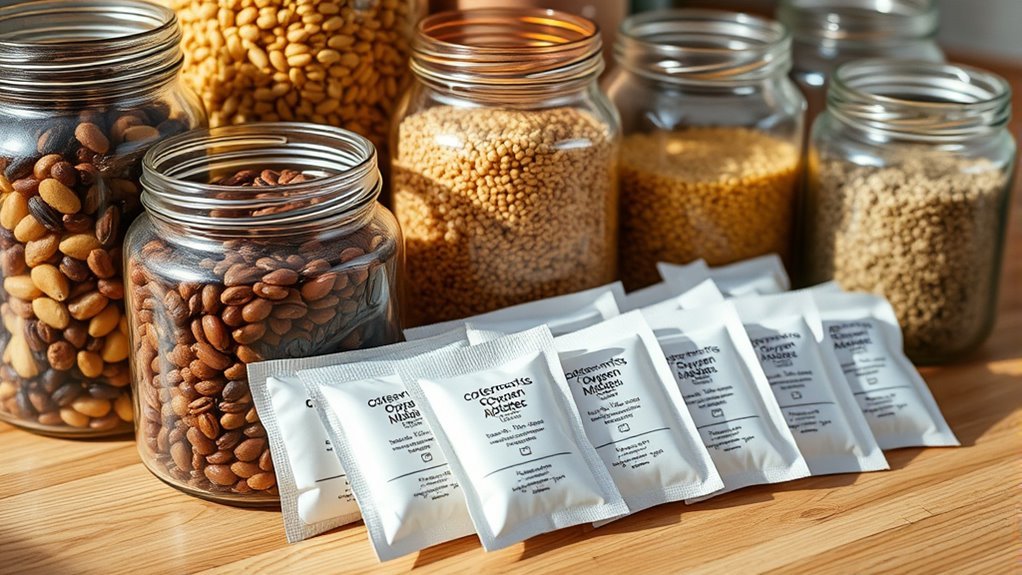
To choose the right size oxygen absorbers for food storage, start by measuring your container’s volume in milliliters or cubic inches. This step is key because it helps you figure out how much air is inside the container.
Then, divide that volume by five to find the minimum absorber size you’ll need.
Keep in mind, denser foods like rice trap less air, so they need fewer absorbers. On the other hand, less dense foods like pasta require more oxygen absorbers to keep them fresh.
Using correctly sized absorbers guarantees freshness and prevents spoilage.
It’s pretty straightforward once you get the hang of it. Keep reading to discover how food density and container size influence your choice even more.
Key Takeaways
- Measure the container volume accurately in milliliters or cubic inches before selecting oxygen absorber size.
- Divide the container volume by five to determine the minimum oxygen absorber capacity needed.
This helps you pick the right size without guessing.
- Use larger absorbers for less dense foods like pasta, as they trap more air and require more oxygen absorption.
- Slightly oversize absorbers to ensure oxygen levels drop below 0.01% for optimal food preservation.
It’s better to have a bit more absorption power than not enough.
– Always use airtight containers to maximize the effectiveness of the chosen oxygen absorber size.
That way, your food stays fresh longer and the absorbers do their job well.
Why Food Density Affects Your Oxygen Absorber Needs
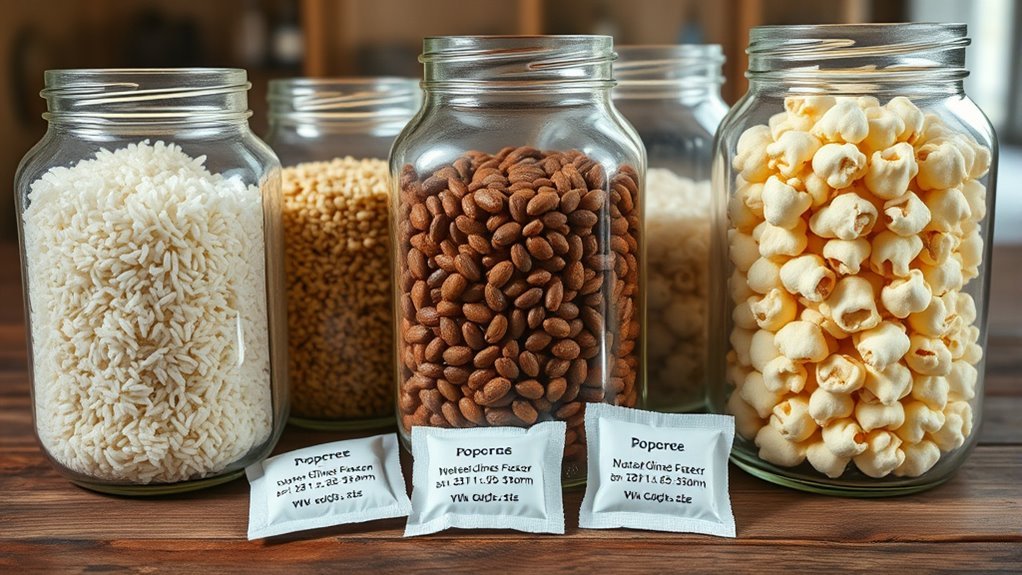
Because denser foods like flour and rice trap less air between particles, you’ll need fewer oxygen absorbers to keep them fresh. Food density directly impacts the amount of air trapped in your storage containers, which affects how much oxygen removal is necessary.
For example, grain storage involves tightly packed particles with a high packing density, reducing the volume of air inside sealed mylar bags. This lower air trapped means less oxygen is available, so the absorption capacity required from oxygen absorbers decreases.
In contrast, pasta and beans are less dense and trap more air, so you’ll need more oxygen absorbers to handle the extra oxygen. Understanding food density helps you choose the right size and quantity of oxygen absorbers to maintain freshness effectively.
How to Calculate Oxygen Absorber Amounts Based on Container Size
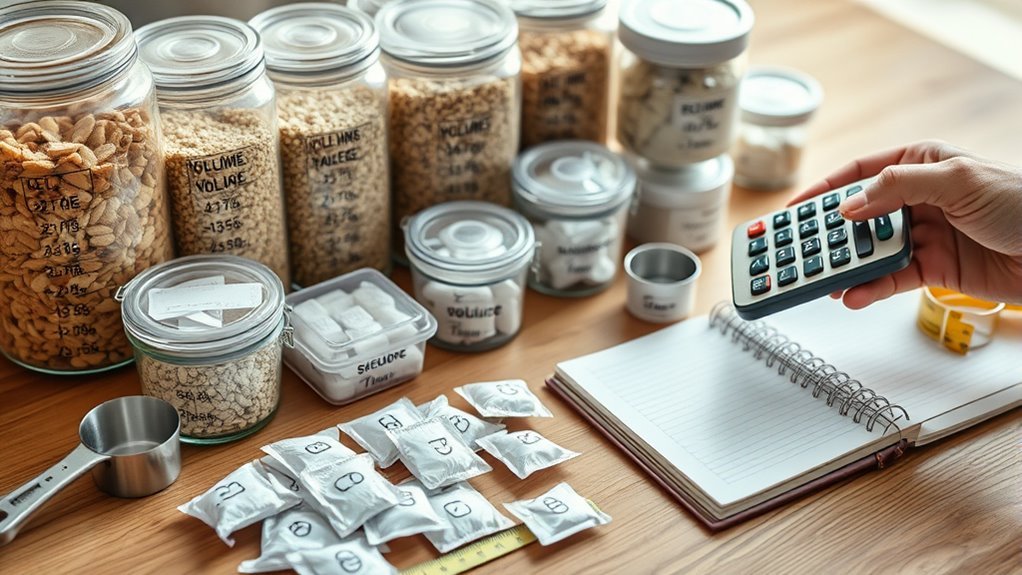
When calculating how many oxygen absorbers you need, start by measuring your container’s volume in milliliters or cubic inches and then divide that number by five. For example, a 1,000 ml container requires at least a 200cc oxygen absorber size to effectively manage oxygen removal.
Since larger storage containers trap more air, you’ll need to increase absorber capacity accordingly to maintain low oxygen levels for long-term storage. Airtight containers benefit most from correctly sized absorbers, reducing oxygen to below 0.01% and guaranteeing optimal food preservation.
To calculate oxygen absorbers accurately, use formulas or size charts that factor in air displacement within the container volume. If you’re unsure, choosing a slightly larger oxygen absorber than calculated offers a margin of safety, enhancing protection against spoilage.
Frequently Asked Questions
How Do I Know What Size Oxygen Absorber to Use?
You figure out the right size by dividing your container’s volume by 5, then pick an absorber equal to or slightly larger.
For bigger containers, use multiple absorbers to guarantee all oxygen is removed effectively. That way, you make sure everything stays fresh and safe.
What Are the Best Oxygen Absorbers for Food Storage?
You’ll want high-quality absorbers like Wallaby or FreshUs, which include oxygen indicators for confirmation.
Using 300cc to 500cc packets is common, but bigger containers need 2000cc or more to preserve food up to 30 years.
It’s pretty straightforward once you get the right size. Just make sure you match the absorber size to your container for the best results.
What’s the Difference Between 100CC and 500CC Oxygen Absorbers?
The 100cc absorber suits small containers, removing less oxygen, while the 500cc handles larger containers with more oxygen removal.
You’ll want the right size to guarantee effective preservation and avoid wasting money. It’s all about matching the absorber to your container size.
What Foods Should Not Use Oxygen Absorbers?
You shouldn’t use oxygen absorbers with fresh produce, cooked foods, sugar, nuts, seeds, or anything with active yeast.
These can spoil, dry out, or lose their fermentation qualities when oxygen is removed. So, it’s best to avoid using them with these kinds of foods.
Conclusion
Choosing the right size oxygen absorber isn’t just a detail—it’s the secret ingredient to keeping your food’s freshness locked in like a cozy, airtight hug. When you match the absorber to your container and consider food density, you’re gently nudging your stored goods toward a longer, happier life.
So, take a moment to calculate carefully—you’re not just preserving food, you’re preserving peace of mind and the comfort of well-prepared meals waiting for you. Picking the perfect oxygen absorber size for food storage helps prevent spoilage, mold, and nutrient loss.
By paying attention to the right oxygen absorber size, you ensure your food stays fresh and safe for months or even years. It’s a small step that makes a big difference in your food storage strategy, keeping your pantry ready for anything.