What Is a Mylar Bag for Food Storage?
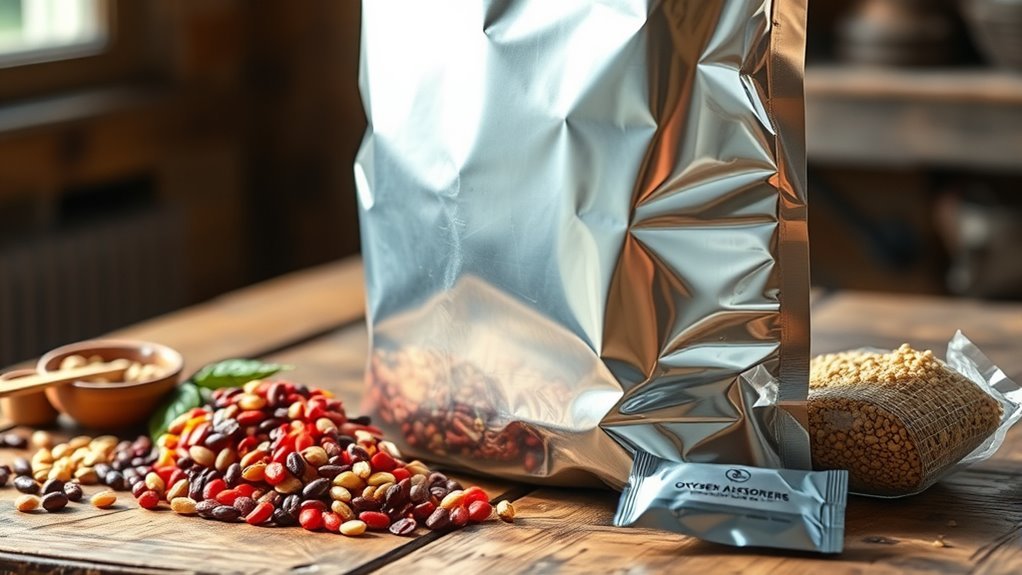
A Mylar bag is a durable, food-grade pouch lined with aluminum foil that blocks light, oxygen, and moisture from reaching your food. These bags are specially designed for food storage, making them ideal for preserving the freshness and quality of your supplies.
By creating an airtight seal, Mylar bags help protect your food from spoilage and extend its shelf life.
Often, people use Mylar bags along with oxygen absorbers to keep low-moisture foods fresh for years or even decades. They’re perfect for storing rice, beans, and dehydrated foods in cool, dark places.
If you keep your supplies well-protected in Mylar bags, you’ll discover how to maximize their storage potential and keep your food safe for the long haul.
Key Takeaways
– A Mylar bag is a multi-layered, food-grade storage pouch with aluminum foil for barrier protection against light, moisture, and oxygen.
It helps keep your food fresh by blocking out things that cause spoilage.
– It preserves low-moisture foods by creating an airtight seal that blocks oxygen and moisture, extending shelf life for years or decades.
Basically, it locks in freshness for a really long time.
– The aluminum foil layer reflects light and gases, enhancing food preservation especially when used with oxygen absorbers inside the bag.
This means your food stays safe from damage caused by light and air.
– Proper sealing using a heat sealer or iron is essential to maintain freshness and prevent contamination for long-term storage.
You gotta make sure the bag is sealed tight so nothing sneaks in.
– Mylar bags are ideal for storing dehydrated foods, rice, and beans, and should be kept in cool, dark, and dry conditions.
Storing them right makes all the difference in keeping your food good for the long haul.
What Are Mylar Bags and How Do They Work?
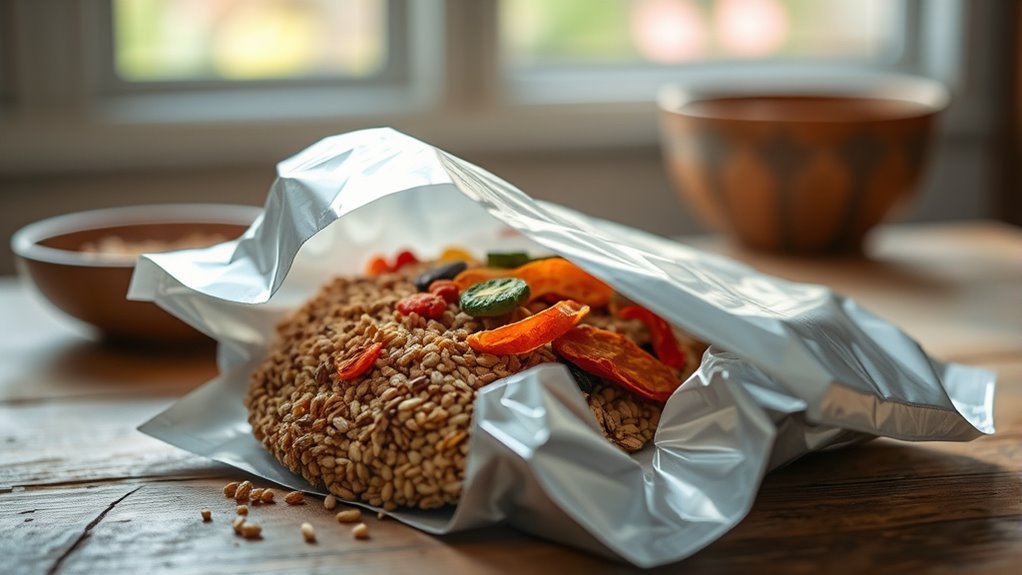
Although you might not have heard of them before, Mylar bags are a smart choice for long-term food storage because they combine multiple layers of specialized materials to protect your food.
Made from food-grade materials, these bags feature a layer of aluminum foil laminated with polyethylene, providing barrier protection against light, moisture, and oxygen.
This aluminum foil acts as a powerful oxygen barrier, reflecting light and preventing gases from penetrating.
When you add oxygen absorbers inside the Mylar bag, you create an airtight seal that greatly enhances long-term preservation.
Thanks to their moisture resistance and durable design, Mylar bags keep low-moisture foods fresh for years, making them ideal for storing rice, beans, and dehydrated items.
This combination ensures your food stays safe and edible for decades.
Best Practices for Using Mylar Bags in Food Storage
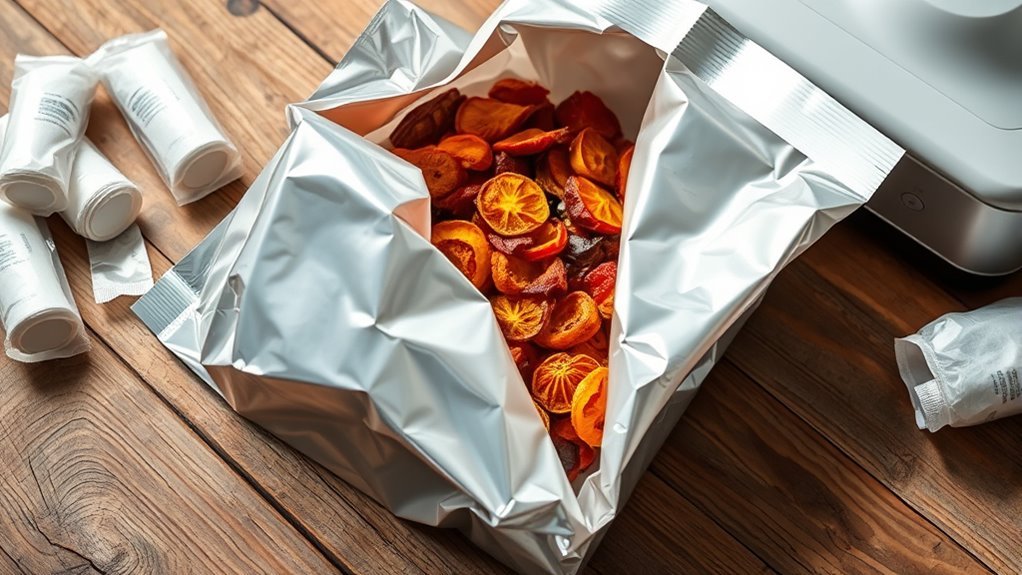
When you use Mylar bags for food storage, sealing them properly is essential to keep your food fresh and safe. Use a heat sealer or household iron at 375–425°F to create an airtight seal that locks out oxygen and moisture.
Choose the right bag size and oxygen absorbers based on your food and bag volume to extend shelf life. It really makes a difference in how long your food will last.
Store your sealed bags in a cool, dark place inside food-grade containers. This helps protect them from light and pests.
Label each bag with contents and packing date, so you know exactly what’s inside and when you packed it. Don’t forget to regularly check seals to maintain long-term freshness.
| Best Practice | Description |
|---|---|
| Seal | Use heat sealer or iron |
| Oxygen absorbers | Match size to bag and food |
| Airtight | Prevent oxygen and moisture entry |
| Storage techniques | Cool, dark, dry place in containers |
| Inspection | Check seals and reseal if needed |
Frequently Asked Questions
What Foods Cannot Be Stored in Mylar Bags?
You shouldn’t store moist, oily, or high-fat foods like fresh produce, dairy, cooked dishes, nuts, or cheese in Mylar bags.
Also, avoid high-moisture items and certain powders like sugar or salt without oxygen absorbers.
These types of foods can cause spoilage or degrade the bag’s effectiveness over time. So, it’s best to stick to dry, low-moisture items for long-term storage in Mylar bags.
Is It a Good Idea to Store Food in Mylar Bags?
If you want to preserve your food like a time capsule, storing it in Mylar bags is a smart move. They lock out air and moisture, keeping your staples fresh and safe for years—your future self will thank you.
Seriously, these bags are great at keeping your food protected from the elements. So, if you’re thinking long-term storage, Mylar bags are definitely worth considering.
How Long Will Food Last in a Mylar Bag?
Food in Mylar bags lasts 10 to 30 years if you use oxygen absorbers and store them in cool, dry, dark places.
Avoid moist or oily foods, as they spoil faster despite the bag’s protection. It’s pretty important to keep the conditions just right to get the best shelf life.
Are Mylar Bags Better Than Ziploc Bags?
Sure, you could trust a Ziploc bag to protect your food for decades—if you enjoy surprises.
But if you want serious, long-term preservation, Mylar bags sealed tight with oxygen absorbers are definitely better.
Conclusion
Now that you know how Mylar bags create a cozy, airtight hug for your food, you’re ready to keep your essentials fresh and safe from the unexpected. Using them wisely means you’re not just storing food—you’re preserving peace of mind for those times when convenience truly counts.
So, tuck your supplies away with care, and enjoy the comfort of knowing your pantry’s best-kept secrets are well protected for whenever you need them. Mylar bags for food storage provide an easy, reliable way to extend shelf life and guard against moisture, oxygen, and pests.
When you choose Mylar bags, you’re investing in long-term freshness and safety—perfect for emergency preparedness or simply keeping everyday staples in top condition. It’s a simple step that makes a big difference in how you store your food.