Is Old Tupperware Safe for Food Storage?
You shouldn’t use old Tupperware for food storage because aging plastic can crack and wear, creating spots where bacteria can grow. Over time, the plastic may also leach harmful chemicals, especially when exposed to heat or acidic foods. These risks can pose serious health concerns.
Instead, consider safer alternatives like glass or stainless steel containers. These options don’t break down the same way plastic does, so they keep your food safe longer.
If you want to keep your food safe, it’s worth exploring better storage options and understanding what makes them safer.
Key Takeaways
- Old Tupperware can degrade over time, which leads to cracks and scratches. These imperfections increase the risk of chemical leaching and bacterial contamination.
- Vintage Tupperware might release harmful chemicals like BPA or BPS, especially when used with hot or acidic foods. That’s something to keep in mind if you’re still using older containers.
- Damaged or worn containers can also harbor bacteria in those tiny, unseen scratches. This can pose additional health hazards, so it’s important to inspect your Tupperware regularly.
- If you want safer options, consider alternatives like glass, stainless steel, or high-quality silicone. You can also use BPA-free plastics labeled #2, #4, or #5.
- To keep your food safe, it’s best to avoid using old Tupperware if it’s cracked, scratched, or doesn’t have clear safety labeling. Taking these precautions can help protect your health.
Risks of Using Vintage Plastic Containers for Food Storage

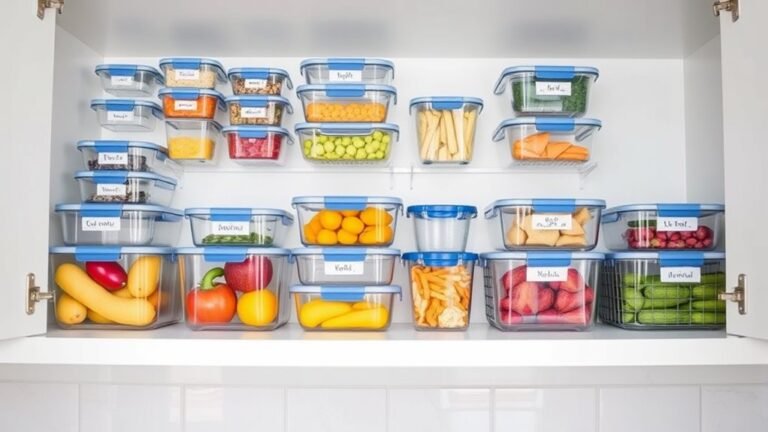
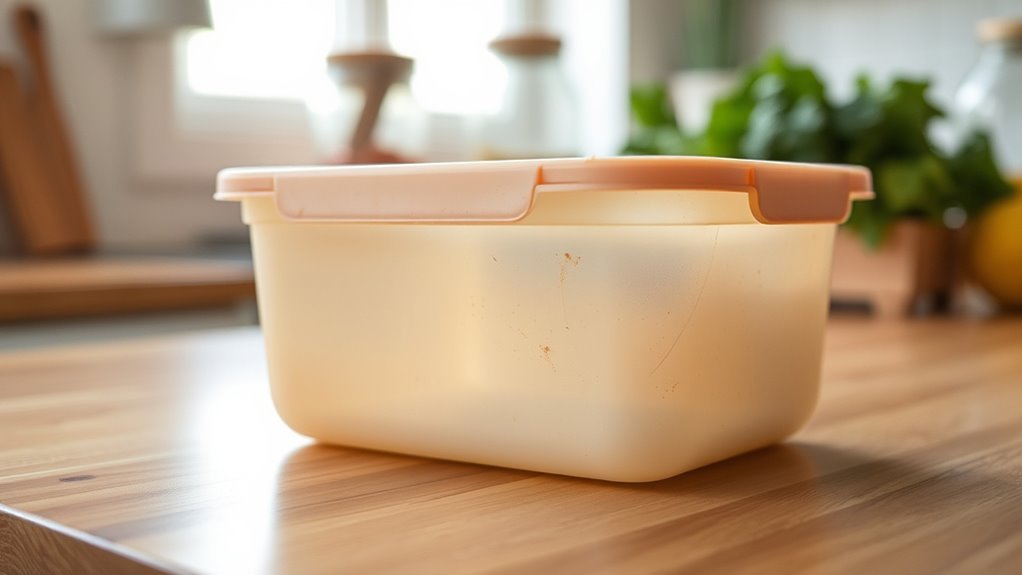
Although vintage Tupperware might hold sentimental value, you should be cautious about using it for food storage. Old plastic containers like vintage Tupperware can undergo plastic deterioration, developing scratches and cracks that increase the risk of chemical transfer.
The aging plastic’s chemical composition changes over time, making it more prone to chemical leaching, especially when exposed to hot or acidic foods. This leaching can lead to serious health hazards as harmful substances like BPA may contaminate your meals.
Using these containers risks not only chemical contamination but also bacterial growth in damaged areas. Even if the vintage Tupperware seems durable, its safety isn’t guaranteed.
Safer Alternatives to Traditional Plastic Food Storage
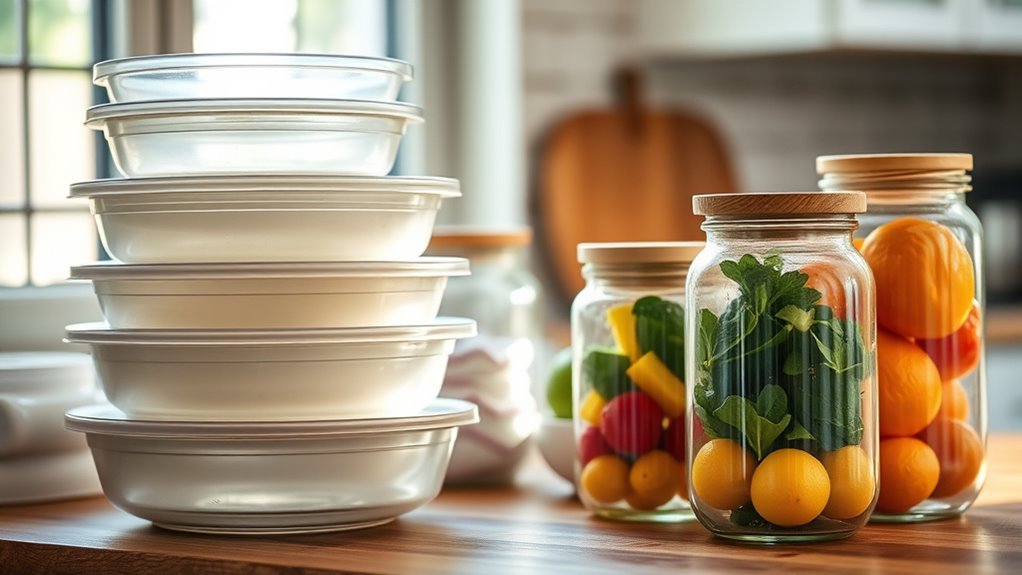
Given the risks tied to vintage plastic containers, you might want to explore safer options for storing your food. Glass food storage is one of the best alternatives since trusted brands like Pyrex don’t leach chemicals, ensuring excellent food safety.
BPA-free plastics labeled #2, #4, or #5 are safer alternatives among plastic food containers. But be cautious—some still contain BPS, which poses health risks.
Stainless steel containers, especially 304-grade, and high-quality silicone also offer reliable, chemical-free food storage. Avoid plastics labeled #3, #6, or #7, as they’re linked to chemical leaching and potential hazards.
Frequently Asked Questions
Is a 50 Year Old Tupperware Safe?
You shouldn’t use 50-year-old Tupperware for food storage because it likely contains harmful chemicals and may have degraded.
Using it risks chemical leaching and contamination, so it’s safer to choose modern, food-safe containers instead.
Better to be safe than sorry, right? Newer containers are made with stricter safety standards, so they’re a smarter choice for your health.
Should I Throw Away My Old Tupperware?
You should throw away old Tupperware if it’s over 10 years old, since studies show BPA can leach from aging plastic.
Don’t risk your health—switch to safer glass or stainless steel containers instead.
When Should I Throw Away Tupperware?
You should throw away Tupperware if it’s cracked, scratched, discolored, or has persistent odors. Also, toss it if the surface peels or if it’s over 10 years old to keep your food safe.
Better safe than sorry, right? Old or damaged containers can harbor bacteria and affect your food’s taste and safety. So, if your Tupperware looks worn out, it’s probably time to say goodbye.
How Can I Tell if My Tupperware Is Bpa-Free?
About 90% of plastics labeled BPA-free use recycling codes #2, #4, or #5. You can check your Tupperware’s bottom for these codes and verify with trusted sources to confidently know if it’s truly BPA-free.
It’s a simple step that can save you worry. Just take a quick look at those little numbers, and you’re one step closer to making sure your containers are safe.
Conclusion
You might wonder if holding onto old Tupperware is worth the risk when it comes to your food’s safety. Given the potential for harmful chemicals and wear that can compromise your containers, it’s smarter to switch to safer alternatives like BPA-free plastics or glass.
After all, why settle for uncertainty when you can protect your health with modern, reliable options designed for food storage? Using old Tupperware might expose you to chemicals that can leach into your food, especially if the containers are scratched or worn.
Your well-being deserves nothing less than the best. Opting for BPA-free and glass containers helps ensure your food stays safe and fresh. So, when it comes to food storage, moving away from old Tupperware is a simple step toward better health and peace of mind.