Top 5 Best Baby Food Storage Containers for 2026
You’ll want baby food storage containers that offer leakproof lids with flexible gaskets, airtight seals, and BPA-free materials for safety. These features help keep your little one’s food fresh and prevent any messy spills.
Plus, choosing the right container means easier feeding and storage.
Consider glass jars for durability and easy cleaning, silicone containers for flexible portion control, or lightweight plastic options that are perfect for on-the-go use.
Top sets in 2026 include options from Sage Spoonfuls and Baby Brezza, which combine freezer-safe, stackable designs with convenient multi-portion trays.
Keeping containers clean and seals intact is key to maintaining freshness and hygiene.
Take some time to explore these choices so you can find the perfect fit for your family’s needs. It’s all about making feeding time simpler and safer!
Key Takeaways
– Sage Spoonfuls offers versatile glass jars with leakproof clamp lids, ideal for long-term, stain-resistant baby food storage.
They’re perfect if you want something durable and easy to clean.
– Green Sprouts features BPA-free plastic containers with airtight, flexible gasket lids and stackable designs for on-the-go convenience.
These are great when you need something lightweight and easy to carry around.
– Baby Brezza provides silicone trays with portion-controlled compartments, freezer-safe and collapsible for easy storage.
They make freezing and storing homemade baby food a breeze.
– Choose containers made from BPA-free, durable materials with removable gaskets for easy cleaning and mold prevention.
This helps keep things hygienic and safe for your little one.
– Top sets combine airtight seals, freezer and dishwasher safety, and practical designs to simplify homemade baby food storage.
It’s all about making your life easier while keeping baby’s food fresh!
How To Choose Leakproof, Safe Baby Food Storage Containers
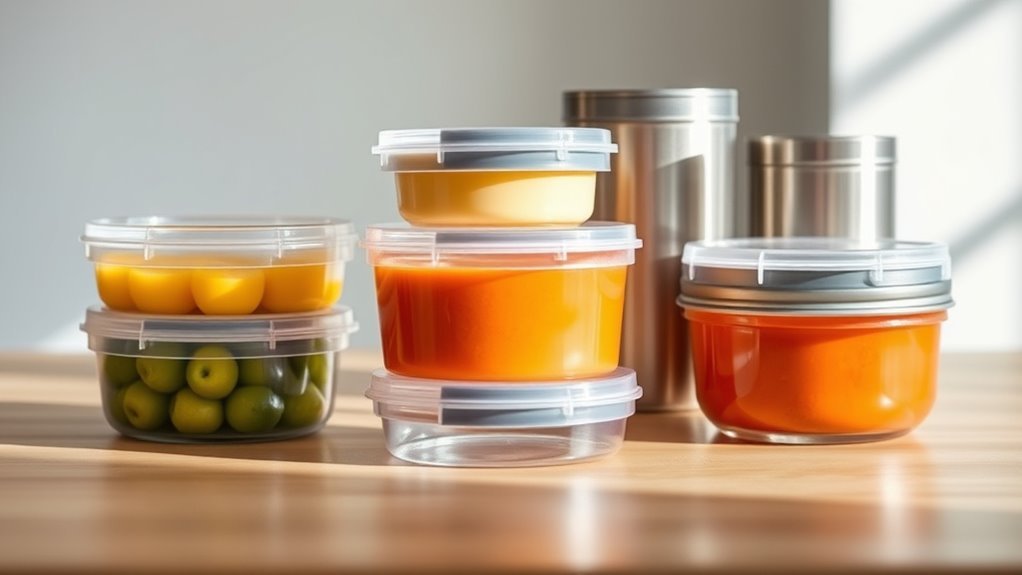
When choosing leakproof, safe baby food storage containers, you’ll want to focus on airtight seals like flexible gaskets or clamp-style lids that keep food fresh and prevent spills. Look for containers made from BPA-free, food-safe materials that are durable and resistant to stains and odors.
A removable gasket is essential—it makes cleaning easy and helps you avoid mold buildup. Opt for a stackable design to save space in your fridge or diaper bag while ensuring containers lock securely with a reliable locking mechanism.
Temperature resistance is another key factor; your containers should withstand freezing and reheating without warping or losing their seal. Prioritize leakproof containers tested against drops and pressure to guarantee durability and performance.
Top Baby Food Containers: Glass, Silicone, And Plastic Options
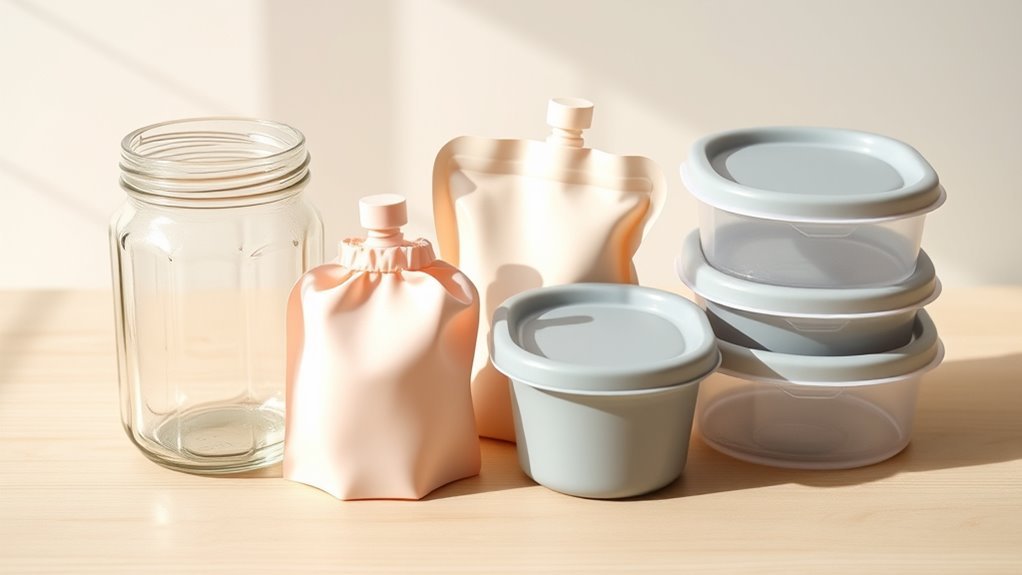
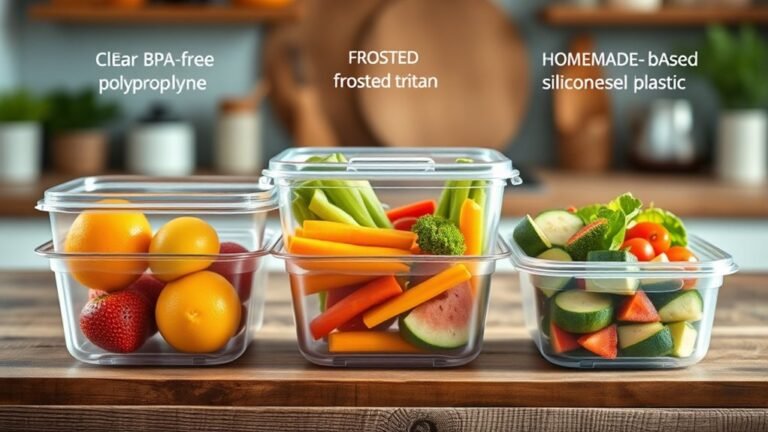
Although each material has its pros and cons, choosing the right baby food container depends on your priorities like durability, convenience, and safety.
Glass baby food containers, especially durable glass jars made from borosilicate, offer microwave-safe baby food jars that resist stains and odors. Their leak-proof lids with clamp-style seals keep food fresh and prevent spills, making them ideal for long-term use.
Durable borosilicate glass jars resist stains, odors, and spills with leak-proof clamp lids, perfect for long-term use.
Silicone baby food storage trays stand out for their flexible silicone trays that collapse for easy storage. Many feature individual compartments, perfect for freezer-safe storage and portioning.
Plastic baby food containers are lightweight and portable baby food containers, often affordable. However, you should prioritize BPA-free baby food containers to avoid chemical risks.
While plastic is handy for on-the-go, silicone and glass provide added safety and durability. By weighing these factors, you can find the perfect container to suit your baby’s needs and your lifestyle.
Comparing The Best Baby Food Storage Sets For 2026
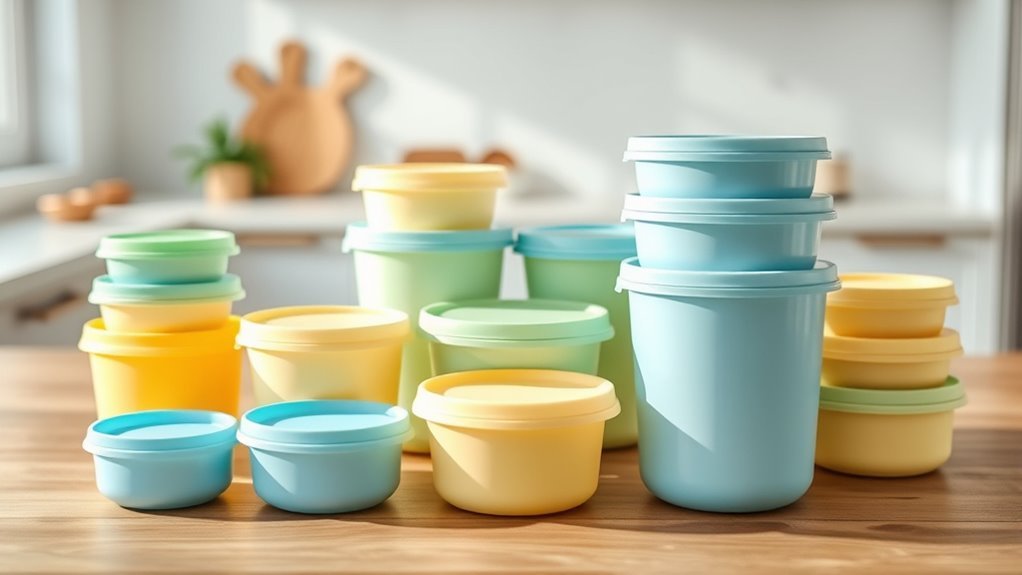
Choosing the right material for your baby food containers is just the start; selecting a storage set that fits your routine makes a big difference too. In 2026, top baby food storage sets like Sage Spoonfuls, Green Sprouts, and Baby Brezza offer a variety of options tailored to your needs.
Whether you prefer glass storage sets with durable, BPA-free materials or flexible silicone food storage, these sets come with leakproof lids and freezer-safe containers for convenience. You’ll find multi-portion trays perfect for batch prepping and reusable pouches ideal for on-the-go feeding.
Durable plastics provide budget-friendly solutions without sacrificing quality. Many sets include baby food jars designed for easy portion control and cleaning.
Price points range from affordable basic plastic containers to premium glass and jar systems, so you can pick what suits your lifestyle best. Overall, these baby food storage sets combine versatility and practicality, making homemade baby food storage simpler and more efficient.
Key Features For Easy, Leakproof Baby Food Storage Containers
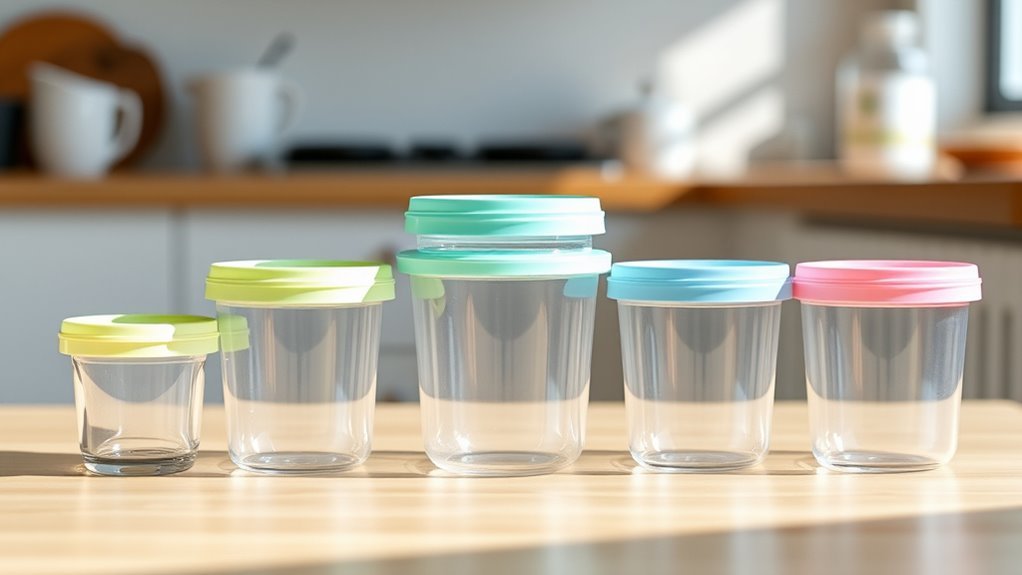
To keep your baby’s food fresh and mess-free, you’ll want containers with leakproof lids that seal tightly using flexible gaskets or clamp-style closures. Look for secure lids featuring silicone gaskets or clamp-style closures that create airtight seals, preventing leaks and preserving freshness.
Easy-to-use designs often include wide-mouth openings, making filling, pouring, and cleaning a breeze. These containers save you time and reduce mess.
High-quality seals undergo rigorous testing to guarantee they hold up during transport and daily use. For added convenience, choose containers that are dishwasher safe and freezer safe, allowing you to store and clean them effortlessly without worrying about damage.
Clear, removable lids with simple locking mechanisms also enhance usability, so you can quickly access or secure your baby’s food. By focusing on these key features—leakproof construction, airtight seals, and user-friendly design—you’ll find baby food storage containers that fit seamlessly into your busy routine.
Tips To Care For And Maintain Baby Food Storage Containers
Keeping your baby food storage containers clean and well-maintained guarantees they stay safe and effective for daily use. Proper cleaning and maintenance help preserve their airtight, leakproof qualities. This way, your baby’s food stays fresh and uncontaminated.
Here are three essential tips to care for your containers:
- Thorough Cleaning: Wash containers with warm, soapy water or use the dishwasher if they’re dishwasher-safe. Avoid abrasive scrubbers that cause scratches. Scratches can harbor bacteria and reduce the container’s lifespan.
- Regular Inspection: Check seals and gaskets for wear and tear regularly. Damaged seals compromise leakproof performance. So, replace lids or containers as needed to keep your storage airtight.
- Proper Storage and Labeling: Store containers in a cool, dry place to prevent mold. Also, label each container with contents and dates. This helps you monitor freshness and reduce food waste.
Following these simple steps makes sure your baby food storage containers stay hygienic, durable, and reliable for everyday use. Easy, right?
Frequently Asked Questions
What Are the Best Baby Food Storage Containers?
You’ll want BPA-free plastic, glass, or stainless steel containers with leak-proof seals and easy-open lids.
Look for stackability, portion markings, and freezer-safe features to keep your baby’s food fresh, safe, and convenient for feeding.
These little details really make a big difference when you’re juggling mealtime!
What Is the Best Brand of Food Storage Containers?
You’ll find Pyrex stands out as the best brand for food storage containers thanks to its durable glass and heat-resistant lids.
If you want plastic, Rubbermaid Brilliance offers excellent leak-proof options with shatter-resistant designs.
Both brands really make life easier when it comes to storing food safely and conveniently.
What Are the Latest Trends in Food Storage Containers?
You’ll ride the wave of modern food storage with eco-friendly glass and stainless steel, airtight seals, and stackable designs.
You’ll love containers that shift from freezer to microwave, making meal prep a breeze every time.
Is It Better to Store Baby Food in Glass or Plastic?
It’s better to store baby food in glass because it’s safer, won’t absorb odors or stains, and handles reheating well without chemicals.
You’ll also appreciate its durability and eco-friendliness compared to plastic containers.
Plus, glass just feels cleaner and lasts longer, which is a win-win for both you and the environment.
Conclusion
Choosing the right baby food storage containers is essential for keeping your little one’s meals fresh and safe. Did you know that 85% of parents prefer leakproof containers to avoid messy spills?
By picking containers made from glass, silicone, or BPA-free plastic with secure lids, you’ll make feeding time easier and cleaner. These materials are not only safe but also durable and easy to clean.
Remember to care for your containers properly to guarantee they last longer. Regular cleaning and avoiding harsh chemicals go a long way in maintaining their quality.
With these tips, you’re all set for hassle-free baby food storage in 2026! Choosing the best baby food storage containers means prioritizing safety, convenience, and durability. Whether you opt for glass, silicone, or BPA-free plastic, always look for leakproof designs to keep mealtime mess-free. Proper care ensures your containers stay in great shape, making feeding your baby smoother and more enjoyable. So, gear up with the top baby food storage containers and enjoy easy, fresh, and safe meals every day!