3 Safe Plastics for Food Storage You Should Know
You can safely store food using three common plastics: PET, HDPE, and PP. These are some of the safest plastics for food storage and are widely used in kitchens and food packaging.
PET offers clear containers perfect for single-use beverages, while HDPE adds durability and chemical resistance.
PP stands out with heat resistance, making it great for microwaveable containers. Make sure to check their recycling codes (#1, #2, and #5) before use.
Avoid using plastics that are damaged or not labeled microwave-safe.
With the right care, these materials keep your food safe and fresh. It’s worth getting to know their benefits and safe use tips to make the most out of them.
Keep exploring to learn more about how to use these safe plastics properly!
Key Takeaways
- PET (#1) offers clear, tough containers with excellent gas and moisture barriers, ideal for single-use food and beverage storage.
- HDPE (#2) is chemically resistant and durable, making it suitable for milk jugs and reusable food containers.
- PP (#5) provides high heat resistance and toughness, perfect for microwave-safe and reusable food storage options.
- Always check for recycling codes #2 or #5 to ensure the container is food-safe and inspect regularly for damage.
- Clean thoroughly, avoid microwaving non-labeled plastics, and replace scratched or discolored containers to maintain safety.
Understanding Food-Grade Plastics: PET, HDPE, and PP
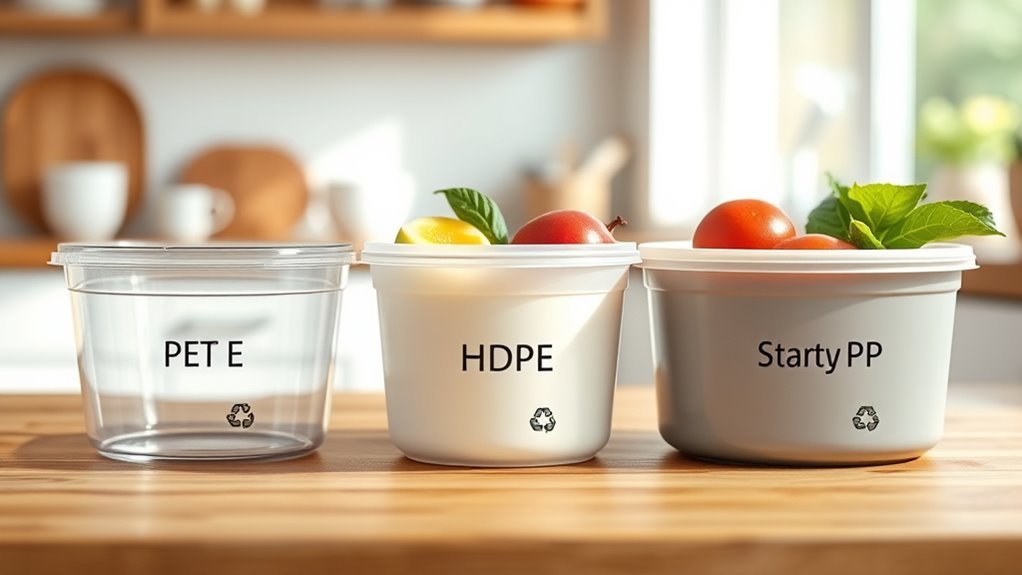
When you choose containers for storing food, understanding the common food-grade plastics—PET, HDPE, and PP—can help you make safer decisions. PET, marked by resin code #1, is a clear, tough plastic often found in beverage bottles and food storage containers.
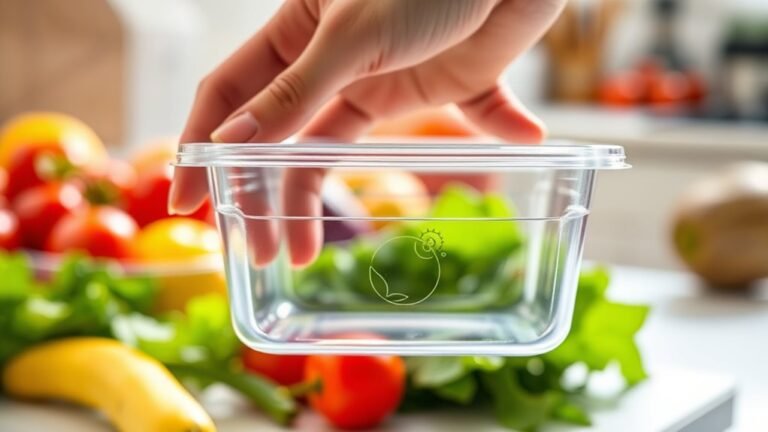
Choosing food containers made from PET, HDPE, or PP ensures safety and durability in your kitchen storage.
HDPE, with resin code #2, is semi-opaque and stiff. It’s known for its chemical resistance and frequent use in milk jugs. PP, identified by plastic number #5, stands out for durability and heat resistance, making it ideal for microwaveable containers.
All three are FDA approved plastics, so they’re safe for food contact. Since PET, HDPE, and PP are recyclable plastics, they’re eco-friendly options too.
Knowing these resin codes helps you pick trusted food-grade plastics. That way, you can balance safety and sustainability in your kitchen storage.
Benefits and Limitations of Using PET, HDPE, and PP for Food Storage
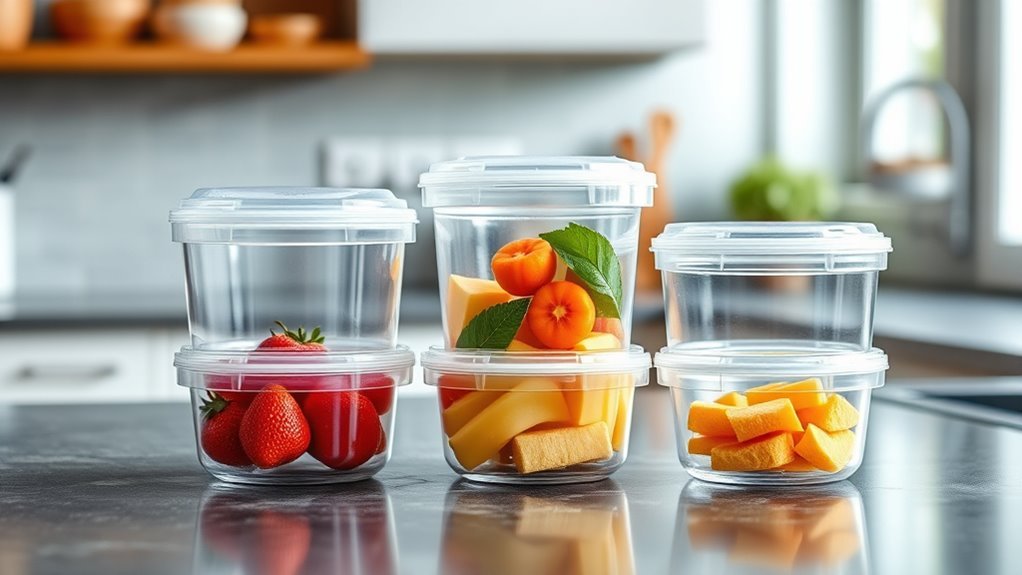
Choosing between PET, HDPE, and PP for food storage means weighing their unique benefits and limitations. PET offers clarity and excellent gas and moisture barriers, making it ideal for single-use plastic containers like beverage bottles. However, its reusability is limited due to potential degradation.
HDPE boasts strong chemical resistance and durability, commonly used in milk and juice containers. But it may degrade over time and poses challenges in sanitation for long-term food storage.
PP stands out with its high heat resistance and toughness, suitable for items like yogurt tubs and microwave reheating. Among food-grade plastics, PP provides the best balance of safety and reusability for various food contact applications.
While all three are FDA-approved, understanding their chemical resistance and reusability helps guarantee safe food storage. So, it’s good to know these differences before choosing the right plastic for your needs.
Best Practices for Safe Use and Reuse of Food-Grade Plastics
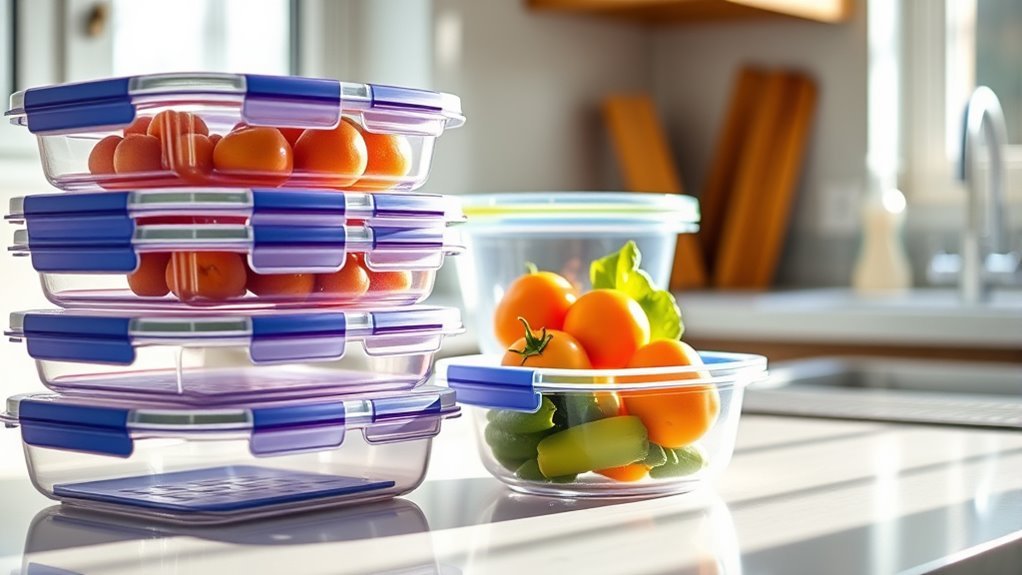
Because food safety depends heavily on proper handling, you should always check that your plastic containers carry recycling codes #2 (HDPE) or #5 (PP). These plastics are safer for repeated food storage.
When using food-grade plastics, inspect reusable containers regularly for plastic wear and tear like cracks, stains, or odors. These can harbor bacteria and increase chemical leaching risks.
Avoid microwaving food in plastics unless they’re clearly labeled microwave-safe. This helps prevent chemical contaminants from migrating into your food.
Maintain plastic container safety by cleaning them thoroughly with hot, soapy water after each use. You might also consider food-safe sanitizers for extra protection.
Replace any scratched or discolored containers promptly. Following these food safety practices ensures you minimize exposure to harmful chemicals while maximizing the lifespan of your plastic storage solutions.
Frequently Asked Questions
What Is the Safest Plastic to Store Food In?
The safest plastic to store food in is polypropylene (#5). You’ll find it durable, heat-resistant, and less likely to leach harmful chemicals, especially during microwave use.
Just avoid plastics with codes #3, #6, and #7 for safety. It’s better to be cautious when it comes to food storage!
Do Ziploc Bags Give off Microplastics?
Yes, Ziploc bags can release microplastics, especially when you flex, cut, or heat them.
To reduce this, avoid heating food in them. Use them only for short-term storage to keep microplastic exposure minimal.
Is Number 2, 4, or 5 Plastic Safe?
You can rest easy knowing plastics #2, #4, and #5 are generally safe for food storage. Just don’t push your luck—avoid heating or reusing them too much to keep chemicals from sneaking into your food.
It’s pretty simple, really. Stick to using these plastics as intended, and you should be good to go!
What Plastics Should Be Avoided in Food Storage?
You should avoid plastics labeled #3 (PVC), #6 (Polystyrene), and #7 (Other, especially polycarbonate), as well as single-use #1 PET for reuse.
Also, skip using scratched or discolored plastics for food storage. It’s better to be safe than sorry!
Conclusion
When choosing plastics for food storage, PET, HDPE, and PP stand out as safe, durable options you can trust. Did you know that over 60% of food containers in the U.S. are made from these materials due to their non-toxic properties?
By understanding their benefits and limitations, you’ll store your food more safely and confidently. Just remember to follow best practices for reuse to keep your meals fresh and free from contaminants.
Using safe plastics like PET, HDPE, and PP for food storage is a smart choice. These materials are popular because they don’t leach harmful chemicals and are tough enough for everyday use. So, when you pick the right plastic containers and care for them properly, you’re making a great move toward safer food storage. Keep these safe plastics in mind for your kitchen, and enjoy peace of mind knowing your food is stored securely.