NHS Baby Food Storage: How Long Puree Lasts in the Fridge
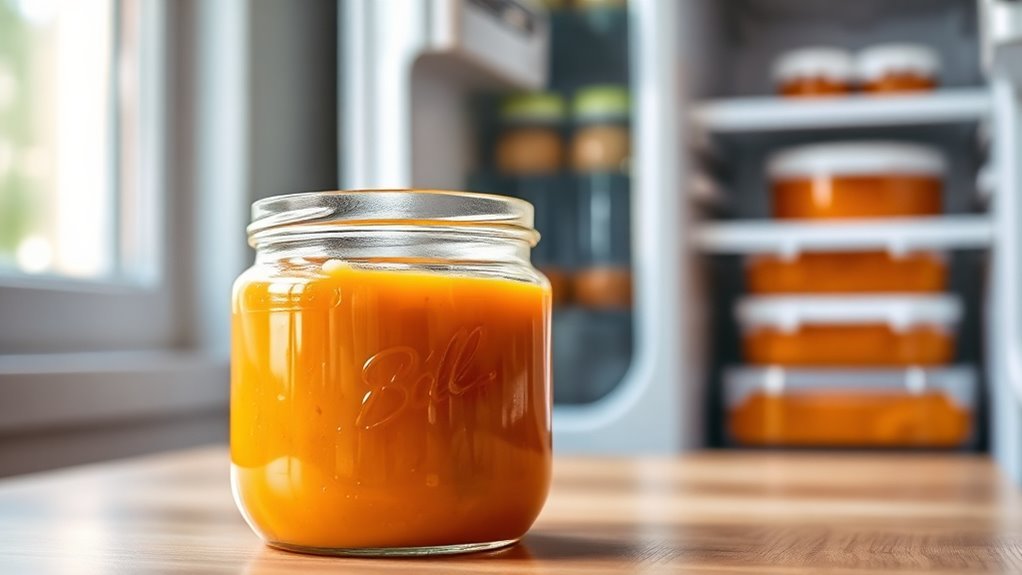
You should refrigerate opened baby puree and use it within 24 to 48 hours to keep it fresh and safe.
When it comes to NHS baby food storage, knowing how long puree lasts in the fridge is super important for your little one’s health.
Store-bought jars usually say 2–3 days if they haven’t been contaminated.
But keep in mind, saliva from feeding can shorten that time, so it’s best to discard any leftovers if you’re unsure.
Homemade puree lasts about 2 to 3 days when stored properly.
If you won’t use it soon, freezing it is your best bet.
Handling, portioning, and spotting spoilage signs are key to keeping your baby’s food safe.
There’s a lot more to learn about this, so don’t worry—you’ll get the hang of it!
Key Takeaways
- Store-bought opened baby puree lasts 24–48 hours in the fridge if uncontaminated by saliva or feeding utensils.
- Homemade puree refrigerated at ≤4°C lasts 2 to 3 days when handled and portioned safely.
- Puree mixed with breastmilk or formula should be used within 24 hours of refrigeration.
- Always portion puree into a clean bowl and avoid feeding directly from the jar to prevent contamination.
- Discard any puree showing spoilage signs or after saliva contact to ensure baby food safety.
How Long Does Baby Puree Last After Opening?
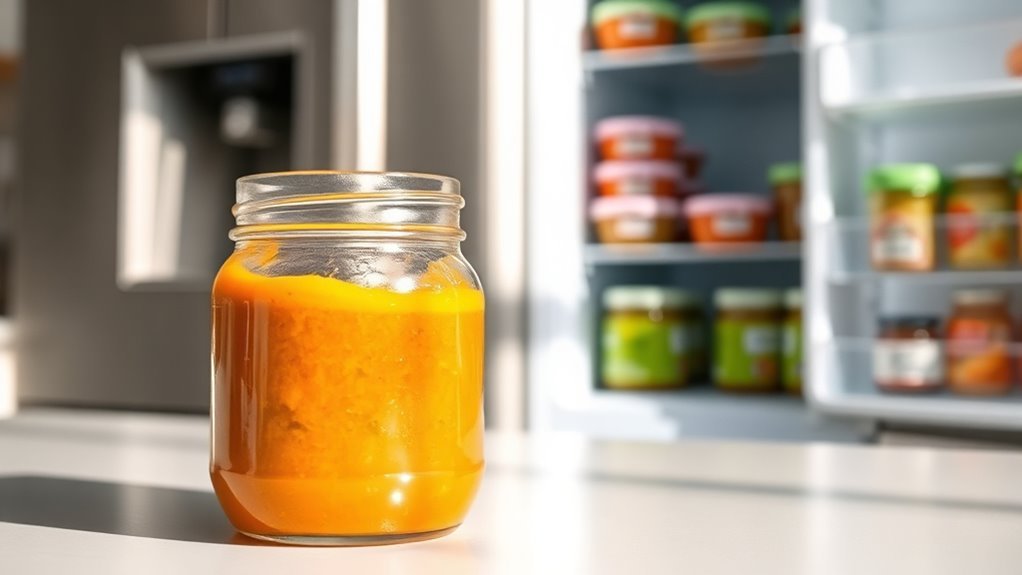
Although many store-bought baby purees say they last 2–3 days after opening, you should only keep them in the fridge for 24–48 hours. That 2–3 day label assumes the puree hasn’t been touched by your baby’s spoon or mouth.
Once saliva contacts the jar, bacteria can quickly multiply, increasing spoilage risk. To keep the rest safe, always spoon out only the amount your baby needs into a separate bowl. Then, refrigerate the opened jar promptly without letting your baby’s spoon touch the puree inside.
If you’re unsure whether the jar has been contaminated by saliva, it’s best to discard any leftover puree right after the meal instead of relying on the usual 24–48 hour storage window. This helps prevent potential foodborne illness.
How Long Homemade Baby Puree Lasts in the Fridge
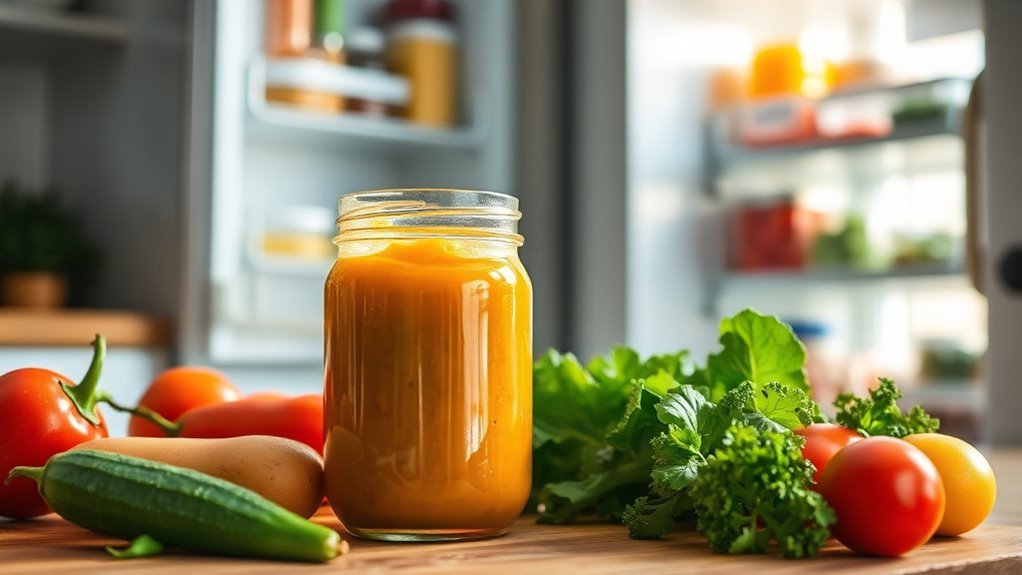
When you store homemade baby puree in the fridge at or below 4°C (40°F), it typically stays fresh for about 2 to 3 days. To keep it secure, portion out what your baby needs into a separate bowl before feeding and refrigerate the rest immediately.
Store homemade baby puree below 4°C and refrigerate leftovers immediately to keep it fresh for 2 to 3 days.
Avoid contaminating the stored puree, especially if your baby’s spoon or mouth touches it, as this increases the risk of spoilage. Any leftovers after feeding should be discarded.
Keep in mind: puree mixed with breastmilk or formula should be used within 24 hours. Also, refrigerate leftovers quickly to prevent bacterial growth.
And remember, discard any puree that’s been in contact with your baby’s saliva after a meal. Following these tips helps ensure your baby’s food stays fresh and safe.
When and How to Freeze Baby Puree
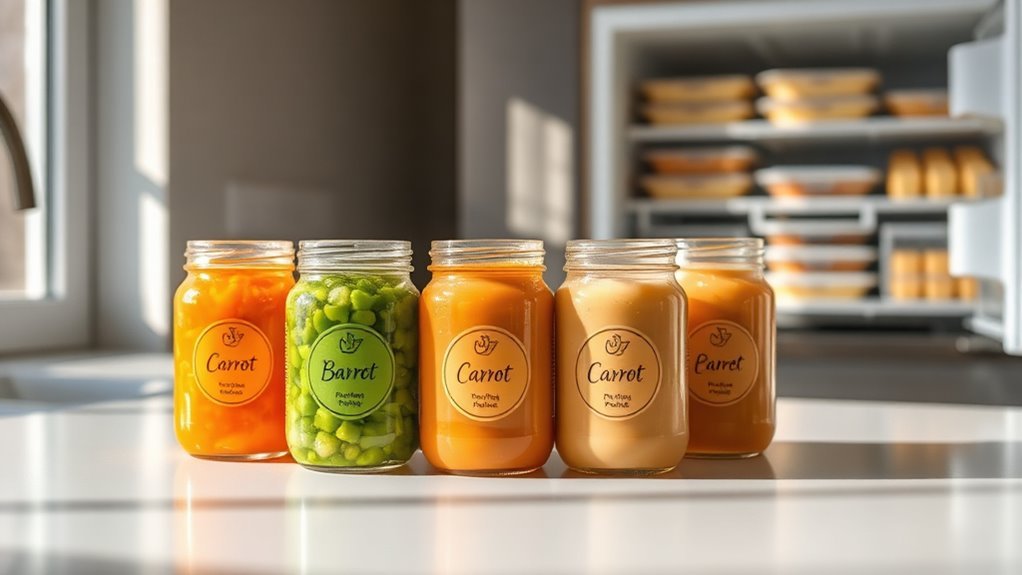
If you won’t use homemade baby puree within 2–3 days, it’s best to freeze it for up to 3 months to keep it fresh. Freeze in small portions, like ice-cube trays, so you can thaw just what you need.
Always cool the puree quickly, store it in airtight containers, and label with the date for easy tracking. This way, you’ll know exactly how long it’s been in the freezer.
Freezing Duration Guidelines
Since you won’t use baby puree within 2 to 3 days after making or opening it, you should freeze it to keep it fresh. Homemade puree lasts best frozen for 1 to 3 months, while store-bought jars can be kept frozen for 6 to 8 months.
Always cool the puree quickly before freezing, and label containers with the date to track storage time. This way, you’ll know exactly how long it’s been stored.
Keep these freezing tips in mind: use freezer-safe containers or ice-cube trays for easy portioning. It makes thawing just the right amount so much easier!
Avoid freezing purees mixed with breastmilk or formula; instead, refrigerate and use within 24 hours. And once your cubes are frozen, transfer them to sealed bags or containers to prevent freezer burn.
Following these guidelines helps you maintain puree quality and safety for your baby. It’s all about keeping things fresh and safe!
Portioning For Freezing
To freeze baby puree properly, start by dividing it into single-use portions using ice-cube trays or small containers. Spoon the amount you need into a separate container, then refrigerate the rest.
Freeze puree if you won’t use it within 2–3 days to prevent spoilage. Store frozen portions for 1–3 months, especially homemade puree.
If mixed with breastmilk or formula, freeze quickly and use within 24 hours.
| Step | Tip | Storage Duration |
|---|---|---|
| Portion | Use ice-cube trays or small containers | Single-use portions prevent waste |
| Freeze timing | Freeze within 2-3 days if unused | 1-3 months in freezer |
| Special handling | Breastmilk/formula mix | Use within 24 hours |
Tips for Storing Opened Jar Baby Food Safely
When you open a jar of baby food, you need to handle it carefully to keep it safe for your little one. Store-bought jar baby food is generally safe in the fridge for 24–48 hours—but only if your baby hasn’t fed directly from the jar.
Saliva contamination can cause bacteria to multiply quickly, so if the spoon or baby’s mouth touches the jar, discard any leftovers immediately. For best practice, pour only the amount your baby needs into a separate bowl, then refrigerate the jar right away.
Keep in mind that labels mentioning 2–3 days apply only if the food hasn’t been contaminated.
- Avoid feeding directly from the jar to prevent contamination
- Store opened jars in the fridge within the 24–48 hour window
- Discard leftovers if the spoon returns to the jar or baby eats from it
Best Ways to Portion and Feed Baby Puree
When feeding your baby puree, always pour only the amount you’ll use into a clean bowl to avoid contamination. Never feed directly from the jar, since saliva can introduce bacteria and shorten the food’s safe storage time.
For easy portioning, try freezing small servings. This way, you can thaw fresh amounts without repeatedly opening the jar. It makes feeding time much simpler!
Portioning Techniques
Although storing baby puree properly is important, how you portion it before feeding plays a significant role in keeping your little one safe from harmful bacteria. Always pour the amount you plan to feed into a separate bowl first, keeping the jar sealed to avoid mixing baby’s saliva into the stored puree.
This way, only the portion your baby eats is exposed, making the rest safer to keep in the fridge for 24–48 hours. Remember to use a clean spoon each time and avoid dipping back into a partially used jar.
Here are some key portioning techniques to follow:
- Portion small amounts into a separate bowl before feeding.
- Never feed directly from the jar or reuse the same spoon.
- Apply these steps to homemade puree to extend its fridge life.
Feeding Hygiene Tips
Proper portioning sets the stage for maintaining good feeding hygiene with baby puree. Always scoop the amount you’ll serve into a separate bowl first, then refrigerate the jar immediately to avoid saliva contamination.
Don’t let your baby’s mouth or spoon touch the puree in the jar, since saliva encourages bacteria growth and shortens safe storage time. Use a clean spoon for each feeding, and discard any leftovers that have been in contact with saliva.
Store-bought jars should be kept refrigerated and used within 24–48 hours once opened. This way, you’re keeping your baby safe and the puree fresh.
| Action | Why It Matters | Tip |
|---|---|---|
| Scoop to bowl | Avoids jar contamination | Refrigerate jar immediately |
| Use clean spoon | Prevents bacteria spread | New spoon each feed |
| Discard touched leftovers | Keeps baby safe | Don’t re-refrigerate |
| Follow storage timing | Maintains puree freshness | Use within 24–48 hours |
Why Saliva Makes Baby Puree Spoil Faster
Saliva from your baby contains bacteria that speed up the spoilage of puree once they mix. When your baby’s spoon or mouth touches the puree, bacteria transfer directly, causing the food to spoil faster than unopened or untouched puree.
After contact, bacteria multiply quickly, even in the fridge, making the leftover puree unsafe to eat. This is why you should only offer fresh portions and discard any puree that’s been contaminated by saliva.
Keeping unused puree safe means feeding with a clean spoon and never returning spoon-fed puree back to the jar or bowl.
- Saliva introduces bacteria that accelerate spoilage
- Bacteria multiply rapidly after contact, even when refrigerated
- Only the portion your baby eats is safe; discard leftovers touched by saliva
Handling Opened Baby Food Pouches and Dry Cereal
When you open a baby food pouch, you should use its contents within 24 hours and keep it refrigerated between feeds to maintain freshness and safety.
If your baby drinks directly from the spout or saliva touches the pouch, discard any leftovers after that meal since saliva speeds up bacterial growth.
For dry baby cereal, check the package for specific guidance, but it’s usually good for about 30 days after opening.
Always inspect the cereal for changes in color, smell, or texture and throw it out if anything seems off, even within that 30-day window.
Remember to follow the manufacturer’s instructions on storage and time limits carefully to ensure your baby’s food stays safe and nutritious.
Signs Baby Puree Has Gone Bad
How can you tell if your baby’s puree has gone bad? Pay close attention to any changes in smell, color, or texture.
If your baby’s spoon or mouth has touched the puree, it can spoil quickly. So, always discard leftovers from that feeding.
Store-bought jarred puree lasts about 24–48 hours in the fridge once opened. But that’s only if it’s kept clean and refrigerated promptly.
Watch for these signs:
- Unusual or sour smell indicating spoilage
- Visible mold or discoloration on the surface
- Texture changes like separation or curdling
If the puree was left out too long, or you suspect saliva contamination, don’t risk it—just throw it away.
When in doubt, always prioritize your baby’s safety by discarding questionable puree.
Frequently Asked Questions
Can You Store Baby Puree in the Fridge?
Yes, you can store baby puree in the fridge. Just scoop out what you need to avoid saliva contamination.
Make sure to use the leftovers within 24-48 hours if it’s store-bought. For homemade puree, try to finish it within 2-3 days to keep it safe.
Is It Really Cheaper to Make Your Own Baby Food?
You won’t always save money making your own baby food since homemade puree lasts only 2 days fresh and may waste more.
Freezing helps, but if leftovers get tossed, store-bought jars might be more cost-effective for you. So, it really depends on how well you manage the food.
What Is the 3 Day Rule for Baby Food?
The 3 day rule means you should keep homemade baby puree in the fridge for no more than three days after making it.
After that, it’s safer to discard any leftovers to avoid spoilage.
It’s a simple way to make sure your baby’s food stays fresh and safe to eat. Just remember, when in doubt, throw it out!
How to Know if Baby Food Has Gone Bad?
You’ll know baby food’s gone bad if it smells sour, looks discolored, or has a strange texture.
If you notice any of these signs or the taste seems off, don’t risk it—throw it away immediately. Better safe than sorry!
Conclusion
Now you know that baby puree usually lasts about 48 hours in the fridge after opening, but homemade puree can spoil even faster.
Did you know that saliva can speed up spoilage? That’s why it’s best to avoid double-dipping spoons.
By following these simple storage tips, you’ll keep your little one’s food fresh and safe. Proper handling means fewer worries and happier, healthier mealtimes for your baby!
Remember, when it comes to NHS baby food storage, keeping puree in the fridge for no longer than 48 hours is key. Always store it in a clean, airtight container and never reuse leftover puree. These small steps help prevent spoilage and ensure your baby enjoys safe, nutritious meals every time. With the right care, you can confidently prepare and store homemade baby food without stress.