What Is a Food Storage Container and Why Use It?
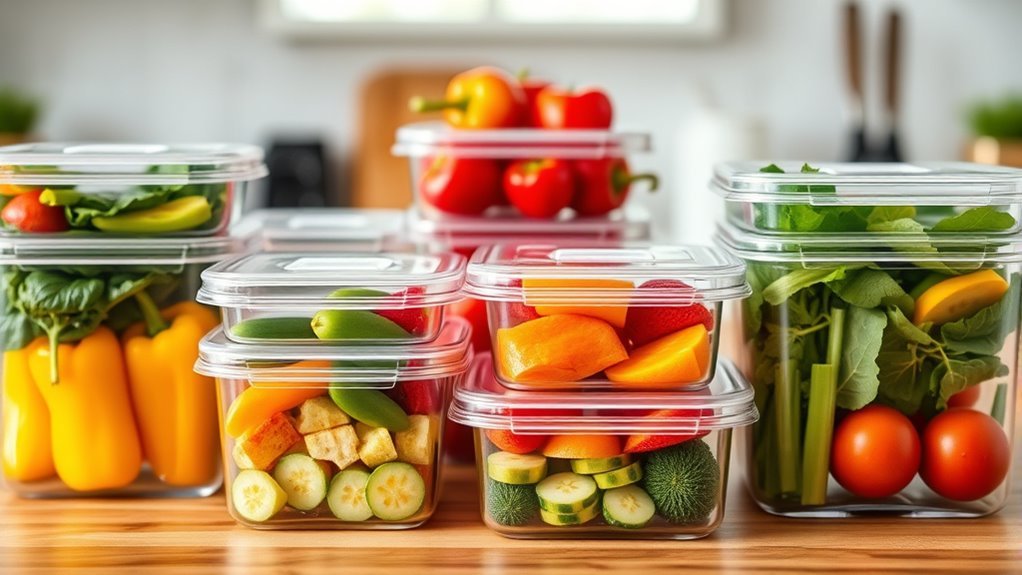
A food storage container is a handy kitchen essential that helps keep your meals fresh longer by creating airtight, leak-proof seals. These containers prevent spills and spoilage, which means your food stays safe and tasty.
Using food storage containers is also a smart way to organize your kitchen and manage portion sizes. Plus, they make dealing with leftovers much easier—no more messy fridge situations!
It’s important to choose containers made from safe materials like glass or BPA-free plastic to keep your food healthy and uncontaminated. If you want to get the most out of your containers and pick the right ones for your needs, there’s plenty more to contemplate.
So, let’s dive into what makes a good food storage container and how to select the best ones for your lifestyle.
Key Takeaways
- Food storage containers are airtight vessels designed to preserve food freshness and prevent spoilage. They help keep your food tasting just right for longer.
- They extend the shelf life of foods while maintaining quality during storage and reheating. So, you can enjoy your meals without worrying about them going bad too soon.
- Containers improve kitchen organization, reduce waste, and make leftovers more convenient to use. It’s a simple way to keep things tidy and save money.
- Safe materials like glass, stainless steel, or BPA-free plastics prevent chemical leaching and ensure food safety. Choosing the right container means your food stays healthy and uncontaminated.
- Features such as leak-proof lids, stackability, and microwave safety enhance usability and storage efficiency. These little extras make your kitchen routine smoother and more efficient.
Purpose and Benefits of Food Storage Containers
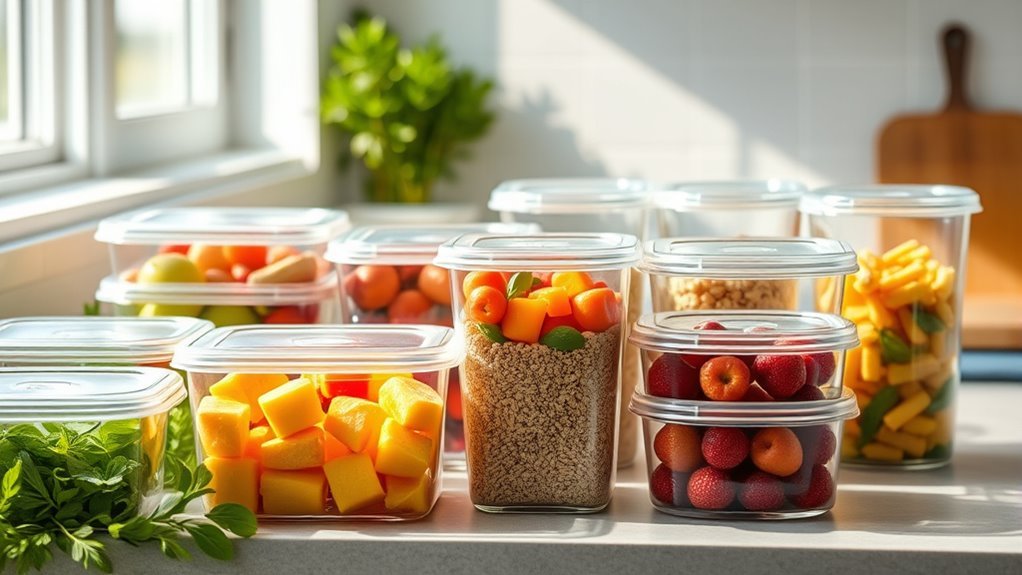
Although you might overlook them, food storage containers play a crucial role in keeping your food fresh and safe. These containers create an airtight seal to preserve food longer, preventing spoilage and maintaining quality.
Using food-safe materials ensures food safety by avoiding harmful chemical leaching. Whether you choose plastic or glass containers, proper storage helps with freezing and reheating, making meal prep and leftovers more convenient.
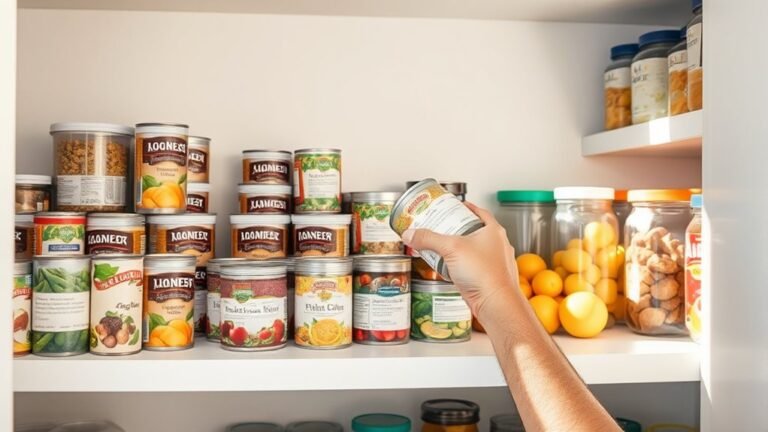
Food storage containers also improve food organization, allowing you to manage portions efficiently and reduce waste. With smart storage management, you keep your kitchen tidy and your food fresher for longer.
Choosing the Right Food Storage Container
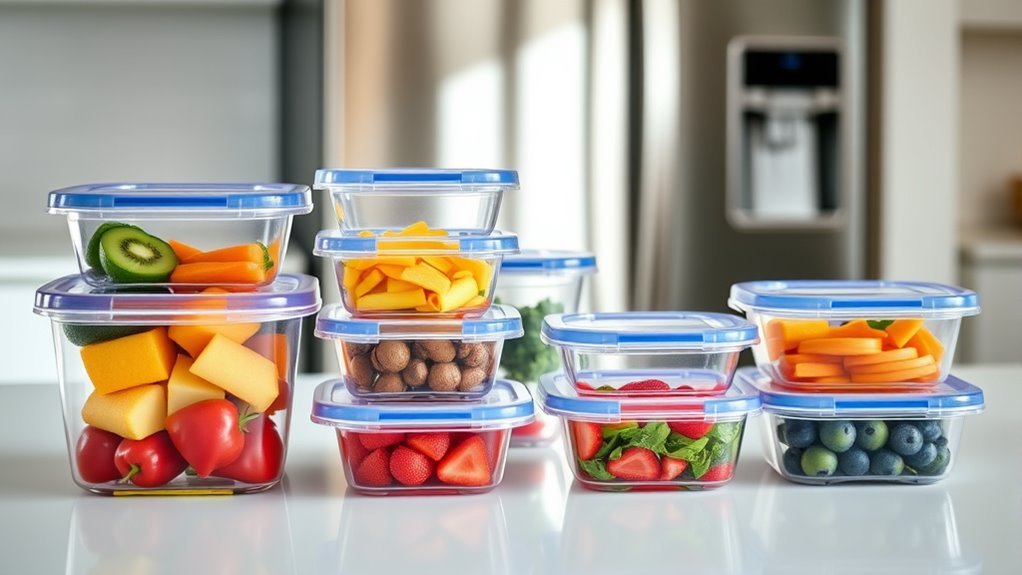
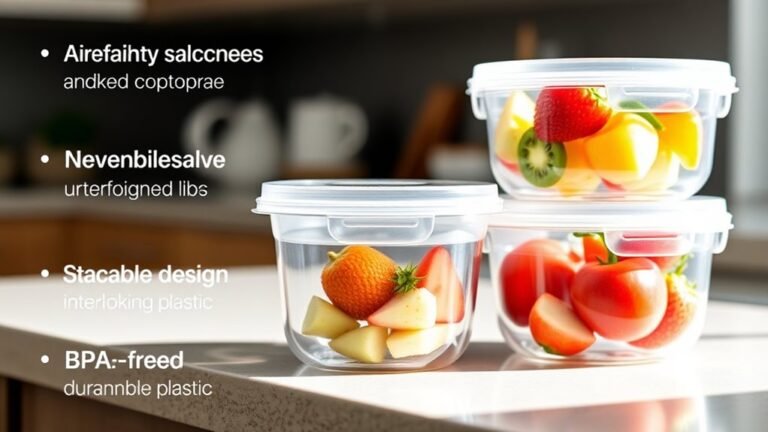
When selecting food storage containers, focus on materials that keep your food safe and fresh, such as glass, stainless steel, or BPA-free plastics. Prioritize containers with airtight seals and leak-proof lids to maintain freshness.
Think about container size and stackability too, so you can optimize your fridge or pantry space. Food-grade silicone adds flexibility and durability, which is a nice bonus.
Make sure your containers are microwave safe and dishwasher safe for convenience. And don’t forget to check for certifications like NSF to guarantee food-safe materials and standards compliance.
| Feature | Benefit | Example Material |
|---|---|---|
| Airtight seals | Keeps food fresh | Silicone, BPA-free lid |
| Leak-proof lids | Prevents spills | Glass, stainless steel |
| Stackability | Saves storage space | Plastic containers |
| Microwave safe | Reheat without transferring | Glass, food-grade silicone |
| Dishwasher safe | Easy cleaning | BPA-free plastic |
Frequently Asked Questions
What Are the Benefits of Using Food Storage Containers?
Using food storage containers keeps your food fresh longer, prevents spoilage, and reduces bacteria growth.
They help organize your kitchen, cut waste, and support sustainability by replacing single-use packaging with reusable options.
What to Avoid in Food Storage Containers?
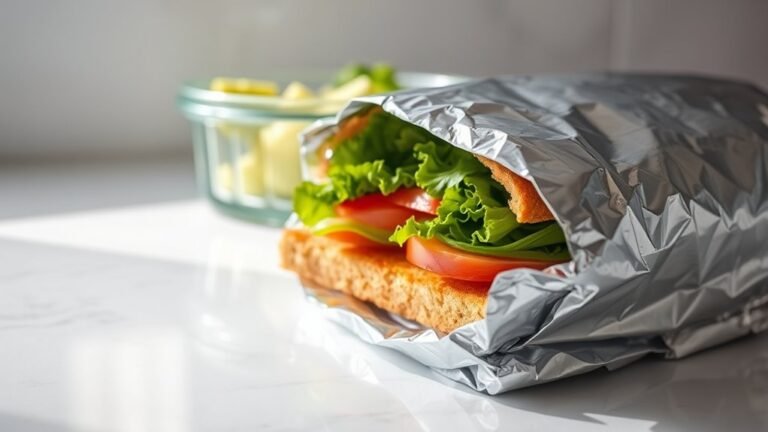
You should avoid leftover packaging not meant for reuse, BPA plastics, PFAS chemicals, aluminum with acidic foods, and plastics labeled 3 or 6.
These materials can leach harmful chemicals or degrade, risking your health and food safety. It’s really better to be cautious with what you store your food in. After all, keeping your meals safe is the top priority!
Should I Stop Using Plastic Food Storage Containers?
Shouldn’t you prioritize your health? Yes, you should stop using plastic food storage containers because they can leach harmful chemicals, especially when heated.
Switching to glass or stainless steel keeps your food safer and healthier. It’s a simple change that really makes a difference!
What Are the Safest Storage Containers for Food?
You should choose glass, stainless steel, or food-grade silicone containers—they’re durable, non-toxic, and don’t leach chemicals.
BPA-free plastics are safer, but avoid heating them to keep your food and health protected. It’s a simple way to stay safe and healthy.
Conclusion
You might think food storage containers are just simple boxes, but they’re actually your kitchen’s unsung heroes. While leftovers can quickly turn into waste without proper storage, the right container keeps your food fresh and your meals ready to enjoy.
Choosing wisely not only saves you money but also reduces environmental impact. So, don’t underestimate these everyday essentials—they transform chaos into order and spoilage into savings.
Food storage containers are essential for preserving freshness, preventing waste, and organizing your kitchen efficiently. Using airtight, durable containers can extend the life of your food and make meal prep easier. Plus, investing in quality food storage containers helps reduce plastic waste by encouraging reuse. In short, these containers aren’t just for storage—they’re a smart, sustainable choice that keeps your food safe and your kitchen tidy.