
Which Plastic Food Storage Containers Are Safe and Reliable?
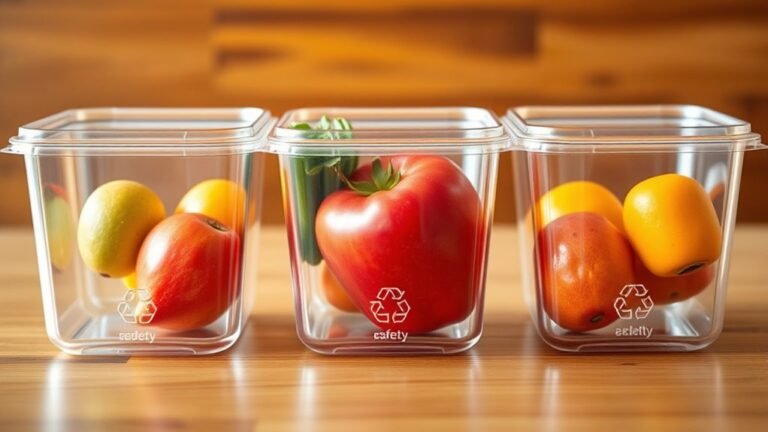
You want BPA-free plastic containers with secure gasket-and-latch seals to keep your food safe and mess-free. These containers reduce harmful chemical leaching often triggered by heat or oily foods.
Look for flat, stable lids that stack well and resist stains or odors from saucy or smelly dishes. Avoid microwaving or dishwashing plastic to extend their life.
If you want to keep your meals fresh and leak-free for years, understanding container features will help you choose wisely.
Key Takeaways
- Choose BPA-free containers but avoid heating them to reduce chemical leaching and microplastic formation. This helps keep your food storage safer.
- Containers with gasket-and-latch designs, like Rubbermaid Brilliance, provide reliable leakproof seals. They’re perfect for saucy and stinky foods.
- Flat, gasketed lids and silicone-coated bases make stacking stable. This also helps prevent spills during storage or transport.
- Hand-wash containers with warm, soapy water and air dry them. Doing this prevents plastic degradation, odors, and stains.
- Replace containers every 3–5 years or whenever lids, gaskets, or plastic show cracks, brittleness, or poor sealing. Keeping your containers in good shape matters for safety.
Why Choosing BPA-Free Plastic Matters for Your Food

Choosing BPA-free plastic matters because BPA can seep into your food and drinks, especially when you heat containers or use them with oily or saucy dishes. When you pick BPA-free plastic food storage containers, you reduce exposure to this harmful endocrine disruptor.
However, BPA-free doesn’t guarantee complete safety—other chemicals can still migrate into your food, particularly when warmed. So, avoid transferring hot foods directly into plastic containers and be cautious even with those labeled microwave-safe.
Additionally, washing BPA-free containers in the dishwasher’s high heat can increase chemical migration, so hand-washing is usually safer. By choosing BPA-free plastic food storage containers and handling them carefully, you can minimize your risk and keep your meals safer from chemical contamination.
Spotting Leakproof Seals and Secure Latches

While selecting BPA-free plastics reduces chemical risks, keeping your food secure from spills and leaks matters just as much. To spot leakproof seals, look for containers with a soft gasket, like Rubbermaid Brilliance’s attached gasket combined with two secure latches.
This design passed vigorous shake tests with no drops escaping, proving its reliability. Avoid simple press-down lids—they often leak or pop off, especially without a gasket.
When using Rubbermaid Brilliance, ensure the lid aligns properly on your first try for a tight seal. Always check latch engagement and gasket condition before storing liquids.
Perform a quick shake test yourself; even a few tiny droplets signal a weaker seal. By focusing on these features, you’ll keep your food safe and avoid messy leaks.
Plastic Containers That Stack Well for Easy Storage

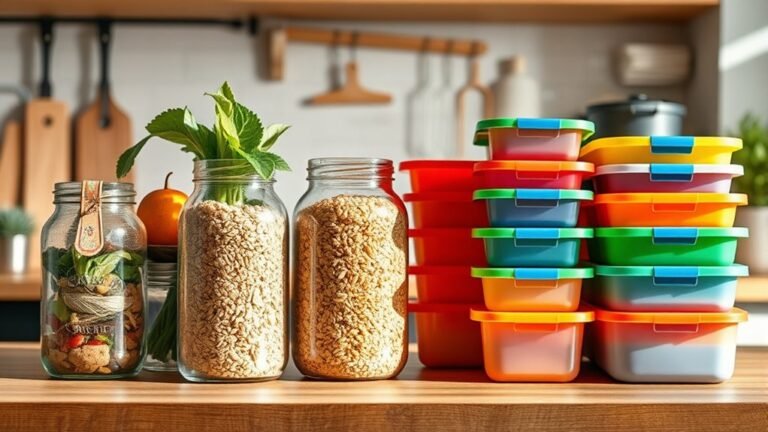
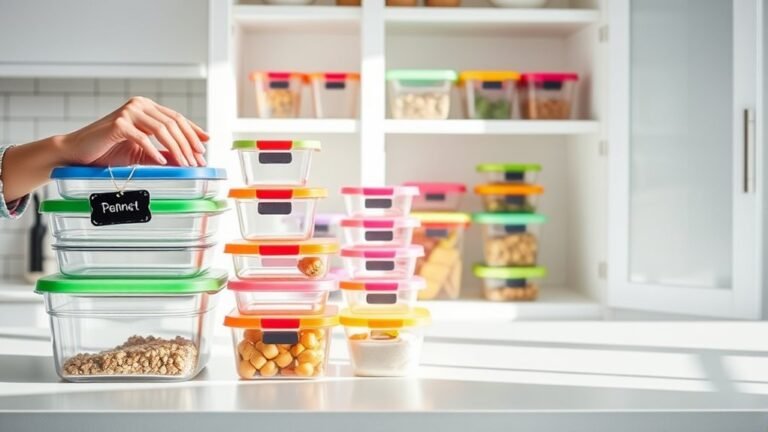
You’ll need containers that stack securely without sliding or tipping, so look for features like silicone-coated bases and flat lids. Space-saving nesting designs also help keep your kitchen organized by fitting containers neatly inside each other when not in use.
Selecting the right stacking system saves space and ensures your containers stay put during storage. It really makes a difference when you want a clutter-free kitchen!
Stacking Stability Features
When stacking plastic food storage containers, you want lids that sit flat and bases coated with silicone or similar materials to prevent slipping. Flat lids create a stable platform, while a silicone-coated lower-third, like on Rubbermaid Brilliance containers, adds friction to keep stacks secure.
Avoid domed lids—they make stacking tricky and unstable. Also, choose containers with secure, repeatable locking lids, such as latch-and-gasket systems that stay aligned and prevent leaks, ensuring safety during movement.
Consider these stacking stability features:
- Flat, gasketed lids paired with silicone-coated bases for grip
- Strong latch-and-gasket closures that resist popping off or leaking
- Avoidance of domed lids that hinder stable stacking
These features help you organize plastic containers without worrying about slips or spills.
Space-Saving Nesting Designs
Efficient space-saving designs make storing plastic food containers easier and neater. When choosing plastic containers, look for space-saving nesting designs that feature flat, stackable lids like those in the Rubbermaid Brilliance set.
These flat lids stack securely without relying on unstable domed shapes. Nesting containers that fit cleanly inside each other save space but can slow you down since you often have to disassemble mid-size containers to access contents.
Prioritize systems with compatible sizes to build neat stack layers without awkward gaps. Also, clear containers help you spot what you need quickly without rearranging stacks.
Keep in mind, lid shape and material flexibility affect stacking reliability—thin or domed lids can cause shifting and make handling trickier. So, choose designs that balance nesting convenience with everyday usability.
Best Containers for Saucy and Stinky Foods
Although many containers claim to be leaktight, only a few truly keep saucy and stinky foods contained without mess or lingering odors. For the best plastic food storage, Rubbermaid Brilliance stands out. Its gasket and latch system seals liquids tightly, passing vigorous leak tests with no drips.
Plus, it handles sauces like tomato and kimchi without retaining stains or odors after a month. However, tuna odors might remain slightly due to its narrow gasket channel.
It resists stains and odors from tomato and kimchi, though tuna smells may linger slightly.
Here’s what to check for in containers for saucy, stinky foods:
- Secure, permanently attached gaskets to prevent leaks
- Strong latch designs that won’t pop off when dropped
- Thick, rigid walls to avoid flexing and spilling when lifted
These features ensure your saucy meals stay put and your fridge smells fresh.
Best Plastic Containers for Meal Prep and Portioning
If you’re organizing meals ahead of time, choosing containers with secure seals and portion-friendly sizes makes all the difference. The Rubbermaid Brilliance Set stands out with its Tritan material, attached gasket, and double latches, passing tough leak tests flawlessly.
For reliable stacking and versatile portion sizes, the Figmint 6-piece set offers four-point latches and snap-n-locks, perfect for snacks or lunches.
If you prefer portion pairing, GoodCook’s 3-cup 2-compartment containers handle dips and dippers with microwave, freezer, and dishwasher safety.
For larger batches, GoodCook EveryWare’s extra-large containers impress with durability and tight lids that endure drops.
When selecting plastic food storage containers, prioritize gasketed lids and secure latching to keep your meals fresh and mess-free during meal prep and portioning.
Avoiding Stains, Odors, and Wear in Plastic Containers
When you want to keep your plastic containers looking and smelling fresh, choosing models with real leak protection and easy-to-clean gaskets makes a big difference. Containers like Rubbermaid Brilliance, with attached gaskets and secure latch clips, help minimize stains and odors even after storing pungent foods.
To avoid wear that leads to odor buildup or cracks, handle plastic containers carefully and avoid dishwasher heat or microwaving, which can accelerate material breakdown. If you find plastic tricky, consider switching to Glass Food Storage for stain and odor resistance.
Keep these tips in mind:
- Choose containers with solid, easy-to-clean gasket channels to reduce lingering smells.
- Avoid hot dishwasher cycles and microwave heating to prevent plastic wear.
- Use flat, compatible lids for stable stacking and less friction damage.
Cleaning Tips to Prevent Odors and Stains
Keep your plastic containers fresh by hand-washing them with warm, soapy water and letting them air dry instead of using the dishwasher. Dishwashers’ longer, hotter cycles can cause wear, increasing odors and stains.
Pay close attention to the gasket area, especially in containers like Rubbermaid Brilliance with soft silicone strips. These narrow channels trap stubborn smells from foods like tuna or pasta sauce.
For smaller containers, thoroughly clean every nook and cranny to prevent lingering odors. Avoid microwaving plastic or transferring hot foods directly into containers, as heat can worsen residue and smells.
Regularly inspect your containers—if you notice brittleness or scratches, especially after freezing, it’s time to replace them. Proper cleaning practices help maintain freshness and prevent odors and stains effectively.
When to Replace Plastic Containers for Safety and Freshness
You should replace plastic containers once you notice scratches, chips, or warped areas. These signs of wear can cause leaks and odors.
Heat exposure speeds up aging, making seals fail sooner and reducing freshness. If odors cling stubbornly or lids don’t seal properly, it’s time to swap them out for safety.
Signs Of Wear
Although plastic containers are durable, they show signs of wear that affect safety and freshness. You should replace them once you notice scratches, chips, melted spots, or increased brittleness.
These damages can increase odor retention, leakage risks, and the potential for toxic chemicals to migrate into your food. So, keep an eye out for these signs:
- Cracks or corner damage after freezer use—brittle plastic chips easily and compromises safety.
- Lids that don’t seal properly or gaskets that fail on the first try—poor seals can cause leaks.
- Persistent food odors that won’t wash out—this indicates degrading seals that may harbor bacteria and toxic chemicals.
Even with good care, it’s a good idea to replace containers every 3–5 years. This helps avoid hidden risks that can affect your food’s freshness and safety.
Heat Exposure Effects
Since heating plastic containers accelerates chemical leaching and microplastic formation, you should steer clear of microwaving or placing them in dishwashers. Even if labeled microwave-safe, heating plastic increases the risk of harmful substances leaching into your food, especially acidic items like tomato sauce.
Dishwashers use hot, prolonged cycles that promote plastic degradation, so hand-wash your containers with warm, soapy water and air-dry them. Replace containers showing signs of heat damage—such as brittleness, chips, or melted spots—to ensure safety and freshness.
With proper care, plastic containers last 3–5 years, but repeated heat exposure shortens their lifespan. Avoid storing hot tomato sauce or other heated foods in these containers to minimize wear and chemical risks. Keeping containers cool helps maintain their integrity and keeps your food safe.
Odor And Stain Retention
Heat and repeated use don’t just wear down plastic containers—they also make them more prone to retaining odors and stains. Over time, scratches and brittleness, especially from heat or freezing, create tiny crevices that trap smells and discolor food storage.
Even well-sealed containers like Rubbermaid Brilliance can hold onto odors in gasket channels, which need thorough cleaning. When odor and stain retention persist despite washing, it’s time to replace the container for safety and freshness.
Watch for these signs: lingering smells after washing oily or saucy foods. Also, keep an eye out for visible scratches or brittleness after 3–5 years of use.
Stains or odors trapped in gaskets or crevices are another red flag. Replacing containers prevents contamination and keeps your food tasting fresh. So, don’t hesitate to swap them out when needed!
Frequently Asked Questions
Is Type 7 Plastic Food Safe?
Type 7 plastic isn’t always food safe because it’s a mixed category. You shouldn’t heat it or store hot foods in it, as chemicals might migrate.
Instead, choose safer materials like glass or stainless steel for reliability. They’re a much better bet when it comes to keeping your food safe and healthy.
Which Is the Best Container to Store Food?
Forget the stone age—Rubbermaid Brilliance containers are your best bet to store food. Their secure gasket and latches keep leaks out, handling everything from sauces to snacks.
They ensure freshness and no mess wherever you take them. So, whether you’re packing lunch or storing leftovers, these containers have got you covered.
What Are the Best Food-Grade Plastic Containers?
You’ll want food-grade containers like Rubbermaid Brilliance for leak-proof sealing, Figmint for stacking and stain resistance, Cambro for liquids, and GoodCook for meal prep compartments.
Always avoid heating plastics to keep them safe and durable. It’s a simple way to make sure your containers last longer and stay healthy for your food.
Is Number 5 Plastic Food Safe?
About 3–5 years is the practical lifespan for #5 plastic containers.
Yes, number 5 plastic is food safe if you avoid heat, hand wash it, and use it as intended. Doing these things helps reduce chemical migration and keeps the seal reliable.
Conclusion
Selecting containers carefully ensures your kitchen stays clean and clutter-free. By picking BPA-free plastics with leakproof locks, you prevent pesky spills and protect your well-being.
Stacking sturdy, stain-resistant storage saves space and stress, especially for saucy, strong-smelling snacks. Staying savvy with scrubbing and swapping worn containers keeps your food fresh and safe.
So, choose smart, seal securely, and stack stylishly to simplify your storage. Using safe and reliable plastic food storage containers not only protects your meals but also helps you enjoy every bite with confidence. Keep your kitchen organized and your food fresh by investing in quality containers that are designed to last. This way, you can savor every meal knowing you’ve stored it right!