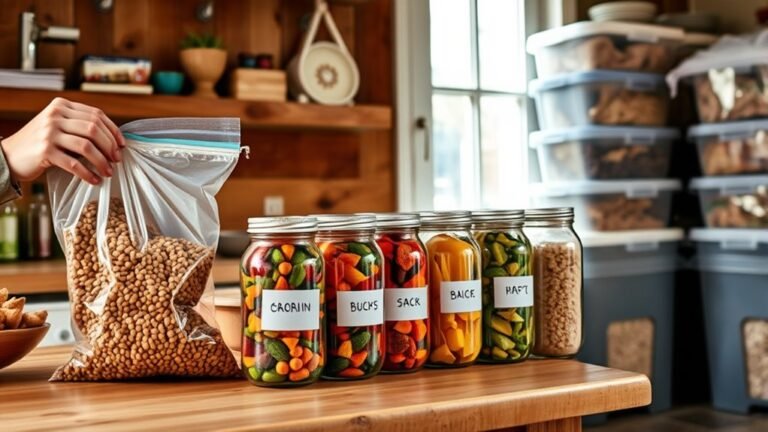
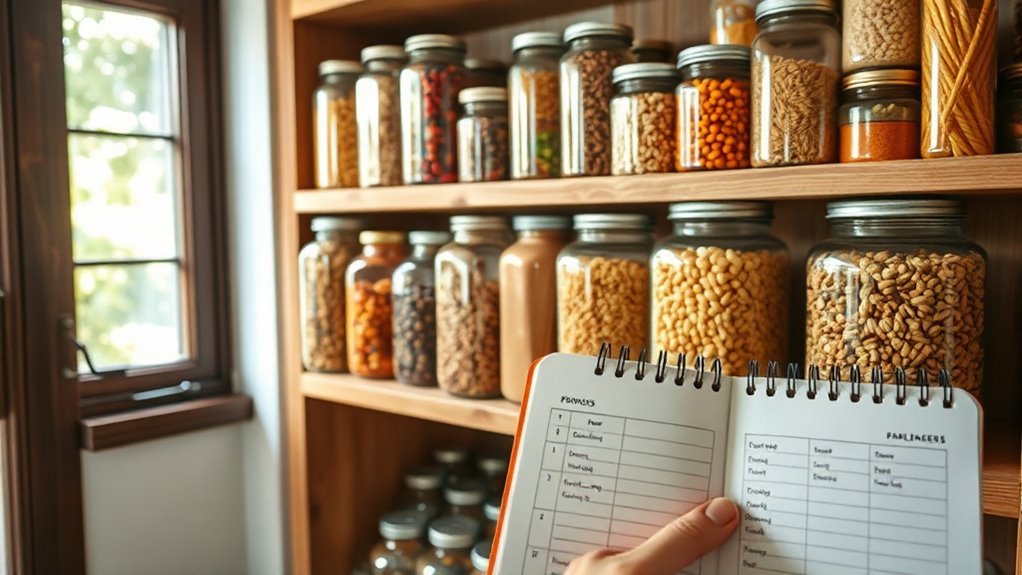
5 Essential Tips on How Much Food Storage You Should Have
You should begin by calculating your family’s daily calorie needs, using weight-based BMR estimates and adjusting for emergencies. This helps you understand exactly how much food storage you’ll need to keep everyone nourished when things get tough.
Planning meals around your family’s favorites makes the process more feasible and enjoyable.
Set six-month storage goals by multiplying meal frequencies and focus on total calories. It’s key to choose long-lasting foods that won’t spoil quickly.
Organize and rotate your supply consistently to keep everything fresh and ready to use.
And don’t forget essential household items like soap and first-aid supplies. Keeping these in mind ensures you’re well-prepared and ready for more detailed strategies ahead.
That way, you can feel confident knowing your food storage covers all the basics and then some.
Key Takeaways
- Estimate daily calorie needs per person, aiming for 1,500 to 2,500 calories in emergencies based on BMR and activity levels. This gives you a good starting point to know how much food each person might need.
- Calculate six-month food quantities by multiplying meal frequency, family size, and calorie targets. This helps set realistic storage goals that actually meet your family’s needs.
- Prioritize long-lasting foods for emergency stock. At the same time, rotate short-term favorites to keep variety and freshness in your supplies.
- Organize and label stored food clearly with quantities and expiration dates. This makes it easier to rotate and use your food efficiently without waste.
- Include essential non-food household items like soap, toothpaste, and first-aid supplies. Use the same six-month planning approach to make sure you have everything you might need.
Calculate Daily Calorie Needs for Your Family

Although calculating daily calorie needs might seem complex, you can start by estimating each family member’s Basal Metabolic Rate (BMR) using their body weight—multiply by 12 for adult males and 11 for adult females.
Remember, BMR covers only vital functions at rest, so in emergencies, you’ll want to adjust upward for extra activity and stress.
When planning Emergency Food Storage, aim for a realistic daily calorie target—typically between 1,500 and 2,500 calories per person.
Calculate the total calories your family needs by multiplying each person’s adjusted BMR by the number of days you want to store food for.
Be cautious when counting servings per day, since calorie content varies by brand and meal size.
This helps ensure you have enough food to meet your family’s true energy requirements during a crisis.
Plan Meals Using Your Family’s Favorite Foods
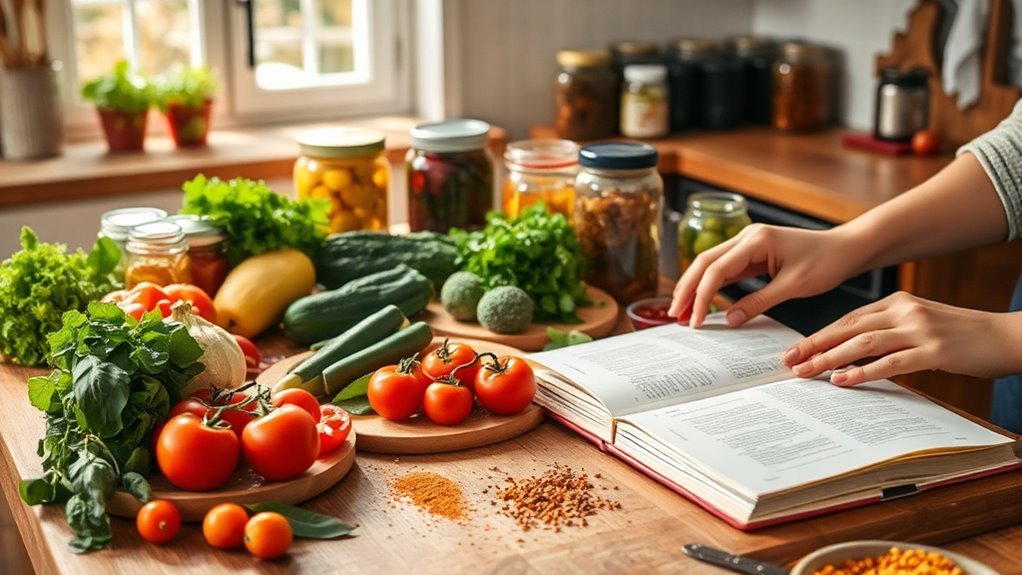
When you plan meals using your family’s favorite foods, you create a storage plan that feels natural and helps everyone to eat well during an emergency. Focus on meals your family already enjoys, so your emergency supply won’t feel like a chore.
Here’s how to do it:
- List regular meals and snacks, then estimate how often you’ll eat each in six months.
- Multiply those meals by your family size to get realistic quantities of food.
- Use long-term items as replaceable stock, and rotate in short-term favorites to keep meals enjoyable.
This approach ensures your food storage covers your family’s needs without forcing new routines. It makes your six-month emergency supply practical and stress-free.
Set Six-Month Emergency Food Storage Goals
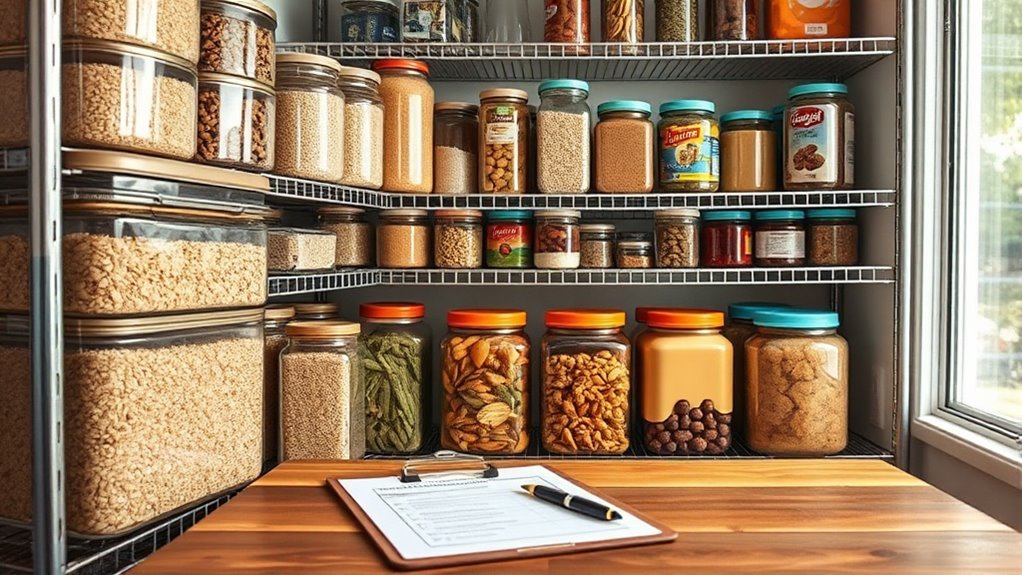
To set your six-month emergency food storage goals, start by figuring out how often your family will eat each meal or use each food item during that time. Use your family’s basic needs meals as a starting point. Then multiply that frequency by six months to get your target amounts.
This final number becomes the supply of food you want to have on hand. Remember to plan with a two-tier system: keep long-term food for emergencies and rotation, and short-term foods for everyday use. This way, maintenance is easier.
Also, estimate calorie needs beyond just resting levels to make sure there’s enough energy. Focus on total calories or clearly defined meals rather than confusing serving sizes. By doing this, you’ll build a realistic, manageable emergency food supply that keeps your family prepared.
Choose, Organize, and Rotate Your Emergency Food Supply
Since a well-organized emergency food supply saves time and reduces stress, you should carefully choose long-lasting foods and daily-use items to keep your pantry practical. Focus on what you would need for basic meals over your target timeframe, balancing long-term storage with items you use regularly.
A well-organized emergency food supply balances long-lasting essentials with everyday items for practical, stress-free preparedness.
To keep your supply efficient, follow these steps:
- Choose foods designed for long shelf life alongside items you consume daily to maintain freshness.
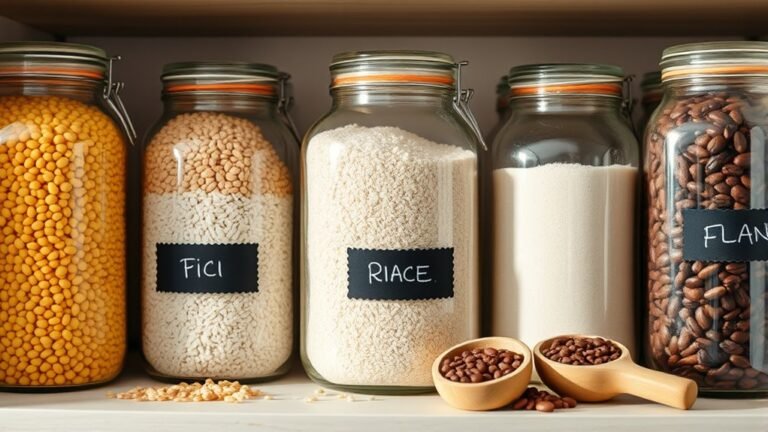
- Organize by creating written lists of food and household goods, using paper to track quantities clearly.
- Rotate stock by marking expiration dates in large letters on packages, moving older items forward to use first.
Regularly adjust amounts as your family’s needs change. That way, your food supply stays practical and ready.
Include Essential Household Items Alongside Food Storage
Including essential household items alongside your emergency food storage helps daily life remain manageable during a crisis. You’ll want to stock essential items you use every day—like soap, toothpaste, toilet paper, cleaning supplies, and basic first-aid products.
Keep in mind to store these with the same “6 months” mindset as your food supply. Make sure to label quantities and expiration dates clearly on each item using a permanent marker. This helps you rotate and replace them on time without any hassle.
Create a separate checklist for household items so you don’t overlook non-food necessities that can become limiting factors. And here’s a tip: coordinate with a neighbor or a similar household to share shopping and inventory checks. It saves effort, avoids duplication, and keeps your supplies adequate and organized.
Frequently Asked Questions
How Do I Store Emergency Food in Small Living Spaces?
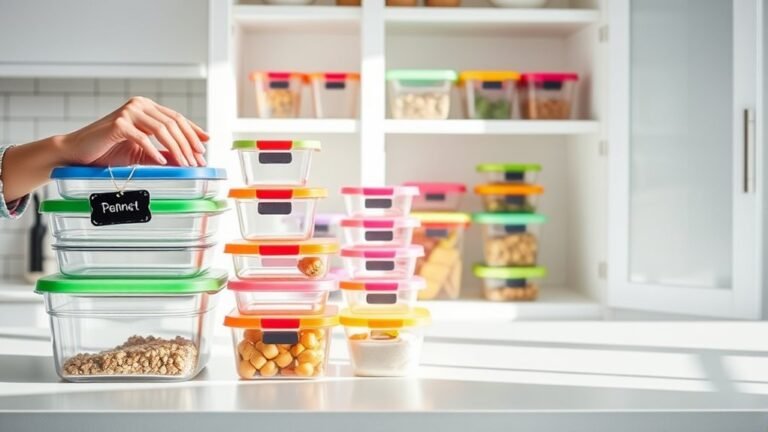
You can store emergency food in small spaces by using stackable containers, vacuum-sealing items, and utilizing vertical space like shelves or under beds.
Rotate supplies regularly to keep everything fresh and easily accessible.
It’s all about making the most of the space you have. Plus, keeping things organized helps when you need to find something quickly.
What Are the Best Food Options for Allergy Sufferers?
Navigating allergies is like walking a tightrope—choose naturally hypoallergenic foods like rice, quinoa, fresh fruits, and vegetables.
Avoid common triggers such as nuts, dairy, and gluten to keep your emergency stash safe and worry-free. It really helps to stick with these options to stay on the safe side.
How Can I Preserve Food Without Refrigeration?
You can preserve food without refrigeration by drying, smoking, salting, or fermenting it. These methods help remove moisture or create conditions that stop spoilage.
Use airtight containers to keep food fresh. Also, try to store your food in a cool, dark place where it won’t be exposed to heat or light.
And if you want to go a step further, consider canning. It’s a great way to safely extend the shelf life of many foods.
What Is the Shelf Life of Common Emergency Food Items?
You’ll find canned goods last 1-5 years, dried beans up to 10 years, and freeze-dried meals can stay good for 25+ years.
Rotate your stock regularly to keep everything fresh and safe for emergencies. It’s a simple step that makes a big difference when you need to rely on your supplies.
How Do I Safely Dispose of Expired Emergency Food?
Disposing of expired emergency food is like shedding old skin—you’ll want to check local guidelines, separate recyclables, and throw the rest in the trash.
Don’t consume it; expired food can harm you or others if shared.
Better safe than sorry, right? Just make sure you handle it properly so it doesn’t cause any problems.
Conclusion
Just like a ship prepares for storms at sea, you need to prepare your family for uncertain times. By calculating daily calories and planning meals with your family’s favorites, you’ll create a solid foundation for your food storage. Setting a six-month objective gives you a clear goal to work toward.
Organize and rotate your supplies regularly to keep everything fresh and ready to use. Don’t forget to include essential household items alongside your food.
Taking these steps now means you’ll weather any storm with confidence and calm. Building dependable food storage isn’t just about stockpiling—it’s about turning preparedness into your family’s steadfast anchor. When you have the right amount of food storage, you ensure security and peace of mind during uncertain times. So start planning today and make food storage an essential part of your family’s safety plan.