How Many Food Storage Containers Do I Need?
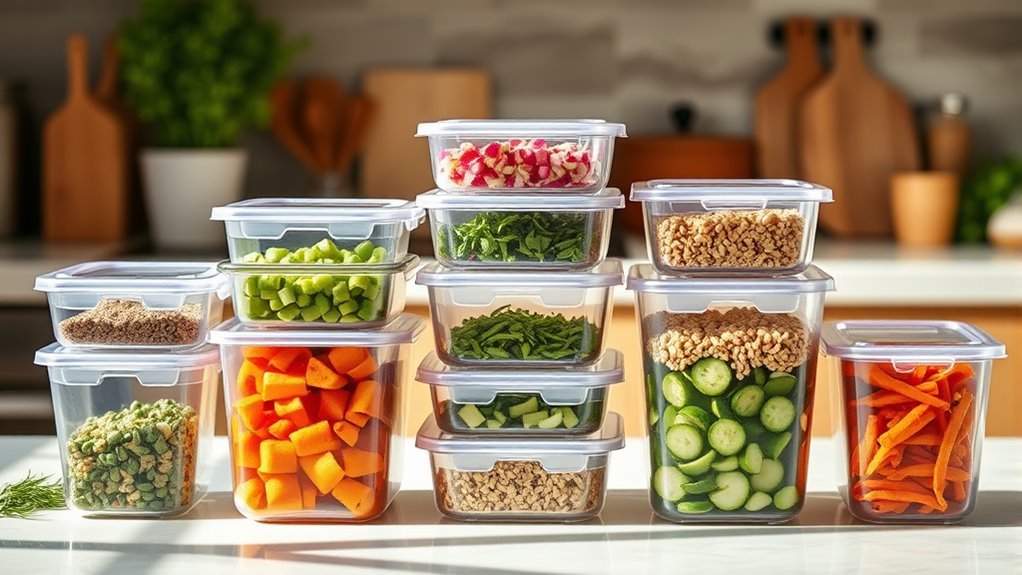
You need enough food storage containers to fit your meal prep style, portion sizes, and household needs without overcrowding your kitchen. Think about how often you cook, whether you pack lunches or have leftovers, and how many people eat regularly. These factors will help you figure out the right number and types of containers to keep things running smoothly.
Match container sizes to the kinds of food you usually store, whether it’s soups, salads, or snacks. Also, consider your available storage space to avoid clutter—no one wants a messy cabinet.
Finding the right balance will keep your kitchen organized and efficient, making mealtime less stressful. Keep going to uncover tips for choosing and using them effectively.
Key Takeaways
– Assess your cooking and eating habits to determine how many containers you use for meals, snacks, and leftovers weekly.
This helps you figure out what you really need without going overboard.
– Choose container sizes based on typical portion sizes, from small for snacks to large for family meals.
Picking the right size means less wasted space and better storage.
– Consider your available kitchen storage space to avoid overcrowding and ensure efficient organization.
You don’t want to clutter your kitchen with containers you can’t store properly.
– Base the quantity of containers on household size and meal prep frequency to meet everyone’s needs.
If you cook often or have a big family, you’ll need more containers.
– Optimize use by matching lids to containers, stacking efficiently, and regularly decluttering unused items.
Keeping things tidy and organized makes meal prep way easier.
Consider Your Food Consumption and Storage Habits
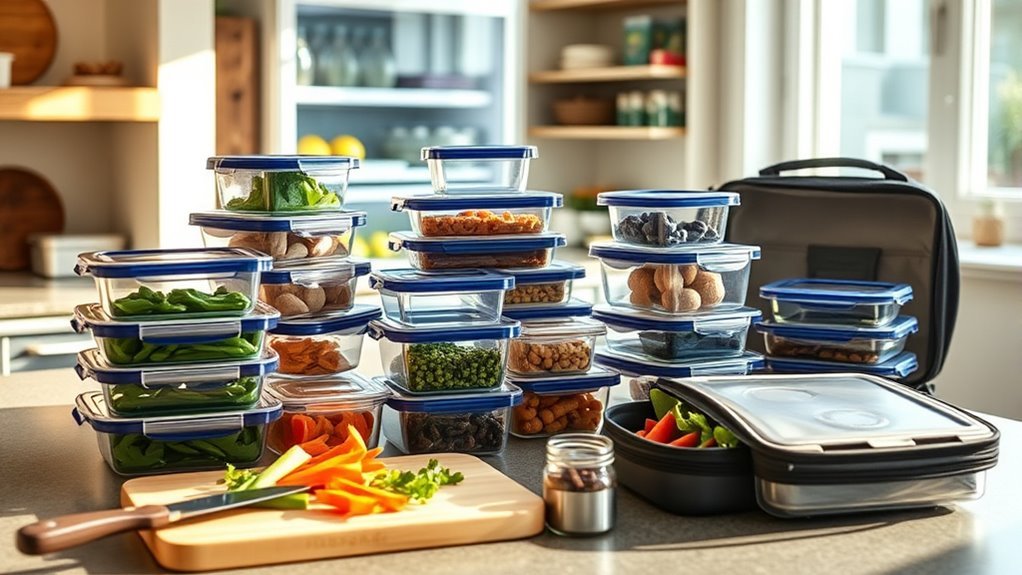
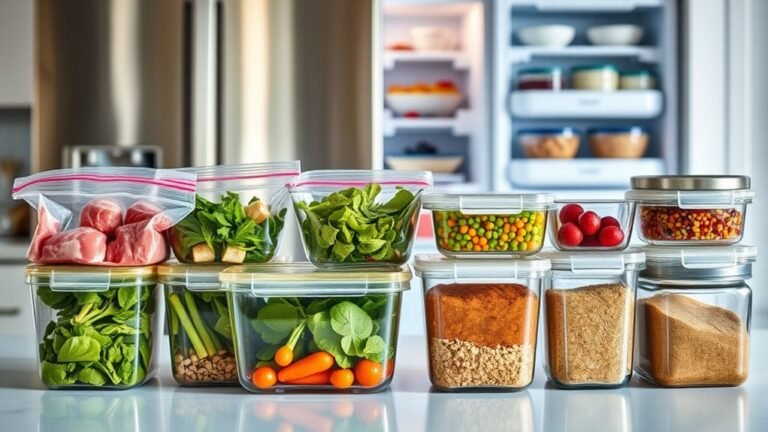
Before choosing food storage containers, take a close look at your cooking and eating routines. Start by evaluating your food consumption patterns—how often you cook in bulk, store leftovers, or pack lunches.
Consider your cooking habits and meal prep frequency before selecting food storage containers.
If you frequently bulk cook, you’ll need larger or more containers. Consider the variety of food you store to select appropriate container sizes for snacks, dry goods, or meals.
Track your container usage for a week to spot unused containers piling up. Assessing your storage habits helps prevent clutter and ensures you’re not hoarding unnecessary containers.
Also, check your available storage space to avoid overcrowding. By aligning your food storage containers with your actual habits, you’ll maintain an organized kitchen and reduce wasted space from unused containers.
Determine Your Food Container Needs
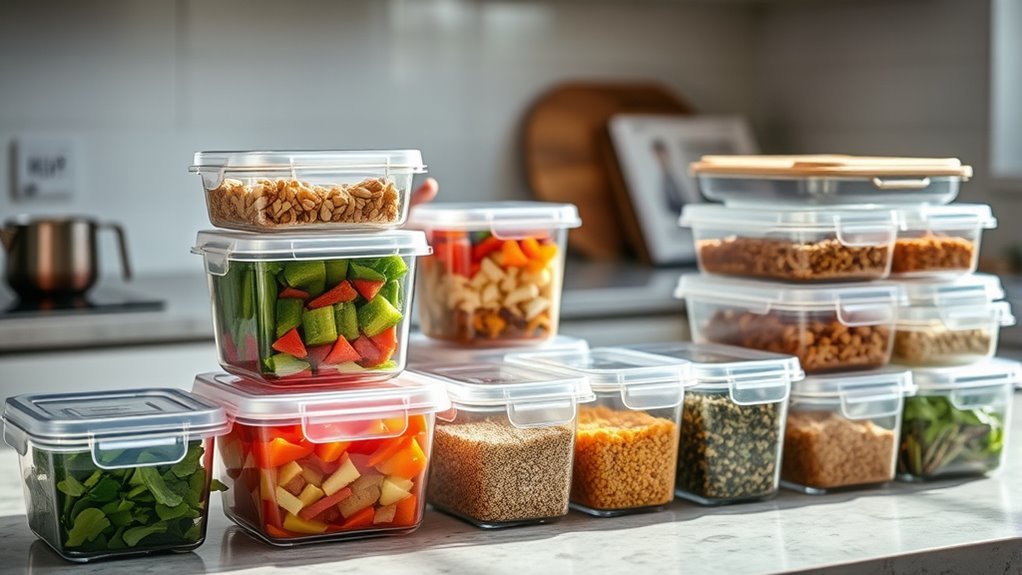
While figuring out your food container needs, consider how many leftovers, lunches, and snacks you store each week. Your storage requirements depend on your household size and eating habits.
To choose the right containers, match lids to containers and think about portion sizes for each type of food. Here are key steps to determine what you need:
- Assess how many meals and snacks you typically store to estimate container quantity.
- Select container sizes that match your portion sizes—small for snacks, medium for lunches, large for family meals.
- Factor in your meal prep routine, such as bulk cooking, to decide if you need extra containers for storage.
Regularly rotate containers to avoid clutter and maximize efficient use of your food storage setup. It really helps keep things organized and easy to find!
Frequently Asked Questions
What Is the Correct Order for Food Storage?
You should store heavy or bulky items on lower shelves, lighter ones on top, group similar foods together, place oldest items at the front, and keep frequently used containers accessible.
Use clear, airtight containers with date labels for freshness. This way, you can easily see what you have and make sure nothing goes to waste.
Should I Throw Out All My Old Tupperware?
Don’t toss all your old Tupperware like a forgotten relic. Keep the ones in good shape, toss cracked or stained pieces, and replace lids that don’t seal.
This way, you’ll avoid clutter and food waste. It’s all about being practical and making the most out of what you have.
How Many Storage Containers Do I Need?
You’ll want around 8 to 12 containers of various sizes for everyday use. But if you cook a lot or have a big family, 15 or more might suit you better.
Keep decluttering to avoid clutter. It really helps keep your kitchen organized and stress-free.
How Much Stuff Fits in a 20FT Container?
You can fit about 1,100 to 1,200 cubic feet of stuff in a 20ft container.
That’s roughly 8,000 to 10,000 one-cup containers or 200 to 300 medium-sized containers.
Of course, it depends on how you stack everything and the weight limits you have to consider.
Conclusion
Picture opening your fridge to a neat, organized array of containers. Each one holds just the right amount of leftovers, snacks, or meal prep.
By thinking about how much you eat and how often you store food, you’ll know exactly how many containers you need. This means no more clutter and no more wasted space.
Finding the right balance makes your kitchen feel calm and efficient. It turns meal times into a breeze rather than a scramble.
So, when choosing food storage containers, consider your eating habits and storage frequency. Having the perfect number of containers not only helps keep your fridge tidy but also saves you time and reduces food waste. With the right containers in place, your kitchen stays organized, making meal prep easier and more enjoyable every day.