How to Use Breast Milk Storage Bags for Baby Food Safely
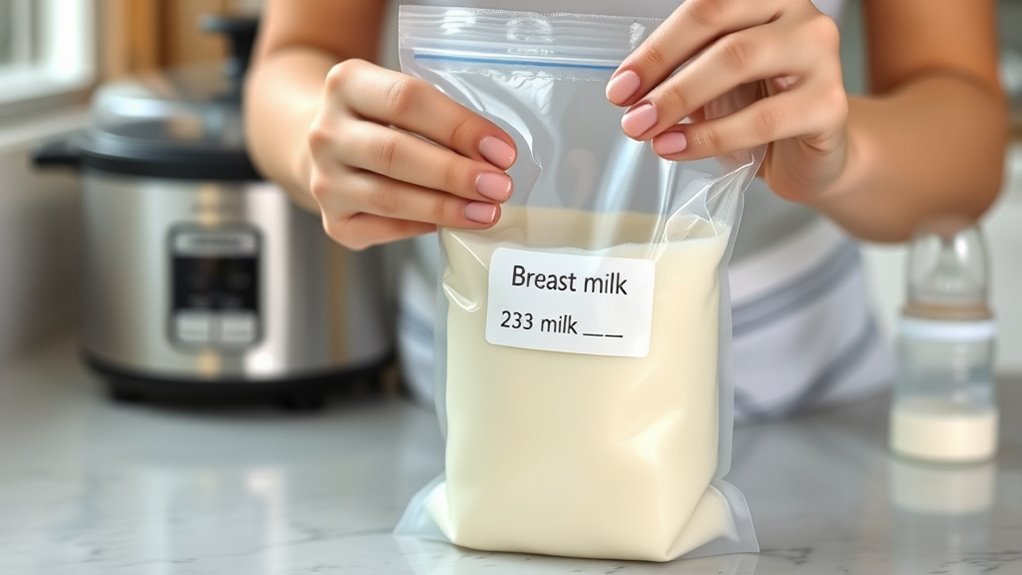
To use breast milk storage bags for baby food safely, start by choosing BPA-free bags with double zipper seals. This helps keep the milk fresh and prevents leaks. It’s best to fill them with small portions, so you only thaw what you need and avoid wasting any milk.
Make sure to label each bag with the date you expressed the milk. Freeze the bags flat in the coldest part of your freezer to save space and help the milk freeze evenly.
When it’s time to use the milk, thaw it slowly in the fridge overnight.
Never warm the milk in a microwave, as it can create hot spots that might burn your baby. Instead, warm the milk gently by placing the bag in warm water.
Always check for any signs of spoilage before feeding your baby. Use thawed milk within recommended times and never refreeze it.
Following these simple steps will keep your baby’s food fresh and safe. You’ll find even more helpful tips ahead!
Key Takeaways
- Choose BPA-free, double-sealed breast milk storage bags designed for freezing and thawing baby food safely.
- Label bags with date and quantity. Then freeze flat in the coldest freezer area to keep everything fresh.
- When it’s time to use, thaw bags overnight in the refrigerator. Warm them gently in a bowl of warm water—microwaves are a no-go here.
- Use thawed milk or baby food within the recommended times. And remember, never refreeze once thawed to avoid contamination.
- Always check for signs of spoilage like a sour smell or sliminess before feeding. It’s the best way to keep your baby safe.
Best Practices for Storing Baby Food in Breast Milk Storage Bags
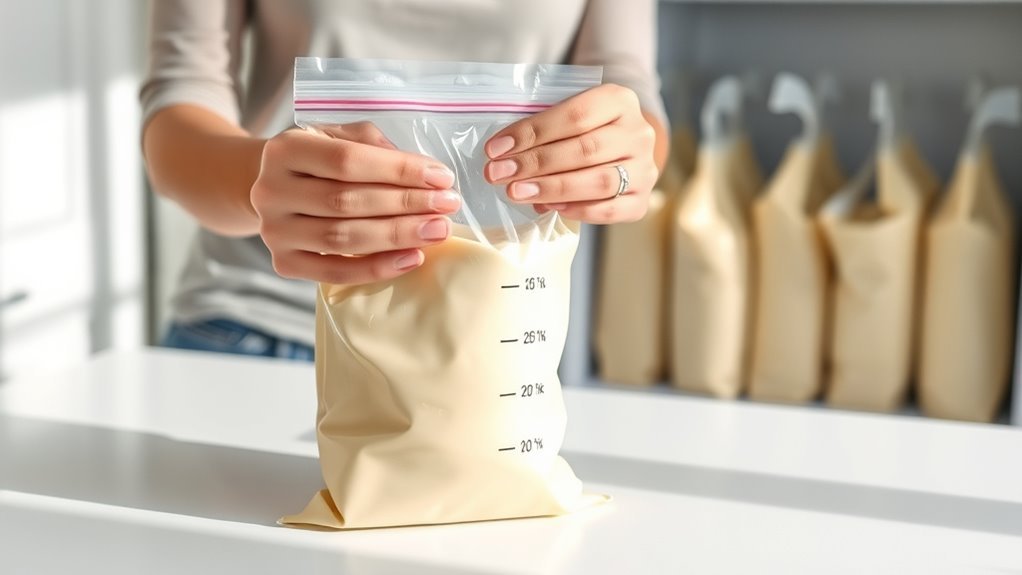
When you store baby food in breast milk storage bags, use high-quality, BPA-free bags with a double zipper seal to prevent leaks. Choose breast milk storage bags that stand upright and fill them with proper portion sizes, typically 2-4 ounces, to avoid waste.
Label storage bags clearly with the date and time to track storage duration. For efficient freezer storage, lay bags flat in the coldest part of your freezer, not the door, to prevent temperature fluctuations.
Label bags with date and time, and freeze flat in the coldest spot—not the door—to keep milk fresh.
Following storage guidelines helps you maintain freshness and avoid contamination. Remember, once thawing breast milk or baby food, never refreeze it.
Use thawed milk promptly to ensure safety. By sticking to these best practices, you’ll keep your baby’s food fresh, safe, and ready when needed.
Safe Thawing and Feeding of Stored Baby Food
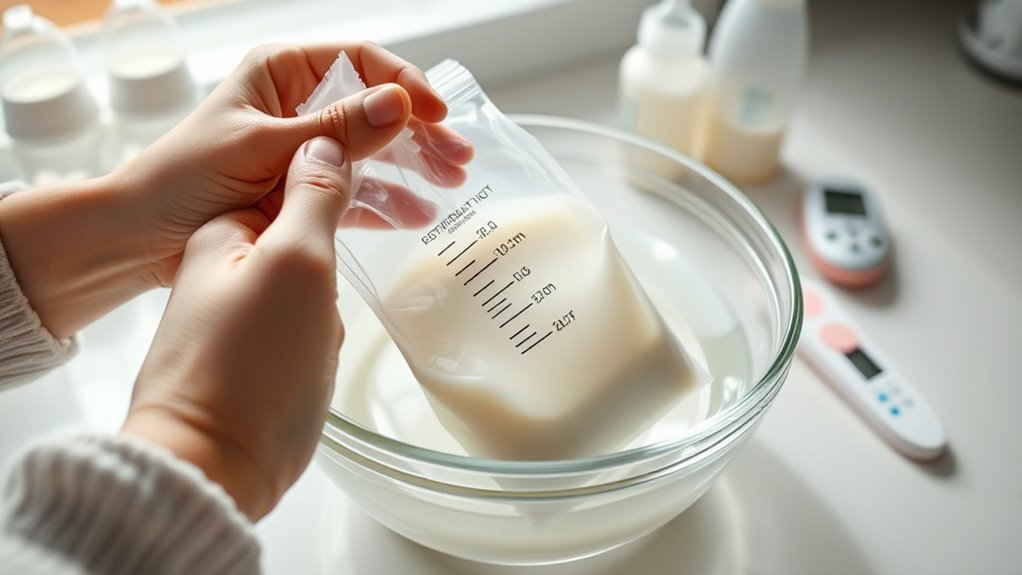
Although freezing preserves baby food well, you need to thaw it safely to keep nutrients intact and avoid harmful bacteria. To thaw breast milk stored in breast milk storage bags, place it in the refrigerator overnight or warm it gently in a bowl of warm water.
Avoid microwave heating to prevent nutrient loss and uneven thawed milk temperature. Always use proper storage containers and store breast milk safely, following recommended guidelines.
Once thawed, use the baby food within the recommended time and never refreeze it. Before feeding, check for spoilage signs like sour smell or slimy texture and ensure the milk is lukewarm.
Practicing safe feeding practices by discarding leftovers after two hours helps protect your baby’s health and ensures every feeding is safe and nutritious.
Frequently Asked Questions
Can I Use Breastmilk Storage Bags for Baby Food?
You shouldn’t use breast milk storage bags for baby food since they’re made for liquids and single use.
Instead, choose airtight, food-grade containers designed for purees. This will help keep your baby’s food safe and fresh.
What Else Can I Use Breast Milk Storage Bags For?
Like a Swiss Army knife, you can use breast milk storage bags for freezing herbs, portioning smoothies, or storing small snacks.
Just label them, freeze flat, and thaw as needed to keep everything fresh and organized.
They’re super handy for more than just milk! Give it a try and see how much easier your kitchen routine can be.
Do You Have to Clean Breast Milk Storage Bags Before Use?
You don’t have to clean breast milk storage bags before use since they’re usually pre-sterilized.
Just wash your hands thoroughly before handling to keep everything hygienic and follow the manufacturer’s instructions for best results.
What Are Common Mistakes in Breast Milk Storage?
Don’t put all your eggs in one basket by overfilling or reusing storage bags. You’ll risk leaks, contamination, and spoilage if you don’t label dates, seal properly, or store milk at correct temperatures every time.
Make sure to label the dates clearly so you know when the milk was expressed. Always seal the bags properly to avoid any spills or exposure to air.
And remember, storing your breast milk at the right temperature is crucial. Keeping these tips in mind will help keep your milk fresh and safe for your baby.
Conclusion
When it comes to using breast milk storage bags for baby food, safety is key. Remember, “better safe than sorry” always applies here.
By properly sealing, labeling, and storing the bags in the freezer, you’ll keep your baby’s food fresh and nutritious. Always thaw food safely in the fridge or warm water, never at room temperature.
Following these simple steps guarantees your little one enjoys every bite without any worries. Using breast milk storage bags correctly helps maintain the quality and safety of your baby’s food.
So, take your time to seal and label each bag clearly, and always follow safe thawing practices. This way, you ensure your baby gets all the nutrients without any risk of contamination. You’ve got this!