
How to Determine If Plastic Storage Containers Are Food Safe
You can determine if plastic storage containers are food safe by looking for the food contact mark, often a glass-and-fork symbol. Also, check the plastic identification code to understand heat limits.
Avoid using plastic for hot, fatty, or acidic foods, and never microwave unless labeled microwave safe. It’s a good idea to opt for larger containers and let hot foods cool before storing.
Using glass or stainless steel can further reduce risks. Keep exploring to discover how to protect your food and health better.
Key Takeaways
- Look for containers labeled explicitly as food-safe or intended for food contact, often marked with a glass-and-fork icon. This symbol is a quick way to know if your container is good to go for food storage.
- Check the plastic identification code on the container’s bottom to assess heat and storage suitability. These codes give clues about what the plastic can handle and whether it’s safe for reheating or freezing.
- Follow label instructions such as “microwave safe,” “reusable,” and temperature restrictions for safe usage. It’s important to stick to these guidelines to avoid any unwanted chemical leaching.
- Avoid containers with heavy scratches or signs of degradation, as damage increases chemical leaching risk. When plastic looks worn out, it’s best to replace it for your health’s sake.
- Prefer inert materials like glass or stainless steel for fatty, hot, or acidic food storage to ensure safety. These materials don’t react with your food, making them a safer option overall.
How To Identify Food-Safe Plastic Storage Containers
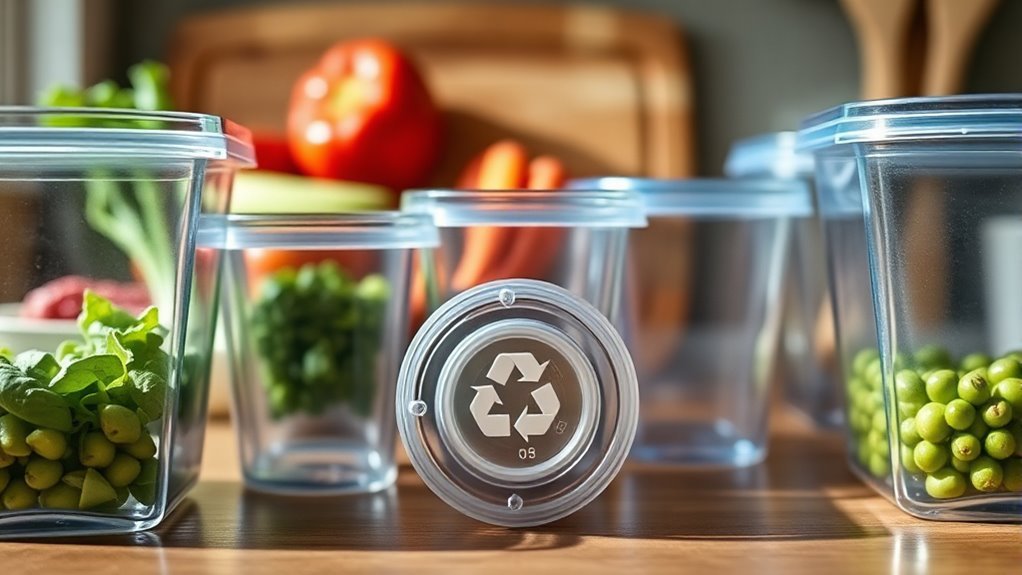
When choosing plastic storage containers, you should always look for those labeled specifically as food-safe rather than just reusable. Plastic food containers made from inert materials like glass or stainless steel usually release fewer chemicals. But if you prefer plastic, be sure it’s clearly marked for food contact.
Avoid using plastic for fatty, hot, or acidic foods, since these increase chemical migration. Also, pick larger containers over small portion packs because a higher surface-to-volume ratio can lead to more chemical transfer into your food.
Finally, don’t microwave plastic containers unless the label explicitly states they’re microwave-safe. Microwaving can raise chemical exposure. By following these guidelines, you can better identify plastic food containers that keep your meals safe and healthy.
How To Read Plastic Food-Safety Labels

How can you tell if a plastic container is truly safe for your food? Begin by looking for the food contact mark—a standardized symbol, often a glass-and-fork icon—that shows the container is intended for food use.
Check the plastic identification code on the bottom; some codes limit heat or storage time suitability. Pay close attention to labels stating “microwave safe,” “reusable,” or temperature restrictions, and always follow instructions like “not for hot liquids” or “use with cover.”
If the label advises transferring food to glass or ceramic for heating, take it seriously. These details matter because chemical migration risk rises with heat and prolonged contact.
Reading these labels carefully ensures you use containers safely and keep your food free from harmful substances.
How Heat And Use Impact Plastic Container Safety
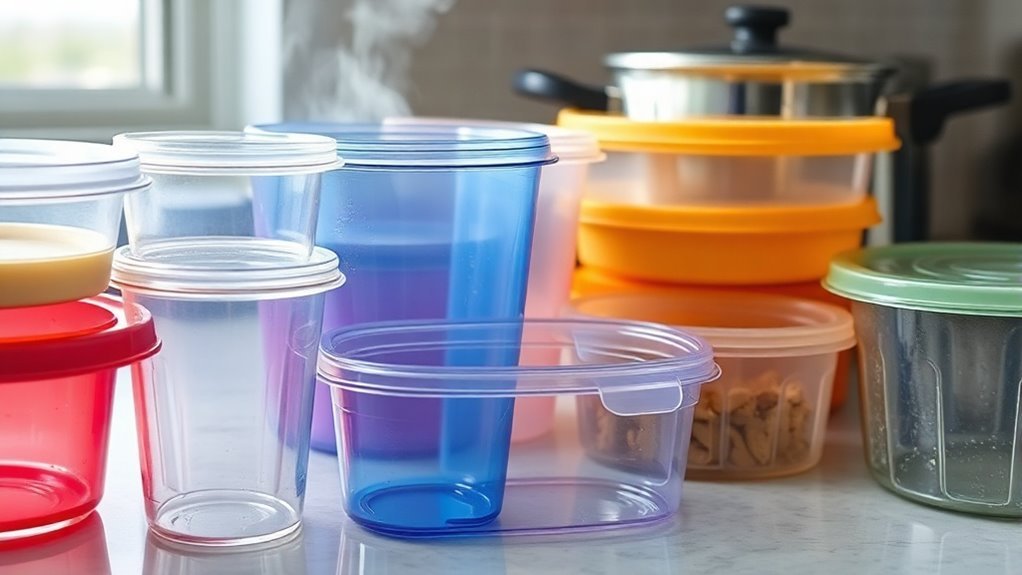
Since heat speeds up chemical migration from plastics, it’s best to avoid leaving hot foods in plastic containers for too long. Microwaving plastic or storing fatty and acidic foods in them can increase the risk of exposure.
Try to let leftovers cool down before putting them in plastic storage containers. Using bigger containers can also help because it lowers the surface-to-volume ratio effect.
Whenever you can, go for inert materials like glass or stainless steel, especially when dealing with hot or fatty foods. Think of plastic containers as a potential source of chemical migration, which really depends on how you use and heat them.
| Action | Impact on Safety |
|---|---|
| Microwaving in plastic | Increases chemical migration |
| Cooling leftovers before storage | Reduces migration risk |
| Using small containers | Higher migration due to surface area |
| Storing fatty/acidic foods | Raises chemical exposure |
Why BPA And Other Chemicals Matter In Plastic Food Containers
Although plastic containers offer convenience, you should be aware that chemicals like BPA can leach into your food, especially under certain conditions such as high temperatures or prolonged storage. BPA migration varies based on the type of plastic and factors like time, temperature, and food composition.
Plastic containers may leach BPA into food, especially with heat, time, and certain food types.
Here’s what you need to know:
- Migration increases with longer contact, higher heat, and when storing fatty or acidic foods rather than watery ones.
- Safety guidelines for BPA exposure have tightened meaningfully as new research shows even tiny amounts may pose risks.
- BPA remains common in many plastics used for food packaging and processing, so potential exposure is widespread.
Being informed helps you understand why BPA and similar chemicals matter for your food’s safety.
How To Minimize Chemical Migration During Food Storage
To minimize chemical migration, keep your food storage time as short as possible and avoid heating food in plastic containers.
Choose inert materials like glass or stainless steel for hot or fatty meals to reduce risk. Also, let leftovers cool before storing.
And whenever you can, reheat food outside plastic containers. It’s a simple way to keep things safer!
Reduce Storage Time
Chemical migration from plastic containers into your food increases the longer they stay in contact. To keep your food safer, reduce storage time in plastic containers by following these tips:
First, store food for the shortest practical time and refrigerate it promptly to slow chemical transfer. It really helps to keep things cool.
Also, let hot food cool before sealing it in a storage container, since heat speeds up migration. Nobody wants extra chemicals in their meal, right?
Avoid reheating food directly in plastic containers—transfer it to a plate to minimize heat exposure. It’s a simple step that makes a big difference.
And one more thing: steer clear of using small containers repeatedly. Their higher surface-to-volume ratio boosts chemical migration per food amount.
Choose Inert Materials
Limiting how long you store food in plastic is a great start, but choosing the right container material makes an even bigger difference in reducing chemical migration. To minimize risks, collect information about inert materials like glass, ceramic, and stainless steel, which typically release fewer chemicals than plastics.
When storing fatty or hot foods—where migration tends to be higher—always opt for these inert containers. Also, let leftovers cool before transferring them to any container, especially plastic, to reduce chemical transfer.
Using larger containers can help too, as they lower the surface-to-volume ratio, decreasing migration potential. By focusing on inert materials and smart storage choices, you can better protect your food’s safety and quality during storage.
Avoid Heating Plastics
Since heat speeds up chemical migration, you should never reheat food in plastic containers. To avoid heating plastics and minimize chemical transfer, follow these tips:
When reheating frozen meals, transfer food to a plate instead of microwaving it in plastic. It’s a simple switch that really helps.
Let leftovers cool before placing them into plastic containers to reduce heat exposure. This way, you’re keeping things safer.
Also, store fatty or acidic foods in glass, ceramic, or stainless steel. These materials are less reactive than plastic, so they’re a better choice for storage.
When To Avoid Plastic For Hot Or Fatty Foods
When you heat or store fatty foods in plastic containers, harmful substances can leach into your meal more easily due to higher temperatures and fat content.
Avoid microwaving food directly in plastic; instead, place a plate underneath to keep the cookie set and reduce chemical migration. Let hot leftovers cool before storing in plastic to minimize risks.
| Food Type | Temperature Risk | Fat Content Risk |
|---|---|---|
| Hot Soups | High | Low |
| Fried Foods | Medium | High |
| Sauces/Gravy | Medium | High |
| Frozen Meals | High | Medium |
| Dairy-based | Low | Medium |
Why Switching From Plastic To Glass, Ceramic, Or Stainless Steel Helps
Switching to glass, ceramic, or stainless steel cuts down on harmful chemical migration, especially when storing hot or fatty foods. These materials handle heat better, so you can safely reheat leftovers without worrying about toxins leaching into your meal.
Choosing inert containers also protects small portions, making them a smarter choice for everyday use. Plus, they’re usually more durable and easier to clean, which is always a win.
Reduced Chemical Migration
Although plastic containers are common for food storage, they can release chemicals into your food, especially over time or at higher temperatures. Choosing glass, ceramic, or stainless steel helps guarantee reduced chemical migration, keeping your food safer.
Here’s why switching matters: Fatty or acidic foods increase chemical migration, so inert materials cut down exposure considerably. Small containers have more surface contact relative to volume, raising migration risks—using glass or stainless steel reduces this.
Heating plastic boosts chemical transfer. So, storing food in non-plastic containers limits this risk before reheating. It’s a simple change that makes a big difference!
Heat Resistance Benefits
Because heat encourages plastics to release more chemicals into your food, choosing glass, ceramic, or stainless steel containers can substantially reduce this risk. These materials are inert, so they don’t leach harmful substances when exposed to warmth.
When you heat food, especially leftovers, using these heat-resistant containers helps limit chemical migration. It improves your experience by keeping your meals safer.
Avoid microwaving food directly in plastic; instead, heat it on a plate and transfer it to a non-plastic container once it cools. This simple swap not only reduces exposure to unwanted chemicals but also enhances the durability and longevity of your storage solutions.
Ideal For Fatty Foods
When you store fatty foods in plastic containers, you risk increasing the migration of harmful chemicals into your meals. Fatty foods, like buttery cookies, draw more chemicals from plastics than water-based foods do.
To improve food safety, switch to glass, ceramic, or stainless steel containers. These inert materials release fewer substances, especially when you:
- Avoid microwaving fatty foods in plastic—heat them in inert dishes instead.
- Cool fatty foods before storing to reduce chemical migration.
- Store leftovers in glass, ceramic, or stainless steel to minimize contact time.
Making these changes can improve the safety of your fatty food storage and keep your cookies tasting better while boosting your health. Choosing the right containers helps you avoid unnecessary chemical exposure every time you store or reheat fatty meals.
When And Why To Replace Plastic Containers To Avoid Chemical Exposure
If your plastic containers show signs of wear like heavy scratches or degradation, it’s time to replace them to minimize chemical leaching into your food. Damage increases chemical migration, especially when storing hot, fatty, or acidic foods.
Replace worn plastic containers to reduce chemical leaching, especially with hot, fatty, or acidic foods.
For example, if you use a plastic container to store cookie dough or leftovers regularly, consider switching to glass or stainless steel for long-term storage. Smaller containers, with a higher surface-to-volume ratio, also pose greater risk and should be replaced more often.
Avoid microwaving plastic whenever possible, as heat accelerates chemical transfer. Stay updated on safety guidelines—recent EFSA recommendations drastically lower safe BPA exposure, so reducing plastic use is wise.
Prioritize inert materials and replace worn plastics to keep your food safe and chemical-free. It’s a simple step that really makes a difference!
Frequently Asked Questions
How Can You Tell if a Plastic Container Is Freezer Safe?
You can tell if a plastic container is freezer safe by checking for explicit labeling or temperature ranges on it. Avoid damaged containers, and choose ones made from inert materials to reduce chemical migration during freezing.
It’s always a good idea to look for symbols or notes that say “freezer safe” on the container. If you’re unsure, it’s better to play it safe and use containers specifically designed for freezing.
How Do You Know if a Bucket Is Food Grade?
Think of a bucket like a trusted vessel—if it wears the badge “food grade” or displays certified symbols, you know it’s safe. Don’t guess; check labels and certifications to make sure it won’t betray your food’s safety.
It’s kind of like checking the ingredients on a food package. You want to be sure what’s inside is safe and clean. So, always look for that “food grade” mark before you use a bucket for storing anything edible.
What Is the Best Way to Store Food to Keep It Safe?
You should store food in cool, inert containers like glass or stainless steel. Avoid prolonged contact with plastic to keep things safe.
Also, make sure to cool leftovers before storing them. And keep foods away from heat to minimize chemical migration. This way, you can keep your food safe and sound.
What Is Food Grade Plastic?
Food-grade plastic means it’s made to safely touch food without harmful chemicals leaching under normal use.
But remember, heating or long storage can increase chemical migration. So, it’s best to avoid plastic for hot or fatty foods.
Conclusion
You might think all plastic containers are the same, but knowing how to spot food-safe ones can protect your health. It’s a twist of fate that the labels you often overlook hold the key to safer storage.
By avoiding heat with certain plastics and switching to glass or stainless steel when needed, you’re not just preserving food—you’re preserving yourself.
So, next time you store leftovers, remember: safety starts with smart choices. Choosing food-safe plastic storage containers means less risk of harmful chemicals leaching into your meals. Prioritize containers labeled as BPA-free or marked with recycling codes like #1, #2, #4, or #5. When in doubt, glass or stainless steel are always safe bets for healthy food storage. Making these simple decisions helps keep your food fresh and your family safe.