How to Choose Which Plastic Is Safe for Food Storage
To choose safe plastic for food storage, start by looking for food-grade certification. This ensures the plastic is tested and safe for contact with food.
Next, focus on plastics labeled with recycling codes #2, #4, or #5. These include HDPE, LDPE, and PP, which are less likely to leach harmful chemicals into your food.
Try to avoid plastics marked with codes #3 and #7 since they may release toxins.
It’s also important to always use plastics according to the directions on the packaging.
Don’t forget to check your containers regularly for any damage or wear and tear.
Understanding these basics helps protect your food and your health while you explore more details about safe food storage plastics.
Key Takeaways
- Choose plastics labeled with recycling codes #2 (HDPE), #4 (LDPE), or #5 (PP) for safe food storage. These types are generally considered safer and less likely to leach harmful chemicals.
- Also, verify that plastics have food-grade certification or FDA approval. This helps ensure the plastic is safe for contact with food.
- Avoid plastics with recycling codes #3 (PVC) and #7. They might leach chemicals that aren’t good for your health.
- Be sure to follow manufacturer guidelines, especially about temperature limits. Heating plastic beyond recommended levels can cause chemicals to leach into your food.
- Lastly, regularly check your containers for any damage like cracks or scratches. If you spot any, replace them to keep your food safe.
Understanding Food-Grade and Food-Safe Plastics
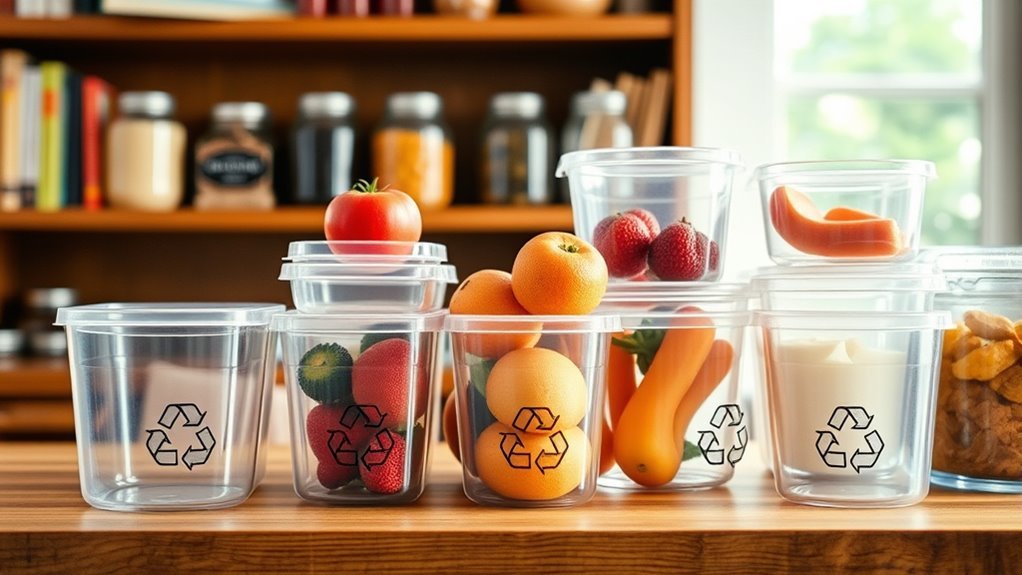
Although the terms food-grade and food-safe plastics are often used interchangeably, it’s important to understand their differences to protect your health. Food-grade plastics meet strict regulatory standards, including FDA approval, ensuring they contain no harmful dyes or additives and are suitable as food contact materials.
Food-safe plastics go a step further—they’re not only food-grade but are also used correctly according to manufacturer guidelines to prevent chemical leaching, especially when exposed to heat. You should pay attention to plastic numbers and temperature resistance to maintain plastic safety.
Identifying Safe Plastic Types for Food Storage
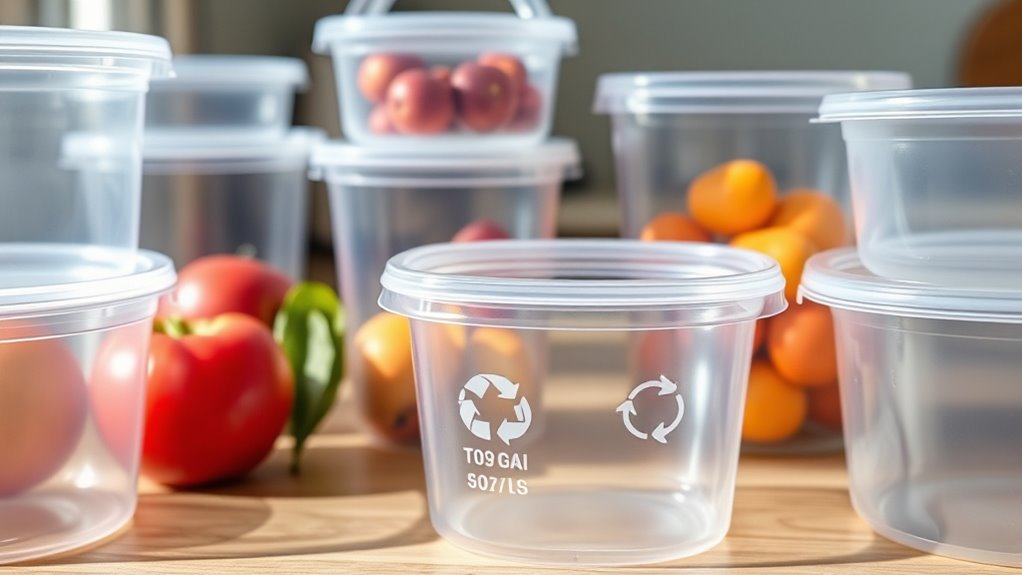
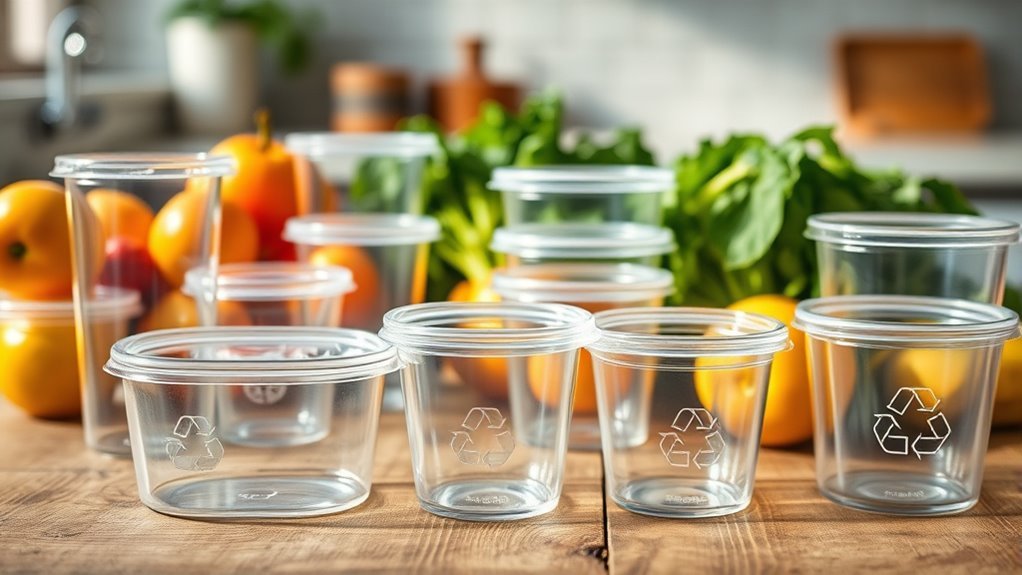
When selecting plastics for food storage, you should focus on those labeled with recycling codes #2, #4, and #5. These types—HDPE, LDPE, and PP—are generally safe and free from harmful chemicals.
These plastic types for food are widely recognized as food-safe plastic options. They’re designed specifically for food contact materials. Always check plastic safety labels to confirm food-grade certification.
This way, you ensure the container doesn’t contain dyes or additives that could cause leaching chemicals to contaminate your food. Avoid plastics marked with recycling codes #3 and #7, which may release harmful substances.
Choosing plastics with proper certification guarantees safety and stability during use. By prioritizing recycling codes 2 HDPE, 4 LDPE, and 5 PP, you protect your food and health effectively.
Frequently Asked Questions
What Is the Safest Plastic to Store Food In?
The safest plastics for food storage are those marked #2, #4, and #5 since they’re FDA-approved.
Avoid BPA-containing plastics like #7, and opt for glass or stainless steel when possible to keep your food chemical-free.
It’s a good idea to choose materials that won’t leach harmful chemicals into your food. That way, you can store your meals safely without worry.
Is Number 2, 4, or 5 Plastic Safe?
Yes, numbers 2, 4, and 5 plastics are safe for food storage if they’re food-grade and you follow usage guidelines.
They resist harmful chemicals, with #5 also being microwave-safe and heat-resistant for versatile use.
Do Ziploc Bags Give off Microplastics?
Yes, Ziploc bags can release microplastics if you heat or reuse them repeatedly.
But if you use them properly—like for single-use and avoid heating—you’ll greatly reduce the chance of microplastic shedding.
That way, you keep your food safer too.
How to Know What Plastic Is Food Safe?
You’d think finding food-safe plastic is rocket science, but it’s simpler! Just check for recycling codes #2, #4, or #5.
Make sure it’s BPA-free, and look for “food-grade” labels before trusting your food’s safety. It’s really that straightforward!
Conclusion
Choosing the right plastic for food storage is easier when you know what to look for. Did you know that only about 20% of plastics are truly food-safe? Understanding this can make a big difference in your daily routine.
By learning to recognize food-grade labels and steering clear of harmful plastics like PVC or polystyrene, you’re not just protecting your health—you’re also keeping your food fresh and tasty. It’s a simple step that pays off every time you reach for a container.
So, next time you pick a plastic container, trust your knowledge. Choosing the right plastic for food storage ensures safe, worry-free storage every day. Remember, knowing which plastic is safe for food storage is key to maintaining both your health and the quality of your meals.