5 Plastic Containers Safe for Food Storage
When choosing safe plastic food containers, look for BPA-free options with recycling codes 2, 4, or 5. These codes help you avoid harmful chemicals that can leach into your food. It’s super important for keeping your meals healthy and safe.
Brands like Rubbermaid Brilliance offer durable, thick plastics and leakproof lids that keep food fresh and spill-free. You’ll love containers with airtight silicone gaskets and secure locking clips because they prevent contamination and messes.
Remember to replace scratched or worn containers, as they can harbor bacteria. Also, avoid heating hot foods directly in plastic to keep things safe.
Keep going to discover more top picks and expert tips for safer food storage—you’re on your way to smarter kitchen choices!
Key Takeaways
- Choose containers labeled BPA-free with recycling codes 2, 4, or 5 for safer food storage options. These codes indicate plastics that are generally considered safer for storing food.
- Rubbermaid Brilliance containers offer true leakproof lids and durable, thick plastic to help prevent contamination. They’re a solid choice if you want something reliable and long-lasting.
- Opt for containers with airtight silicone gaskets and secure locking clips. This keeps your food fresh longer and helps avoid any messy spills.
- Remember to replace scratched or cracked containers regularly. Doing this minimizes microplastic exposure and keeps your food safe.
- Consider versatile container sets that are stain-resistant, stackable, and designed for everyday food storage needs. They make organizing your kitchen so much easier!
Criteria for Selecting Safe Plastic Food Containers
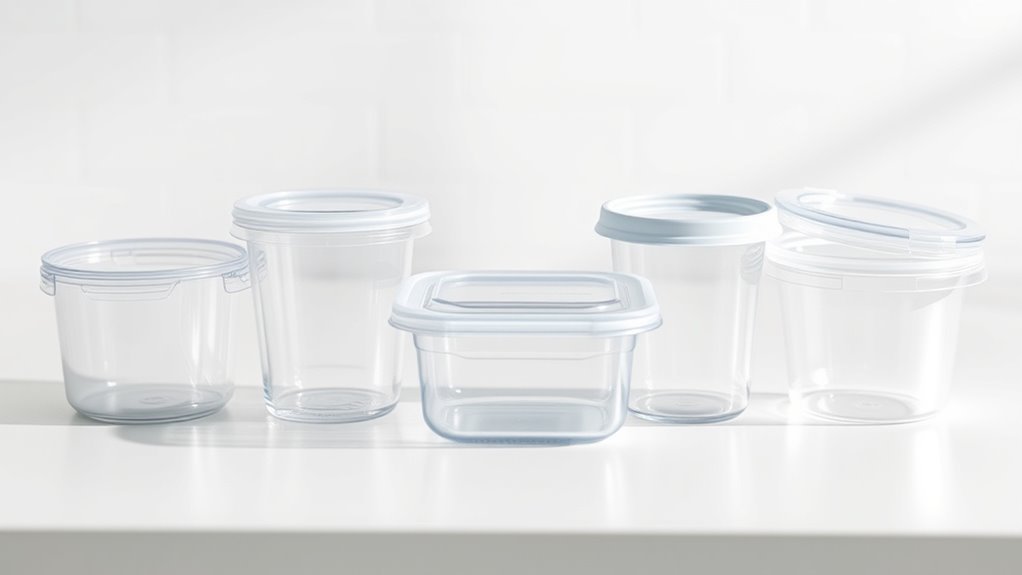
When selecting plastic containers for food storage, you should focus on safety by choosing those labeled with recycling codes 2, 4, or 5, as they’re generally safer options. These recycling codes indicate plastic resins known for food-grade plastics that minimize chemical leaching risks.
Always check for BPA-free labeling and safety certification from agencies like the FDA to ensure food storage safety. Prioritize durable containers made from thicker plastics resistant to scratching and staining, as these last longer and reduce bacterial buildup.
Avoid plastics with recycling codes 3, 6, or 7 since they often contain harmful chemicals. Replace any containers that show cracks or heavy wear to prevent contamination.
Top Performing Leakproof Plastic Containers
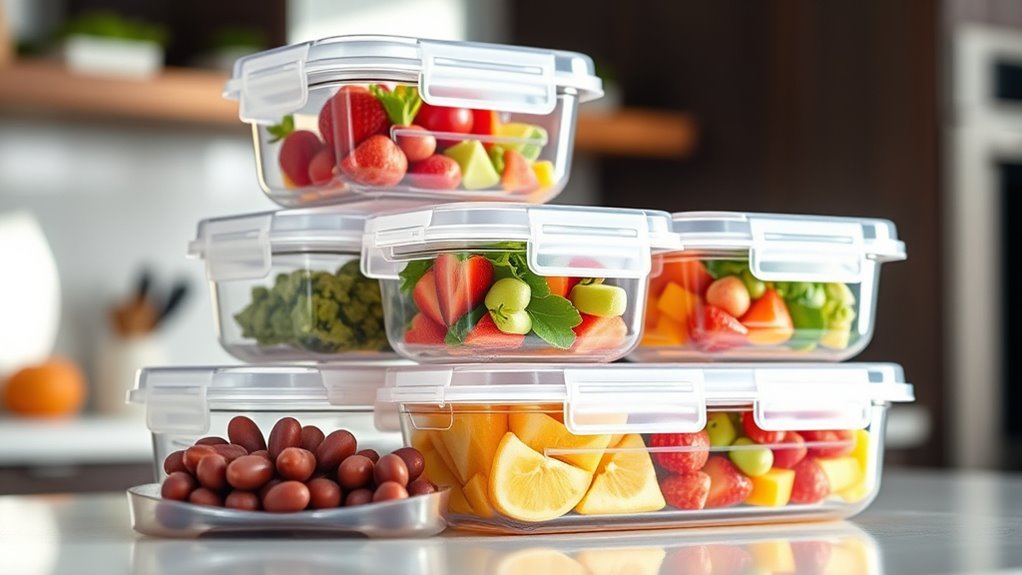
Although many plastic containers claim to be leakproof, only a few, like Rubbermaid Brilliance, truly prevent spills even when aggressively shaken. When you choose leakproof containers for food storage, focus on seal design and container lids that lock securely to maintain food safety and storage durability.
Unlike Pyrex Snapware, which often leaks when tipped, Rubbermaid Brilliance’s snap-on lids ensure excellent transportability without mess. Be cautious with brands like Yeti Dash & Dine, where latch mechanisms can break, compromising their leakproof performance.
The key to reliable plastic containers lies in sturdy lids combined with thick, durable materials. By selecting containers with proven leakproof seals, you protect your food, prevent contamination, and enjoy hassle-free storage and transport every day.
Durable Materials and Lid Designs That Prevent Contamination
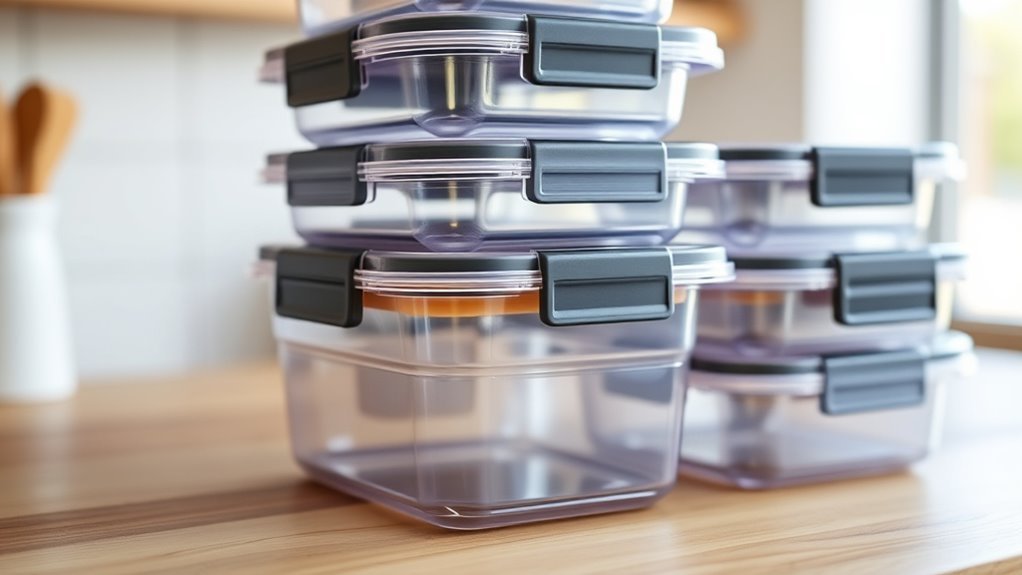
Because durable materials and smart lid designs work hand in hand, you can trust your plastic containers to keep food fresh and safe. Durable plastic made from high-quality plastics offers wear resistance and sturdy materials to prevent cracking or warping.
Leakproof lids with airtight seals and secure locking clips ensure contamination prevention by keeping bacteria and spills out. Lockable containers with easy-to-use lids reduce wear and tear, maintaining container integrity over time.
Here’s a quick overview:
| Feature | Benefit | Example |
|---|---|---|
| Durable Plastic | Lasts longer, resists damage | Rubbermaid Brilliance |
| Leakproof Lids | Prevents spills and leaks | Snap-on locking clips |
| Airtight Seals | Maintains freshness | Silicone gaskets |
| Sturdy Materials | Resists scratching | Thick high-quality plastics |
| Lockable Containers | Easy to open, durable | Locking snap lids |
Versatile Plastic Container Sets for Everyday Use
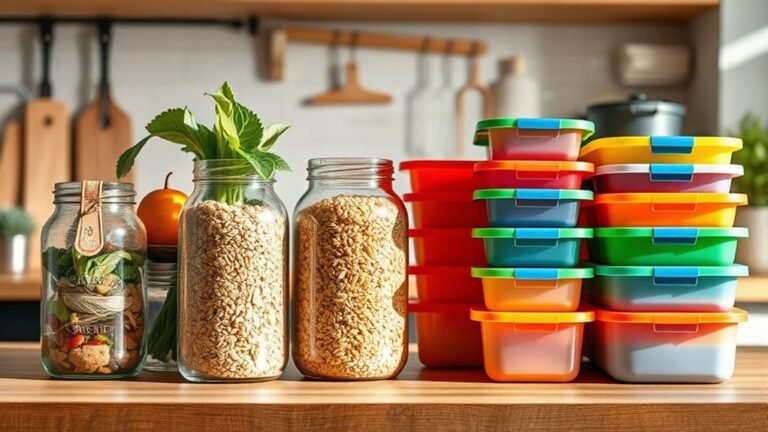
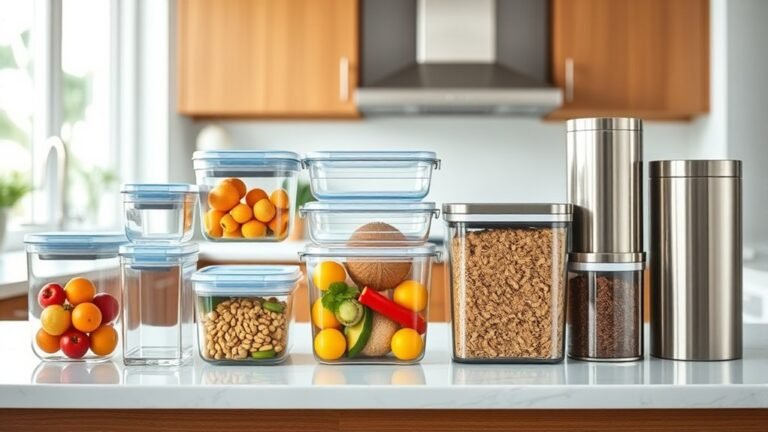
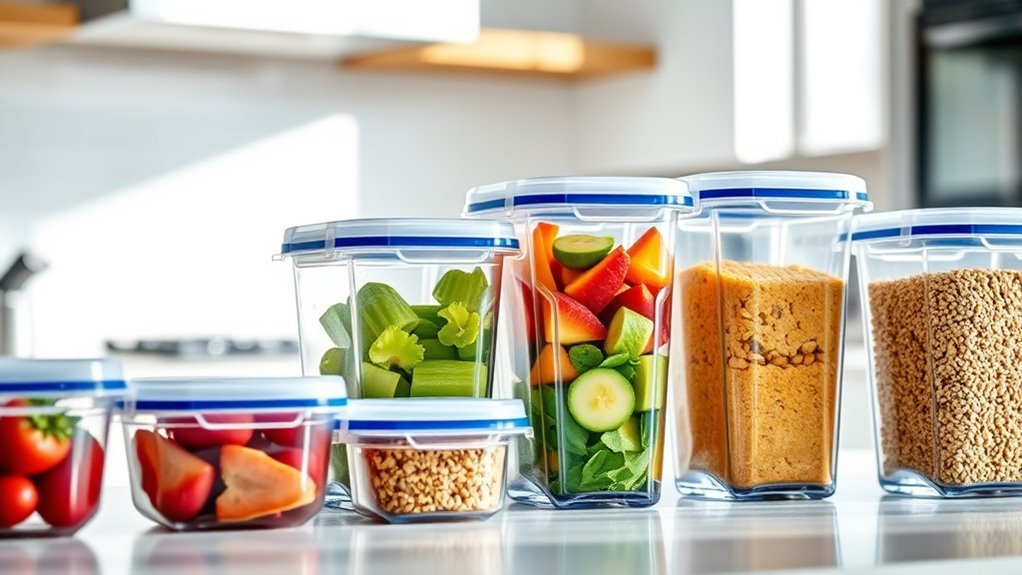
Versatile plastic container sets offer a range of sizes and configurations that fit all your storage needs, from small snacks to large leftovers. These plastic containers come with airtight lids that guarantee food safety by preventing leaks and keeping your food fresh.
Whether you’re into meal prep or just need reliable storage containers, these sets are designed to simplify your food packaging and organization. Many feature a stackable design to optimize space in your fridge or pantry.
Consider these benefits:
- Leak-proof airtight lids to maintain freshness
- Various sizes for snacks, meals, and leftovers
- Lightweight and budget-friendly options
- Durable, stain-resistant materials for daily use
- Stackable design to save space and keep things tidy
These versatile sets make food storage effortless and safe. You’ll wonder how you ever managed without them!
Expert Recommendations to Minimize Microplastic Exposure
While plastic containers offer convenience and practicality for everyday food storage, it’s important to use them wisely to protect your health. Experts suggest avoiding heating or storing hot, acidic, or greasy foods in plastic containers to limit microplastic release and chemical leaching.
Let hot foods cool before storing to maintain heat safety and reduce health risks. Consider switching to glass containers or other alternatives like stainless steel to markedly diminish microplastic exposure.
Also, don’t reuse scratched or damaged plastic containers, as this increases microplastic shedding and chemical transfer. Regularly replacing worn containers and avoiding microwaving food in plastics further lowers your microplastic intake.
Frequently Asked Questions
Which Plastic Containers Are Safest for Food Storage?
You should choose containers made from HDPE (2), LDPE (4), or polypropylene (5) since they’re the safest plastics for food storage.
Avoid PVC, polystyrene, and polycarbonate plastics to keep your food free from harmful chemicals. It’s better to be cautious when it comes to what touches your food, right?
Should You Avoid Storing Food in Plastic Containers?
You should think twice before using plastic containers for food storage. They can quietly invite unwanted guests like chemicals into your meals, especially when heated.
Choosing glass or stainless steel keeps your food safer and fresher. It’s a simple switch that makes a big difference. Why not give it a try?
Do All Plastic Containers Give off Microplastics?
No, not all plastic containers give off microplastics, but many do, especially if they’re scratched, heated, or worn.
You should choose high-quality, durable plastics or switch to glass or stainless steel to minimize risks. It’s a simple way to keep things safer and cleaner.
Do Ziploc Bags Leach Microplastics Into Your Food?
Yes, Ziploc bags can leach microplastics into your food, especially when stretched, heated, or reused.
To reduce this, avoid prolonged storage, high heat, and repeated use.
Doing this helps ensure safer food handling and minimizes microplastic ingestion.
Conclusion
So, unless you’re aiming to season your leftovers with a dash of mystery chemicals, choosing the right plastic container isn’t just a game of Tetris in your fridge. You want leakproof lids that actually stay put, materials tougher than your morning coffee, and designs that scream “I won’t contaminate your snack.”
Follow these picks, and you’ll dodge microplastics like a food ninja—because your sandwich deserves better than a plastic apocalypse on its plate.
When it comes to food storage, picking safe plastic containers is key. Look for BPA-free options made from durable materials like polypropylene or Tritan. These containers not only keep your food fresh but also prevent harmful chemicals from leaching in.
Investing in quality plastic containers with secure lids means no leaks, no spills, and no unwanted flavors. So, for healthy, safe, and convenient food storage, make sure your plastic containers are designed to protect your snacks and keep microplastics out of your meals. Your leftovers—and your health—will thank you!