5 Essential Tips for Reheating Leftover Food From Cold Storage
When reheating leftovers from cold storage, it’s super important to use a food thermometer. This helps you make sure the internal temperature hits 165°F (74°C), keeping your food safe to eat.
Try portioning your food into shallow containers so it heats evenly. And avoid microwaving leftovers multiple times—that can increase bacterial risks.
Always cover your dishes while reheating. Plus, stirring or rotating the food helps it warm consistently throughout.
Don’t forget to cool leftovers quickly before storing them again. Following these simple tips keeps your food safe and tasty.
If you want, you can dive deeper into mastering each step for even better results. It’s easier than you think!
Key Takeaways
- Use a food thermometer to ensure leftovers reach an internal temperature of 165°F (74°C) for safe consumption.
- Reheat leftovers in microwave-safe dishes, stirring or rotating halfway for even heating and avoiding cold spots.
- Portion food into shallow containers before reheating to promote uniform heat distribution and faster reheating.
- Limit reheating to only one cycle to prevent bacterial growth and maintain food quality.
- Let microwaved food stand for two minutes after heating to allow heat to distribute evenly throughout.
Use a Food Thermometer to Ensure Safe Internal Temperatures
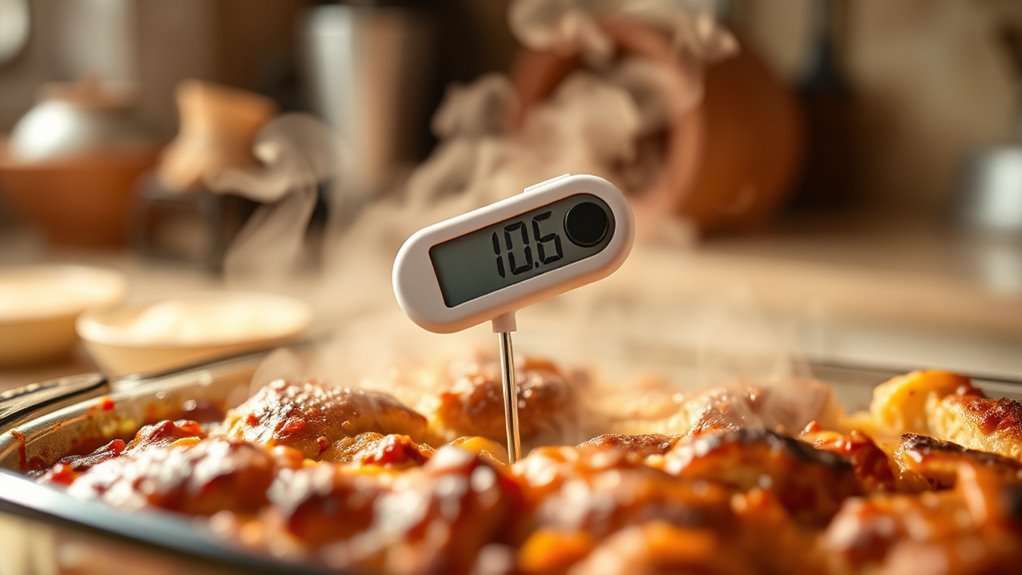
Although reheating leftovers might seem straightforward, you should always use a food thermometer to guarantee they reach a safe internal temperature of at least 165°F (74°C). This temperature check is vital for food safety, as it helps kill bacteria like Salmonella and Listeria that cause foodborne illness.
Always use a food thermometer to ensure leftovers reach a safe internal temperature of 165°F.
When reheating leftovers, insert the thermometer into the thickest part of the food, avoiding bones or containers for an accurate reading. A digital thermometer is ideal because it offers quick, precise measurements.
Don’t forget to regularly calibrate your thermometer to maintain its accuracy. Proper storage before reheating also plays a role in minimizing bacterial growth.
Using a food thermometer ensures you safely reheat leftovers, protecting yourself and your family from potential health risks. It’s a simple step that makes a big difference!
Best Practices for Microwaving and Oven Reheating
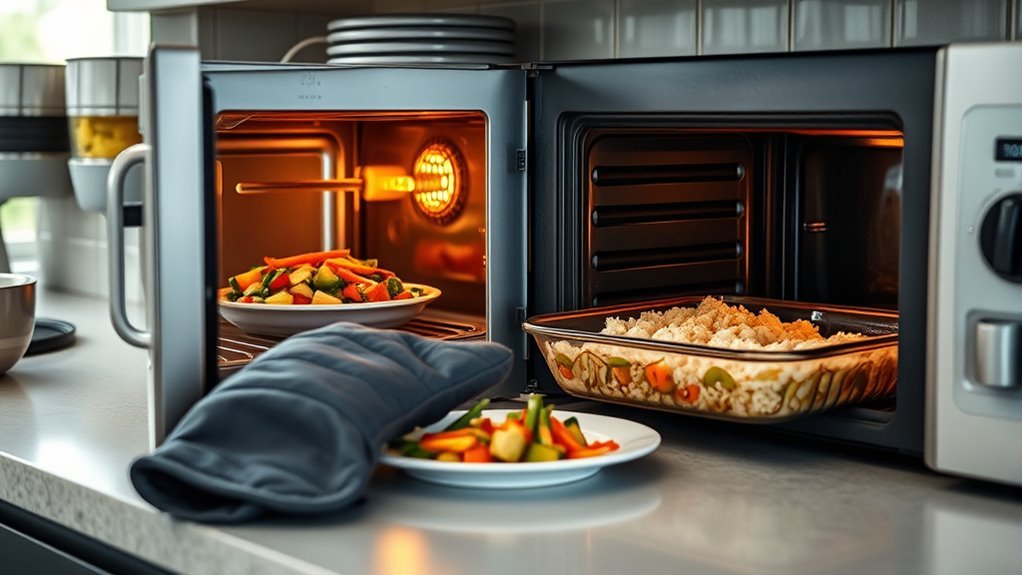
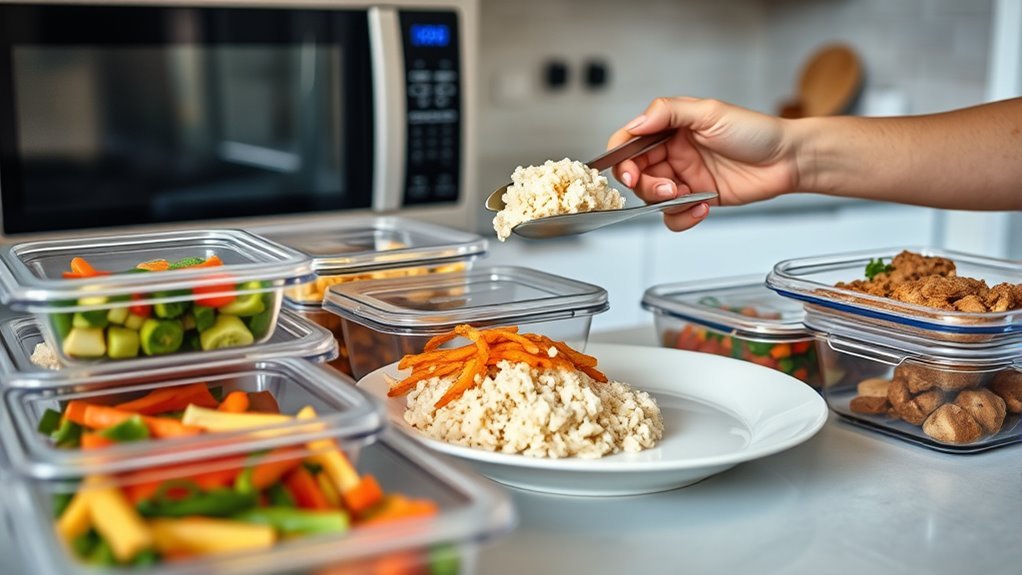
When reheating leftovers in the microwave or oven, you should always use microwave-safe dishes. Also, cover your food with a vented lid or microwave-safe plastic wrap to guarantee even heating.
To assure food safety and prevent bacterial growth, follow these best practices:
- During microwave reheating, stir or rotate your food halfway through. This helps avoid cold spots and promotes even heating.
- Use a food thermometer to conduct a temperature check. Make sure the internal temperature reaches at least 165°F (74°C).
- For oven reheating, reheat in short intervals and monitor closely. This prevents overcooking or drying out.
Remember to let microwaved food stand for two minutes after reheating. This allows heat to distribute evenly, ensuring safe and delicious leftovers every time.
Avoid Multiple Reheating Cycles to Maintain Food Safety
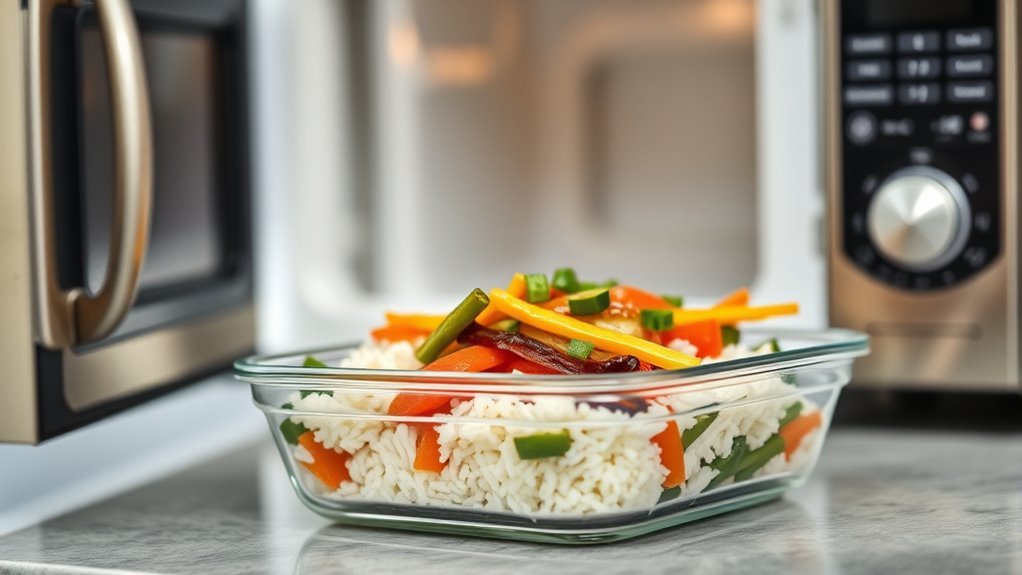
Because reheating leftovers multiple times can promote bacterial growth and compromise food safety, you should avoid doing it more than once. Each reheating cycle increases the chance that food stays in the danger zone (40°F-140°F), where bacteria multiply rapidly.
To guarantee food safety, always use a food thermometer to check that your leftovers reach an internal temperature of 165°F (74°C) during the first reheat. Repeatedly cooling and reheating leftovers not only raises the risk of foodborne illness but also degrades food quality, flavor, and texture.
After reheating, consume your food immediately and don’t return it to cold storage. Sticking to a single reheating cycle helps maintain both the safety and the nutritional value of your meals while minimizing bacteria growth.
Proper Portioning and Handling Before Reheating
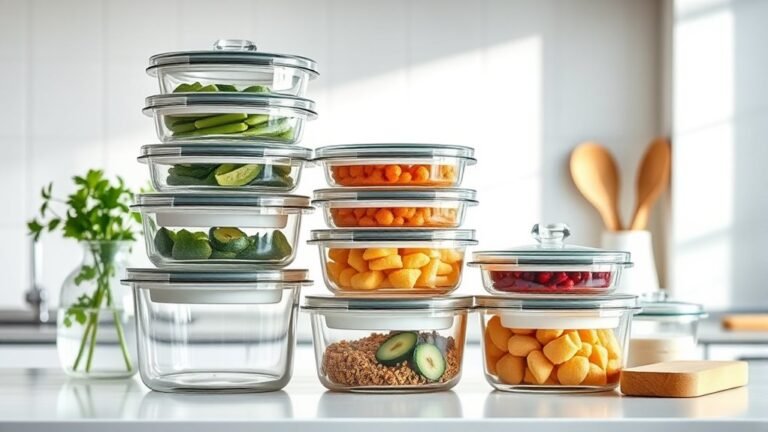
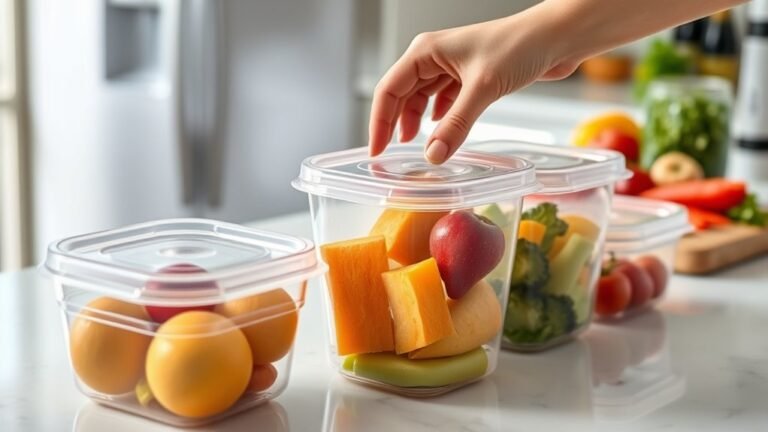
To guarantee your leftovers reheat safely and evenly, you should portion them into smaller, shallow containers before storing. Proper portioning and handling are key to food safety and efficient reheating.
Follow these steps:
- Use separate utensils and plates for raw and cooked leftovers to avoid cross-contamination.
- Cool leftovers quickly to below 40°F within two hours before placing them in the refrigerator for safe storage.
When reheating, only heat the portion you’ll consume. And be sure to check the internal temperature with a food thermometer to make sure it reaches a safe level.
Tips for Storing and Cooling Leftovers Before Reheating
If you want to keep your leftovers safe and tasty, you need to cool and store them properly right after cooking. To cool leftovers effectively, transfer hot food into shallow containers to promote rapid cooling and prevent foodborne bacteria growth.
Don’t leave food at room temperature for more than two hours—or just one hour if it’s hotter than 32°C (90°F). Always refrigerate perishable items promptly, maintaining your fridge between 0-5°C (41°F) for ideal food storage.
Proper cooling and temperature control are essential for food safety, so label containers with the date to track freshness. Following these food handling tips reduces bacterial risks and guarantees your leftovers stay safe until you’re ready to reheat and enjoy them.
Frequently Asked Questions
What Is the 2 2 4 Rule for Leftovers?
The 2-2-4 rule tells you to refrigerate leftovers within 2 hours, keep them at or below 40°F, and eat or freeze them within 4 days.
This helps keep your food safe and fresh without risking bacteria growth. It’s a simple way to make sure your leftovers don’t spoil.
Do I Wait for Leftovers to Cool Down Before Refrigerating?
No, don’t wait for leftovers to cool completely before refrigerating. Instead, cool them quickly by dividing into shallow containers or stirring.
Refrigerate within two hours to prevent bacterial growth and keep your food safe. It’s a simple step that helps your leftovers stay fresh longer.
Why Can’t You Reheat Leftovers Twice?
You can’t reheat leftovers twice because it increases bacteria risk and breaks down food quality.
Each reheating cycle allows harmful bacteria to grow if the food isn’t heated evenly. So, it’s safer to reheat only once.
What Are Some Tips for Reheating Leftovers?
Think of reheating leftovers like waking a sleeping dragon—heat evenly by stirring, cover to trap steam, use a thermometer to hit 165°F, and cool quickly afterward.
Don’t reheat twice, or safety’s at stake. It’s all about keeping things safe and tasty!
Conclusion
By following these simple steps, you’ll give your leftovers a fresh new lease on life while keeping them safe to enjoy.
Remember, treating your food with a little extra care and attention not only preserves its flavor but also protects your well-being.
So, take the time to handle, store, and reheat wisely—you’ll turn yesterday’s meal into today’s delight without any unwelcome surprises.
Proper reheating of leftover food from cold storage ensures you maintain both taste and safety.
Your future self will thank you for mastering these essential tips!