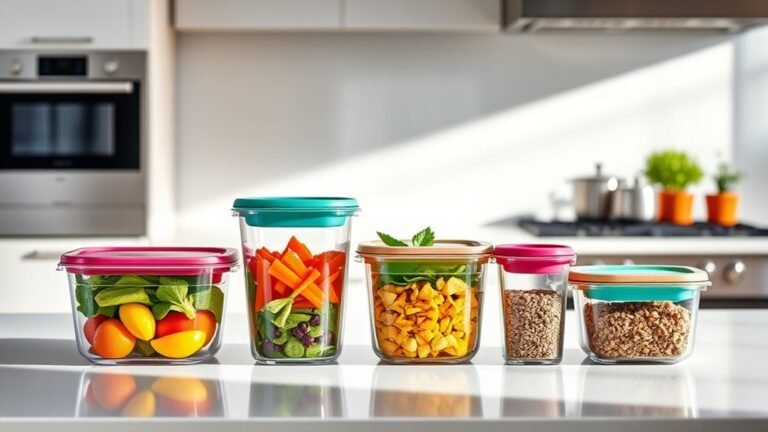
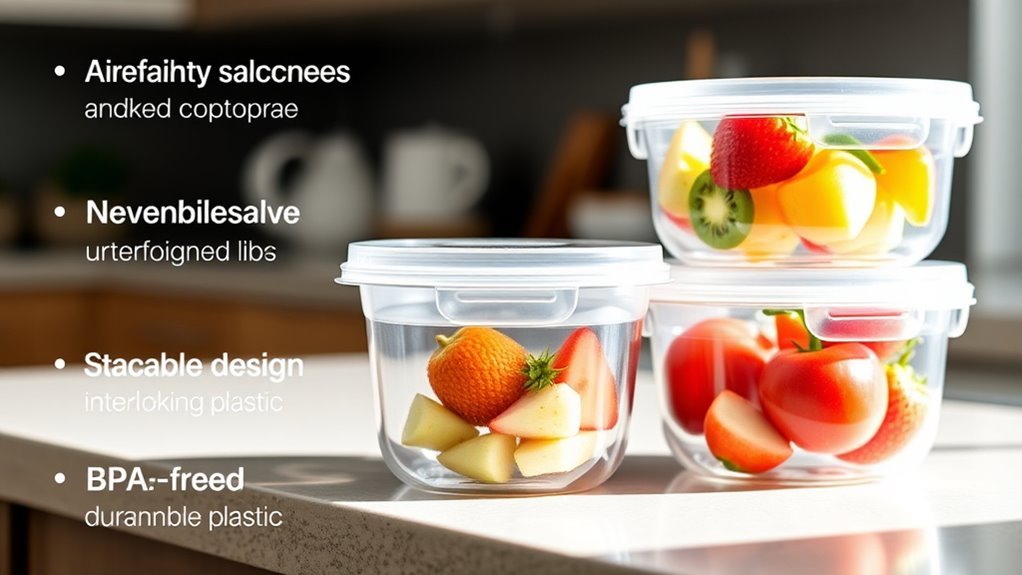
3 Key Features to Look for in Food Storage Containers
You’ll want food storage containers that lock tightly with silicone gaskets to prevent leaks and spills. This feature is key for keeping your food fresh and your fridge mess-free.
Choose impact-resistant, BPA-free plastic or tempered glass for durability. These materials can handle daily use without cracking or staining, so your containers last longer.
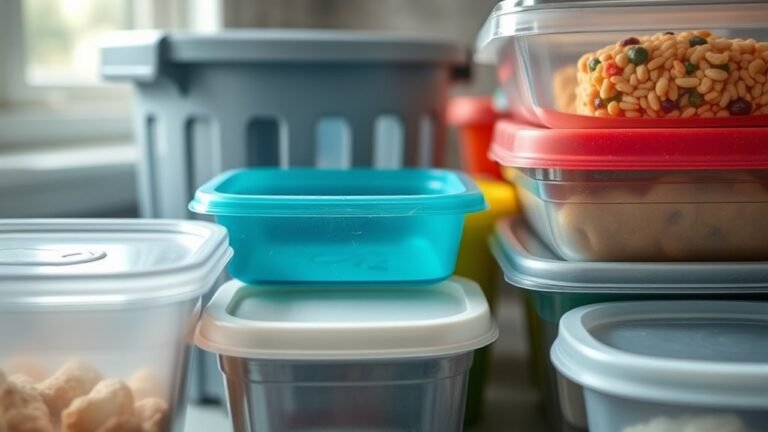
Look for user-friendly lids with textured tabs for easy opening. Also, consider shapes like rectangles or squares that stack neatly to save space in your kitchen.
These features create a practical, reliable system that fits your lifestyle perfectly. There’s more to explore to help you make the best choice.
Key Takeaways
- Leakproof design with silicone gaskets or secure locking lids prevents spills and maintains freshness.
- Durable materials like BPA-free plastic or tempered glass ensure long-lasting container use.
- User-friendly lids with textured tabs allow easy opening and secure sealing.
- Stackable and uniform-shaped containers maximize storage efficiency and organization.
- Clear lids enable quick closure verification, minimizing accidental spills during transport.
Leakproof Design and Material Durability
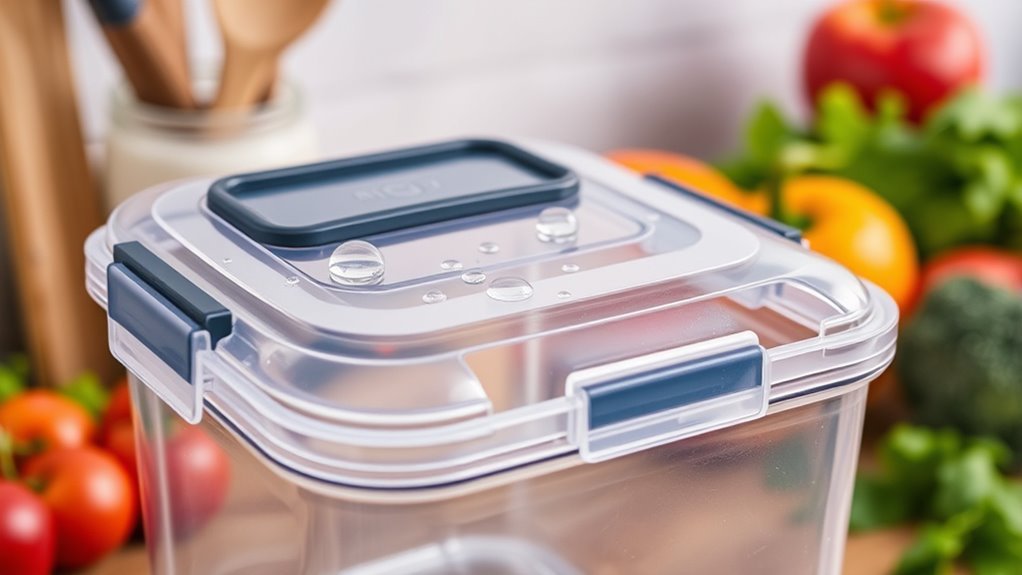
When choosing food storage containers, you’ll want to prioritize leakproof designs that use silicone gaskets or secure locking lids to keep spills at bay. These features create a secure sealing system that prevents leaks even when containers are tilted or shaken.
Focus on containers made from impact-resistant material like BPA-free plastics or tempered glass, which offer superior plastic durability and resist cracking or warping over time. Tempered glass is especially crack-resistant and warping-resistant, ensuring long-lasting performance.
Pay attention to the lid design—ill-fitting lids can compromise leakproof integrity, so choose containers with reliable locking lids that snap securely in place. Testing containers for true leakproof performance before purchase saves you from messy surprises later.
This way, you’ll enjoy durable, mess-free food storage every time.
User-Friendly Lid Functionality
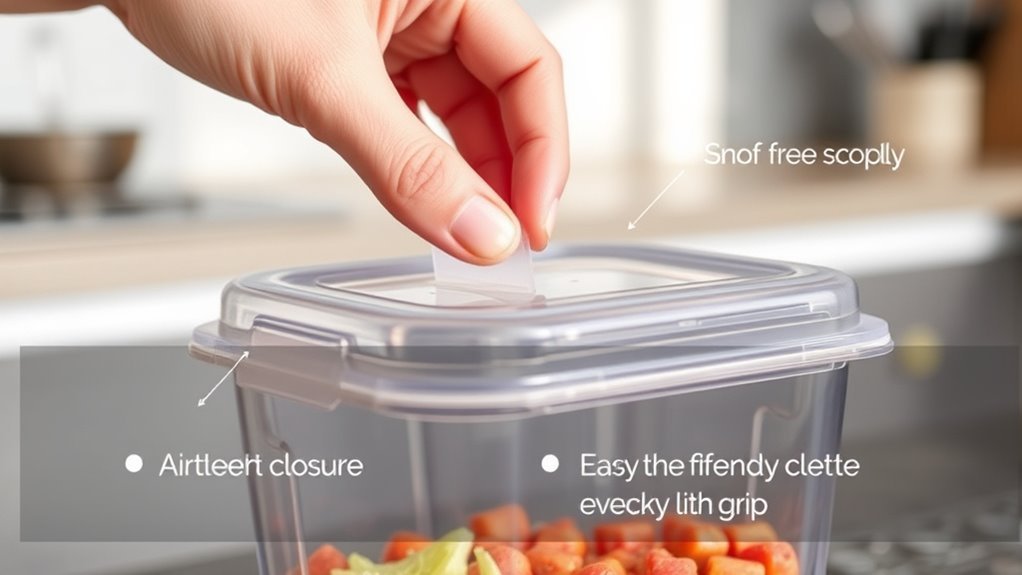
Although a secure seal is essential, you’ll also want lids that are easy to open and close, even with one hand. User-friendly lid functionality guarantees convenience without sacrificing performance.
Here’s what to look for:
- Locking lids with silicone gaskets provide an airtight seal that’s also leak-proof, keeping food fresh and secure.
- Textured tabs make lids easy to open and close, perfect for one-handed operation.
- Choose durable lids designed for long-lasting use to avoid frequent replacements.
- Opt for clear lids that allow you to quickly verify closure, minimizing spills.
These features combine to deliver containers that are both practical and reliable. They make your food storage hassle-free and efficient.
Versatility and Storage Efficiency
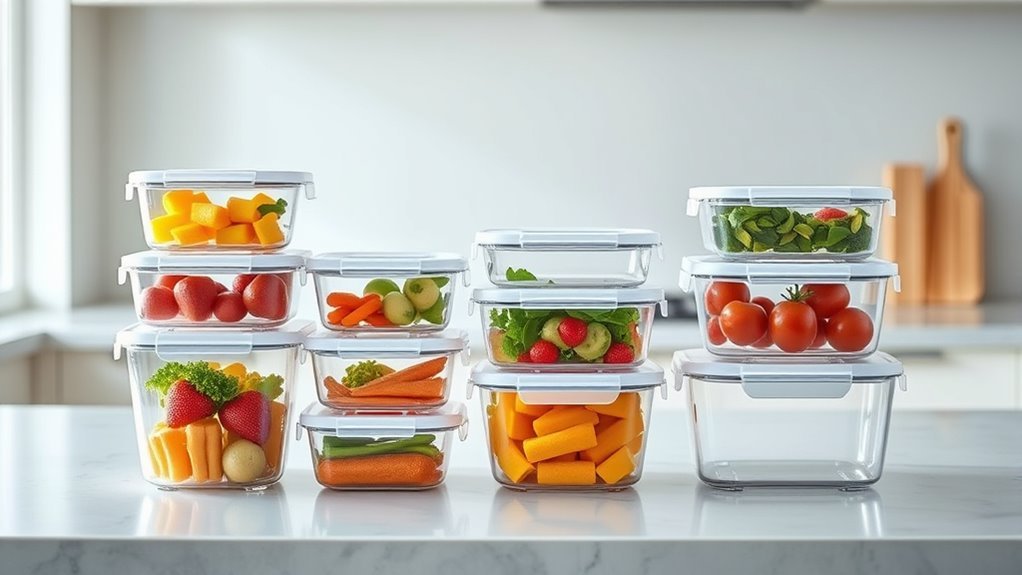
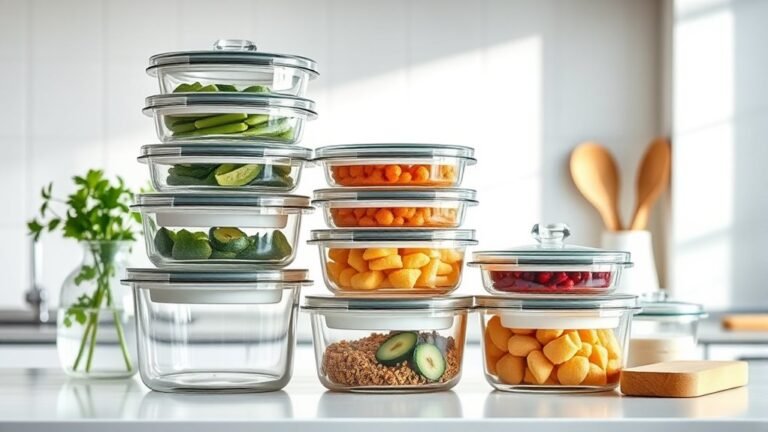
Maximizing your kitchen space means choosing containers that offer both versatility and storage efficiency. Look for containers with uniform shapes, like rectangular or square, to enhance organization and make the most of your cabinet and refrigerator storage.
Stackable lids help you utilize vertical space, keeping your kitchen neat while providing easy access to contents. Opt for containers with a nesting design so you can store them compactly when not in use, saving valuable space.
Versatile sizes and multi-piece sets ensure you have adaptable containers for different food types and portions. This way, you can achieve maximum capacity without clutter.
Frequently Asked Questions
What Is the 2-2-2 Rule for Food Storage?
The 2-2-2 rule means you store leftovers in containers holding 2 cups or less. Eat them within 2 days if refrigerated, and keep frozen leftovers no longer than 2 months.
It helps you prevent waste safely. Simple, right? Just a handy way to keep your food fresh and your kitchen tidy.
What to Avoid in Food Storage Containers?
Want containers that leak or break? You shouldn’t choose ones without silicone gaskets, made from code 7 plastics, or with fragile handles.
Avoid glass without secure lids and designs that trap residue; they’re just asking for trouble.
What Are 5 Important Food Storage Tips?
You should keep food airtight, label containers with dates, store leftovers promptly, separate raw and cooked foods, and regularly check seals for damage.
These habits keep your food fresh and safe while minimizing waste. It’s pretty simple but makes a big difference!
What Are the Latest Trends in Food Storage Containers?
You want leakproof seals, stackable designs, and eco-friendly materials. You’ll love containers with venting systems for microwaves and sleek, color-coded sets.
These trends help you save space, preserve food, and keep your kitchen stylish. It’s all about making storage practical and pretty at the same time!
Conclusion
When you choose food storage containers, imagine opening a perfectly sealed lid that never leaks, keeping your meals fresh no matter where you go. Picture lids that snap on effortlessly, saving you time and frustration.
Now, think about stacking those containers neatly, maximizing every inch of your kitchen space. With leakproof durability, user-friendly lids, and smart storage design, you’re not just storing food—you’re transforming your daily routine into something smoother and more efficient.
Choosing the right food storage containers means looking for leakproof durability, easy-to-use lids, and clever stacking features. These key features help keep your food fresh longer and make organization a breeze. Ready to make the switch to containers that simplify your kitchen and keep your meals fresh? It’s time to upgrade your storage game!