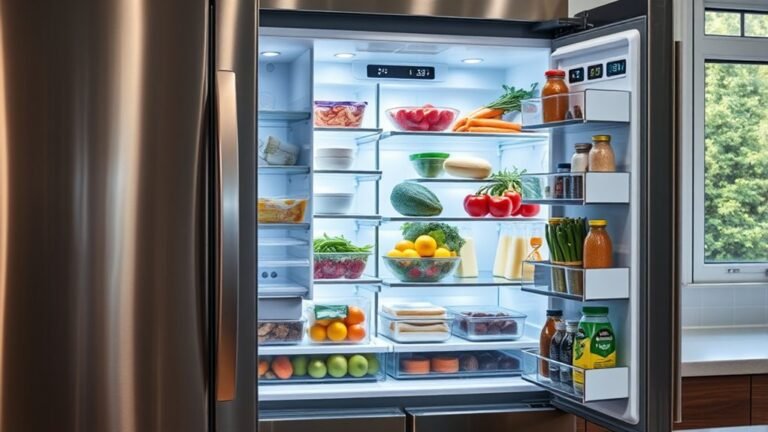
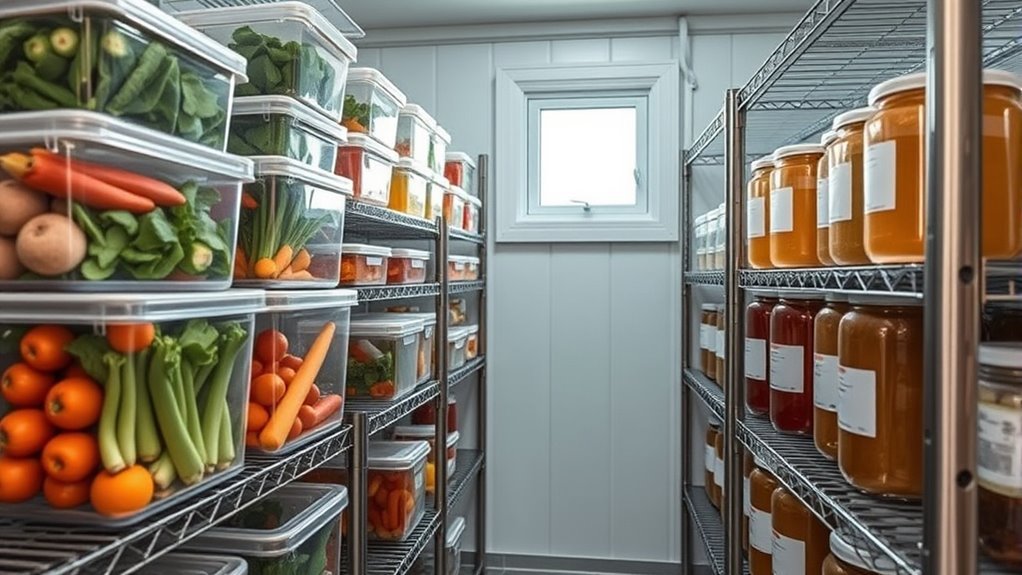
How You Can Store Food Safely in a Storage Unit
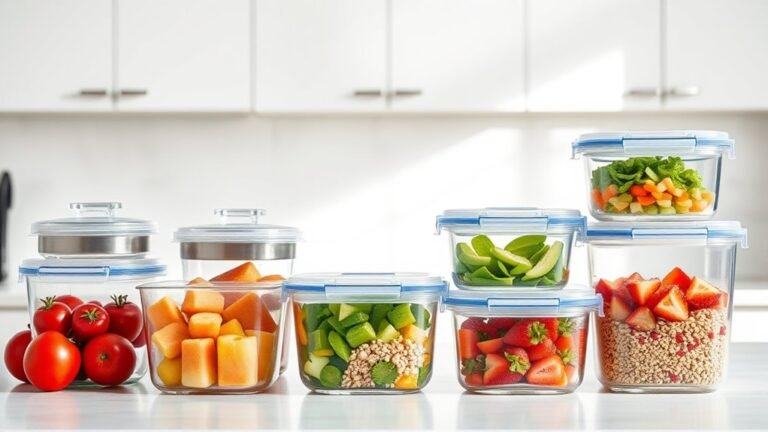
You can safely store non-perishable foods like canned goods, dried grains, and packaged snacks in your storage unit by using airtight, food-grade containers to keep moisture and pests out. This simple step helps protect your food and keeps it fresh for longer.
Choose climate-controlled units to maintain stable temperature and humidity. This is super important because it helps prevent spoilage and keeps your food in the best condition possible.
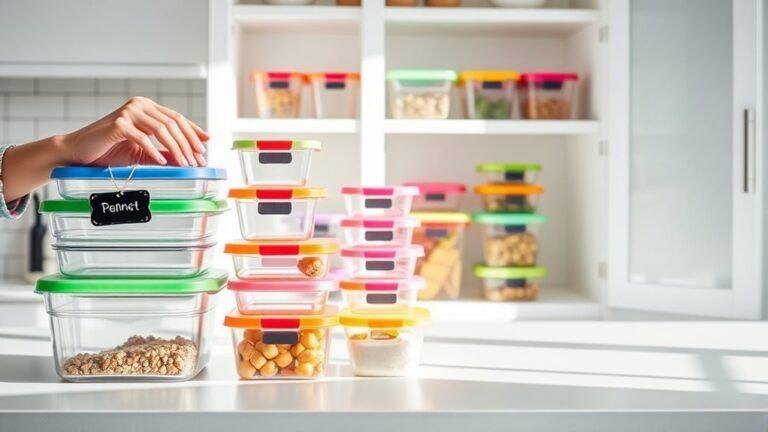
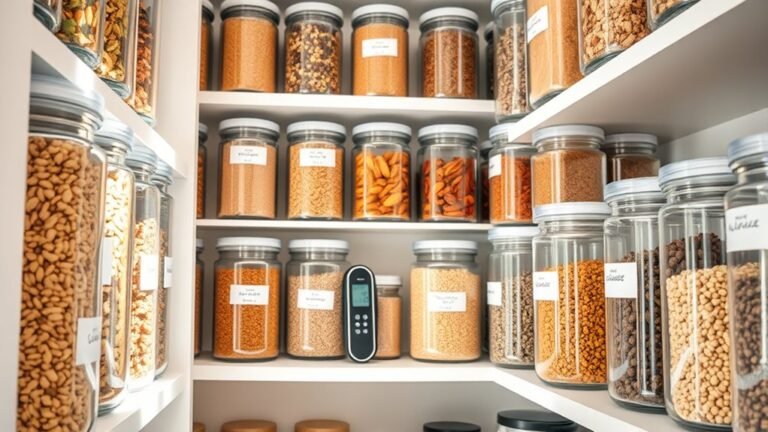
Keep items off the floor on sturdy shelves and label everything clearly for easy tracking. It makes finding what you need a breeze and keeps things organized.
Don’t forget to regularly check for signs of damage or pests to guarantee freshness. Staying on top of these small tasks can save you a lot of hassle in the long run.
Keep going to discover more tips on effective food storage. There’s plenty more to learn to make sure your food stays safe and tasty!
Key Takeaways
– Store only non-perishable foods like canned goods and dried grains in airtight, food-grade containers to prevent spoilage and contamination.
This way, your food stays fresh and safe for longer.
– Use a climate-controlled storage unit to maintain consistent temperature and humidity. This helps protect food from damage and spoilage.
It really makes a difference in keeping things in good shape.
– Label containers clearly with contents and storage dates for easy inventory management and freshness tracking.
You’ll thank yourself later when you can quickly find what you need.
– Place food on sturdy, elevated shelves away from walls and floors. This ensures proper airflow and reduces pest risks.
Keeping food off the ground is a simple but effective step.
– Regularly inspect stored items for damage or pests, and promptly discard any compromised food to maintain safety.
A quick check now and then keeps everything safe and sound.
What Foods Can You Safely Store in a Storage Unit?
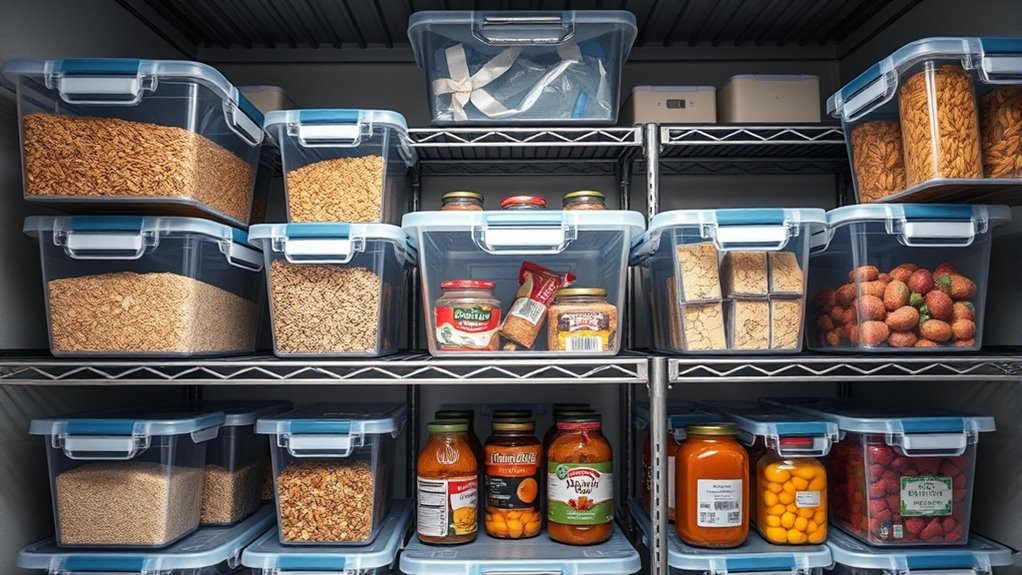
Although storage units aren’t designed for perishables, you can safely store non-perishable foods like canned goods, dried grains, pasta, and packaged snacks if you keep them properly sealed. When choosing storage solutions, focus on using airtight containers to prevent moisture and pests from compromising your food storage.
Non-perishable foods like canned goods and dried grains stay safe when sealed and stored in airtight containers.
Canned foods are especially reliable since their sealed packaging helps minimize risks of food spoilage. For ideal food safety, consider renting a climate-controlled unit. This helps maintain consistent temperature and humidity levels, which protect non-perishable foods from damage caused by extreme conditions.
Avoid storing perishable items like meats and dairy, as they attract pests and spoil quickly. Always check your facility’s rules to confirm specific foods are allowed. By keeping your food properly sealed and in a climate-controlled environment, you’ll considerably reduce the chances of food spoilage and pest infestation.
That way, your storage unit becomes a practical option for preserving non-perishable foods safely.
How to Pack and Protect Food for Storage Units
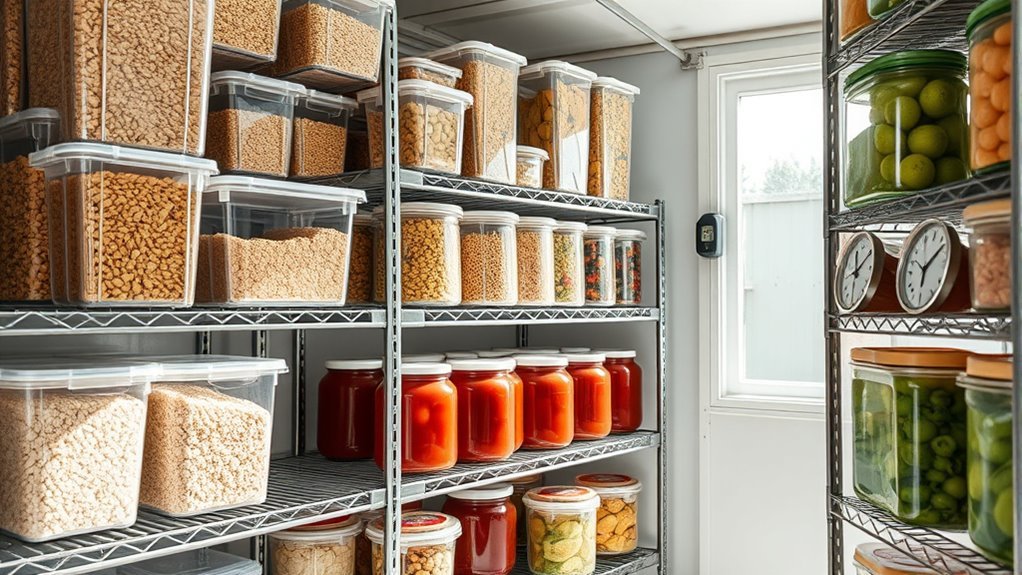
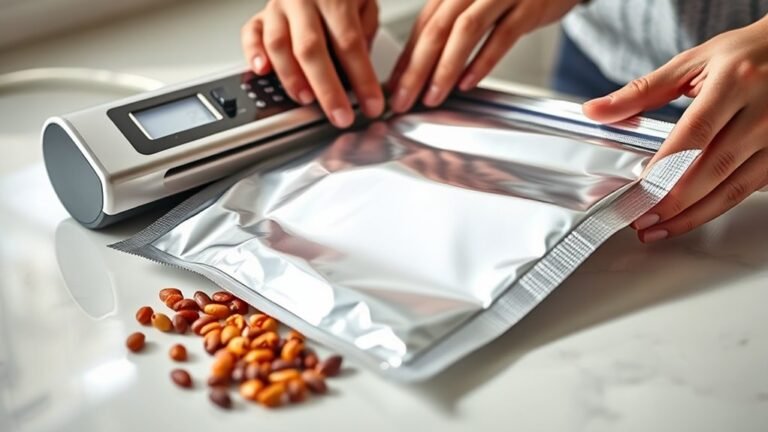
When you pack food for a storage unit, using airtight, food-grade containers or vacuum-sealed bags is essential to keep moisture, pests, and contamination at bay. Proper labeling helps with inventory management and spoilage prevention by clearly showing contents and storage dates.
To maintain storage hygiene and pest prevention, place food on sturdy shelves away from walls and floors, allowing for better airflow. If you store perishables, choose climate-controlled units to ensure temperature control and avoid spoilage.
Regular inspections help you spot damage or pests early so you can discard compromised items promptly.
| Packing Tip | Benefit |
|---|---|
| Airtight containers | Prevent moisture, pests |
| Vacuum-sealed bags | Block contamination |
| Labeling | Simplify inventory |
| Shelving placement | Enhance airflow, pest prevention |
Following these steps will keep your stored food safe and fresh.
Frequently Asked Questions
Can I Store Food in a Storage Unit?
You can store non-perishable food in a storage unit if it’s sealed airtight and the unit is climate-controlled.
Avoid perishable items, check facility rules, and use vacuum sealing to prevent pests and spoilage.
It’s all about keeping things fresh and safe while stored away. Just make sure you follow the guidelines!
What Is the Safest Storage for Food?
The safest storage for food is like a fortress—climate-controlled units keep temperature and humidity steady. You’ll want airtight, sealed containers, label everything clearly, and avoid perishables to prevent spoilage and pests during storage.
Keeping your food in the right environment makes all the difference. So, think of it as giving your food a cozy, safe home. That way, it stays fresh and safe for longer!
What Should You Not Store in a Storage Unit?
You shouldn’t store perishable foods, items needing refrigeration, open or unsealed packages, or anything attracting pests like grains and dried herbs.
Also, avoid damaged canned goods to prevent spoilage, contamination, and health risks in your storage unit.
Keeping these things out will help protect your stuff and keep your storage unit clean and safe.
What Are the Rules for Safe Food Storage?
You can’t just stash anything—always check facility rules first. Store only sealed, non-perishables in airtight containers.
Use climate-controlled units to avoid spoilage, label everything clearly, and organize by date to keep your food safe and fresh.
Conclusion
When storing food in a storage unit, you might think sealed containers alone are enough, but temperature and humidity play bigger roles than you realize. To keep your food safe, you’ll need airtight packaging and moisture absorbers, plus a cool, dry unit.
Remember, some foods spoil faster despite your best efforts, so always check for signs of spoilage before use. By staying vigilant, you’ll protect your supplies and avoid unpleasant surprises.
Safe food storage isn’t just about containers—it’s about controlling the environment inside your storage unit. Keeping the temperature stable and humidity low helps preserve your food’s quality. Using airtight packaging along with moisture absorbers creates an extra layer of protection. So, if you want to store food safely in a storage unit, focus on sealing your food well and maintaining the right conditions. This way, you’ll extend shelf life and keep your food fresh longer.