
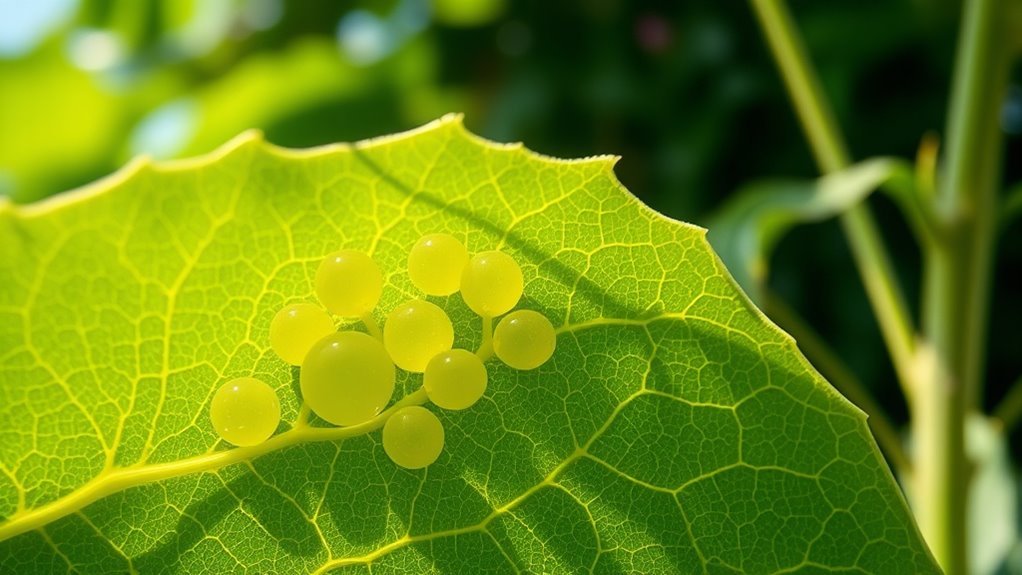
Which Process Involves Food Storage in Plants?
You store energy in your plants through photosynthesis, which is the key process involving food storage in plants. During photosynthesis, chlorophyll captures sunlight to make glucose from carbon dioxide and water.
This glucose isn’t just for immediate use; it plays a big role in how plants save energy for later.
Your plant converts the extra glucose into starch, a stable form of food storage. This starch mainly gets stored in roots, seeds, and stems.
That way, your plant has energy saved up for tough times like winter or drought.
Pretty clever, right? Keep exploring to see how this process supports your plant’s survival and growth over time.
Key Takeaways
- Plants convert excess glucose into starch for stable food storage. Starch acts as a long-term energy reserve in roots, seeds, and stems.
- Food storage in plants occurs primarily through the process of starch formation. Stored starch provides energy during periods of low photosynthesis or stress.
- This starch storage is super important because it supports plant growth, survival, and seedling development. So, in simple terms, turning glucose into starch is how plants save food for later!
How Photosynthesis Produces Food in Plants
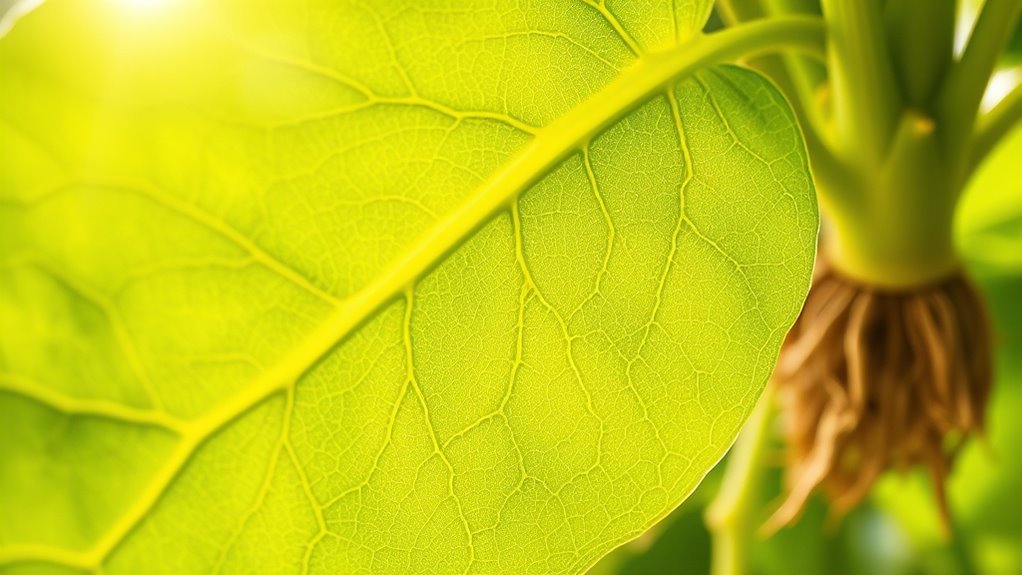
Although you might not see it, plants are constantly making their own food through photosynthesis. This process happens mainly in the chloroplasts found in the plant leaves, where chlorophyll pigments capture sunlight.
Photosynthesis uses light energy to drive chemical reactions that convert carbon dioxide and water into glucose, a simple carbohydrate. This glucose serves as the primary organic molecule for energy storage and food for the plant.
Light energy transforms carbon dioxide and water into glucose, powering plants with essential energy and food.
As glucose accumulates, it can be transformed into starch, a more stable form of food storage. The carbohydrates created not only fuel the plant’s growth but also provide energy reserves.
Oxygen is released as a byproduct during these reactions. Understanding photosynthesis helps you see how plants produce and store essential food molecules, relying on chloroplasts to convert sunlight into usable chemical energy.
This process is fundamental to plant life, enabling continuous energy storage and supporting the entire ecosystem. It’s pretty amazing how plants keep everything running smoothly just by turning sunlight into food!
Plant Food Storage: Why and Where Starch Is Stored
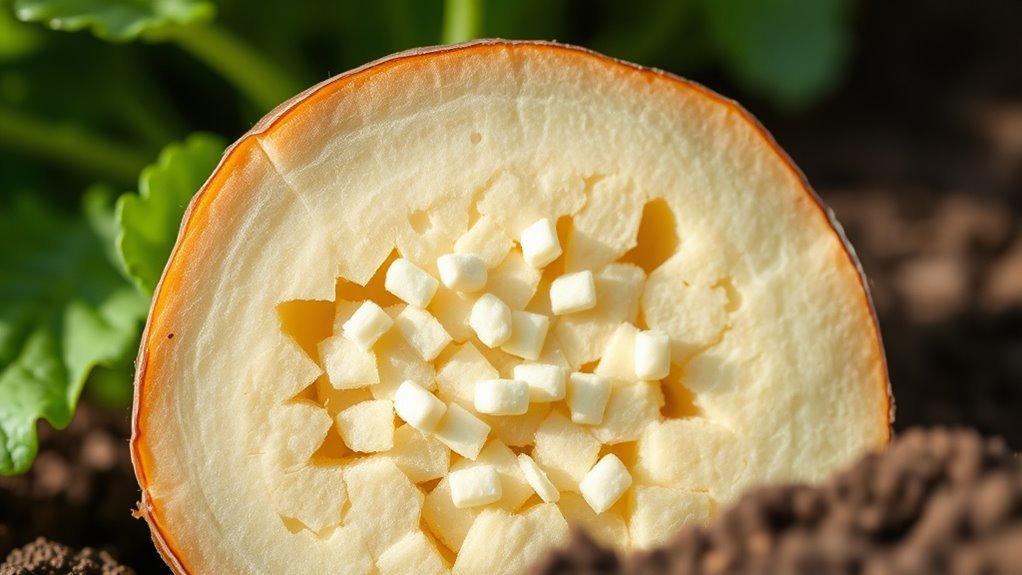
When plants produce more glucose than they immediately need, they store the extra as starch to use later. Starch, a polysaccharide, acts as a compact and efficient form of food storage.
This long-term storage provides energy during times when photosynthesis slows down, like in winter or drought. You’ll find starch stored primarily in roots, seeds, and stems, ensuring plants have a reliable energy reserve.
Here’s why and where starch storage is essential in plants:
- Roots (e.g., carrots) store starch to support growth and survival.
- Seeds (such as grains) hold starch to fuel germination and early seedling development.
- Starch storage prevents waste by converting excess glucose into a stable form.
- It supplies energy during periods of low photosynthesis, maintaining plant vitality.
Frequently Asked Questions
What Involves Food Storage in Plants?
You store food in plants through starch synthesis, converting extra glucose into starch. This process deposits energy reserves in roots, seeds, or stems.
It helps you survive when photosynthesis isn’t active or during growth phases. So, basically, it’s like saving up energy for later use.
What Is the Food Making Process for Plants Called?
The food-making process for plants is called photosynthesis. You’ll find plants using sunlight, carbon dioxide, and water to create sugars.
They use these sugars for energy and also store some as starch for later growth and survival. It’s pretty amazing how they do all this!
What Is Food Stored as in Plants?
You store food in plants primarily as starch, a complex carbohydrate made from glucose. This starch accumulates in roots, stems, and seeds.
It serves as an energy reserve that the plant breaks down when it needs fuel. So basically, plants save up energy in the form of starch for later use.
What Is the Process of Carrying Food in Plants Called?
The process of carrying food in plants is called translocation.
You’ll find that it moves sugars from leaves to other parts like roots and stems. It uses energy to push nutrients through the phloem efficiently.
Conclusion
Now that you’ve explored how plants make food through photosynthesis, you might wonder what happens next. Here’s the twist: plants don’t just use their food immediately—they store it as starch.
This hidden process happens in roots, stems, and leaves, waiting for the perfect moment to fuel growth and survival. So, next time you see a plant, remember there’s a secret food reserve working quietly beneath the surface.
This food storage in plants is essential because it helps them survive when sunlight or water is scarce. By storing energy as starch, plants ensure they have a backup supply to keep growing and thriving. So, the process that involves food storage in plants is all about converting and saving energy for future use, making plants smart and self-sufficient living beings.