What Is Safe Food Storage?
Safe food storage means keeping your food at the right temperature and preventing contamination. It’s all about making sure your food stays fresh and safe to eat.
You should keep your fridge at or below 40°F (4°C) and your freezer at 0°F (-18°C). These temperatures help slow down bacteria growth and keep your food lasting longer.
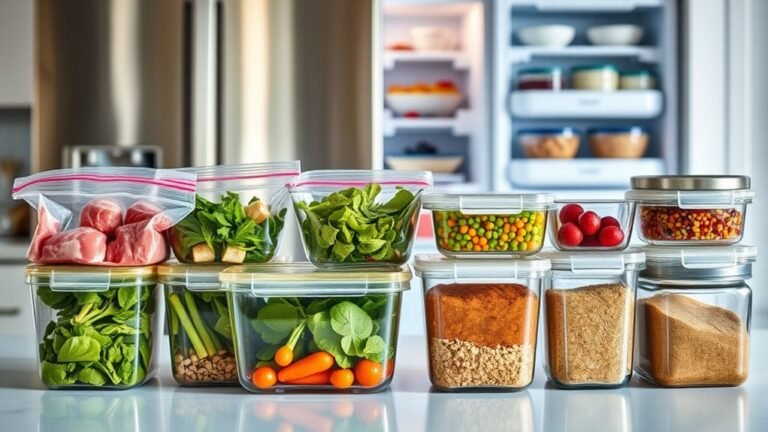
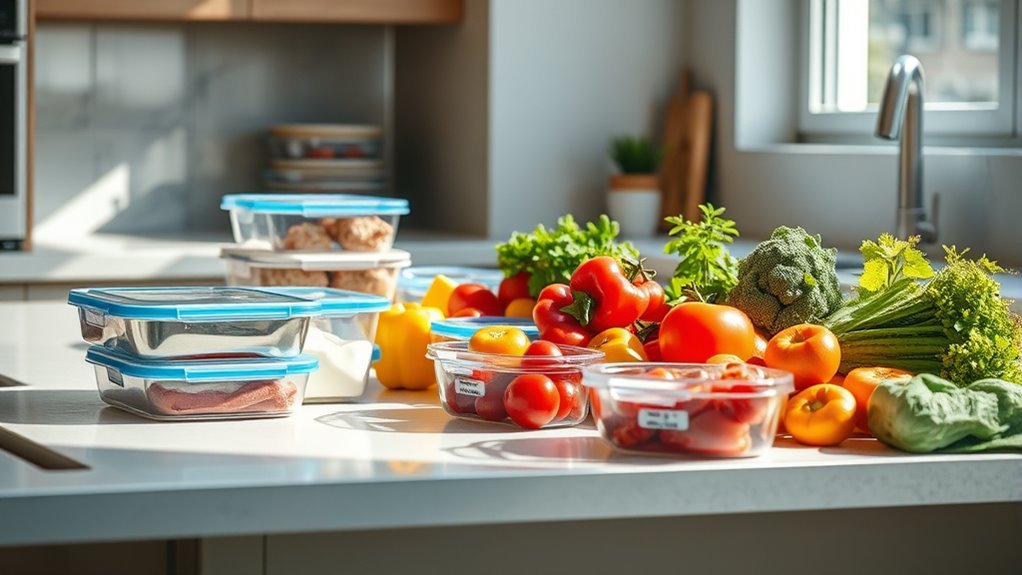
Store raw meats on the bottom shelf to avoid drips contaminating other foods.
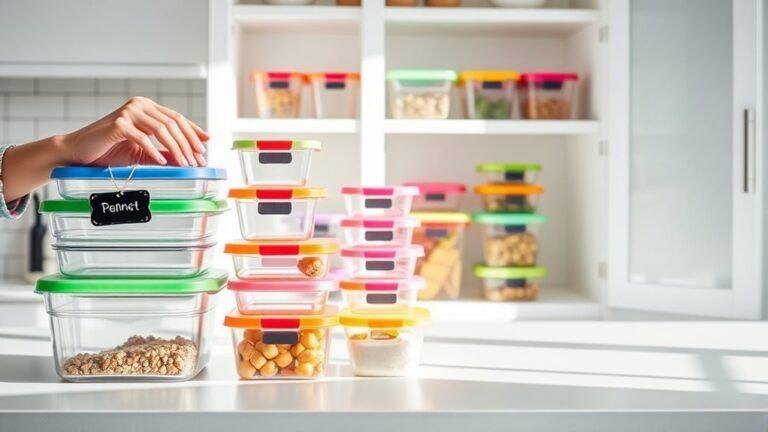
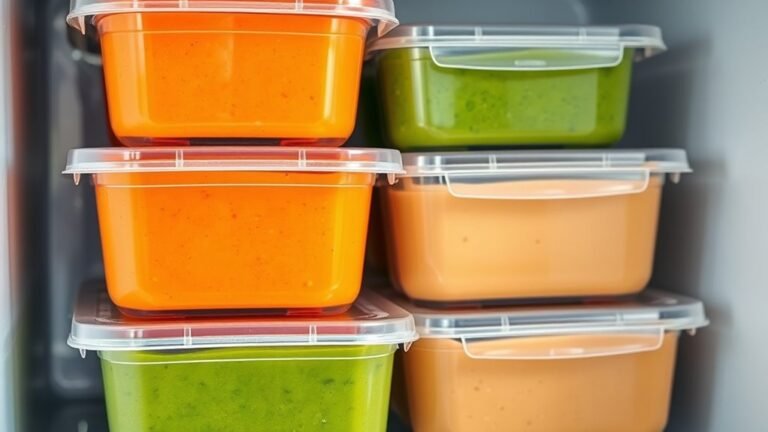
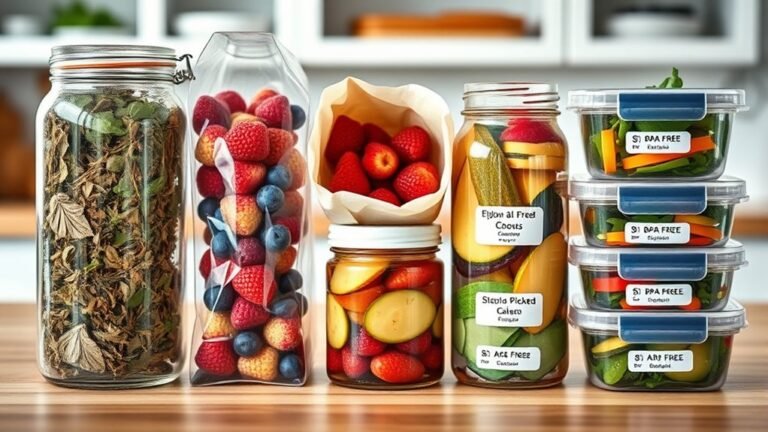
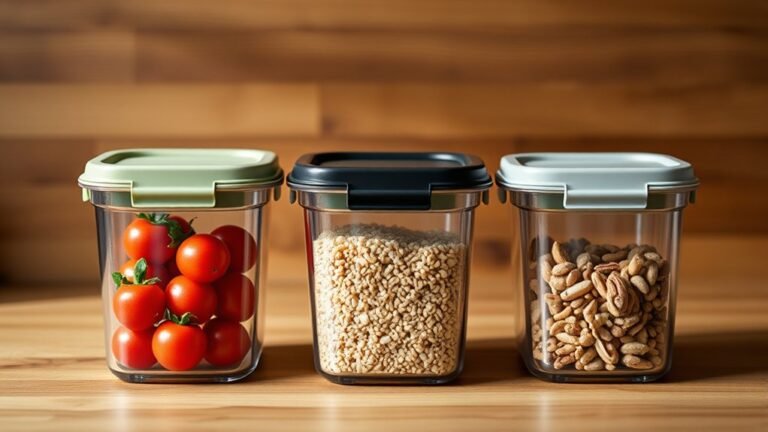
Using airtight containers is a great way to maintain freshness and prevent odors from mixing.
Always check for spoilage signs and follow expiration dates to stay on the safe side.
Storing eggs in their cartons inside the fridge helps maintain their quality.
By managing these basics, you’ll keep your meals fresh and safe.
There’s much more to explore on how to store food properly, but these tips are a solid place to start!
Key Takeaways
- Safe food storage prevents spoilage and reduces the risk of foodborne illnesses by maintaining proper temperature and hygiene. It’s really about keeping your food safe and fresh for as long as possible.
- Refrigerators should be kept at or below 40°F (4°C) to slow bacterial growth and preserve food quality. This helps your groceries last longer and stay safe to eat.
- Store raw meats on the bottom shelf and use airtight containers to avoid cross-contamination and maintain freshness. This way, juices don’t drip onto other foods and cause problems.
- Freezers must be set to 0°F (-18°C) and frozen foods labeled with dates to track expiration and prevent freezer burn. Labeling helps you keep track of what needs to be eaten first.
- Regularly monitor temperatures and check for spoilage signs like odors or texture changes, discarding unsafe foods promptly. Trust your senses—if something smells off, it’s better to toss it out.
Storage Basics
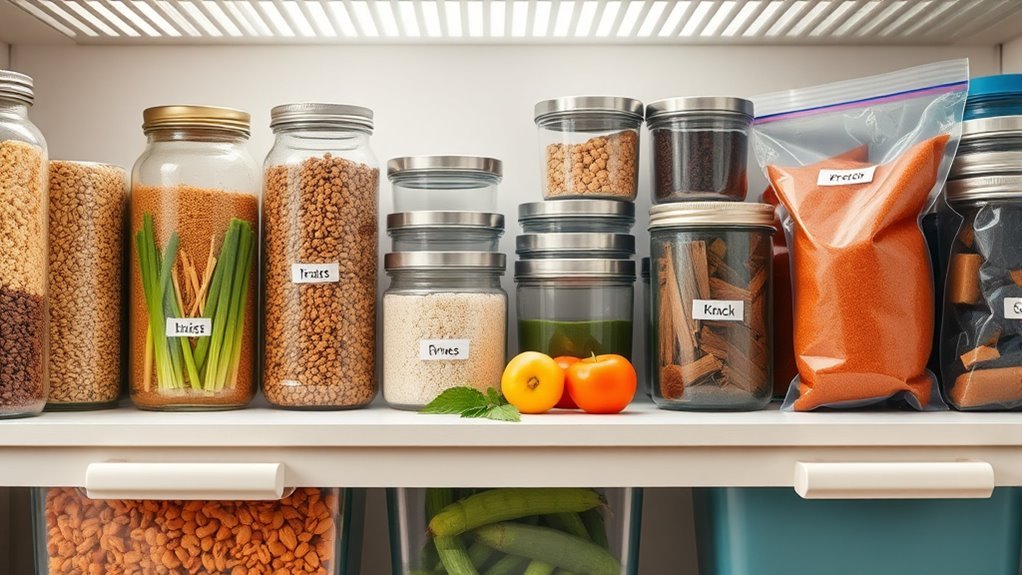
When you store food properly, you reduce the risk of spoilage and foodborne illness. Maintaining the correct refrigerator temperature at or below 40°F (4°C) is vital for food safety.
Use proper storage containers to keep stored foods fresh and prevent cross-contamination. Keep eggs in their carton inside the fridge, not on the door, to maintain the cold chain.
Proper containers preserve freshness and prevent cross-contamination; store eggs in their carton inside the fridge, not on the door.
For freezer storage, set the freezer to 0°F (-18°C) and label items with dates to track expiration dates effectively. Always check for spoilage signs like unusual odors or textures and discard expired foods promptly.
Follow these storage tips to support foodborne illness prevention and keep your food safe, fresh, and well-preserved. It really makes a difference!
Refrigeration Tips
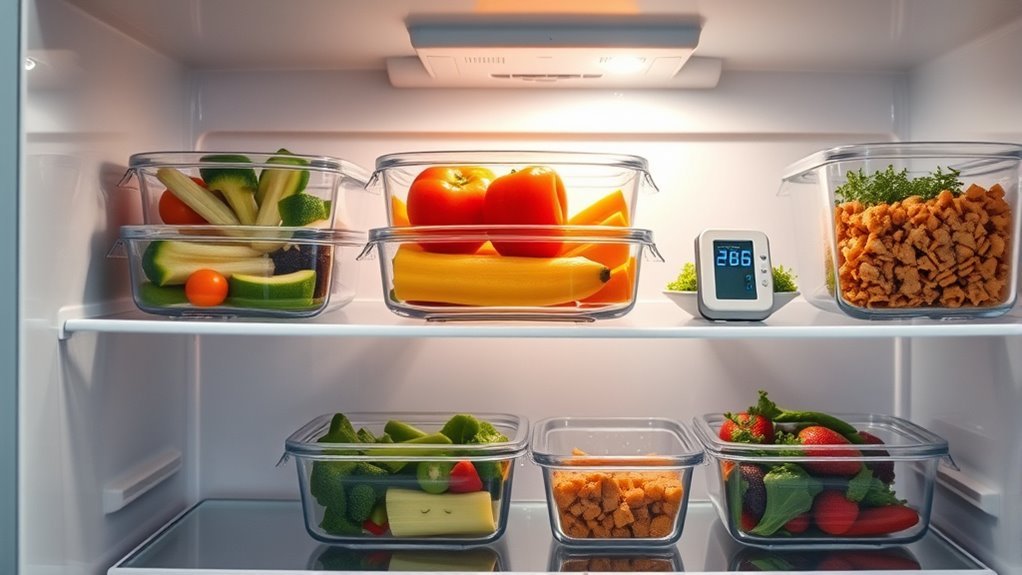
How can you guarantee your refrigerator keeps food safe and fresh? Maintaining proper refrigerator temperature and using the right storage containers are key to food safety. Keep food in the refrigerator at or below 40°F (4°C) to slow bacterial growth.
Here are essential tips to help you keep refrigerated foods safe: Check temperature control regularly with a thermometer to ensure it stays cold for about four hours during power outages. Store raw meats on the bottom shelf to prevent drips and cross-contamination with other food stored above.
Use airtight storage containers or covered dishes to preserve freshness and prevent odors. Keep refrigerator doors closed as much as possible to maintain consistent temperature and avoid spoilage.
Following these tips helps you protect food safety and keep food fresh longer. Easy, right? Just a few simple habits can make a big difference!
Frequently Asked Questions
What Is the Safest Storage for Food?
The safest storage for food is refrigerating perishables at 40°F or below and freezing at 0°F. Use airtight containers, separate raw meats, keep dry goods cool and dry, and regularly check for spoilage.
Keeping your fridge at the right temperature really helps slow down bacteria growth. And freezing food at 0°F is perfect for long-term storage.
Also, make sure to store raw meats separately from other foods to avoid any cross-contamination. Using airtight containers keeps everything fresh and prevents odors from mixing.
Don’t forget to keep your dry goods in a cool, dry place. This prevents moisture and pests from ruining them. Plus, it’s always a good idea to check your food regularly for any signs of spoilage.
What Two Foods Never Expire?
You’ll find honey and salt never expire if stored properly. Their natural preservatives keep them safe indefinitely, so you don’t have to worry about spoilage as long as you keep them sealed and dry.
Pretty amazing, right? Just make sure to keep them in a cool, dry place and they’ll last forever. No need to toss them out!
What Three Vegetables Should Never Be Refrigerated?
You’d think refrigerators were ice castles, but never chill tomatoes, potatoes, or onions—doing so wrecks their flavor and texture.
Keep them cool or dark instead, or you’ll ruin your veggies faster than a blink!
What Are the Rules for Safe Food Storage?
You should store perishables below 40°F. Keep raw meats on the bottom fridge shelf to avoid drips and cross-contamination.
Use airtight containers to maintain freshness. Also, discard spoiled foods promptly.
Make sure to follow storage time guidelines. This helps keep your food safe and prevents contamination or spoilage.
Conclusion
You want your food to stay fresh and safe, not spoiled and risky. By storing leftovers in clean containers and keeping your fridge at the right temperature, you’re creating a barrier between freshness and waste.
Think of your fridge as a chilly guardian, preserving flavor and health while keeping bacteria at bay. It’s all about simple habits that make a big difference.
With these easy steps, you turn potential food hazards into a safe, nourishing experience every time you open the door. Safe food storage isn’t just about keeping food edible—it’s about protecting your health and reducing waste. By handling and storing food properly, you ensure every bite is fresh, tasty, and safe to eat. Remember, good food storage habits are key to a healthy kitchen and happy meals!