10 Correct Food Storage Methods to Know for Quizlet
To keep your food safe and fresh, it’s important to store perishables in the fridge at 0–4°C and freeze items at –18°C. These temperatures help stop bacteria from growing, which keeps your food safe to eat.
Avoid the 4–60°C danger zone because bacteria multiply super fast there.
Using airtight containers for dry goods helps prevent moisture and pests from ruining your food. Also, keeping humidity below 60% stops spoilage and keeps things fresh longer.
Knowing the difference between “use by” (which is about safety) and “best before” (which is about quality) dates is key.
And don’t forget to apply FIFO—First In, First Out—to make sure you use the older stock first.
Mastering these basics sets you up for safer, longer-lasting food every time.
Key Takeaways
- Store perishable foods below 4°C to slow bacterial growth and keep them fresh for longer. This way, you’re making sure your food stays safe to eat.
- Keep your freezer at –18°C and use airtight containers. This helps prevent bacterial growth and stops freezer burn from ruining your food.
- Avoid the danger zone between 4°C and 60°C by refrigerating foods quickly or heating them above 60°C. It’s all about keeping bacteria at bay.
- Use airtight containers for dry goods like flour or rice. These containers block moisture, air, and pests, which helps keep your food quality high and shelf life longer.
- Follow FIFO, which means “first in, first out.” Use older items first and organize your storage so nothing goes to waste or spoils before you get to it.
How Temperature Control Keeps Food Safe and Fresh
When you control the temperature properly, you slow down bacteria growth and keep your food fresh longer. This directly impacts the shelf life of your items, helping you avoid waste.
For example, storing dry food at room temperature is fine, but once opened, it’s best to keep it sealed and in a cool, dry place to prevent spoilage. Always use food before its expiration date.
And don’t leave perishable items in the danger zone between 4°C and 60°C, where bacteria multiply rapidly. Proper temperature control means promptly refrigerating or freezing foods to inhibit bacterial growth, preserving freshness and safety.
Keep Fridge Temperatures for Safe Food Storage (0–4°C)
You should keep your fridge temperature between 0 and 4°C to slow down bacteria growth and keep food safe. This range helps extend the shelf life of your groceries by preventing rapid spoilage.
Always use a thermometer to make sure your fridge stays within this ideal temperature. It’s a simple step that can make a big difference in food safety.
Ideal Fridge Temperature Range
Although it might seem simple, setting your refrigerator to the ideal temperature range of 0–4°C plays a crucial role in keeping your food safe. This temperature range slows down bacterial growth, which helps preserve the freshness and extends the shelf life of your food.
When your fridge consistently stays within 0–4°C, you reduce the risk of food spoilage and maintain best safety. It’s important to avoid temperature fluctuations that allow your food to briefly warm up, as this can accelerate spoilage.
Bacteria Growth Prevention
Setting your fridge between 0 and 4°C does more than just preserve freshness—it actively slows down bacteria growth that causes food to spoil.
Bacteria multiply fastest in the “danger zone” between 4 and 60°C, so keeping your fridge below 4°C is essential to reducing this risk.
Since bacteria thrive best around 37°C, refrigeration well below this optimum temperature greatly limits their activity.
If your fridge temperature rises above 4°C for too long, you increase the chance of foodborne illness.
While freezing at -18°C halts bacterial growth by making them dormant, proper refrigeration within 0–4°C keeps food safe for daily use.
Extending Food Shelf Life
When you keep your fridge temperature between 0 and 4°C, you slow bacterial growth and extend your food’s shelf life noticeably. At these temperatures, bacteria multiply much more slowly, which helps prevent spoilage and keeps your food fresher longer.
Remember, the danger zone—between 4 and 60°C—is where bacteria grow fastest. So, avoid leaving food out at room temperature.
For foods you want to store even longer, use your freezer set at -18°C. That’s where bacteria become dormant and stop multiplying.
To maximize safety and shelf life, store your food promptly after purchase and maintain these temperatures consistently. By controlling fridge temperature carefully, you reduce waste and keep your food safe to eat.
Freeze Foods at –18°C to Stop Bacterial Growth
To stop bacterial growth effectively, you should keep your freezer at –18°C. At this temperature, bacteria don’t die instantly; instead, they become dormant, halting their ability to multiply.
Freezing your food at –18°C keeps it safely out of the 4–60°C danger zone where bacteria thrive. Maintaining this cold temperature consistently helps preserve the safety and quality of your food.
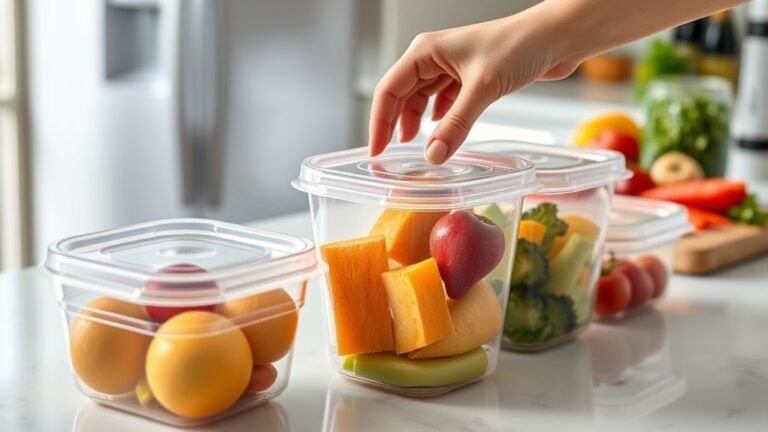
To optimize freezing, always store your food in airtight, tightly sealed containers or bags. This limits temperature fluctuations and prevents freezer burn, ensuring your food stays fresh longer.
Keep Food Out of the Danger Zone (4–60°C)
Because bacteria multiply fastest between 4°C and 60°C, you need to keep your food out of this danger zone to prevent rapid bacterial growth. Bacteria thrive particularly around 37°C, so if food stays at these temperatures, harmful bacteria can multiply quickly, making your food unsafe.
To protect yourself, keep hot foods above 60°C and cold foods below 4°C. This stops bacteria from growing and reduces the risk of foodborne illness.
Remember, temperatures near 74°C can kill bacteria, so heating food properly is important. Avoid leaving perishable foods out too long at room temperature, as this allows bacteria to reach dangerous levels.
Store Dry Ingredients Safely in Airtight Containers
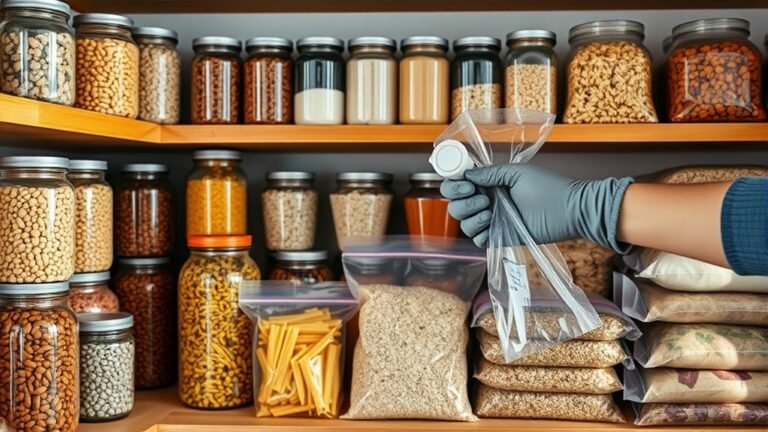
Although dry ingredients seem less vulnerable than fresh foods, storing them in airtight containers is essential to keep moisture, air, and pests out. You should keep these containers in a cool, dark, and dry place to prolong their shelf life.
Aim for a temperature between 50–70°F (10–21°C) and maintain relative humidity at or below 60%. This environment slows spoilage and keeps your ingredients fresh longer.
| Factor | Ideal Condition |
|---|---|
| Container Type | Airtight |
| Temperature Range | 50–70°F (10–21°C) |
| Humidity Level | ≤ 60% |
| Storage Location | Cool, dark, dry area |
| Purpose | Extend shelf life, prevent spoilage |
Store Ambient Foods Safely: Freeze-Drying & Vacuum Packing
Storing dry ingredients securely guarantees a strong foundation for food preservation, but ambient foods require a different approach to maintain their quality at room temperature. You can safely store ambient foods by using freeze-drying and vacuum packing, both designed to extend shelf life without refrigeration.
Freeze-drying removes water, preventing microbial growth and spoilage. This method keeps your food stable for long periods. Vacuum packing eliminates air from the package, slowing oxidation and maintaining freshness.
Both techniques ensure ambient foods stay safe and maintain their quality outside the fridge. By choosing freeze-dried or vacuum-packed options, you’re effectively protecting your pantry staples and snacks. This way, they last longer without compromising taste or safety.
Maintain Dry Storage Humidity Below 60
To ensure your dry foods stay fresh and last longer, keep storage humidity at or below 60%. Moisture is the enemy of dry foods—it causes spoilage and lowers quality.
Here’s how you can manage it effectively:
Here’s a simple guide to keeping your dry foods fresh and moisture-free.
- Store dry ingredients in airtight containers. This helps block moisture from raising humidity around your food.
- Pick a cool, dark, and dry spot to keep your food. It really helps minimize spoilage risks.
- Aim to keep storage temperatures between 50°F and 70°F (10°C–21°C). This range is great for preserving your dry goods.
- Check humidity levels regularly to make sure they stay below 60%. This way, you protect your dry foods from moisture-related damage.
Difference Between “Use By” and “Best Before” Dates
You need to understand the difference between “use by” and “best before” dates to keep food safe and tasty.
The “use by” date is about safety—you shouldn’t eat food past this date. It’s really important to follow this one closely.
The “best before” date is about quality, meaning food might still be safe but could lose flavor or texture. So, it’s more about how good the food tastes and feels than whether it’s safe to eat.
Use By Date Meaning
When deciding whether to eat a product, understanding the difference between “use by” and “best before” dates is essential. The “use by” date is a strict safety warning. Here’s what you need to know:
Foods past their “use by” date may cause food poisoning, even if they look or smell fine. You should never consume food after its “use by” date to avoid health risks.
“Use by” dates focus on safety, not quality. Treat “use by” dates seriously—they’re about protecting your health.
Unlike “best before” dates, which indicate quality, “use by” dates tell you when food is no longer safe. Always check this date carefully and prioritize it over appearance or smell.
Best Before Date Meaning
Although “use by” dates warn you about food safety, “best before” dates guide you on quality. When you see a best before date, it tells you the food will taste or perform at its best before that day.
After this date, the food might still be safe to eat, but its texture, flavor, or nutritional value could decline. Unlike use by dates, best before dates don’t indicate a safety risk.
You can often trust your senses—look, smell, and taste—to decide if the food is okay past its best before date. Remember, use by dates are critical for safety, so always discard food past that date.
Best before dates help you manage quality, so you know when food might not be at its peak anymore.
Safety Versus Quality
Understanding the difference between “use by” and “best before” dates helps you make safer and smarter food choices. The “use by” date is a safety warning telling you the food might not be safe after this date, increasing the risk of food poisoning.
On the other hand, “best before” dates focus on quality, meaning the food is likely safe but may lose freshness.
Here’s what you should remember:
- Use-by dates protect you from harmful pathogens.
- Never eat food past its use-by date, even if it looks or smells fine.
- Best-before dates indicate when quality may start to decline.
- Food past its best-before date is usually safe but might taste or look off.
Keep these in mind to store and consume food wisely. It’s all about staying safe while enjoying your food at its best!
Use FIFO to Manage Your Food Stock
Regularly applying the FIFO (First In, First Out) method can substantially reduce the chance of your food expiring before you use it. You do this by always using the oldest items in your stock first, especially dry and shelf-stable foods stored in cool, dark, and dry conditions.
When you organize your shelves, place newly bought items at the back and move older items to the front. This way, you automatically follow FIFO each time you grab food.
Make it a habit to check dates regularly and prioritize items with the earliest “best before” or “use by” dates. Remember, “use by” dates are safety warnings, not just suggestions.
FIFO helps you limit quality loss and safety risks by rotating your food stock in the right order. It’s a simple trick that really makes a difference!
Why Controlling Storage Temperature Extends Shelf Life
Controlling the temperature where you store your food plays an important role in extending its shelf life. When you manage storage temperatures properly, you slow or stop bacterial growth, keeping food safe longer.
Here’s why: Keeping your fridge between 0–4°C slows bacterial growth since it’s colder than the “danger zone” (4–60°C). The “danger zone” is where bacteria multiply fastest, especially near 37°C, so avoiding this range prevents rapid spoilage.
Freezing food at −18°C stops bacteria from growing by making them dormant, greatly extending shelf life. Instead of killing bacteria with heat, refrigeration and freezing focus on preventing growth, which keeps your food usable much longer.
Frequently Asked Questions
How Often Should I Clean My Refrigerator to Prevent Contamination?
You should clean your refrigerator thoroughly at least once a month to prevent contamination.
Wipe up spills immediately and regularly check for expired items. This keeps your fridge safe and your food fresh.
Keeping on top of these little tasks makes a big difference in avoiding any nasty surprises. It’s easier than you think!
Can I Store Cooked and Raw Foods Together Safely?
You can’t store cooked and raw foods together safely, just like knights wouldn’t share armor.
Keep raw meats below cooked foods to avoid drips and cross-contamination. Always separate to protect your meals and health.
What Is the Best Way to Thaw Frozen Food?
The best way to thaw frozen food is in the refrigerator, keeping it at a safe temperature.
You can also use cold water or the microwave if you plan to cook it immediately afterward. Just make sure to handle it quickly so it stays safe to eat.
How Do Humidity Levels Affect Fresh Produce Storage?
You should adjust humidity based on produce type; high humidity keeps leafy greens crisp, while low humidity prevents mold on fruits like apples.
Using the right humidity levels helps maintain freshness and extends shelf life effectively. It’s all about giving each type of produce the environment it likes best.
Are There Specific Containers Recommended for Freezing Liquids?
Think of freezing liquids like tucking them into a cozy, airtight blanket. You should use freezer-safe, airtight containers or heavy-duty freezer bags to prevent spills and freezer burn.
Don’t forget to leave space for expansion! It’s super important so your liquids don’t burst out as they freeze.
Conclusion
By mastering these food storage methods, you’ll keep your meals fresh and safe, avoiding any nasty surprises down the line. Remember, keeping your fridge cool and dry storage dry isn’t just about following rules—it’s about protecting your health and saving money.
Don’t let your hard-earned food go to waste; a stitch in time saves nine. Stick to these tips, and you’ll always have quality food ready when hunger strikes!
Proper food storage is key to maintaining freshness and preventing spoilage. By using the right techniques, you safeguard your meals from bacteria and extend their shelf life. This not only keeps your food tasty but also helps you avoid unnecessary waste.
So, keep these food storage methods in mind—they’re simple, effective, and essential for anyone who wants to enjoy safe, delicious meals every day. With these habits, you’ll protect your health, save money, and always have good food on hand when you need it most.