How to Use Plastic Safely for Food Storage
To use plastic safely for food storage, it’s important to choose the right containers. Look for plastics labeled #1, #2, #4, or #5 — these are generally safer options. Also, make sure they’re marked microwave and freezer safe to avoid any health risks.
Avoid reusing single-use plastics because they can break down and release harmful chemicals. Before each use, always check your containers for cracks or strange odors. If something seems off, it’s best to toss it out.
When washing, use warm, soapy water and be gentle to avoid damaging the plastic. And remember, never microwave containers that don’t have a microwave-safe label.
Using the proper plastics can help keep your food fresh and prevent harmful chemical leaching. Keep these tips in mind to get the most out of your plastic food storage containers!
Key Takeaways
- Use plastic containers labeled #1, #2, #4, or #5 for safe food storage to minimize chemical leaching. These numbers indicate plastics that are generally safer for your food.
- Choose containers marked microwave-safe and freezer-safe to ensure durability during heating and freezing. It’s handy to know your containers can handle the temperature changes without breaking down.
- Avoid reusing single-use plastics like yogurt cartons. They may degrade over time and could contaminate your food, so it’s better to stick with containers designed for multiple uses.
- Hand wash containers with warm, soapy water and inspect them regularly for cracks, odors, or worn seals. Taking good care of your containers helps keep your food safe.
- Replace damaged or heavily scratched containers to prevent bacteria buildup and maintain food safety. When in doubt, swapping out old containers is a smart move.
Choosing the Right Plastic Containers for Food Storage
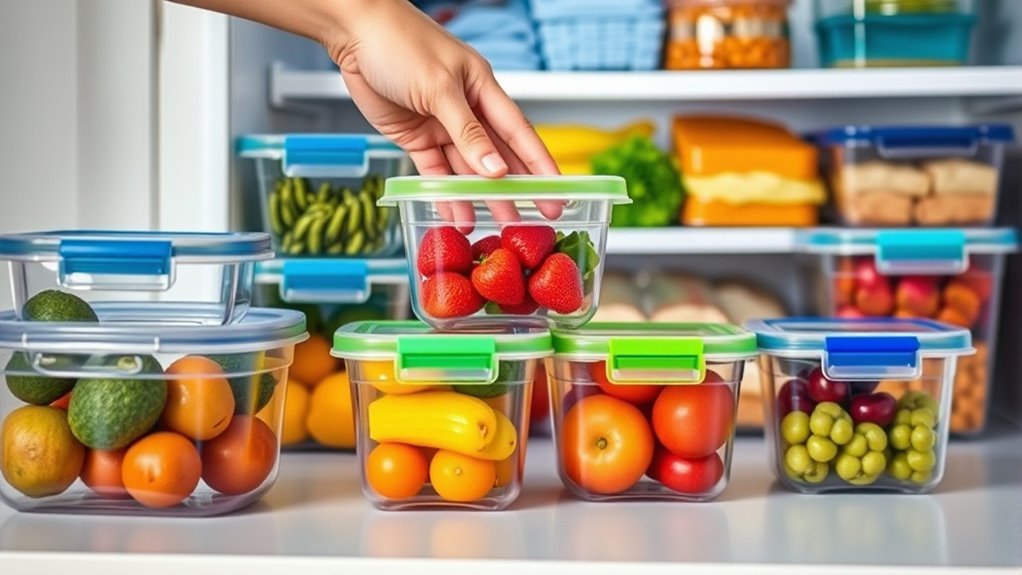
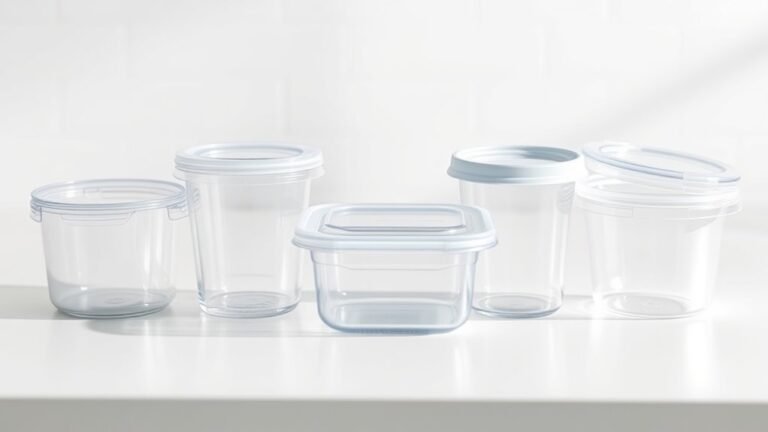
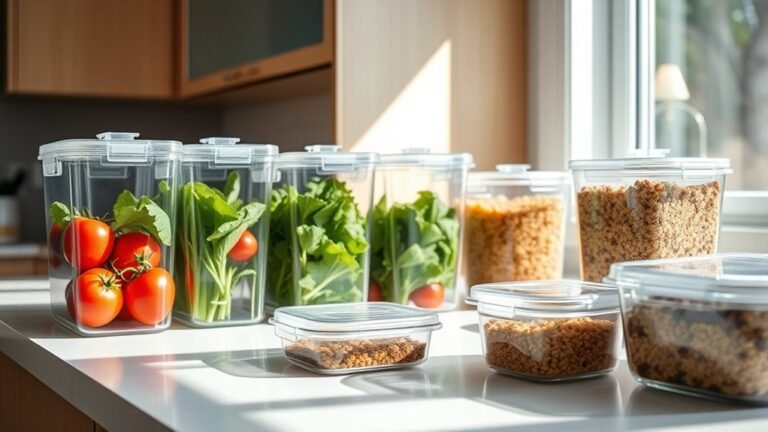
When storing food, you should choose plastic containers labeled with recycling codes #1, #2, #4, or #5. These are food-grade and safer for use. These plastic types minimize chemical leaching and guarantee better plastic safety.
Always check container labels for microwave-safe or freezer-safe indications to suit your needs. Polypropylene (code #5) stands out for its durability and low risk of chemicals seeping into your food.
Look for microwave and freezer-safe labels; polypropylene (#5) offers durability and minimal chemical leaching for safe food storage.
Avoid reusing single-use plastics like yogurt cartons. They don’t meet reuse guidelines and can compromise food safety.
If you notice cracks, worn seals, or strong odors, discard the container to prevent contamination. By selecting proper food storage containers and following these tips, you’ll maintain safety and extend the life of your plastics effectively.
Best Practices for Cleaning, Freezing, and Microwaving Plastic Containers
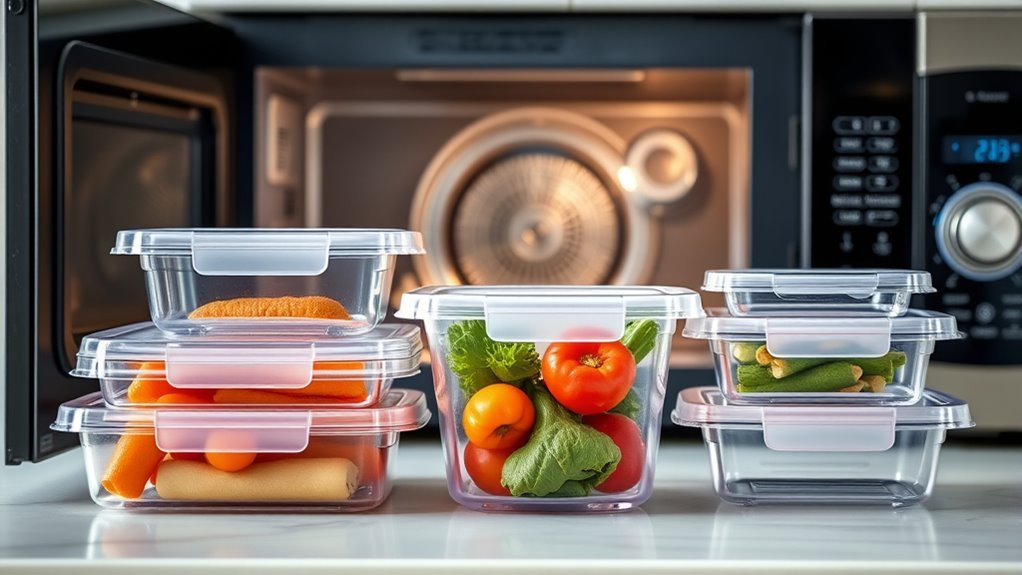
Although plastic containers offer convenience, you should clean them carefully to avoid damage and contamination. Hand wash most plastic containers with warm, soapy water unless labeled dishwasher-safe to prevent degradation.
Pay special attention to grooves around openings to remove hidden bacteria and mold. Inspect containers regularly for cracks and scratches or signs of odor absorption. That means it’s time to replace them to keep food safe.
When freezing, use only food grade plastic designed for low temperatures. This helps prevent warping or chemical leaching.
For microwaving, make sure containers are microwave safe. That way you avoid melting or harmful chemical release.
Following these best practices for cleaning, freezing, and microwaving will help you keep your plastic containers safe and extend their lifespan.
Frequently Asked Questions
Is There a Safe Plastic for Food Storage?
Yes, you can safely use plastics labeled HDPE (#2), LDPE (#4), and PP (#5) for food storage. These types are generally considered safe and are commonly used for food containers.
Just avoid reusing single-use plastics—they aren’t designed for multiple uses. Also, be sure to replace containers that show any signs of damage. That way, you keep your food safe and avoid any unwanted chemicals leaching in.
Do Ziploc Bags Leach Microplastics Into Your Food?
Ziploc bags can sometimes leach microplastics into your food, especially if they’re worn or heated—think of it like tiny plastic confetti mixing in.
To stay safe, avoid reusing bags and keep them away from heat. It’s a simple way to protect your meals and avoid any unwanted plastic bits.
Is a 20 Year Old Tupperware Safe to Use?
You shouldn’t use a 20-year-old Tupperware for food storage. Over time, plastics degrade, increasing risks of chemical leaching and bacteria buildup.
If it’s scratched, cracked, or discolored, it’s safer to replace it. Honestly, it’s better to be safe than sorry when it comes to your health!
What Foods Should Not Be Stored in Plastic?
Imagine zesty tomatoes bubbling in a plastic container—avoid storing acidic foods like tomatoes or citrus in PVC plastics.
Also, don’t stash hot, fatty, or strongly scented foods in plastics that might soak up odors or chemicals.
It’s better to choose glass or stainless steel for these kinds of foods to keep things fresh and safe.
Conclusion
Think of choosing and using plastic containers like picking the right shoes for a hike—wear the wrong pair, and you’ll regret it. Studies show BPA-free plastics reduce harmful chemical exposure, just like sturdy boots protect your feet.
By selecting safe containers and following cleaning and heating tips, you keep your food—and yourself—safe and fresh.
So, treat your plastic like trusted gear, and you’ll enjoy every meal without worry. Using plastic safely for food storage means choosing BPA-free options, avoiding high heat that can cause melting, and regularly checking for cracks or damage.
Remember, proper use and care of plastic containers not only preserve your food’s freshness but also protect your health from harmful chemicals. Stay informed, follow safe storage practices, and you’ll get the best experience out of your plastic food containers every time.