Which Cell Part Acts Like a Storage Place for Food?
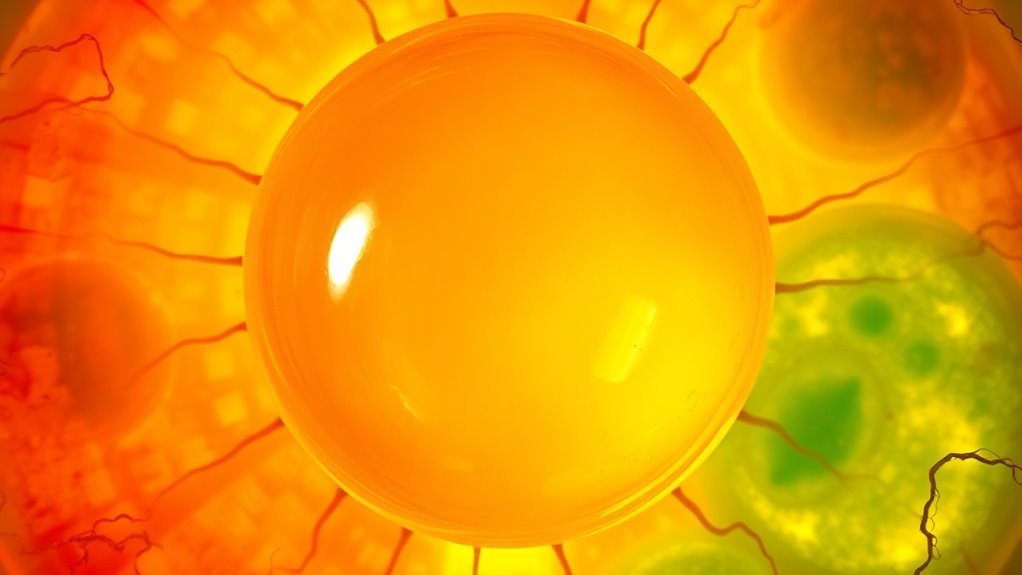
You’ll find that the vacuole is the cell part acting like a storage place for food and nutrients. It holds water, sugars, amino acids, and other essentials safely inside a membrane-bound space.
This storage function is especially large and important in plant cells.
When your cell needs energy, the vacuole releases stored nutrients and even breaks them down with enzymes.
It also helps keep the cell stable and healthy.
If you want to understand how this storage system works with other parts, there’s more to explore.
The vacuole plays a key role in managing the cell’s resources and maintaining balance.
Key Takeaways
- The vacuole acts as the cell’s main storage compartment for food and nutrients. Vacuoles store water, sugars, amino acids, and other essential nutrients in the cell.
- In plant cells, the large central vacuole holds most stored food and nutrients. Vacuoles release stored nutrients when the cell requires energy or building materials.
- Transport proteins in vacuole membranes actively move food substances in and out. This helps the cell manage its energy and resources efficiently.
What Is the Vacuole and How Does It Store Food?

Although you might not see it, the vacuole plays a key role in storing food within a cell. Think of it as a storage compartment, especially large in plant cells, where it holds water, sugars, amino acids, and other nutrients.
This storage helps your cell keep the fuel it needs for energy and growth ready to use. In plants, the central vacuole takes up most of the cell’s space and keeps it firm by holding water.
Besides storing food, vacuoles also help break down unwanted materials, recycling nutrients efficiently. When your cell requires these stored substances, the vacuole releases them into the cytoplasm.
Vacuoles break down waste and recycle nutrients, releasing essentials when the cell needs them.
This makes sure the cell has what it needs to function smoothly and stay healthy.
How Do Vacuoles Store and Release Nutrients?

You’ll find that vacuoles store nutrients like sugars and ions to keep the cell fueled and healthy. When the cell needs energy, vacuoles release these stored substances by breaking them down and sending useful molecules into the cytoplasm.
In plant cells, this process also helps maintain internal pressure, keeping the cell firm and functional. It’s pretty cool how vacuoles do double duty—both storing nutrients and supporting the cell’s structure.
Nutrient Storage Functions
Vacuoles serve as the cell’s pantry, storing essential nutrients like sugars and ions until the cell needs them for energy or growth. They keep these nutrients safely inside a membrane-bound space, preventing them from mixing with other parts of the cell.
This separation helps maintain nutrient balance and keeps the cell’s environment stable. In plant cells, the large central vacuole also stores water, which supports cell pressure and structure.
When the cell requires nutrients, vacuoles can break down or transport these stored materials so enzymes and organelles can use them effectively. By managing nutrient storage and water content, vacuoles play a key role in keeping the cell healthy and ready to respond to changing needs.
Vacuole Release Mechanisms
When your cell needs assurance of nutrients, it relies on specialized release mechanisms within vacuoles to deliver them efficiently. Vacuoles store nutrients in an internal fluid, and transport proteins in the vacuole membrane actively move specific substances in and out as needed.
Osmosis controls water level inside vacuoles, causing them to expand or contract. This helps push nutrients toward where they’re required.
When stored materials need breaking down, lysosome-like processes kick in, recycling components so the cell can reuse valuable nutrients. These coordinated actions ensure the vacuole not only keeps nutrients safe but also releases them in a timely manner.
This supports your cell’s survival and function without wasting resources or energy. It’s a smart system, really!
Role in Plant Cells
Although plant cells rely on various structures for nutrient management, the vacuole plays an important role by storing water, ions, and dissolved nutrients that keep the cell firm and ready for growth.
You’ll find the vacuole enclosed by the tonoplast, a membrane that controls what enters and leaves, helping regulate nutrient levels.
When your plant cell needs nutrients for metabolism or building new parts, the vacuole releases stored materials into the cytoplasm. It also stores plant chemicals and waste, breaking down some materials so the cell can recycle them.
During drought or stress, the vacuole adjusts its size by losing water, helping the plant manage resources and survive until conditions improve.
This dynamic storage makes vacuoles essential for plant health and growth.
Why Are Vacuoles Different in Plant and Animal Cells?
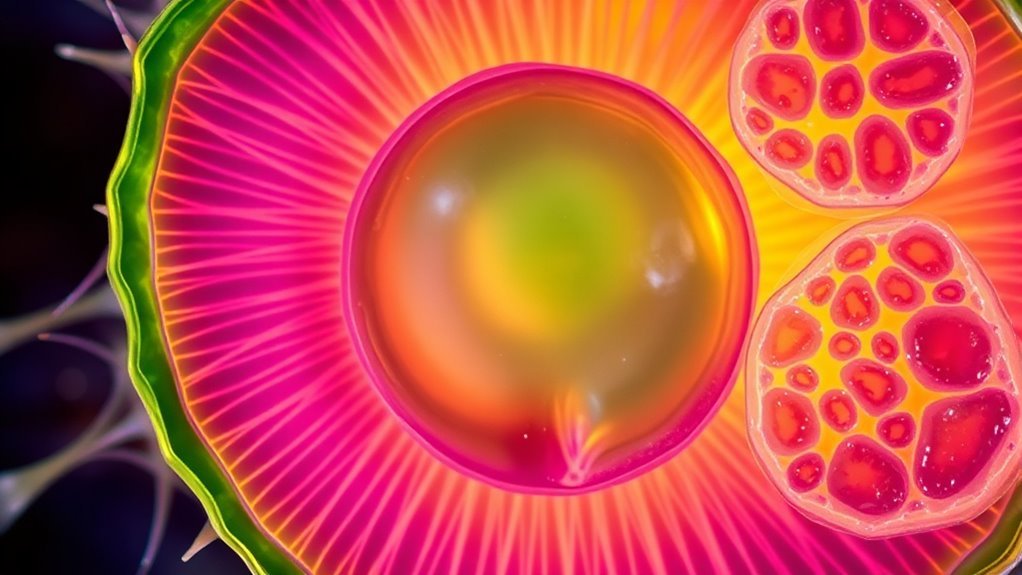
You’ll notice plant cells have one large vacuole that stores water and nutrients, while animal cells have smaller, more numerous vacuoles focused on storage and transport.
This size difference affects how each cell manages resources and structural support. Understanding these roles helps explain why vacuoles vary between plant and animal cells.
Vacuole Size Differences
Since plant cells have rigid walls that limit their expansion, they rely on one large central vacuole to store water and maintain internal pressure, keeping the cell firm. This central vacuole holds water and dissolved nutrients, helping the plant cell stay turgid and stable.
In contrast, animal cells don’t have rigid walls, so their vacuoles are smaller and fewer. These small vacuoles mainly handle temporary tasks like transporting materials and removing waste, rather than providing water storage or pressure.
Because plant cells need to control water balance tightly within their stiff walls, the large central vacuole plays an essential role. Meanwhile, animal cells depend on flexible membranes and smaller vacuoles for their storage and transport needs.
Storage Functions Compared
Understanding why vacuoles differ so much between plant and animal cells requires looking at how each cell uses these storage spaces. In plant cells, you’ll find one large central vacuole that stores food-like materials and water, helping the cell stay rigid through turgor pressure.
This vacuole acts as a long-term storage and support system. In contrast, animal cells have smaller, temporary vacuoles that handle storage and water balance on a limited scale.
While both cell types use vacuoles to store nutrients, waste, and recycle materials, plants rely heavily on their big vacuole for maintaining structure and storing essential substances. So, the differences come down to how each cell prioritizes storage and internal regulation based on its unique needs.
How Do Vacuoles Break Down Stored Food to Release Energy?
Vacuoles break down stored food by using hydrolytic enzymes to convert nutrients into smaller molecules. When your cell requires energy, these enzymes break down the food stored in the vacuole, releasing molecules like sugars and amino acids.
Your cell then uses these smaller molecules for cellular respiration, which produces ATP—the energy currency of the cell. To protect the rest of the cell, vacuoles keep these enzymes contained within their liquid-filled sacs, preventing damage.
In plant cells, the large central vacuole plays a key role, storing nutrients and assisting in digestion when energy is low. By breaking down stored food efficiently, vacuoles help ensure your cell has a steady supply of energy to keep functioning properly.
How Vacuoles Work With Other Organelles to Keep Cells Alive
Although they often work behind the scenes, vacuoles team up with other organelles to keep your cells healthy and functioning. They store water, nutrients, and waste, helping maintain balance inside the cell.
In plant cells, the large central vacuole holds water to keep the cell firm by maintaining turgor pressure. Vacuoles collaborate with lysosomes by receiving waste or worn-out parts, which lysosomes then break down for reuse.
Meanwhile, vesicles and the endoplasmic reticulum shuttle materials to and from vacuoles, making sure substances move efficiently for storage or digestion. By regulating these substances, vacuoles protect your cells from damage and create the right conditions for enzymes and other organelles to work properly.
This all supports overall cell survival and function. So, even though vacuoles might seem quiet, they’re actually pretty busy keeping things running smoothly inside your cells.
How Vacuoles Keep Cells Healthy During Scarce Times
Keeping cells healthy isn’t only about managing everyday tasks—it’s also about handling tough times when resources run low. Vacuoles step up by storing water, nutrients, and waste products, so your cells have what they need during shortages.
In plant cells, the large central vacuole holds water to keep the cell turgid, maintaining its structure even when it’s dry outside. Vacuoles also shield your cells by isolating harmful substances, reducing stress on the cytoplasm.
Some act like cleanup compartments, breaking down materials that the cell can reuse later. By regulating water balance and internal pressure, vacuoles ensure your cells keep running essential processes, helping them survive and stay healthy when external resources are limited.
What Signs Indicate Vacuole Problems in Cells?
When your cell’s storage system malfunctions, you’ll notice signs like swelling, shrinking, or wilting in plant cells. If the vacuole can’t regulate water properly, the cell may swell or shrink due to osmotic pressure imbalance.
In plants, a failed central vacuole causes loss of turgor pressure, making cells lose firmness and leading to wilting. You might also see harmful buildup in the cytoplasm because defective vacuoles fail to dispose of waste efficiently.
Vacuole breakdown can impair the recycling of damaged cell parts, causing them to accumulate inside the cell. These issues disrupt the cell’s balance, so spotting swelling, shrinking, wilting, or waste buildup signals vacuole problems that need attention to keep cells healthy.
Organelles That Support Vacuole Functions in Nutrient Storage
Because vacuoles rely on a network of organelles to manage nutrient storage effectively, you need to understand how these helpers work together. The Golgi apparatus packages nutrients into vesicles that deliver materials to vacuoles, keeping them stocked.
The rough endoplasmic reticulum produces proteins and substances the cell stores or transports to vacuoles. Lysosomes break down stored compounds into smaller molecules, enabling vacuoles to recycle nutrients when needed.
Meanwhile, the cell nucleus controls which enzymes and transport proteins the cell makes, regulating vacuole functions. By coordinating their roles, these organelles ensure vacuoles efficiently store and manage nutrients, supporting the cell’s survival and energy needs.
Recognizing this teamwork helps you appreciate how cells maintain nutrient balance. It’s pretty cool how all these parts work together seamlessly, isn’t it?
Frequently Asked Questions
What Are the 7 Types of Cell Organelles?
You’ll find seven main organelles: nucleus, mitochondria, ribosomes, endoplasmic reticulum, Golgi apparatus, lysosomes, and vacuoles. Each plays a unique role, helping your cell function smoothly and stay organized.
It’s kind of like how different parts of a machine work together to keep things running. Without any one of these organelles, the cell wouldn’t be able to do its job properly.
What Part of the Plant Cell Stores Food and Water?
The vacuole stores food and water in a plant cell. You’ll find it holding nutrients and water, helping maintain pressure so the plant stays firm and healthy.
It’s essential for your plant’s survival and growth. Without the vacuole, the plant wouldn’t be able to keep its shape or store the things it needs to live.
What Organelle Is the Site of Cell Product Storage?
You’ll find the Golgi apparatus is the site of cell product storage. It processes, sorts, and packages proteins and other products. Then, it stores them in vesicles, ready to transport or release when the cell needs them.
Basically, it acts like the cell’s post office, making sure everything gets packaged up and sent to the right place. Pretty neat, right?
What Stores Food, Water, Wastes, and Other Materials?
The vacuole stores food, water, wastes, and other materials. You’ll find it holding helpful nutrients and harmful wastes, keeping the cell clean and comfy.
This way, it functions flawlessly and stays structurally sound. It’s like the cell’s very own storage and cleanup crew!
Conclusion
You might be surprised to learn that vacuoles can take up to 90% of a plant cell’s volume, acting as a massive storage space for food and nutrients. This shows just how important they are for your cells’ survival, especially during tough times.
By storing and releasing energy, vacuoles keep your cells—and you—healthy and energized. So, next time you think about cell parts, remember how essential vacuoles are in keeping life going strong.
In short, vacuoles act like a storage place for food inside plant cells. They hold nutrients, waste products, and other substances, helping the cell manage its resources efficiently. Without vacuoles, cells wouldn’t be able to store the food and energy they need, which makes these cell parts absolutely vital for survival and growth.