How to Safely Use PEVA for Food Storage
To safely use PEVA for food storage, start by washing your bags thoroughly with warm water and mild soap before the first use. This simple step helps remove any manufacturing residues and ensures your bags are clean and ready for food.
Always seal them firmly to avoid leaks and only store cold or room temperature foods—never heat or microwave your PEVA bags.
After cleaning gently, air dry them completely and store in a cool, dry place away from sunlight. This helps prevent any mold or damage to the material.
Taking care of these steps helps keep your food fresh and your bags durable. Keep exploring for tips on maintaining and extending their lifespan. Trust me, a little extra care goes a long way with PEVA bags!
Key Takeaways
- Wash PEVA bags with warm water and mild soap before first use to ensure cleanliness and safety.
- Use PEVA bags only for cold or room temperature foods; avoid heating or microwaving.
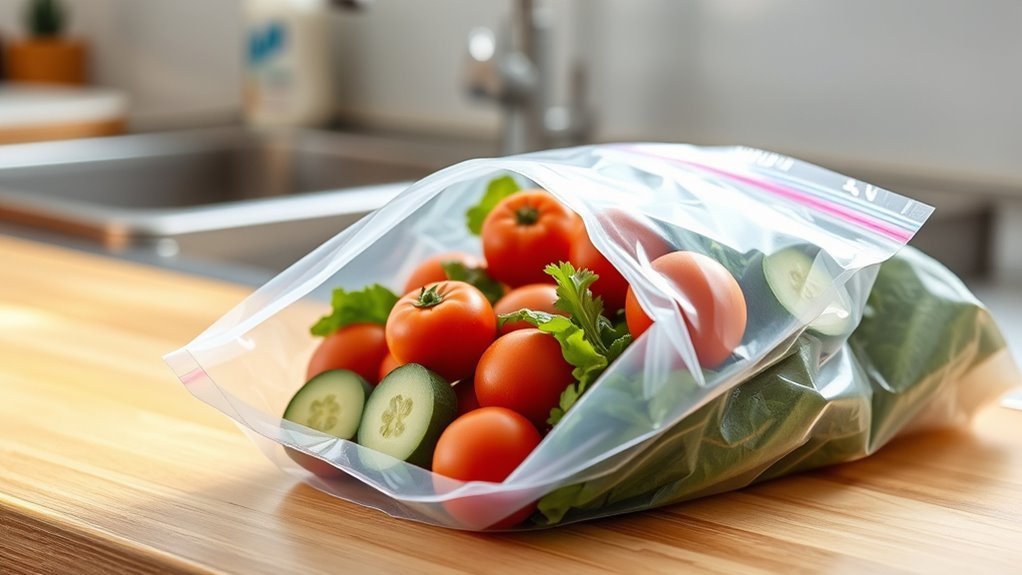
- Seal PEVA bags firmly along the zipper to prevent leaks and maintain freshness.
- Hand wash gently with mild soap and air dry completely before storage to avoid contamination.
- Inspect bags regularly for tears or punctures and replace damaged bags immediately.
Best Practices for Using PEVA Food Storage Bags
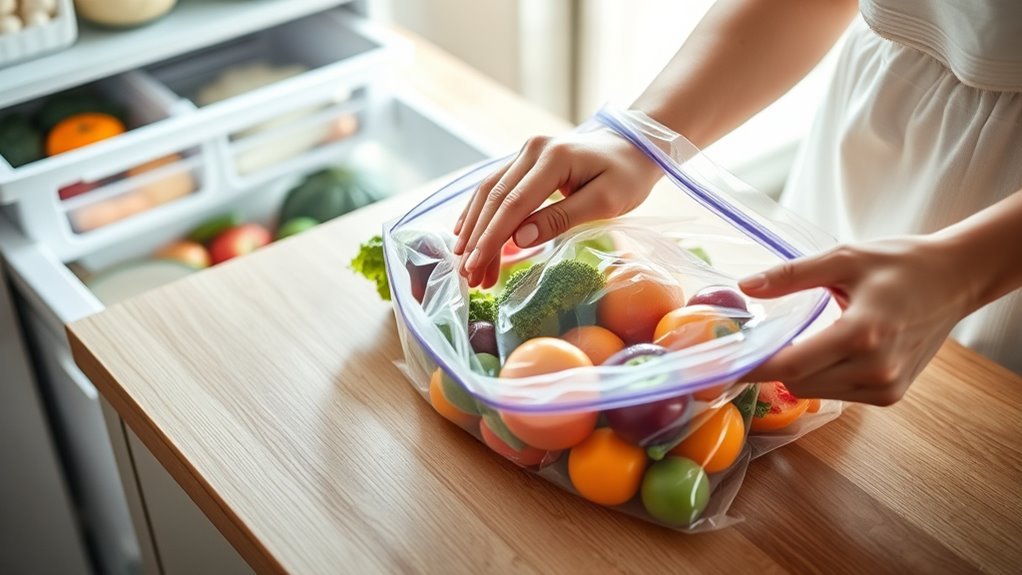
Before you use your PEVA food storage bags for the first time, make sure to wash them thoroughly with warm water and mild soap to keep them hygienic.
Always wash new PEVA food storage bags with warm water and mild soap before first use to ensure hygiene.
When using PEVA food storage bags, always respect their temperature limits by storing only cold or room temperature foods. Avoid heat sources like microwaves to maintain food safety.
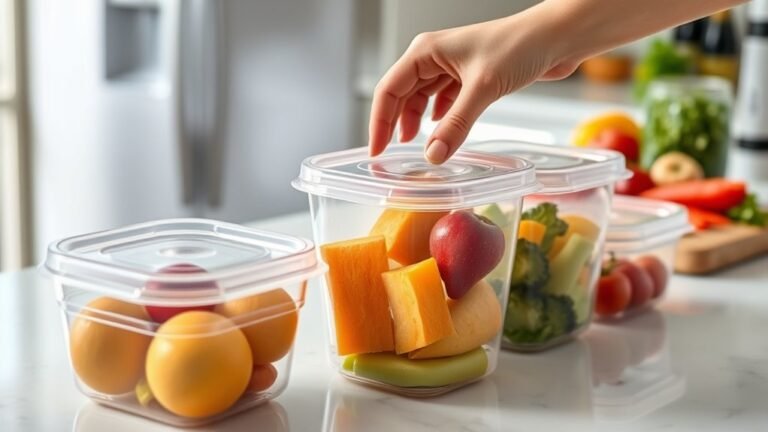
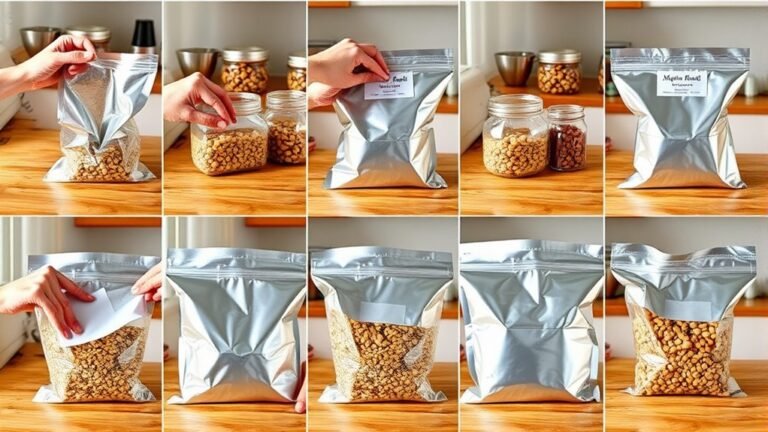
Confirm proper sealing by pressing firmly along the zipper to keep the bags leak-proof and preserve food freshness. Be careful not to puncture or tear the bags with sharp utensils, as this compromises safety and leak-proof features.
After cleaning and drying, follow storage tips by air drying bags completely. Then store them flat or rolled in a cool, dry place. This helps with odor prevention and supports effective food preservation.
Cleaning and Maintenance Tips for PEVA Bags
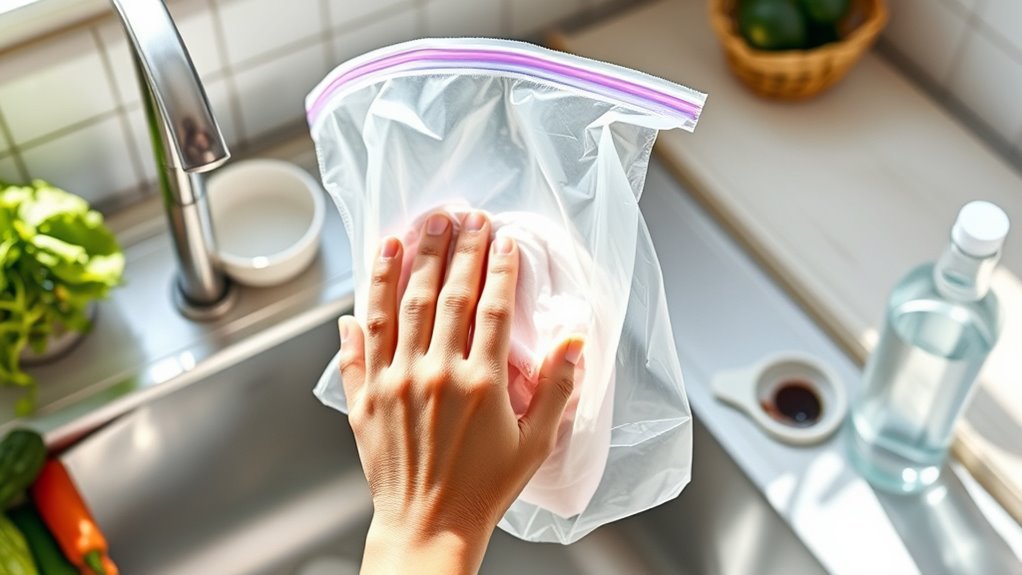
Since PEVA bags are designed for repeated use, you’ll want to hand wash them gently with warm water and mild dish soap to keep their material intact. Avoid harsh chemicals, bleach, or abrasive scrubbers during cleaning, as they can weaken the PEVA material.
After washing, air dry your bags completely, preferably upside down or on a dish rack, to ensure mold prevention. Never put PEVA bags in the dishwasher or microwave, because high heat can cause warping or melting.
Regular maintenance includes inspecting for damage like tears or punctures; replace any compromised bags to maintain food safety and prevent leaks. Proper care through careful cleaning and regular inspection will extend your PEVA bags’ lifespan and keep your stored food safe.
Frequently Asked Questions
Is PEVA Safe to Store Food?
Yes, you can safely store food in PEVA bags, especially if they’re FDA or LFGB certified. Just avoid heat, clean them regularly, and handle with care to keep your food fresh and free from harmful chemicals.
PEVA is a popular alternative to PVC because it doesn’t contain chlorine. That means it’s less likely to leach harmful substances into your food.
Just remember, don’t use them for hot foods or in the microwave. And make sure to wash them often to keep things hygienic. Easy enough, right?
Do PEVA Bags Release Microplastics?
PEVA bags don’t usually release microplastics because they’re stable and non-porous.
You just need to avoid high heat and clean them properly to keep them safe and prevent any potential degradation or particle shedding.
What Is the Safest Plastic for Food Storage?
The safest plastics for food storage are BPA-free, food-grade polyethylene (PE) and PEVA. They don’t leach harmful chemicals when used properly.
Always choose plastics labeled food-grade to keep your food safe and fresh. It’s a simple step that really makes a difference!
What to Use Instead of Ziploc Bags to Avoid Microplastics?
You might think switching is tough, but silicone bags and glass containers are your best bets instead of Ziploc bags.
They avoid microplastics, last longer, and keep your food safer without harmful chemicals leaching in.
Plus, they’re easy to clean and can be reused over and over, which is great for the environment and your wallet.
Conclusion
Now that you know how to safely use PEVA for food storage, you’re ready to keep your snacks fresh without worry. Just remember to clean your bags thoroughly after each use and avoid exposing them to high heat.
With a little care, PEVA bags can be your kitchen’s superhero, saving your food from spoilage like it’s on a mission from the food gods themselves.
Stay safe, stay fresh, and enjoy every bite! Using PEVA for food storage is a smart and eco-friendly choice that helps maintain your food’s quality. By following these simple tips, you ensure your snacks remain tasty and safe. So go ahead, make PEVA bags a staple in your kitchen routine for fresh and secure food storage every day.