How Do Smart Refrigerators Improve Food Storage?
You can improve food storage with a smart refrigerator that tracks inventory using sensors and barcode scanning. It keeps your grocery list updated and alerts you when items are nearing expiration. This way, you’re always aware of what you have and what you need to buy.
Smart refrigerators also automatically adjust temperature and humidity to preserve different foods. This helps prevent spoilage and extends the freshness of your groceries. By managing these factors efficiently, it reduces waste and saves you money.
Plus, this technology adapts to your habits, learning how you use your fridge over time. It keeps your food at its best longer, making your kitchen smarter and more convenient.
Key Takeaways
- Smart refrigerators monitor food inventory with cameras and sensors for accurate stock and expiration tracking. They keep an eye on what you have so nothing gets forgotten in the back of the fridge.
- They send real-time alerts to prevent spoilage by notifying users when items are near expiration. This way, you get a heads-up before food goes bad.
- Advanced temperature and humidity controls maintain optimal conditions tailored for different food types. That means your veggies, dairy, and meats all stay fresher for longer.
- Adaptive learning optimizes cooling patterns based on household usage, enhancing food freshness and shelf life. The fridge gets smarter over time, adjusting to your habits.
- Integrated digital grocery lists and meal planning reduce food waste by managing purchases and consumption efficiently. It helps you shop smarter and eat what you buy, cutting down on waste.
Advanced Inventory Management and Expiration Tracking
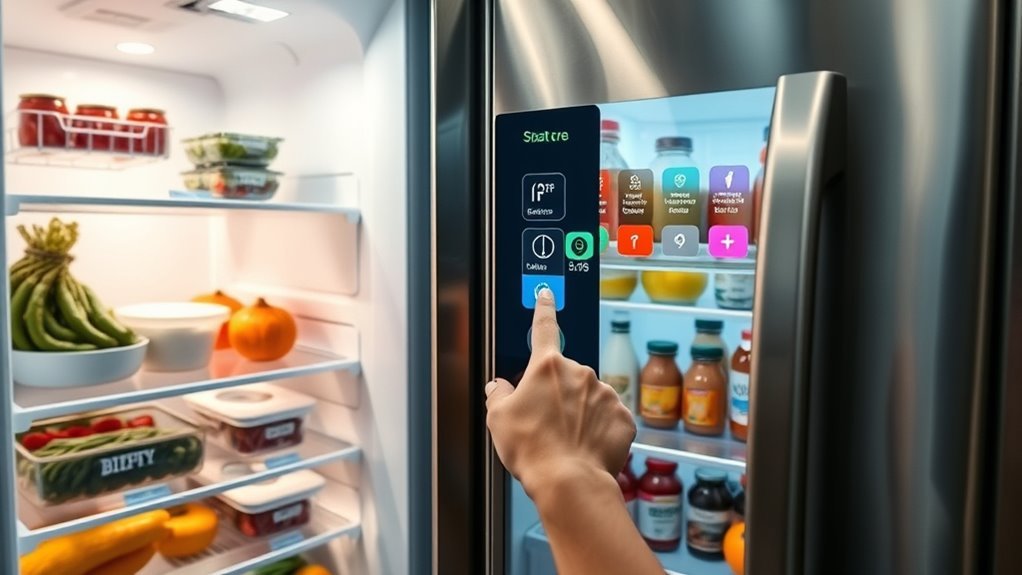
While you might not always remember what’s inside your fridge, smart refrigerators take care of that for you by using built-in cameras and sensors to track every item on their shelves. With advanced inventory management, these smart refrigerators monitor your food inventory in real time, using barcode scanning and usage patterns to keep everything up-to-date.
They handle expiration tracking efficiently, alerting you through real-time notifications when items approach food spoilage. This way, you avoid wasted food and optimize your food storage.
Plus, they help you maintain a digital grocery list based on current stock levels, so you never run low on essentials. By managing your food inventory and expiration dates, smart refrigerators make your kitchen smarter and reduce food waste effortlessly.
Optimized Temperature and Humidity Controls
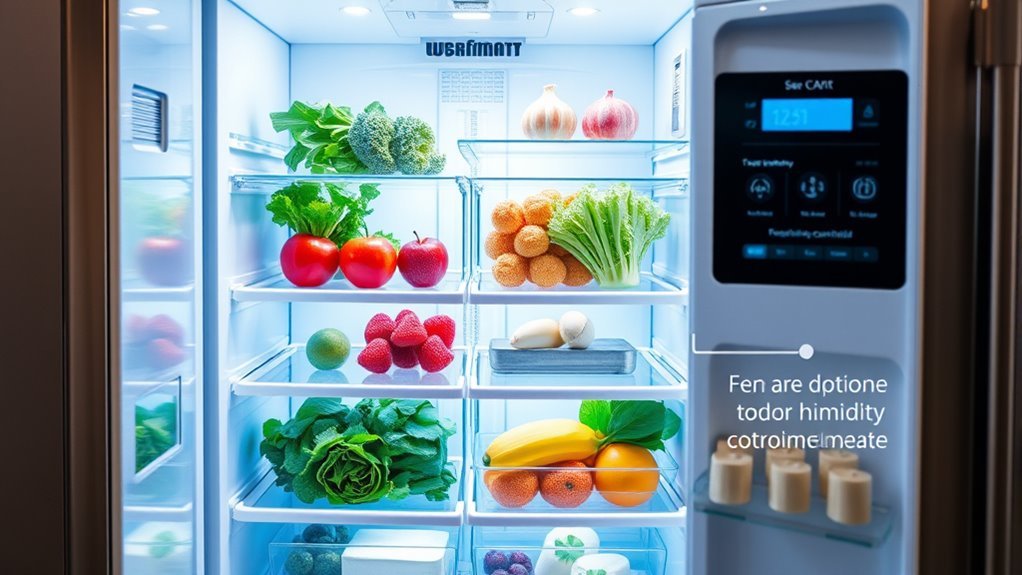
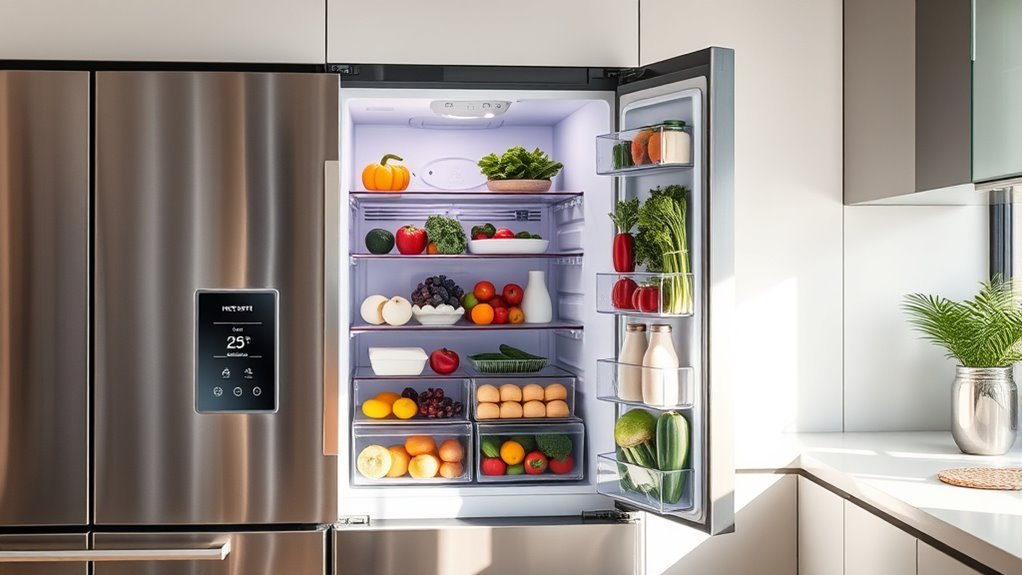
How does your smart refrigerator keep food fresher for longer? It uses advanced sensors to monitor and adjust temperature control and humidity levels, ensuring ideal storage conditions tailored to your food.
By maintaining precise humidity in crispers, it preserves produce and prevents spoilage effectively. Real-time data lets the fridge respond instantly to temperature changes, like when you open the door frequently or add warm items.
Its adaptive cooling system learns your household patterns to maximize conditions during busy times, enhancing food freshness. Plus, notifications alert you if temperature or humidity deviate from set parameters, so you can act quickly to protect your groceries.
This intelligent management of the environment inside your fridge is key to spoilage prevention and keeping food fresh. Pretty smart, right?
Frequently Asked Questions
What Are the Disadvantages of a Smart Fridge?
You’ll face higher upfront costs, rely on Wi-Fi, and risk expensive repairs with smart fridges.
Plus, they collect data, raising privacy concerns. Their complex features might be frustrating if you’re not tech-savvy.
What Are the Benefits of a Smart Refrigerator?
You know what they say, “A stitch in time saves nine.” With a smart fridge, you’ll prevent spoilage and organize food effortlessly.
Plus, you get timely alerts and can control temperatures remotely. This means you save money and reduce waste while keeping your groceries fresher longer.
What Is the Average Lifespan of a Smart Refrigerator?
You can expect your smart refrigerator to last about 10 to 15 years, similar to traditional models. Just keep up with regular maintenance and updates to avoid technological obsolescence.
That way, you can guarantee it runs smoothly for a longer time. It’s really about staying on top of the care and software updates.
Is a Smart Refrigerator Worth It?
Yes, a smart refrigerator is worth it if you want to reduce food waste and save money. You’ll enjoy convenience, better organization, and fresher food.
It makes your kitchen experience more efficient and enjoyable overall. Plus, it’s pretty cool to have tech doing some of the work for you!
Conclusion
You’ll see how smart refrigerators transform food storage by keeping track of what’s inside and adjusting conditions automatically. Imagine Sarah, who used to toss spoiled veggies weekly.
With her smart fridge alerting her about expiration dates and maintaining perfect humidity, her produce lasts longer and waste drops markedly.
By using these features, you save money and enjoy fresher food every day—making your kitchen smarter and your life easier. Smart refrigerators improve food storage by minimizing waste and extending the freshness of your groceries. This technology not only helps you organize better but also ensures optimal conditions for every type of food, keeping your ingredients at their best for longer. Ultimately, smart refrigerators make food storage more efficient and convenient, helping you reduce food spoilage and save money while enjoying fresh, high-quality meals every day.