Glass Is Better Than Plastic for Food Storage: 5 Factors to Consider
You’ll find glass containers better than plastic for food storage because they keep your food safer—free from harmful chemicals like BPA—and preserve its true taste without odors.
Glass is eco-friendly, fully recyclable, and avoids adding microplastics to the environment.
Plus, it resists stains and handles heat well, making it perfect for cooking or reheating. Cleaning is a breeze too, as glass doesn’t retain residues like plastic often does.
Stick with glass, and you’ll discover even more reasons why it’s the smarter, healthier choice for your kitchen.
Honestly, once you try glass, it’s hard to go back to plastic!
Key Takeaways
- Glass is nonporous and chemical-free, which means it won’t leach harmful toxins into your food. This helps keep your food safe and pure.
- Plus, glass is fully recyclable and eco-friendly. Using it helps reduce plastic waste and lowers environmental pollution.
- Glass also resists staining, odors, and discoloration. So, it stays clear and hygienic even after lots of use.
- It can handle high temperatures, too. That makes it perfect for cooking, baking, reheating, and even moving from freezer to oven.
- Cleaning glass is a breeze since it’s dishwasher safe. Unlike plastic, it doesn’t hold onto bacteria or odors, keeping things fresh and clean.
Health and Safety Benefits of Glass Containers
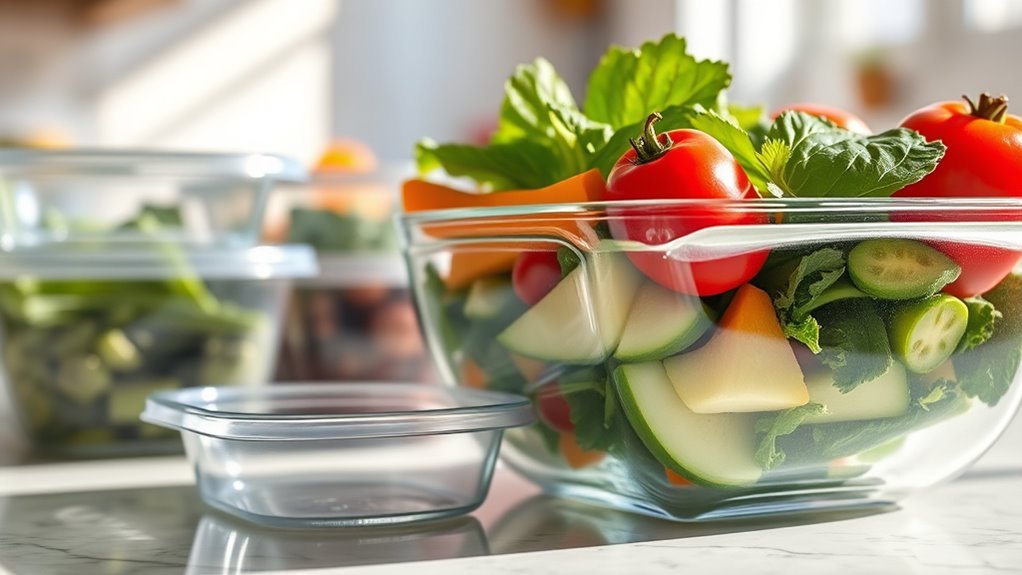
Although many people default to plastic for convenience, choosing glass containers offers significant health and safety advantages. Glass is nonporous and inert, which means it won’t leach harmful chemicals like BPA, phthalates, or heavy metals into your food.
Glass containers offer safer, chemical-free storage by preventing harmful toxins from leaching into your food.
This chemical-free quality guarantees safer storage, protecting you from toxins linked to hormone disruption. Unlike plastic, glass remains odor-free and doesn’t absorb flavors, preserving the purity and food safety of what you store.
For those with sensitivities or autoimmunity, glass reduces toxic exposure, helping you avoid added health risks. Plus, glass won’t degrade or release toxins when heated or washed, making it a reliable, safer option for everyday food storage.
Choosing glass means you’re prioritizing both your health and the integrity of your food. It’s a small change that can make a big difference in your wellbeing.
Environmental Impact and Sustainability
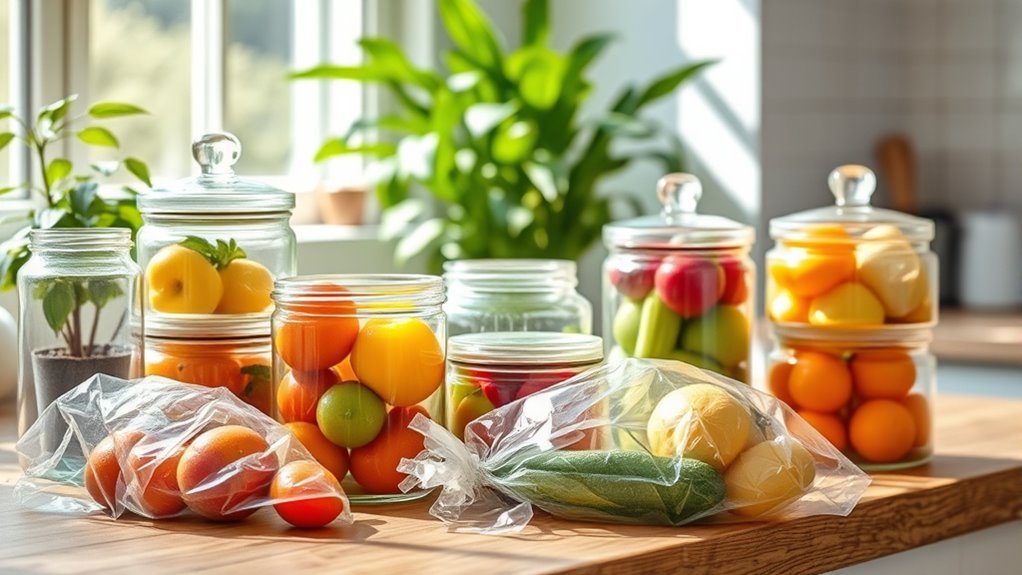
How does choosing glass over plastic impact the environment? Glass containers are 100% recyclable without losing quality, which helps reduce landfill waste and supports resource conservation.
Producing glass emits considerably fewer greenhouse gases than manufacturing plastic, lowering your environmental footprint. Unlike plastic, glass doesn’t break down into harmful microplastics that pollute oceans and threaten wildlife.
By opting for durable glass containers, you avoid single-use plastics, cutting down on plastic pollution and waste generation. This choice promotes a sustainable lifestyle by minimizing environmental harm and encouraging reuse.
When you pick glass, you actively contribute to reducing landfill waste and greenhouse gas emissions while preventing microplastic contamination. Overall, glass offers a greener, more responsible option for food storage that aligns with eco-friendly values.
Durability and Resistance to Staining
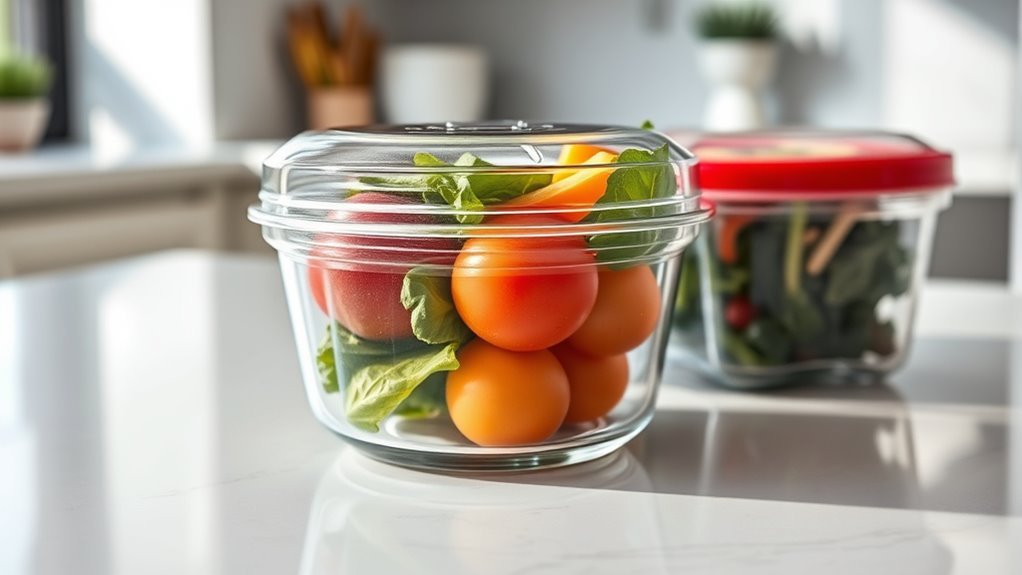
When you choose glass containers, you get durable storage that resists staining from colorful and oily foods. Unlike plastic, glass doesn’t absorb dyes or retain odors, so you won’t see discoloration even after repeated use.
This resistance to staining means your glass containers maintain their clarity and aesthetic appeal over time. Glass’s impermeable surface prevents food residues from penetrating, making cleaning easier and more effective.
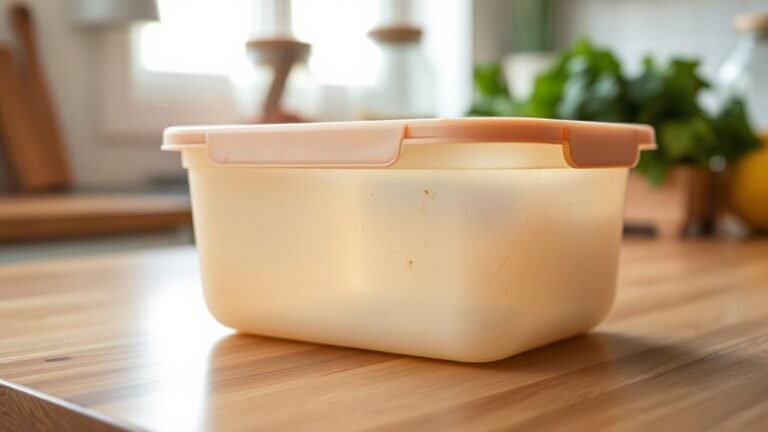
Plastic containers often yellow or cloud, especially with turmeric, curry, or tomato-based dishes, but glass stays clear. In food storage, this durability ensures your containers remain visually appealing and hygienic.
Versatility in Cooking and Storage
Because glass containers can handle high temperatures and sudden temperature changes, you can cook, bake, reheat, and store food all in the same dish without worrying about damage or contamination. Their oven-safe nature, often up to 450°C, supports versatile cooking right from freezer to oven, thanks to borosilicate glass’s resistance to thermal shock.
This sturdy material won’t warp or degrade like plastic, so you get long-lasting use. Plus, glass is microwave safe, letting you reheat leftovers directly without transferring food or risking chemical leaching.
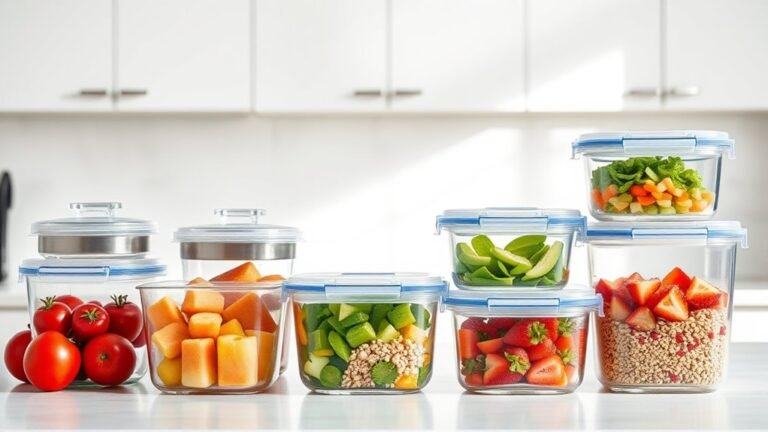
Its impermeable surface also resists stains and odors, keeping your storage fresh and odor-free regardless of what you store. With glass containers, you simplify meal prep and storage while ensuring safe, versatile, and reliable food handling.
Ease of Cleaning and Maintenance
Although both glass and plastic containers serve the purpose of food storage, glass makes cleaning far easier and more effective. You’ll appreciate that glass containers are dishwasher safe and resistant to staining, so they won’t retain odors or residues after cleaning.
Their non-porous surface prevents oils, spices, and food particles from absorbing, keeping them hygienic and clear over time. Unlike plastic, glass doesn’t degrade or develop scratches that harbor bacteria, simplifying maintenance and extending their lifespan.
Plus, glass withstands high temperatures during cleaning cycles, including sterilization, without warping or releasing toxins. Whether you wash them by hand with warm, soapy water or use your dishwasher, glass containers require minimal scrubbing or special care.
This makes them a smarter, more convenient choice for hassle-free cleaning and maintenance.
Frequently Asked Questions
Why Is Glass Better Than Plastic for Food Storage?
You’ll find glass better because it won’t leach chemicals into your food. It handles heat safely and resists stains and odors.
Plus, glass stays clear, so you can easily see what’s inside. This makes storage more organized and eco-friendly.
Is Glass Good for Storing Food?
Think of glass as a trusty guardian for your food—it’s excellent for storing because it won’t leach chemicals, resists stains and odors, and handles heat well.
Just handle it carefully to avoid chips or breaks.
Which Is Healthier, Glass or Plastic?
Glass is healthier because it doesn’t leach harmful chemicals like BPA found in plastics. You’ll avoid toxins, keep food pure, and reduce exposure to synthetic additives.
This promotes better health and safer food storage overall. So, if you care about what goes into your body, glass is definitely the way to go!
Is Glass or Plastic Better for Pantry Storage?
Glass is better for pantry storage because it won’t absorb odors or stains, keeps food safer, and helps you see contents clearly.
It’s heavier but more durable long-term, making it worth the extra care. Plus, you don’t have to worry about it getting scratched up like plastic.
Conclusion
When it comes to food storage, choosing glass over plastic isn’t just a small change—it’s a smart step toward better health, a cleaner planet, and lasting convenience. You’ll enjoy its durability, versatility, and ease of cleaning without worrying about harmful chemicals or stains.
Like a clear window into freshness, glass lets you see and trust what’s inside. Plus, it doesn’t absorb odors or colors like plastic can, keeping your food tasting just the way it should.
So, why settle for less when you can embrace the brilliance of glass every day? Glass food storage containers offer a safer, more sustainable option that protects your meals and the environment. Making the switch to glass means investing in quality, clarity, and peace of mind—all in one container.