5 Tips to Organize Food Storage Containers
Start by emptying your containers and tossing any broken or mismatched lids. Nest container bases separately and group lids for easy access. This makes finding the right pieces super simple and saves you from the usual kitchen chaos.
Choose adjustable organizers and stackable storage that adapt as your collection changes. It’s a smart way to keep everything neat without having to overhaul your system constantly.
Use vertical space with shelf risers and keep frequently used items up front. That way, you’re not digging through stacks every time you want a container.
Label containers clearly and schedule regular checks to keep clutter at bay. Staying on top of things means your kitchen stays functional and tidy.
Follow these smart steps, and you’ll find simple ways to create a neat, functional kitchen space ahead. Organizing your food storage containers doesn’t have to be overwhelming — just a few easy tips can transform your kitchen!
Key Takeaways
- Declutter and discard damaged containers, then match lids to their containers to keep only necessary, functional pieces. It really helps to get rid of the ones you don’t use or that are broken.
- Nest containers by size without lids and store lids separately to save space and reduce clutter. This way, everything fits neatly and you won’t be hunting for lids later.
- Use adjustable, stackable organizers and clear bins to create a flexible, visible storage system. Seeing what you have makes it easier to grab what you need quickly.
- Store lids vertically and add shelf risers or inserts to maximize vertical and double-layered storage. This trick frees up a lot of space you might not realize you have.
- Label containers and storage areas clearly and schedule regular checks to maintain organization and remove unused items. Keeping up with this means your kitchen stays tidy without a big effort.
Declutter and Assess Your Collection
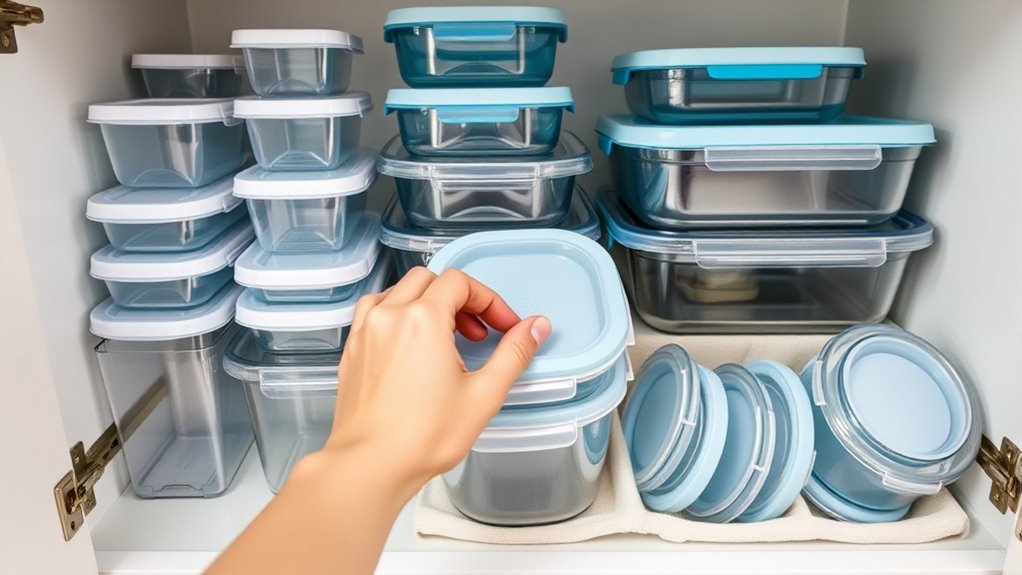
Before you begin organizing, empty all your food storage containers to see exactly what you have. This helps you evaluate your collection clearly.
Start by decluttering: discard any broken, cracked, or damaged containers and lids to avoid leaks and spills. Next, separate containers by size and shape to spot duplicates and mismatches.
Check for lids and containers that don’t belong together, setting aside or recycling those without matches. By doing this, you’ll understand which containers are necessary and functional for your food storage needs.
Taking these steps ensures you only keep what fits your lifestyle, making it easier to organize and maintain your storage system efficiently. Decluttering and assessing your collection is the first key step to a well-organized kitchen.
Separate Containers and Lids for Better Nesting
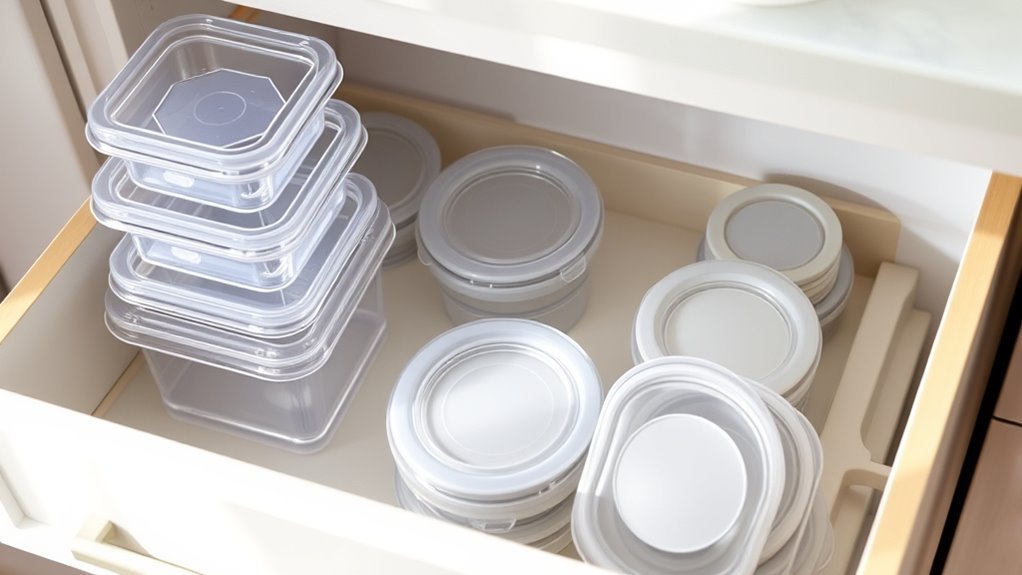
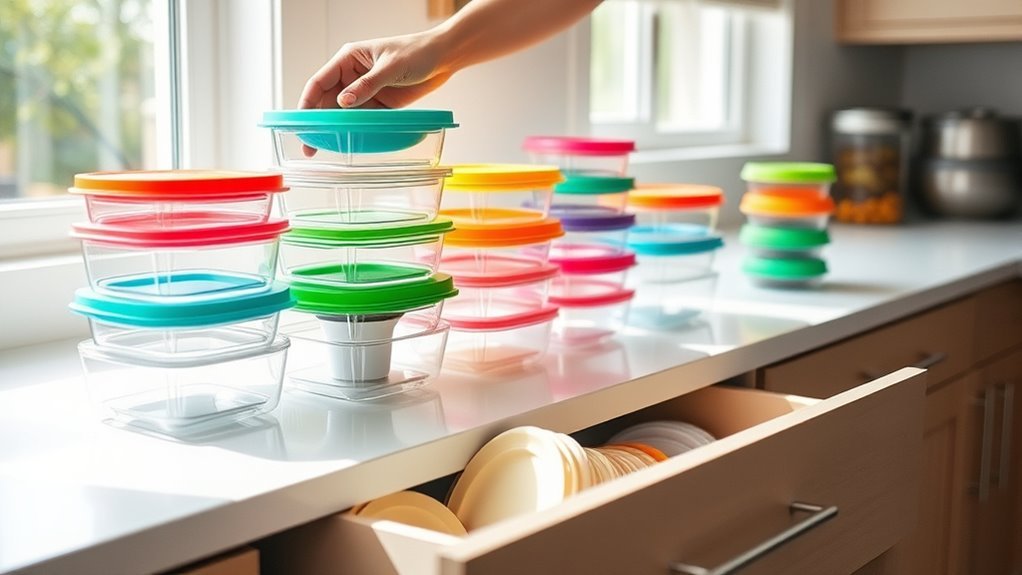
Once you separate containers from their lids, you can nest the bases more compactly, saving considerable cabinet space. Organizing containers and lids separately helps you maximize your cabinet storage efficiently.
Start by grouping containers by shape and size to make stacking and nesting easier. Here’s how to organize for better nesting:
- Nest containers bases without lids to reduce clutter and prevent toppling.
- Group lids separately to quickly find the right match.
- Stack nesting bases from largest to smallest for space-saving.
- Keep containers and lids in designated spots to avoid mess.
- Avoid mixing lids with containers to minimize search time.
This method improves nesting, reduces clutter, and creates a neat, space-saving system for your containers and lids. It really makes a difference when you open your cabinets!
Choose Flexible Storage Solutions
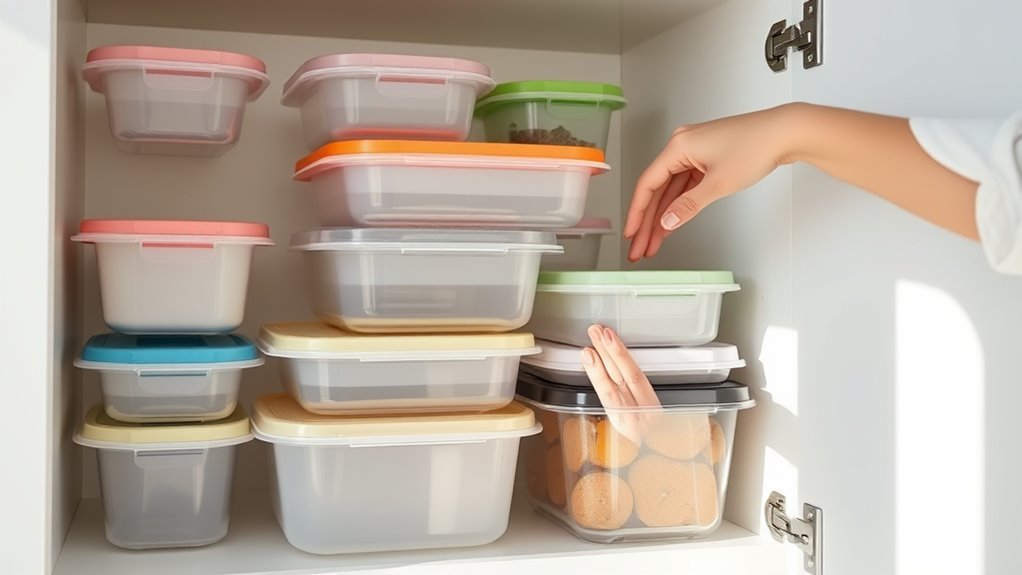
When you choose flexible storage solutions, you’ll adapt easily to different container sizes and shapes while keeping your kitchen organized. Opt for adaptable storage like adjustable dividers and modular organizers that you can reconfigure as your collection grows or changes.
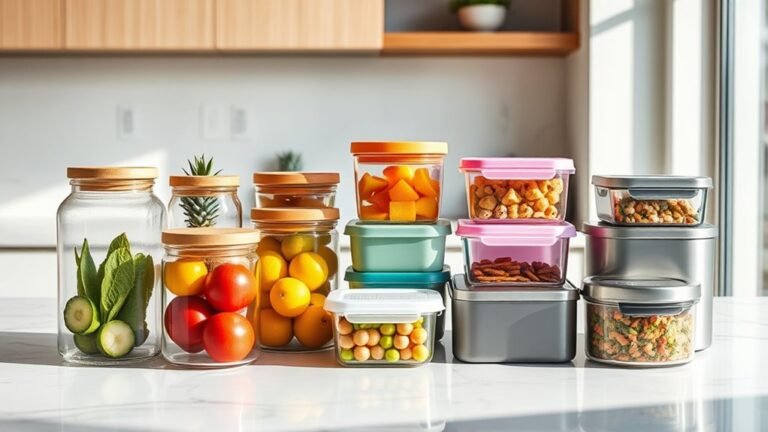
Use stackable containers and storage systems with expandable features to maximize flexible storage without clutter. Open storage options let you quickly add or remove containers without needing fixed compartments.
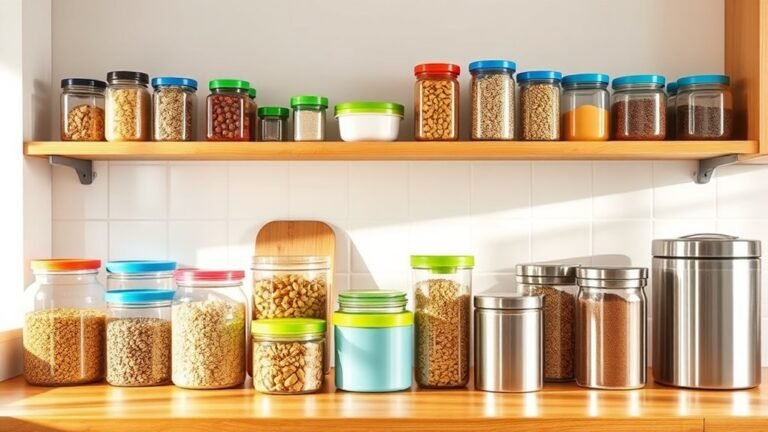
Select storage solutions made from versatile materials such as clear acrylic or woven baskets, which blend with various kitchen styles. By combining reconfigurable and adaptable storage, you create a system that evolves with your needs.
This makes it easier to maintain order and accessibility in your kitchen space at all times. It’s all about creating a setup that works for you, no matter how your kitchen changes!
Maximize Space With Smart Placement
Although organizing containers can feel overwhelming, you can maximize your kitchen space by placing items strategically. Start by using stackable containers to make the most of vertical space without risking toppling.
Maximize your kitchen space with strategic placement and stackable containers for safe, efficient vertical storage.
Store storage lids vertically in a designated organizer to save drawer space and improve access. Incorporate shelf inserts or risers to create double-layered storage, which optimizes cabinet capacity.
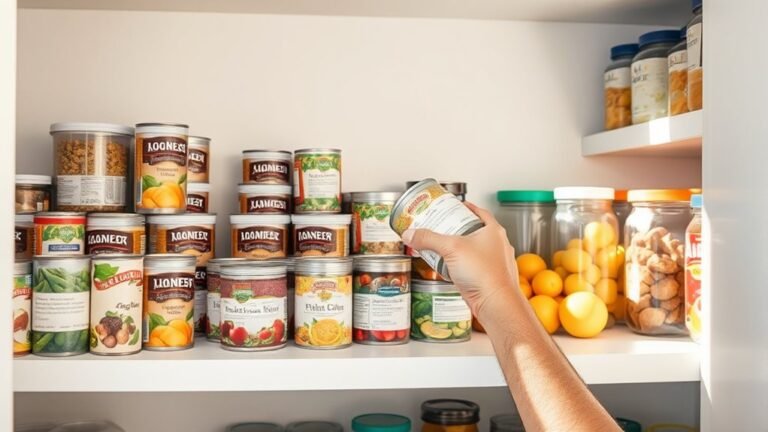
Place frequently used containers near the front for quick retrieval. Use clear storage bins to enhance visibility, allowing you to identify contents easily.
Here’s a quick guide:
- Use stackable containers to utilize vertical space
- Store lids vertically with an organizer
- Add shelf inserts for double-layered storage
- Keep frequently used items accessible
- Use clear storage bins for better visibility
This efficient placement keeps your kitchen tidy and functional. It really makes a difference!
Maintain Organization With Labels and Regular Checks
Smart placement keeps your containers easy to find, but adding labels takes organization a step further. Use clear labels on your storage containers, baskets, or shelves to quickly identify contents without opening container lids.
Keep a label station nearby, stocked with waterproof labels and markers, so you can easily update labels whenever needed. It makes staying organized a breeze.
Schedule regular checks—monthly or quarterly—to inspect your storage containers, update labels, and reorganize as necessary. During these checks, remove expired or unused items to prevent clutter buildup.
Frequently Asked Questions
Should Containers Be Stored With Lids on or Off?
You should store containers with lids on to keep sets together and stack neatly, saving space.
However, if lids aren’t fully dry, store them separately to prevent mold and make it easier to find the right lid quickly.
What Are 5 Important Food Storage Tips?
Imagine sealing freshness like a vault: You should refrigerate promptly, use airtight containers, label with dates,
store leftovers in small portions, and avoid overcrowding to keep food vibrant and safe for your next delicious meal.
What to Avoid in Food Storage Containers?
You shouldn’t use non-food grade plastics, cracked or scratched containers, mismatched lids, or single-use disposables.
Avoid containers that aren’t dishwasher or microwave safe to keep your food safe and your storage efficient.
It’s really about choosing the right materials and keeping everything in good shape. That way, your food stays fresh and you don’t run into any unexpected issues.
What Is the Correct Order for Food Storage?
You should place your most-used containers and lids upfront for quick access. Store bulky ones on bottom shelves, and group similar items together.
Studies show organized kitchens reduce meal prep time by 30%. That means less stress and effort for you!
Conclusion
Now that you’ve got these tips, why not take a moment to transform your chaotic cabinet into a neat, functional space? By decluttering and separating lids, you’re already on your way to a more organized kitchen. Choosing flexible storage options and maximizing space can make a huge difference too.
Labeling your containers helps save time and reduces frustration when you’re in a hurry. Keeping your food storage containers organized isn’t just about tidiness—it’s about making your kitchen work better for you. Imagine a clutter-free kitchen that makes meal prep a breeze every day.
So, are you ready to enjoy the benefits of an organized pantry? With these simple food storage container organization tips, your kitchen will become more efficient and enjoyable to use. Start today and watch how easy cooking and storing leftovers can be!