5 Safest Materials for Food Storage
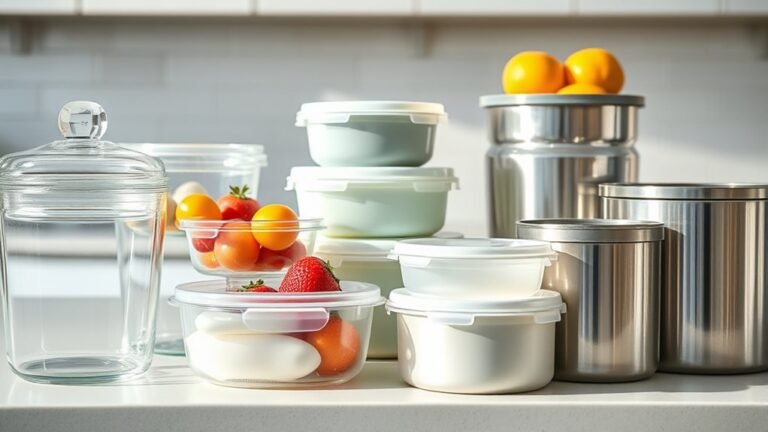
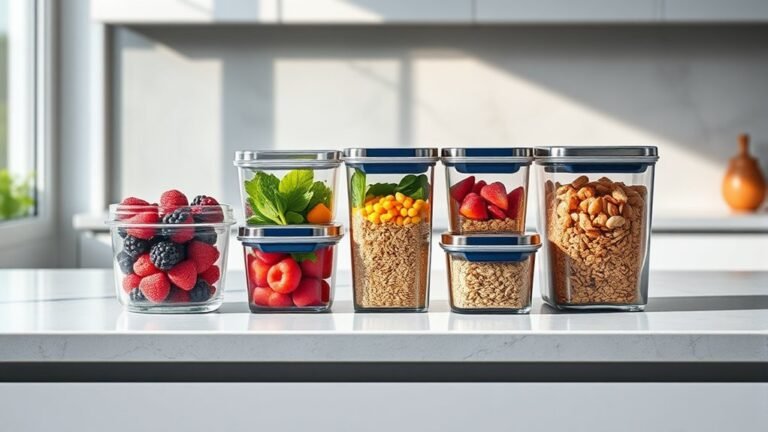
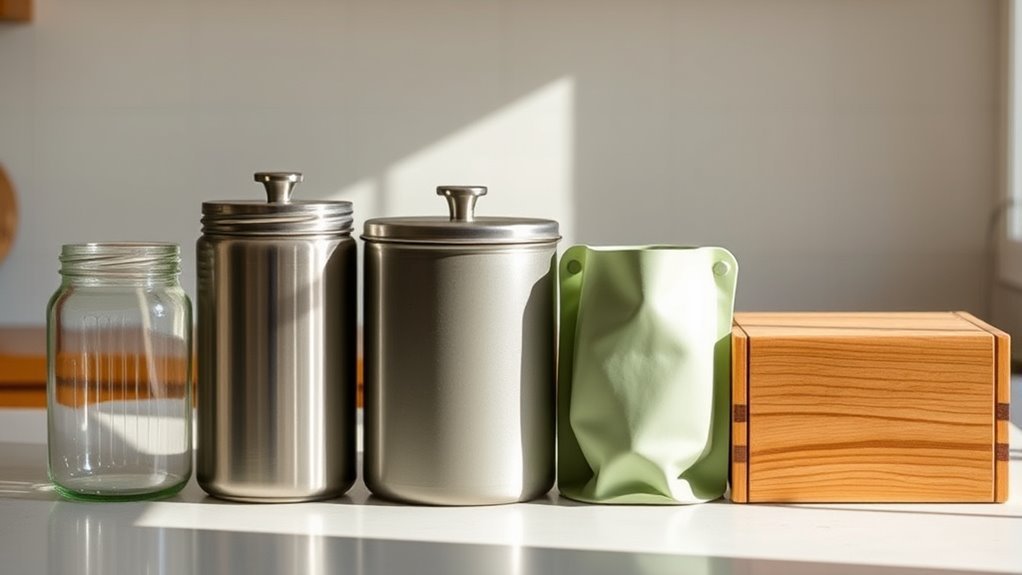
When choosing food storage, it’s smart to pick materials that are safe and non-toxic. Glass is a top choice because it’s non-reactive, BPA-free, and lets you see your food clearly. Plus, it doesn’t hold onto stains or smells, which is a big win in the kitchen.
Stainless steel is another fantastic option. It’s super durable, chemical-free, and handles high heat like a champ. If you love baking or reheating, ceramic is a solid pick since it won’t contaminate your food.
Looking for something natural? Bamboo and wood are sustainable, toxin-free, and add a nice touch to your storage collection. And don’t forget silicone and beeswax wraps—they’re flexible, eco-friendly covers that keep your food fresh.
With these materials, you’re set to keep your food safe and fresh every time.
Key Takeaways
- Glass containers are non-reactive, BPA-free, heat-resistant, and fully recyclable. This makes them safe and environmentally friendly for food storage.
- Stainless steel is durable, chemical-free, non-reactive, and resistant to heat and corrosion. It’s ideal for long-term safe food storage.
- Ceramic storage options are heat-resistant, non-reactive, and lead-free. They maintain food flavor without contamination risks.
- Bamboo and wood are natural, biodegradable, and chemical-free when food-grade. They’re suitable for dry food storage with proper care.
- Silicone and beeswax wraps offer reusable, eco-friendly, and breathable protection. They’re safe for short-term food storage without harmful chemicals.
Glass: The Non-Reactive Storage Solution
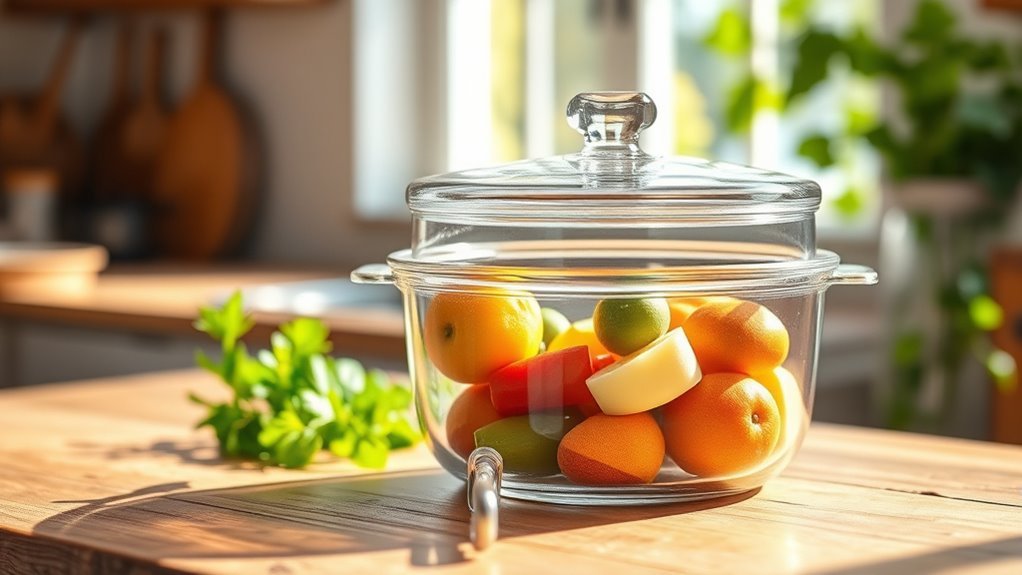
Although many storage options exist, glass stands out because it doesn’t react with your food or release harmful chemicals, even when heated. When you choose glass for food storage, you’re picking a non-reactive, BPA-free material that keeps your meals safe and fresh.
Glass containers are heat-resistant and durable, made from borosilicate or tempered glass, so they won’t crack under temperature changes. You’ll also appreciate how transparent glass is—letting you see what’s inside without opening the lid. This helps reduce food waste.
Plus, glass is 100% recyclable, making it an environmentally friendly choice. By opting for glass, you avoid plastics that might leach toxins, giving you peace of mind in every meal you store.
Stainless Steel: Durable and Chemical-Free
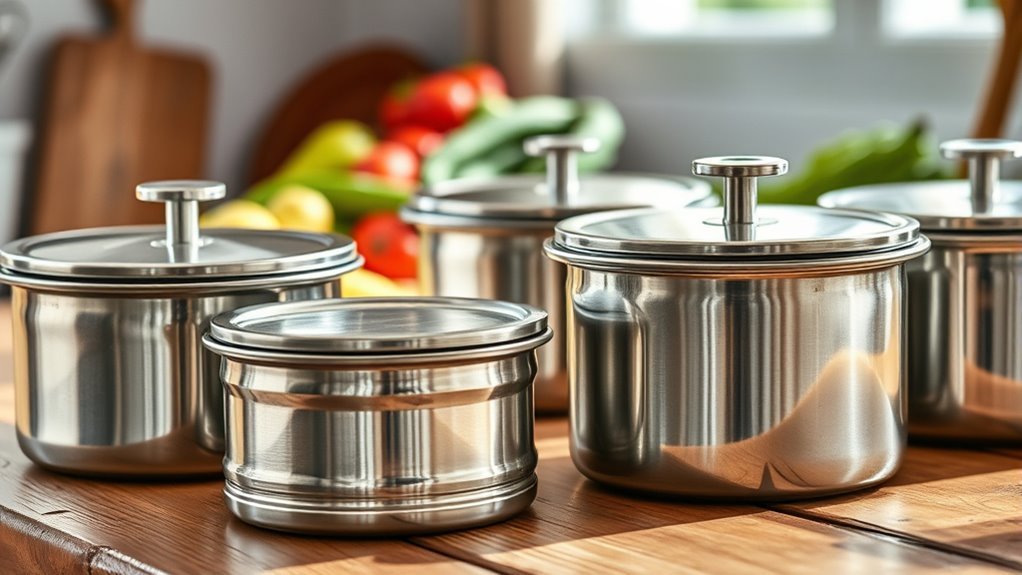
When you want a storage option that combines toughness with safety, stainless steel delivers. This durable, corrosion-resistant material stands up to dents, scratches, and drops without breaking, making it perfect for long-term storage.
You’ll appreciate that stainless steel is completely chemical-free and non-reactive, so it won’t leach harmful substances into your food. It’s food-safe and free from BPA, phthalates, and PFAS, ensuring your meals stay pure and uncontaminated.
Plus, stainless steel can handle high heat without degrading, so it’s oven- and dishwasher-safe. Choosing stainless steel means opting for a reliable, unbreakable container that keeps your food fresh and safe without compromise.
It’s a smart, lasting investment for anyone serious about safe food storage.
Ceramic: Heat-Resistant and Safe for Baked Goods
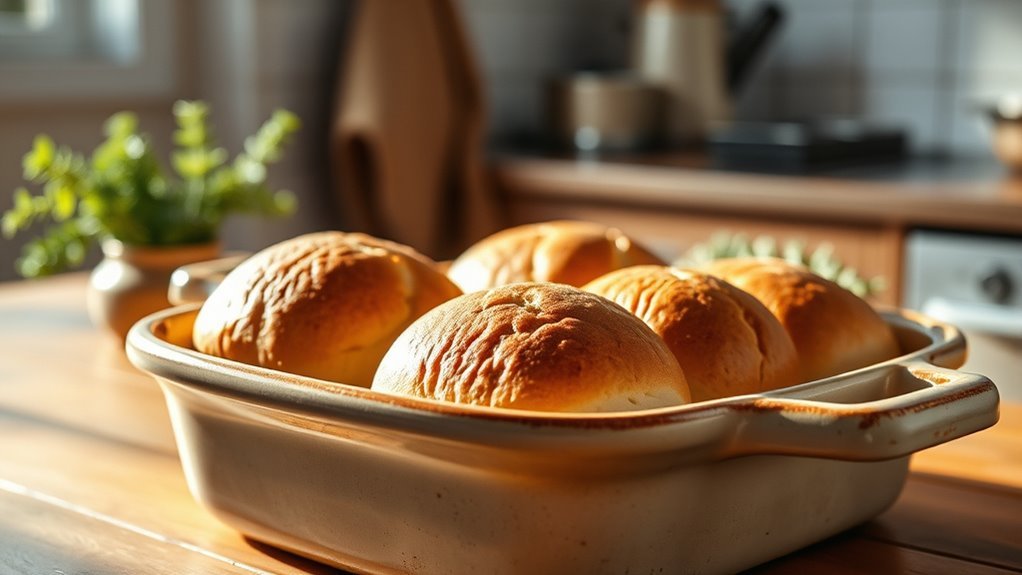
Because ceramic containers resist heat and don’t react with food, you can safely bake, reheat, and store your meals without worrying about harmful chemicals leaching in. These heat-resistant, oven-safe bakeware pieces ensure excellent food safety, especially when made with lead-free glaze.
You’ll appreciate how non-reactive ceramic containers maintain flavors and prevent contamination. Plus, high-quality ceramics offer staining resistance and durability, keeping your kitchenware looking fresh.
Picture this:
- A lasagna bubbling in a ceramic casserole dish
- Freshly baked bread cooling on a ceramic tray
- Leftover stew stored in a ceramic container
- A colorful, stain-free ceramic bowl after tomato soup
- Oven-safe ceramic ramekins preparing custards
Choosing ceramic means choosing safe, versatile bakeware for everyday meals.
Bamboo and Wood: Natural and Sustainable Options
If you’re looking for eco-friendly food storage, bamboo and wood offer natural, sustainable choices that reduce your environmental footprint. These materials are biodegradable, renewable, and free from harmful chemicals when you choose food-grade, non-toxic options.
Bamboo and wood containers are ideal for dry food storage and kitchen utensils, providing durability without plastic’s environmental cost. It’s essential to select products sealed properly to avoid toxic adhesives or resins.
To keep your bamboo and wood storage safe and long-lasting, clean them regularly with mild soap and avoid soaking or prolonged moisture exposure. By opting for bamboo and wood, you embrace an eco-friendly lifestyle with food storage that’s natural, sustainable, and safe for your health and the planet.
Silicone and Beeswax Wraps: Flexible and Eco-Friendly Alternatives
Moving beyond rigid containers, flexible options like silicone and beeswax wraps offer practical, eco-friendly solutions for keeping your food fresh. Silicone wraps are made from food-grade silicone, which is heat-resistant and safe for use in the microwave, oven, and freezer.
Beeswax wraps, on the other hand, are crafted from cotton infused with beeswax and jojoba oil. They provide natural breathability and work great for short-term food storage.
Both wraps are reusable alternatives to plastic that help reduce waste without compromising freshness. You can mold silicone wraps to cover bowls or produce easily.
Use beeswax wraps for fruits, veggies, and baked goods. Just remember to wash beeswax wraps in cold water to preserve their coating.
Enjoy the versatility of heat-resistant silicone wraps, and benefit from the natural breathability that beeswax wraps offer.
These eco-friendly options keep your food fresh and support a sustainable lifestyle.
Frequently Asked Questions
What Is the Healthiest Material to Store Food In?
You should choose glass or stainless steel to store food because they don’t leach harmful chemicals. They’re durable, non-reactive, and safe for reheating.
This helps you keep your food fresh and healthy without worrying about toxins. Plus, they’re pretty easy to clean and last a long time.
What Materials Are Safe for Food Storage Containers?
You’ll find glass, stainless steel, and ceramic safe for food storage containers, coincidentally because they don’t react with your food.
BPA-free plastics and food-grade silicone also work well, keeping your meals fresh without harmful chemicals leaching. It’s all about choosing materials that won’t mess with your food’s flavor or safety.
Is Silicone Safer Than Plastic for Food Storage?
Yes, silicone’s safer than plastic for food storage because it doesn’t leach harmful chemicals when heated. You’ll appreciate its durability, resistance to stains, and odor.
But always choose certified, food-grade silicone for safety. It’s a small step that makes a big difference!
Is It Better to Store Food in Plastic or Metal?
Think of metal containers as a fortress protecting your food. You’ll find storing food in metal better than plastic because it won’t leach chemicals.
It also resists damage and keeps your meals safe and fresh longer. So, if you want to keep things fresh and worry-free, metal is the way to go!
Conclusion
When it comes to storing your food, choosing the right material isn’t just smart—it’s essential. Glass, stainless steel, ceramic, bamboo, and silicone each bring unique benefits that keep your meals fresh and safe.
Imagine your kitchen as a fortress, where these materials stand guard against chemicals and waste. By picking any of these options, you’re not only protecting your food but also making a choice that’s good for you and the planet.
Using safe materials for food storage helps prevent contamination and preserves the quality of your meals. Plus, these options are reusable and eco-friendly, reducing waste and harmful environmental impact. So, when selecting containers, remember that glass, stainless steel, ceramic, bamboo, and silicone offer both safety and sustainability. Choosing these materials means you’re investing in your health and supporting a greener lifestyle. It’s truly a win-win for you and the planet!