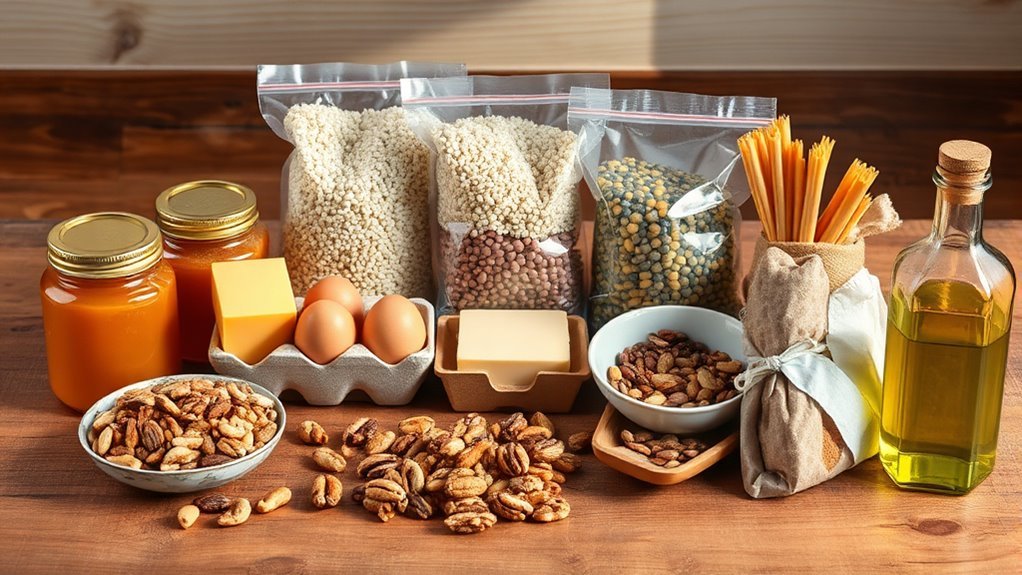
10 Key Foods I Should Have in My Food Storage
You should stock long-lasting staples like white rice and hard wheat berries for versatile carbs. These basics are perfect for creating a variety of meals, and they store well for a long time.
Plus, they’re easy to cook and very filling.
Include dry beans such as pinto, black, and chickpeas for protein and fiber that last indefinitely when stored right. They’re nutritional powerhouses and super budget-friendly.
Adding canned meats and TVP gives you quick protein options that are convenient during emergencies.
Keep shelf-stable oils and canned vegetables on hand for healthy fats and important nutrients.
Don’t forget essential spices, sugar, and salt to enhance flavor and help with preservation.
Remember to rotate your stock regularly and store everything in a cool, dark place.
Want to build balanced, nutrient-packed emergency meals? These key foods will make it easier than you think!
Key Takeaways
- Store long-lasting grains like white rice, wheat berries, and rolled oats. They’re great versatile, shelf-stable carbohydrate sources you can rely on.
- Include dry beans and legumes for high-protein, fiber-rich nutrition. When stored properly, they have an indefinite shelf life, which is super convenient.
- Keep canned meats, fish, and shelf-stable cooking oils on hand. These provide convenient protein and healthy fats without needing refrigeration.
- Stock shelf-stable canned vegetables and dried fruits. They add essential vitamins and bring variety to your emergency meals.
- Add baking staples, spices, salt, sugar, and honey. These help enhance flavor, preserve foods, and keep you ready to cook anytime.
Essential Grains for Long-Term Food Storage

When you’re planning long-term food storage, choosing the right grains is crucial because they form the foundation of many meals and store well under proper conditions. White rice can last 3–5 years if you maintain it dry and cool, making it a reliable staple.
Wheat berries, especially hard white varieties, store well for long periods and offer versatility for grinding or hearty meals. Rolled oats also keep for about three years when you transfer them to an airtight container to protect against moisture and pests.
Don’t overlook popcorn and dried corn; they’re great for quick snacks or meals but must be sealed tightly to block oxygen and moisture. Make sure to store grains in a dark, cool place and use FIFO to ensure freshness in your prepper pantry.
Criteria for Choosing Prepper Pantry Foods
Although you might be tempted to stockpile a wide variety of foods, it’s best to focus on shelf-stable items with durable packaging and a long shelf life. That way, your prepper pantry stays reliable when you need it most.
Choose foods with at least a one-year shelf life, stored in cans, boxes, or retort packs that don’t require refrigeration. Nutrient-dense options that are easy to prepare work best—either eaten straight from the can or needing minimal fuel to reheat or rehydrate.
Always rotate your stock by placing newer items behind older ones. Avoid products that are close to their best-by dates to keep everything fresh.
Rotate stock by placing new items behind older ones and avoid near-expiry products to maintain freshness.
Make sure to inspect cans and jars carefully for leaks, bulges, or cracks. You don’t want to risk your food safety.
Finally, protect your food storage by keeping it cool, dark, dry, and airtight. This shields your supplies from heat, light, moisture, pests, and oxygen.
Best Beans and Legumes for Prepper Pantry Nutrition

Since beans and legumes offer exceptional nutritional value and long shelf life, they should be a foundation of your prepper pantry. Dry beans like pinto, black, navy, kidney, and chickpeas last indefinitely when kept dry in airtight containers away from heat, light, and moisture.
While quality may decline after about two years, they can still be safely used for a long time. Canned beans add convenience, ready to eat with minimal reheating, saving fuel and time.
Rotate among varieties—black beans for soups, pinto for refried dishes, chickpeas for stews or hummus—to keep meals interesting. Combine beans with grains to create complete proteins for balanced nutrition.
Store everything in cool, dark, dry places to ensure your beans and legumes last indefinitely and remain a reliable prepper pantry staple.
Reliable Protein Sources for Your Prepper Pantry
You’ll want to stock up on dry beans for long-lasting, high-protein meals, and keep canned meats on hand for quick, no-fuss options.
Pairing beans with grains like rice or pasta helps you get a complete protein profile without extra effort.
Remember to rotate your stock and check packaging to keep your protein sources safe and ready.
Dry Beans Benefits
When you stock dry beans like pinto, black, or chickpeas in your prepper pantry, you gain a reliable, long-lasting source of protein that can stay edible for years if stored properly.
Dry beans benefits include high nutritional value, providing protein, fiber, B vitamins, and antioxidants. They store efficiently, tolerate room temperature, and reduce the need for frequent resupply.
Pairing beans with grains gives you complete proteins, which are essential for balanced nutrition.
| Benefit | Explanation |
|---|---|
| Shelf Life | Lasts years if kept dry and airtight |
| Nutritional Value | Protein, fiber, B vitamins, antioxidants |
| Versatility | Used in chili, soups, stews, or plain |
| Storage Efficiency | Calorie-dense, space-saving |
| Complementary Foods | Pairs well with grains for complete protein |
Canned Meat Options
Although fresh meat requires refrigeration, canned meat provides a dependable, shelf-stable protein source that you can safely store at room temperature until the best-by date. Stock canned foods like chicken and salmon as calorie-dense, ready-to-eat options that last long without spoiling.
Always select cans with sturdy packaging and skip any that are bulging, leaking, dented, or foul-smelling to ensure safety. You can eat canned meat straight from the can or heat it for better taste.
Rotate protein types to avoid menu fatigue—mild canned chicken and omega-3 rich canned salmon add variety. Pair these canned meats with staples like rice, beans, and spices to create filling, nutritious meals that boost morale and help you maintain a well-rounded prepper pantry.
Protein Pairing Staples
Build a dependable protein foundation for your prepper pantry by combining versatile staples like dry beans, canned beans, and shelf-stable meats. Stock a variety of beans and legumes—pinto, black, kidney, chickpeas—to ensure indefinite storage when kept airtight.
Canned beans offer quick, no-fuel-needed meals, perfect for survival foods. Pair beans with grains like rice or pasta to create complete protein meals, providing all essential amino acids.
Include shelf-stable proteins such as canned chicken, salmon, and cured meats to diversify your protein sources and boost morale. Don’t forget textured vegetable protein (TVP), a compact, long-lasting high-protein option that can last up to 20 years when stored properly.
Just make sure to protect all protein staples in cool, dark, airtight containers. That way, you prevent spoilage from heat, moisture, pests, light, and oxygen.
Healthy Fats to Include in Long-Term Food Storage
Including healthy fats in your long-term food storage is essential for maintaining energy and meal satisfaction during emergencies. Focus on shelf-stable fats like olive oil and cooking oils, which provide calorie-dense nutrition without refrigeration.
Canned goods such as canned chicken, salmon, and Spam offer fats and proteins that keep meals satisfying and quick to prepare. Don’t forget textured vegetable protein (TVP), a long-lasting fat-and-protein staple that pairs well with grains and beans.
If you have space, consider shelf-stable animal fats and cured meats like country hams—they last indefinitely when stored properly. For compact, nutrient-dense options, pemmican-style bars deliver concentrated fats efficiently.
Keep these essentials alongside your first aid kit so you’re ready for any emergency with both nutrition and safety covered. It’s all about being prepared and making sure you have what you need when it counts.
Shelf-Stable Fruits and Vegetables for Your Pantry
When you prepare your pantry with shelf-stable fruits and vegetables, you make sure you have access to essential nutrients even during long-term storage. Focus on options that stay safe to eat and retain their quality over time.
Stock dried fruits like raisins, which don’t require refrigeration and last a long time. They’re super convenient to have on hand.
Include canned tomatoes, perfect for frequent cooking staples like chili or marinara. Just remember their shelf life is about 18 months.
For longer-lasting veggies, choose non-acidic canned options, such as green beans or corn. These tend to hold up well over time.
Always store cans in a clean, cool, dark, and dry place (50–70°F) to maintain freshness. Before storing, inspect cans for bulging, dents, or leaks to make sure they remain safe to eat.
- Dried fruits like raisins for convenience
- Canned tomatoes for versatile recipes
- Non-acidic canned vegetables for durability
Must-Have Spices for Flavor and Food Preservation
Though you might focus on main ingredients, must-have spices like salt, white vinegar, sugar, and honey play an essential role in both flavoring your food and preserving it for the long haul. Salt not only enhances taste but also helps prolong their freshness by preventing spoilage when stored dry and airtight.
White vinegar’s high acidity makes it perfect for quick pickling and cleaning. It adds tang while extending shelf life.
Sugar provides sweetness and calories, which helps with preservation and even boosts morale. Honey, with its natural antimicrobial properties, can last indefinitely if stored properly, even if it crystallizes.
Including spice blocks like curry adds concentrated flavor to simple staples like rice and beans. This way, your meals stay exciting without needing fresh ingredients.
These spices are crucial for a well-rounded, long-lasting food storage. They really make a difference when you want your food to taste great and last longer.
Baking Staples for Prepper Pantry Cooking
Spices add flavor and preservation benefits, but your prepper pantry also needs reliable baking staples to ensure you’re ready for any cooking challenge. Stock long-lasting essentials like flour, sugar, and salt in durable, airtight containers to keep them fresh.
Remember, granulated sugar and salt resist spoilage, so they’re perfect for room-temperature storage. Include leaveners like baking powder and baking soda, but make sure you check their dates regularly.
Don’t forget shelf-stable fats and spices to enhance texture and morale without refrigeration. You can mix and match these staples with items like brown rice for versatile meals.
Key baking staples to have include:
- Flour, sugar, and salt stored airtight
- Baking powder, baking soda, and shelf-stable fats
- Vanilla, cinnamon, and other baking spices
This setup guarantees you’re ready for any cooking challenge.
Effective Food Storage Tips for Prepper Pantries
Maintaining a clean, dark, dry, and cool environment—ideally between 50 and 70°F— helps you protect your prepper pantry from heat, light, moisture, pests, and oxygen. These are the five main enemies that shorten food shelf life.
Using durable, airtight packaging for your emergency food is a great idea to keep freshness longer.
| Tip | Why It Matters |
|---|---|
| FIFO System | Eat oldest food first |
| Airtight Containers | Prevent moisture & pests |
| Inspect Cans/Jars | Avoid botulism risk |
Keep grains and legumes in airtight containers and watch for damaged cans or jars before use.
And remember, store goods marked “Keep Refrigerated” properly even if canned. These simple steps help your food stay safe and ready when you need it most.
Combining Pantry Staples for Balanced Emergency Meals
When you combine pantry staples like grains and legumes, you create balanced emergency meals that provide complete amino acids and lasting energy. Pairing beans + rice not only boosts nutrition but also helps your meals taste better, making emergency eating more enjoyable.
Use canned beans for quick, heat-light meals or dry beans for long-term storage. To stretch your supplies and improve satiety, add calorie-rich fats like canned meat or TVP.
Keep seasoning basics like salt and vinegar on hand to avoid blandness and maintain morale.
Rotate combinations such as beans + rice + spices or chickpeas + oats to ensure variety. Use FIFO (first in, first out) to keep your stock fresh.
Incorporate canned salmon or honey for extra flavor and nutrition. It’s the little touches that can make a big difference when you’re relying on pantry staples.
Frequently Asked Questions
How Often Should I Check My Food Storage for Spoilage?
You should check your food storage for spoilage at least every three to six months. This helps you catch any issues early, rotate older items, and keep your supplies fresh and safe to eat.
It’s a good habit to stay on top of it regularly. That way, you won’t be stuck with anything spoiled when you really need it.
What Are the Best Containers for Long-Term Food Storage?
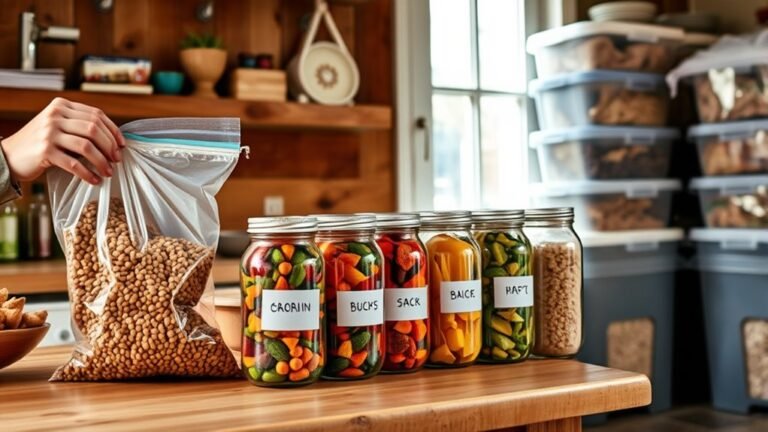
You’ll want airtight, moisture-proof containers like Mylar bags with oxygen absorbers or food-grade buckets with sealed lids. These keep your food fresh longer by preventing air, moisture, and pests from spoiling your stored goods.
It’s pretty simple—air and moisture are the enemies when it comes to long-term storage. So, using containers that seal out both is a smart move. Plus, these options are easy to find and work really well.
Can I Store Food in a Basement or Garage Safely?
You can store food in a basement or garage safely if the area stays cool, dry, and pest-free. Use airtight, moisture-resistant containers to keep your food fresh.
Also, avoid temperature extremes to prevent spoilage. It really helps to keep an eye on the conditions now and then. That way, your food stays good for longer.
How Do I Prevent Pest Infestations in My Food Storage?
You can deter pests by sealing containers tightly, yet pests still sneak in. Keep your storage clean and dry, but they’re relentless.
Regularly inspect and rotate food to outsmart those tiny invaders before they multiply. It’s all about staying one step ahead!
What Is the Best Way to Label and Organize My Pantry?
You should use clear, waterproof labels with expiration dates and organize items by category. Store frequently used goods at eye level, group similar foods together, and use airtight containers to keep everything fresh and easy to find.
It really helps to keep things neat and accessible. Plus, when everything has a place, you save time and reduce waste. Give it a try!
Conclusion
Building your prepper pantry is like planting a garden—you need the right mix of grains, proteins, and fats to thrive. By including essential beans, spices, and baking staples, you’ll create meals that are both nutritious and flavorful.
Remember to store your food properly to keep it fresh and ready. With these key foods, you’ll be prepared to face emergencies confidently, knowing you have a balanced supply to sustain you and your loved ones.
Having the right foods in your food storage is crucial for long-term preparedness. By focusing on key staples like grains, beans, spices, and baking essentials, you ensure your pantry is versatile and nourishing. Proper storage techniques will extend the shelf life and maintain the quality of your supplies.
In an emergency, having a well-stocked prepper pantry means you can rely on wholesome, balanced meals without stress. So, keep these important foods in your food storage to stay ready, resilient, and confident no matter what comes your way.