5 Plastics Safe for Food Storage in 2026
You can trust five plastics to keep your food safe in 2026. PET (ID 1) works well for single-use containers. HDPE (ID 2) is durable and great for long-term storage.
LDPE (ID 4) resists moisture, making it ideal for cold foods. Polypropylene (PP, ID 5) handles heat safely, perfect for reheating.
Always choose microwave-safe options and avoid reusing certain plastics to minimize chemical risks.
If you want to keep food fresh and safe, there’s more useful info ahead. Understanding which plastics are safe helps you make smart choices in your kitchen every day.
Key Takeaways
– Polyethylene Terephthalate (PET, #1) is safe for single-use food storage but not recommended for reheating or multiple uses.
It’s best to avoid reusing these containers to keep things safe.
– High-Density Polyethylene (HDPE, #2) is durable, BPA-free, and safe for long-term food storage and occasional heating.
This makes it a solid choice if you want something reliable.
– Low-Density Polyethylene (LDPE, #4) is ideal for cold food storage and moisture resistance but not microwave-safe.
So, keep it out of the microwave to avoid any issues.
– Polypropylene (PP, #5) handles high temperatures safely, is BPA-free, and suitable for reheating and freezing food.
It’s great if you want a versatile container.
– For safety, use microwave-safe plastics like #5, avoid reusing #1 PET containers, and inspect containers regularly for damage.
That way, you’ll keep your food storage smart and safe!
Polyethylene Terephthalate (PETE or PET, ID 1)
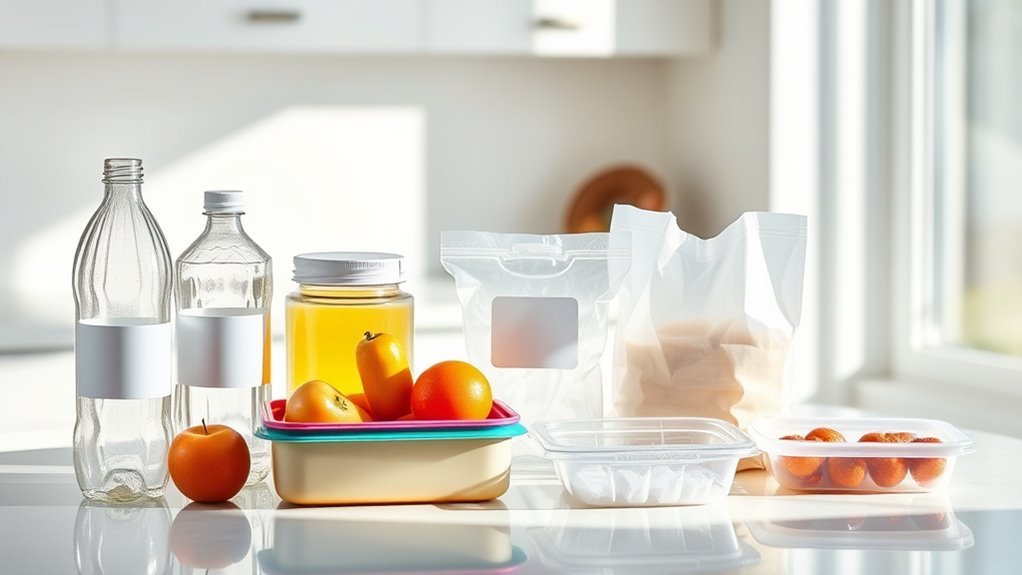
Polyethylene Terephthalate, or PET, is a popular choice for beverage bottles and food containers because of its clarity and strength. As a type of plastic identified by the recycling number 1, PET is widely used for food storage and approved for food contact due to its low toxicity.
You’ll find it commonly in plastic containers designed for single use. However, while PET offers good food safety when used as intended, reusing containers or heating them can increase chemical leaching. This means residual monomers and additives might be released into your food or drink.
To stay safe, avoid using PET reusable containers for hot foods or multiple uses. PET ranks high among plastic codes for recyclability and minimal chemical migration. So, it’s a reliable option for safe food storage if you handle it properly.
High-Density Polyethylene (HDPE, ID 2)
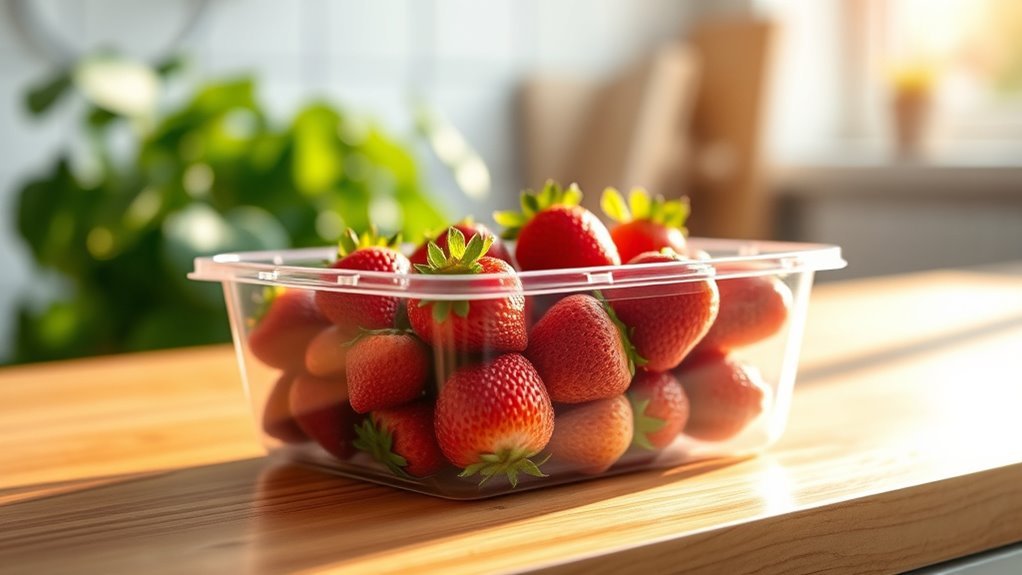
A trusted choice for many kitchens, High-Density Polyethylene (HDPE) offers durability and safety for food storage. You’ll find HDPE in food storage containers like milk jugs and juice bottles, identifiable by recycling symbols with the number 2.
This plastic type boasts low migration into food and excellent chemical resistance, making it one of the safest plastics for food contact. HDPE typically contains no BPA or harmful additives, ensuring your stored food stays uncontaminated.
It withstands repeated washing, freezing, and light heating, but you should avoid microwave use unless the container specifically states microwave safety. Resistant to impacts, stains, and odors, HDPE remains a reliable option for long-term reuse.
When choosing plastics, HDPE ranks high among safe plastics for food storage containers. It’s a solid pick if you want something tough and trustworthy in your kitchen.
Low-Density Polyethylene (LDPE, ID 4)
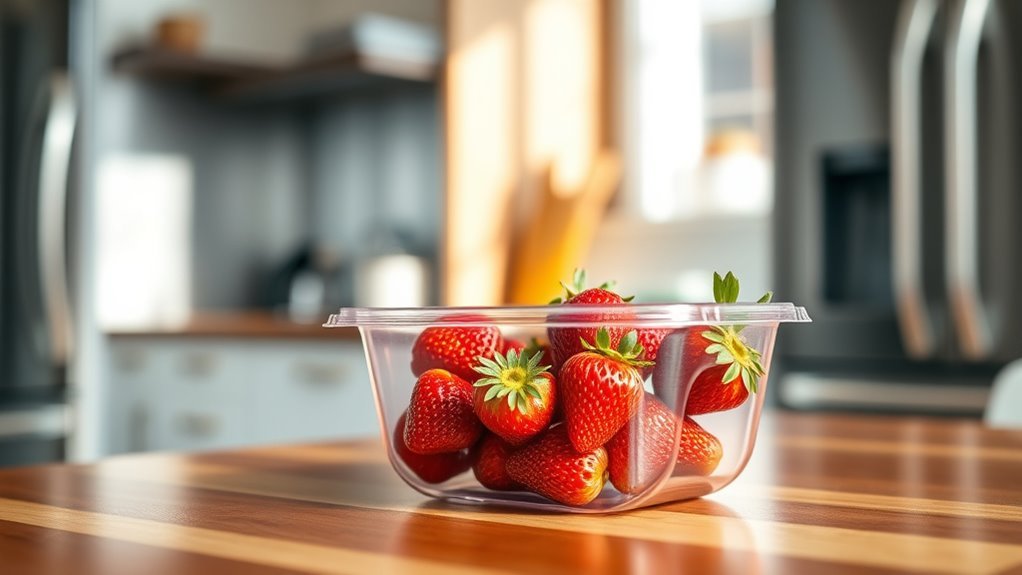
While you might recognize it in everyday items like bread bags and squeeze bottles, Low-Density Polyethylene (LDPE, ID 4) offers flexible durability that’s well-suited for short-term food storage, especially in cold conditions.
Low-Density Polyethylene (LDPE) provides flexible, durable packaging ideal for short-term, cold food storage.
This food-grade plastic resists moisture, acids, and fats, making it a reliable choice among food-safe plastics. However, LDPE isn’t microwave-safe, so avoid heating foods in these containers to maintain plasticware safety.
Proper plastic identification helps you choose LDPE products that meet safety standards and reduce chemical leaching risks. Keep in mind that repeated reuse or scratching can increase the chance of chemical migration.
LDPE also plays a role in recycling plastics, promoting sustainability.
- Used in bread bags and squeeze bottles
- Ideal for cold food storage
- Resists moisture and fats
- Not suitable for microwave heating
- Certified food-grade plastics for safety
Polypropylene (PP, ID 5)
If you’ve used containers made from Low-Density Polyethylene for cold storage, you might appreciate Polypropylene (PP, ID 5) when you need something that handles heat better.
Polypropylene is a popular choice among food-safe plastics due to its high heat resistance, making it ideal for microwave-safe containers and reusable food storage. With a resin ID 5 symbol, you can easily identify PP products.
This BPA-free plastic minimizes chemical leaching risks, ensuring safer contact with your food. It withstands temperatures up to 212°F (100°C), perfect for reheating or freezing without damage.
Widely used in food packaging plastics, polypropylene also supports plastic recycling efforts. So, it’s a durable and eco-friendly option for your kitchen needs.
Safe Practices for Using Plastic Food Containers
Choosing the right plastic containers plays a crucial role in keeping your food safe and healthy. To guarantee plastic safety, focus on food-grade plastics with clear resin codes, especially #2 (HDPE), #4 (LDPE), and #5 (PP).
Follow these food storage practices to minimize chemical leaching and maintain safe food packaging:
- Use microwave-safe containers for heating food, avoiding plastics not labeled for microwaving.
- Only reuse durable plastic types like #2 and #5; avoid single-use containers such as #1 PET for storage.
- Inspect plastic containers regularly for scratches or warping that can increase chemical migration.
- Clean and dry reusable food containers thoroughly after each use.
- Avoid storing acidic or fatty foods in plastics not designed for them to reduce chemical leaching risks.
Frequently Asked Questions
What Is the Safest Plastic to Store Food In?
You should choose plastics like HDPE, LDPE, or polypropylene for safe food storage. They resist chemical leaching and handle heat well.
Avoid scratched or cloudy containers, and consider glass or stainless steel for extra safety. These materials can give you peace of mind when it comes to storing your food.
Do Ziploc Bags Leach Microplastics Into Your Food?
Just like a vintage radio might crackle unexpectedly, Ziploc bags can leach microplastics into your food, especially if you heat or reuse them.
Is a 20 Year Old Tupperware Safe to Use?
No, you shouldn’t use 20-year-old Tupperware. Over time, it can degrade and leach chemicals. Plus, it might harbor bacteria because of scratches or tiny cracks.
It’s definitely safer to replace old plastic containers. That way, you avoid any health risks down the line.
What Storage Containers Do Not Have Microplastics?
You should choose glass, stainless steel, or food-grade silicone containers since they don’t release microplastics.
If you prefer plastic, opt for high-quality HDPE, LDPE, or PP plastics. Just make sure to avoid scratched or damaged containers.
Conclusion
When storing your food, choosing the right plastic is like picking the perfect shield to guard freshness. PETE, HDPE, LDPE, and PP each offer safe, reliable protection against spills and contamination.
Just remember to avoid heat and wear from repeated use to keep them working their best. By handling these plastics with care, you’ll keep your meals fresh and your kitchen worry-free.
Using food-safe plastics for storage not only preserves taste and quality but also ensures safety from harmful chemicals. So, whether it’s leftovers or meal prep, selecting the right plastic container makes food storage a breeze every time. Keep these tips in mind to enjoy fresh, delicious meals and a hygienic kitchen environment.