3 Best Materials for Food Storage Containers
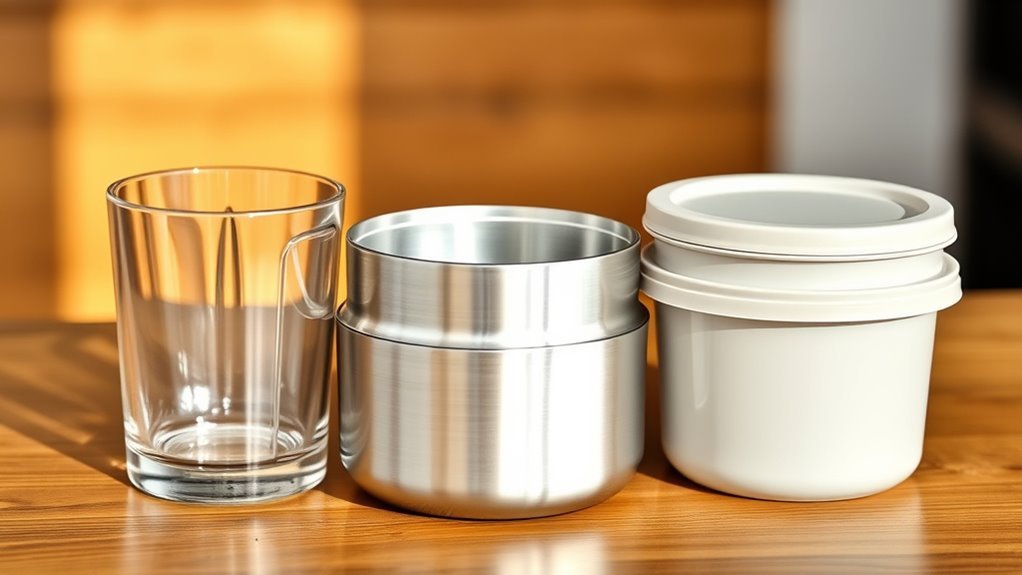
You’ll want to choose plastic, glass, or stainless steel for food storage containers. These materials are popular because they each offer unique advantages for keeping your food fresh and safe.
Whether you’re storing leftovers or packing lunch, knowing which container fits your lifestyle makes all the difference.
Plastic is lightweight and affordable, perfect for everyday use but can stain or warp over time.
Glass containers are durable, microwave-safe, and resist odors, making them great for reheating and freezing.
Stainless steel is tough, rust-resistant, and odor-proof but isn’t microwave safe.
Each has unique benefits, so understanding their features helps you pick the best fit for your needs and lifestyle.
Key Takeaways
- Plastic containers are lightweight, affordable, and versatile. However, they may stain, retain odors, and degrade with heat over time.
- Glass containers offer durability and are safe for both microwave and freezer use. They resist stains and odors, especially when paired with airtight, leakproof lids.
- Stainless steel containers are rust-proof, odor-resistant, and shatterproof. They’re ideal for long-term pantry storage, but keep in mind they aren’t microwave safe.
- Both glass and stainless steel shine when it comes to durability and safety. They can handle temperature changes without warping or damage.
- When choosing containers, think about what you need most—safety, durability, heating options, or storage type. That way, you can keep your food fresh and your containers lasting longer.
Plastic Food Storage Containers
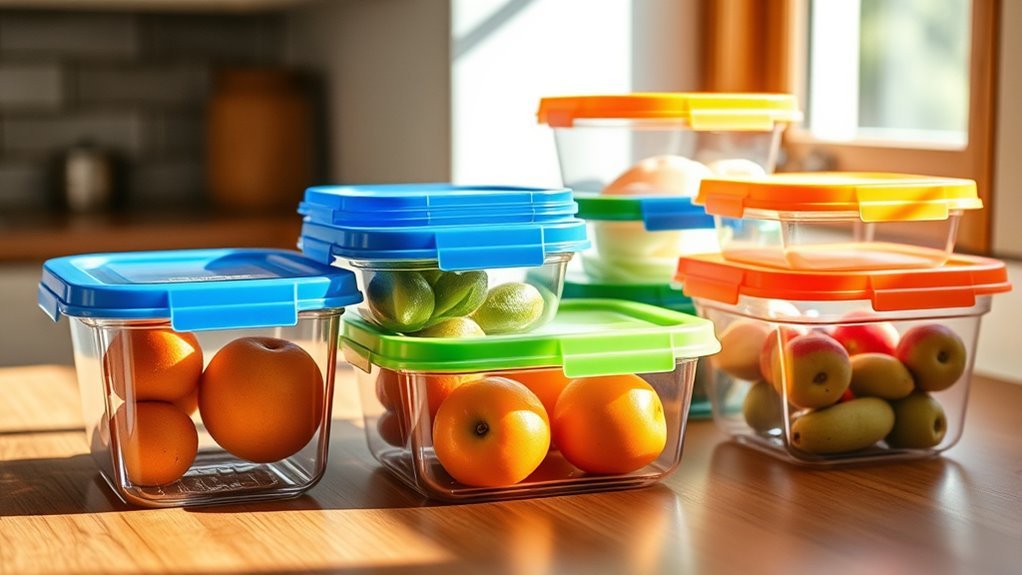
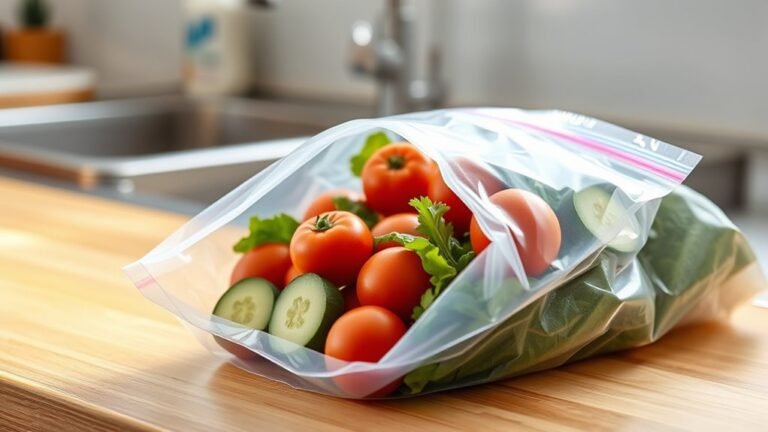
Plastic food storage containers offer a lightweight and affordable solution for keeping your leftovers fresh. You’ll appreciate their versatility since they come in various sizes and shapes, fitting different storage needs.
Opt for BPA-free plastic to avoid health risks linked to chemicals like Bisphenol A. Many containers feature airtight lids with snap-on or lever-lock mechanisms, ensuring leak-proof seals that lock in freshness.
Although some plastics can stain or retain odors, choosing stain-resistant options helps minimize this issue. Keep in mind, plastic’s durability can decrease over time due to thermal shock from repeated heating and cooling, so watch for warping or cracking.
Glass Food Storage Containers
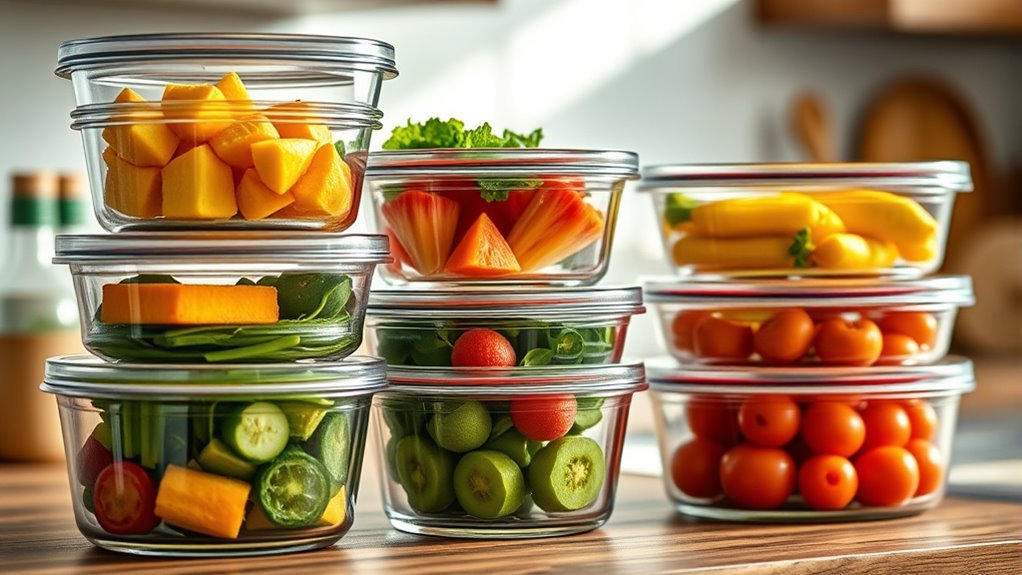
Why choose glass food storage containers? Glass containers offer durability and superior food safety, made from tempered glass that’s both microwave safe and freezer safe.
Glass food storage containers are durable, safe, microwave and freezer friendly, made from tempered glass for reliable use.
Brands like Pyrex glass provide leakproof, airtight lids that lock securely, keeping your food fresh and spill-free. You’ll appreciate that these containers are stain and smell resistant, thanks to their non-porous surface, so they won’t absorb odors or flavors from your meals.
Though heavier than plastic, glass containers are reusable and eco-friendly, making them a smart long-term choice. They withstand temperature changes without warping or damage and clean easily in the dishwasher.
If you want reliable, safe food storage that handles reheating and freezing with ease, glass containers with airtight lids are a practical and sustainable option.
Stainless Steel Food Storage Containers
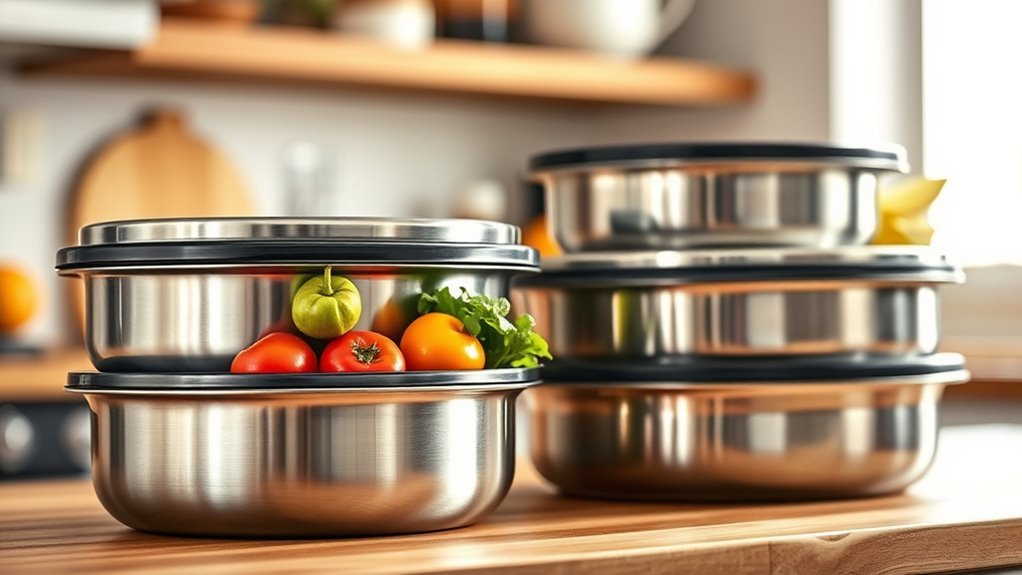
Although you can’t use stainless steel containers in the microwave or oven, they offer exceptional durability and resist rust, corrosion, and stains. When you choose stainless steel food storage containers, you get a rust-proof, odor-resistant option that won’t absorb flavors or stains from your meals.
These containers are perfect for long-lasting pantry storage since they maintain their appearance and performance over time. Unlike glass, stainless steel is shatterproof and lightweight, making it safer and easier to handle.
You’ll appreciate how non-absorbent stainless steel containers stay clean and resist scratches, especially with dishwasher-safe designs. If you want durable, reliable food storage containers that stand up to daily use while keeping your food fresh, stainless steel is an excellent choice.
Frequently Asked Questions
What Is the Best Material for Food Storage Containers?
You’ll find glass containers best for durability, safety, and versatility, especially for microwaving and oven use.
If weight matters, BPA-free or thick plastics work well, but avoid staining and odors by choosing quality materials carefully.
What Is the Safest Material for Food Storage Containers?
You’ll find glass is the safest choice since it’s non-porous, doesn’t retain odors, and contains no harmful chemicals like BPA.
BPA-free plastics and food-grade silicone are good alternatives if you want lightweight, flexible options. They’re convenient but just make sure they’re labeled safe for food storage.
What Are the Best Containers for Storing Food to Keep It Fresh?
You want containers that lock in freshness and flavor—glass ones with airtight lids are your best bet. They resist stains and odors, keep food safe longer, and work in ovens and microwaves for versatile use.
Plus, they’re easy to clean and don’t hold onto smells like plastic can. So, if you’re looking for something durable and reliable, glass containers are definitely the way to go!
Is It Better to Store Food in Glass or Stainless Steel Containers?
You’ll find glass better for reheating and seeing your food, but stainless steel shines in durability and portability.
Choose glass for visibility and oven use, or stainless steel for toughness and odor resistance on the go.
Conclusion
Choosing the right food storage container is like picking the perfect shield for your meals. Plastic offers flexibility, glass brings clarity and purity, while stainless steel stands for strength and durability.
By understanding these materials, you’re not just storing food—you’re protecting your nourishment and preserving your efforts. So, pick the container that fits your lifestyle, and let it be the guardian of your kitchen’s treasures.
Whether you prefer the convenience of plastic, the sleekness of glass, or the toughness of stainless steel, choosing the best food storage containers matters. These materials help keep your food fresh, safe, and ready to enjoy. Remember, the right container isn’t just about storage—it’s about preserving flavor, nutrients, and the hard work you put into every meal.