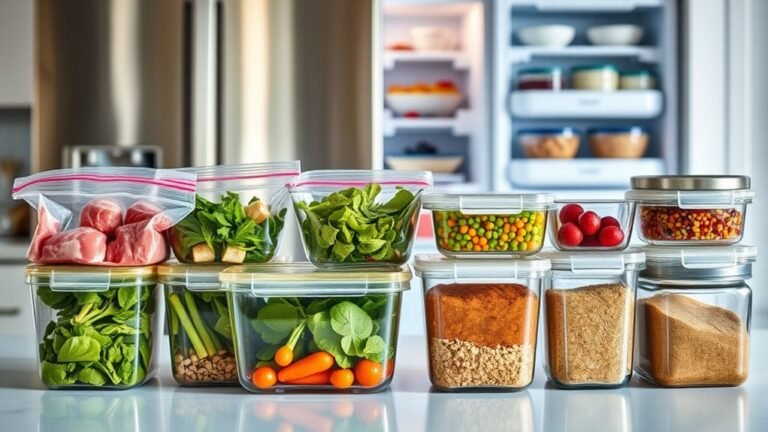
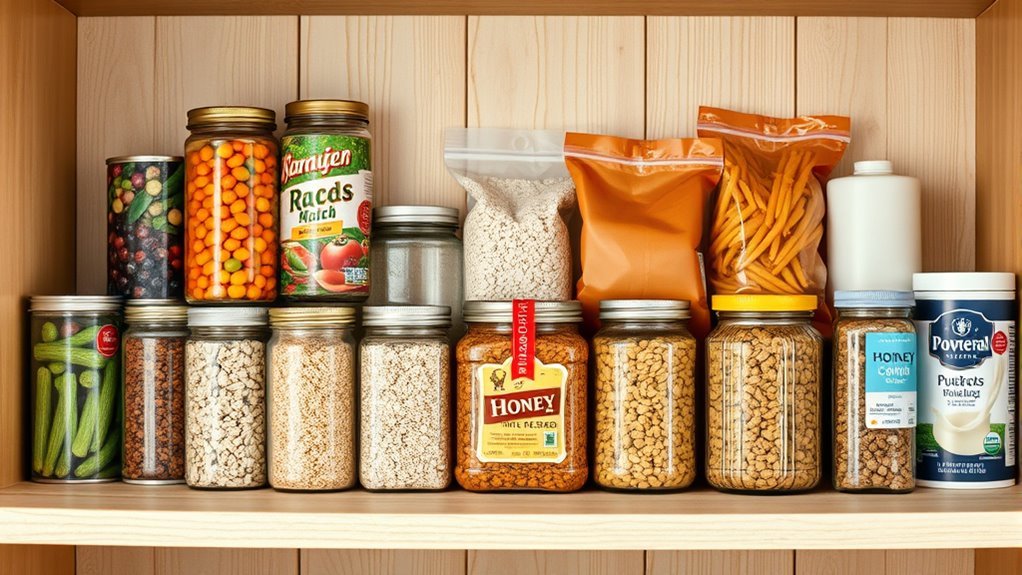
10 Essential Foods to Buy for Emergency Storage
You’ll want to stock up on canned meats and poultry for ready protein, dry beans and legumes for fiber and nutrients, plus whole grains and pasta for energy. These staples form the backbone of any emergency food supply, ensuring you have the fuel you need when access to fresh food is limited.
Include nut butters and nuts, canned veggies and fruits, and shelf-stable snacks for variety and quick fuel. Variety is key to keeping meals interesting and maintaining your morale during tough times.
Don’t forget bottled water, essential spices, and ready-to-eat soups or chili for convenience. Hydration and flavor can make all the difference when you’re relying on stored food.
With the right choices, you’ll build a balanced emergency stash that keeps well and fuels you through tough times—there’s plenty more to learn about storing these essentials effectively. It’s all about being prepared, so you can face any emergency with confidence.
Key Takeaways
- Stock canned meats, poultry, and fish for long-lasting, ready-to-eat protein without refrigeration. These are great to have on hand when fresh meat isn’t an option.
- Store dry beans, whole grains, and pasta in airtight containers for nutrient-dense, shelf-stable carbohydrates. They’re filling and can be used in lots of different meals.
- Include canned vegetables and fruits to maintain essential vitamins and minerals over extended storage. It’s an easy way to keep your diet balanced when fresh produce isn’t available.
- Keep powdered milk, nut butters, and energy bars for versatile sources of fats, protein, and quick energy. These items are convenient and pack a nutritional punch.
- Maintain bottled water supplies and essential spices, ensuring proper storage to maximize shelf life and safety. Don’t forget, water is the most important item in any emergency kit!
Canned Meats and Poultry
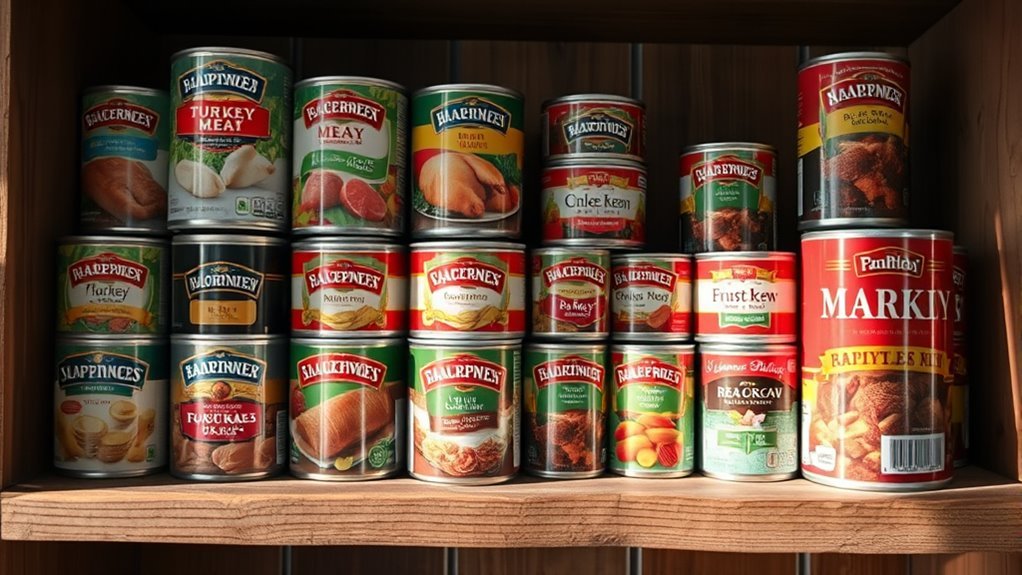
When you prepare for emergencies, canned meats and poultry offer a reliable protein source that won’t spoil quickly. These shelf-stable foods, including chicken, turkey, salmon, and tuna, come pre-cooked and ready to eat, making them convenient for quick meals.
With a long shelf life—typically over two years—you can store them confidently in a cool, dry place to maintain quality. Proper storage is key to preserving their safety and nutritional value.
Before using canned meats, always inspect the cans for bulges, leaks, or dents, as compromised seals can lead to food safety issues. By keeping a variety of canned meats in your emergency supplies, you ensure access to essential protein without worrying about refrigeration or spoilage.
Dry Beans and Legumes
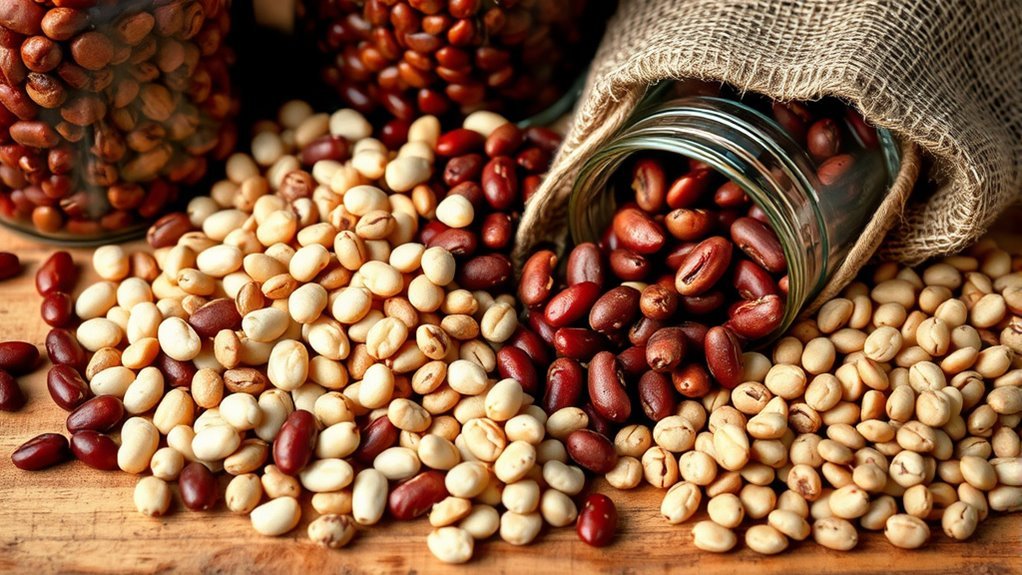
Canned meats provide convenient protein, but stocking dry beans and legumes adds variety and long-lasting nutrition to your emergency supplies. Dry beans like pinto, black, and kidney are nutrient-rich staples with a remarkable shelf life when stored properly.
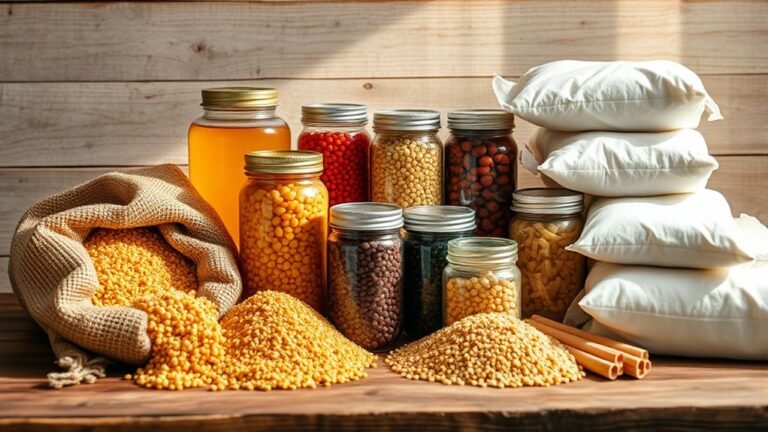
Keep them in airtight containers or oxygen-absorbing mylar bags with desiccants, stored in a cool, dark place to maximize longevity—often 2 to 10 years. Before cooking, soak them to cut down time and improve digestibility.
Their versatility lets you boil, slow cook, or even sprout them, ensuring you have essential nutrients during emergencies.
- Store dry beans in airtight containers for ideal shelf life
- Use oxygen absorbers to prevent spoilage and pests
- Prepare beans in multiple ways for varied emergency meals
Dry beans are indispensable for smart emergency food storage.
Whole Grains and Pasta
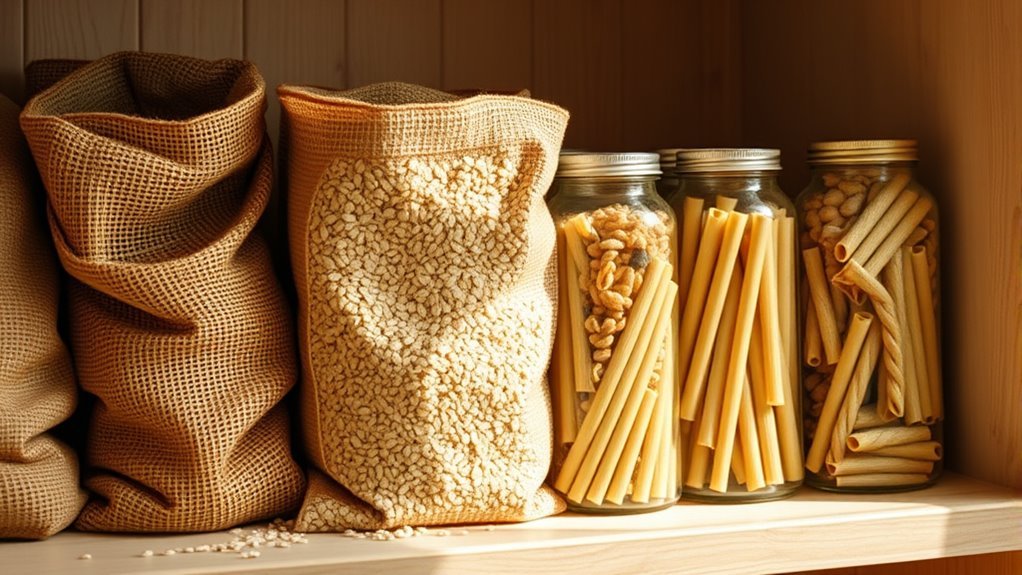
You’ll want to focus on whole grains like brown rice, quinoa, and oats because they offer essential fiber, vitamins, and minerals.
Pasta is another smart choice since it lasts up to five years when stored properly in a cool, dry place. Storing these foods in airtight containers will help keep them fresh and ready when you need them most.
Nutrient-Dense Grain Choices
Although emergencies can disrupt your regular food supply, stocking nutrient-dense grains like brown rice, quinoa, and oats guarantees you have reliable sources of fiber, vitamins, and minerals to maintain energy and digestive health.
Whole grains provide essential nutrients and support digestive wellness. Pasta—especially whole wheat or enriched varieties—offers a versatile carbohydrate with a long shelf life. Using airtight storage containers helps with food preservation, keeping your grains fresh and pest-free.
Consider these nutrient-dense grain choices for your emergency stockpile:
- Whole grains like brown rice and quinoa for fiber and minerals
- Oats for sustained energy and digestive health
- Pasta with a long shelf life for easy, adaptable meals
Incorporating these ensures balanced nutrition during crises. It’s a smart way to stay prepared and healthy when it matters most.
Storage and Shelf Life
How long can you expect your stored whole grains and pasta to last during an emergency? Whole grains like wheat berries and oats can maintain their quality for 10 to 30 years with proper storage. That means using airtight containers, such as Mylar bags with oxygen absorbers, inside sealed buckets kept in a cool, dark place around 50°F.
Dry pasta, being less perishable, generally has a shelf life of 2 to 5 years when stored in moisture-free, sealed containers away from heat and light. To maximize long-term shelf life, regularly inspect your storage for pests, moisture, and packaging integrity.
Nut Butters and Nuts
You’ll find nut butters and nuts pack a powerful nutritional punch with protein, healthy fats, and energy perfect for emergencies.
To keep them fresh, store them in airtight containers away from heat and moisture.
Plus, they’re great for quick snacks or adding to meals when cooking isn’t an option.
Nutritional Benefits
When planning your emergency food supply, nut butters and nuts provide a powerful combination of calories, protein, and healthy fats that keep your energy and body functioning during stressful times.
These foods are packed with essential nutrients like vitamins, magnesium, and fiber, all indispensable for maintaining health in emergencies. Plus, their long shelf life and stable storage make them dependable staples.
Nut butters deliver 190-200 calories and 6-8 grams of protein per serving for sustained energy. Nuts contain heart-healthy monounsaturated and polyunsaturated fats to support cardiovascular health.
Both offer essential vitamins like vitamin E, plus minerals and fiber to boost immunity and digestion. Including nut butters and nuts ensures you have nutrient-dense, high-protein, and healthy-fat options for survival situations.
Storage Tips
Although nut butters and nuts are nutrient-dense and long-lasting, proper storage is essential to preserve their freshness and nutritional value. Nut butters like peanut and almond have a shelf life of 1-2 years when kept in airtight containers in a cool, dark place.
Nuts such as almonds and walnuts last about six months at room temperature but stay fresh up to a year if refrigerated or frozen. Since these are perishable foods, store them in sealed, opaque containers to prevent exposure to light, heat, and oxygen, which cause rancidity.
Proper storage also means keeping them dry to avoid mold growth. Regularly check your nut butters and nuts for off odors or discoloration, and discard any that show spoilage to guarantee safety and quality during emergency storage.
Usage Ideas
How can nut butters and nuts enhance your emergency meals? These non-perishable foods serve as a reliable protein source with a long shelf life, perfect for emergency supplies.
You can enjoy them straight from the jar or mix them into various dishes. They add flavor and nutrients when fresh options are scarce.
To make the most of your stockpile, follow these storage tips for preserving quality.
Here are some usage ideas to try:
- Spread nut butters on crackers or dried fruit for a quick, nourishing snack.
- Stir nuts into oatmeal, yogurt, or trail mix to boost calories and texture.
- Use nut butters in sauces or dressings for added richness and protein.
Nut butters and nuts are versatile, portable, and essential for balanced emergency meals.
Canned Vegetables and Fruits
Because canned vegetables and fruits stay shelf-stable for over two years when stored properly, you can rely on them as a convenient, long-lasting emergency food source.
Choose canned vegetables like green beans, carrots, and peas for essential nutrients, and canned fruits such as peaches and pineapple for quick, nutritious snacks. Always check the expiration date and inspect cans for dents or bulging, which may signal spoilage.
Proper storage in a cool, dry place extends shelf life and safety.
| Item Type | Examples | Storage Tips |
|---|---|---|
| Canned Vegetables | Green beans, peas | Store in a cool, dry place |
| Canned Fruits | Peaches, pineapple | Check expiration, avoid dents |
| Safety Checks | Inspect cans | Clean after flooding |
Powdered Milk and Dairy Alternatives
When you store powdered milk and dairy alternatives properly in airtight containers, they can last from several months to over a decade. This makes them really reliable staples for emergencies.
Powdered milk offers a shelf life of 2-10 years when kept cool, dry, and away from light. Dairy alternatives like soy or almond milk come in powdered or shelf-stable forms and last 6 months to several years depending on the product.
Their nutrition, including calcium, vitamin D, and protein, closely matches fresh milk when you reconstitute them. To get the most out of their shelf life, always check expiration dates and follow storage instructions carefully.
- Keep powdered milk moisture-free to prevent clumping
- Store dairy alternatives in cool, dark places
- Rotate stock to use older items first and maintain nutrition integrity
Shelf-Stable Snacks and Energy Bars
Alongside powdered milk and dairy alternatives, shelf-stable snacks and energy bars offer convenient, long-lasting fuel during emergencies. You’ll want to stock up on granola bars, protein bars, trail mix, dried fruit bars, and jerky. These snacks provide quick energy and often come fortified with essential vitamins and minerals.
Their long shelf life, typically 6 months to 2 years, makes them ideal for emergency storage. To keep these snacks fresh, store them in airtight containers or sealed packaging in a cool, dry place.
Don’t forget to regularly check expiration dates and rotate your stock to maintain *best* quality. With proper storage and rotation, shelf-stable energy bars can be a reliable, nutrient-dense source of energy when you need it most.
Bottled Water and Hydration Supplies
Why is water one of the most critical items to store for emergencies? You need bottled water and hydration supplies to stay alive and maintain health when regular sources aren’t available.
Aim for at least a three-day supply—one gallon per person daily for drinking and sanitation.
Keep these tips in mind for your emergency water storage:
- Store water in food-grade, sealed water storage containers away from heat and sunlight.
- Include electrolyte-enhanced waters or shelf-stable drinks to replenish lost minerals.
- Have water purification options like portable filters or tablets ready for natural water sources.
Rotate your emergency water every six months and discard damaged bottles to ensure freshness and safety.
Proper hydration is key to surviving any crisis. So, don’t skip it!
Spices, Seasonings, and Bouillon
You’ll want to stock essential spices like salt, pepper, and garlic powder to keep meals flavorful in an emergency. Bouillon cubes and powders add a quick, savory boost and last for years if stored properly.
Make sure to keep all seasonings airtight and away from moisture to preserve their potency. That way, your spices stay fresh and tasty when you need them most.
Essential Spices Overview
When preparing your emergency food supplies, don’t overlook the importance of spices, seasonings, and bouillon. These essentials enhance flavor, making your meals more enjoyable when resources are limited.
Prioritize whole spices like cumin and coriander seeds since they’re long-lasting and retain flavor better than ground versions. Proper storage in airtight containers keeps your spices potent for years.
Consider these key points for your emergency supplies:
- Salt: crucial for flavor and food preservation; store ample amounts.
- Whole spices: longer shelf life and can be toasted to boost aroma.
- White vinegar: indefinite shelf life, useful for flavoring and preserving.
Including these will ensure your emergency food remains tasty and nutritious even during extended storage periods. It really makes a difference when you’re relying on stored food for a while.
Bouillon Uses Benefits
Although fresh ingredients might be limited during emergencies, bouillon offers a convenient way to boost the flavor of your meals. This concentrated seasoning, available in cubes or powder, adds rich flavor enhancement to soups, stews, and other dishes.
Bouillon is shelf stable and ideal for long-term storage, making it a valuable addition to your emergency food supplies. Beyond taste, it provides essential nutrient content like sodium and potassium, supporting electrolyte balance when fresh foods are scarce.
You can also use bouillon as a base for homemade seasoning blends or to rehydrate dried foods, increasing their palatability. Its versatility and long shelf life make bouillon a cost-effective, practical choice to maintain flavorful and nutritious meals during emergencies.
Storage Tips Seasonings
Since maintaining flavor and nutrition is essential during emergencies, proper storage of spices, seasonings, and bouillon guarantees they stay effective for as long as possible. You should store dried spices like cumin and black pepper in airtight containers, away from light and moisture, to preserve their flavor for up to 2-3 years.
Whole spices last even longer, up to 4-5 years. Salt and sugar need sealed, moisture-proof containers since they last indefinitely and are critical for flavor and preservation.
Bouillon cubes, with a shelf life of 2-3 years, add quick flavor and nutrients to meals.
- Use airtight containers for all spices and seasonings
- Keep salt and sugar moisture-proof for indefinite storage
- Store bouillon in cool, dark places to maintain shelf life
Ready-to-Eat Soups and Chili
If you want a convenient and long-lasting meal option for your emergency storage, ready-to-eat soups and chili fit the bill perfectly. These canned foods require no refrigeration until opened and boast a shelf life of over two years when stored properly.
You can choose from varieties like chicken noodle, vegetable, tomato, and beef chili for variety. Just make sure to inspect cans for bulging, rust, or leaks before use for food safety.
Once opened, transfer contents to covered, nonmetallic containers and refrigerate within two hours to avoid spoilage.
| Aspect | Recommendation |
|---|---|
| Shelf Life | Over 2 years in cool, dry place |
| Food Safety | Inspect cans before use |
| Refrigeration | Refrigerate after opening |
Frequently Asked Questions
What Food Should I Stockpile for Emergencies?
You should stockpile canned meats, vegetables, fruits, rice, dried beans, pasta, nuts, granola bars, instant oatmeal, and powdered milk.
Choose long-lasting, non-perishable foods, including special dietary items and comfort snacks to meet your needs.
That way, you’ll be prepared for whatever comes your way. It’s all about making sure you have what you need when you need it.
What to Stockpile in Case of WW3?
You should stockpile high-calorie foods like peanut butter and energy bars; did you know the average adult needs 2,000–2,500 calories daily?
Also, store plenty of water and consider special dietary needs for prolonged wartime survival.
What Foods Do Doomsday Preppers Buy?
You buy canned meats, dried beans, rice, and powdered milk for long shelf life.
You include peanut butter, energy bars, dried fruits, freeze-dried meals, and instant grains to keep energy up and nutrition balanced during emergencies.
What Are 20 Foods I Can Stockpile That Don’t Expire?
Like a timeless treasure chest, stockpile honey, pure maple syrup, white rice, dried beans, lentils, pasta.
Freeze-dried fruits, canned tuna, salmon, vegetables, powdered milk are great too.
Don’t forget salt, sugar, yeast, wheat berries, oats, nuts, and dried herbs.
These foods last forever and keep your pantry ready for anything!
Conclusion
So, you’re ready to become the next apocalypse gourmet, huh? Stock up on these essentials, and you’ll be dining like royalty when the world turns upside down—canned chicken à la disaster, anyone?
Remember, emergency storage isn’t just about survival; it’s about surviving with style. So grab those beans, nuts, and mystery-flavored energy bars.
Because nothing says “prepared” like a pantry that screams, “I’ve got this… probably.” Stay ready, snack happy! When it comes to emergency storage, having the right foods on hand is key to staying nourished and comfortable during uncertain times. Prioritize versatile, long-lasting staples like canned goods, nuts, and energy bars to keep your pantry stocked and your spirits high. With these 10 essential foods, you’ll be well-prepared for whatever comes your way—ready to face emergencies with confidence and a bit of flair.