How to Store Food for Long-Term Storage Step by Step
To store food long-term, start by choosing high-quality grains like hard wheat and staples such as rice and beans. These are great for long-term food storage because they last a long time and provide essential nutrients.
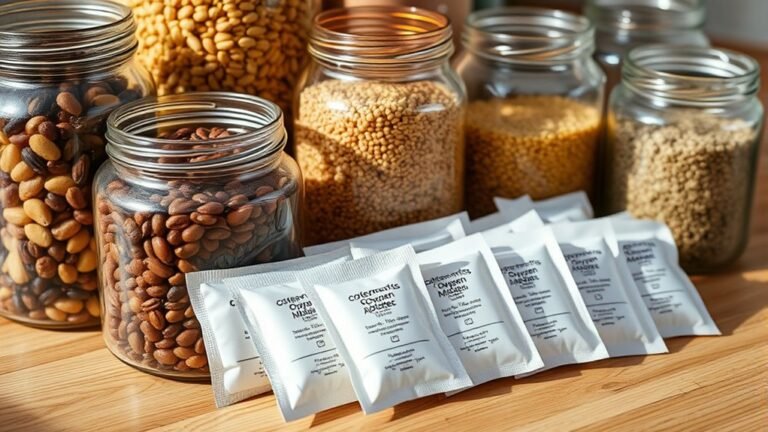
Using the right containers is key to keeping your food safe. Use airtight, moisture-proof containers like Mylar bags with oxygen absorbers or food-grade buckets. These help protect your food against pests and humidity, which can ruin your stored items. It’s super important to keep everything sealed tight.
Keep your storage in a cool, dark, dry place, away from heat and sunlight. This helps maintain the quality and extends the shelf life of your food.
Also, be sure to label items with dates and organize them for easy access.
Rotating your stock by using older food first is a smart way to avoid waste and keep things fresh. If you keep following this approach, your food will stay fresh longer and you’ll minimize waste. It’s all about being organized and careful!
Key Takeaways
- Choose high-quality grains and staples like rice, beans, and oats, ensuring they are pre-treated to prevent insect infestation.
- Store food in airtight, moisture-proof containers such as Mylar bags with oxygen absorbers or sturdy food-grade buckets.
- Keep storage areas cool, dark, dry, and free from pests, avoiding heat sources and direct sunlight.
- Label containers with contents, purchase, and expiration dates, and organize them for easy access and inventory management.
- Regularly inspect stored food, rotate older items first, and maintain consistent conditions to maximize shelf life and prevent spoilage.
Choosing Foods and Containers for Long-Term Food Storage
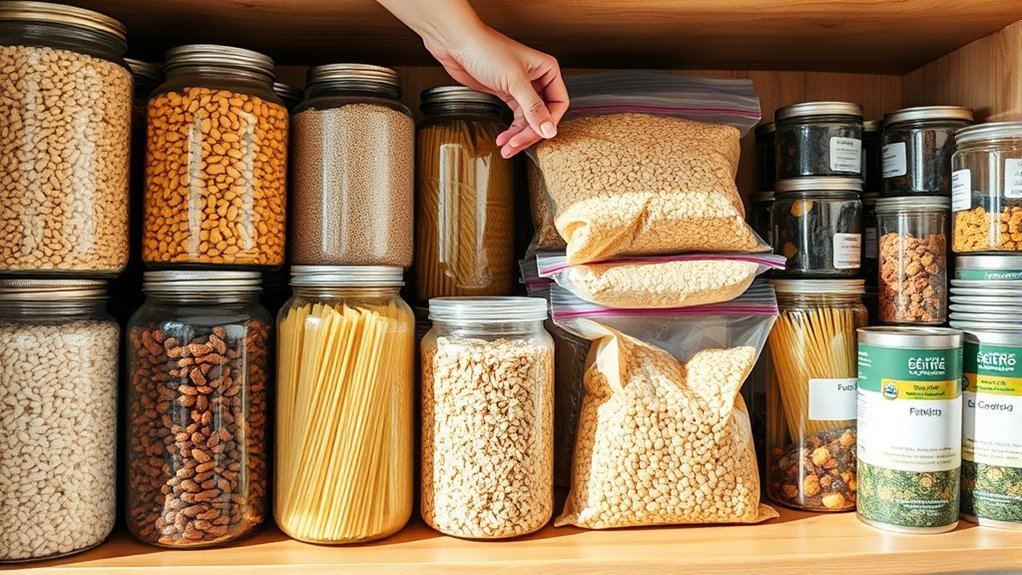
When you choose foods and containers for long-term storage, picking high-quality grains like hard winter or spring wheat with 12-15% protein content guarantees better preservation.
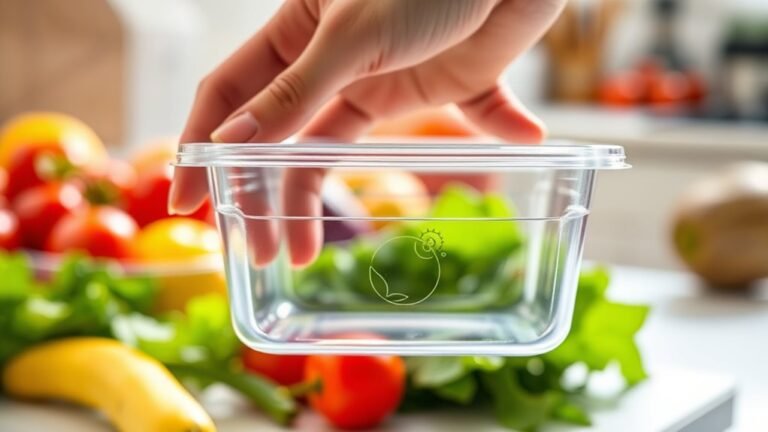
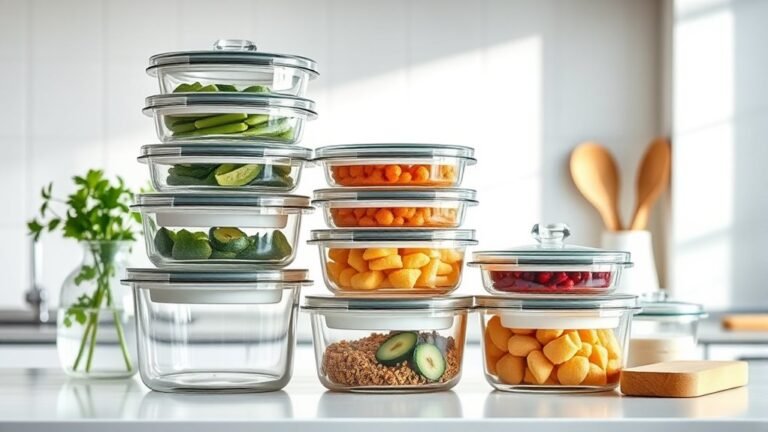
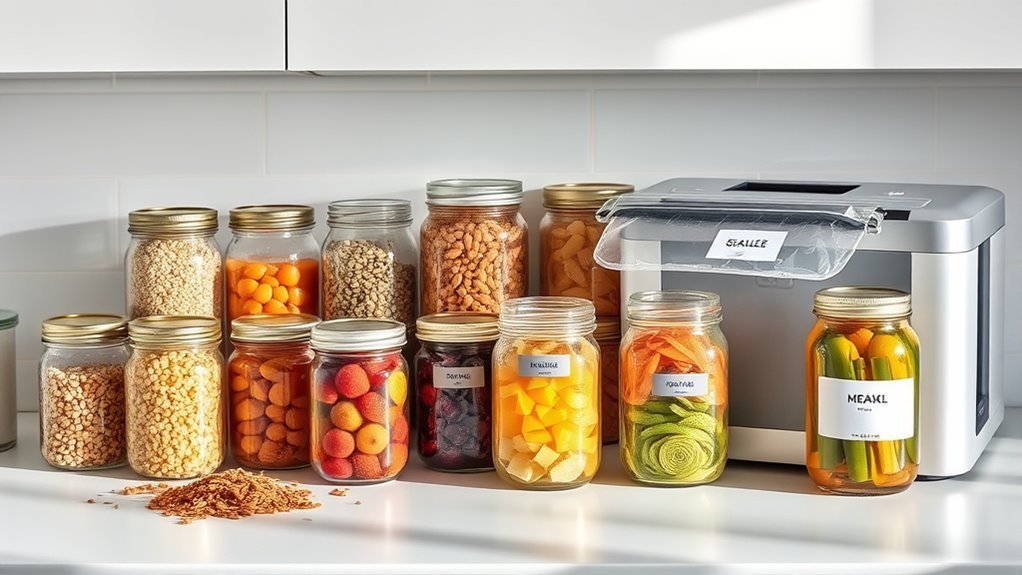
To keep your dry goods fresh, use airtight containers such as Mylar bags combined with oxygen absorbers or sturdy food-grade buckets. These moisture-proof solutions protect against humidity and pests, ensuring ideal food preservation.
Before storing grains, treat them with dry ice if they haven’t been pre-treated to prevent insect hatching. Storing staples like rice, beans, oats, and pasta in cool, dark places further extends their long shelf life.
Don’t forget to label every container clearly with purchase and expiration dates; this helps you track freshness and manage your supply efficiently. By carefully selecting both your foods and proper food storage containers, you’ll maintain quality and maximize the shelf life of your emergency or bulk food stockpile.
Organizing, Storing, and Rotating Your Food Supply
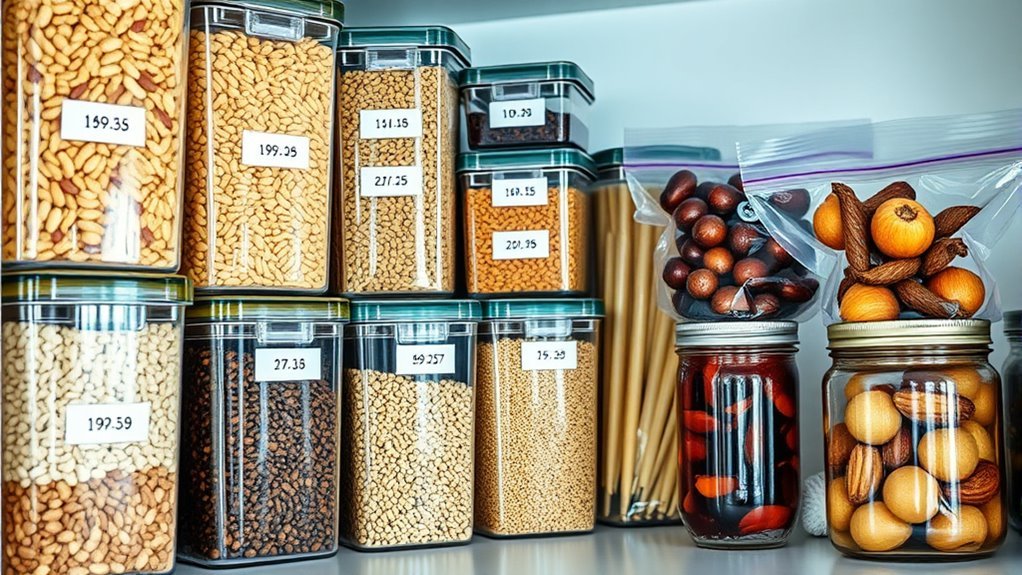
Selecting quality foods and proper containers sets the foundation, but organizing, storing, and rotating your food supply keeps it usable and fresh over time. Use airtight containers like Mylar bags with oxygen absorbers or food-grade buckets that are moisture-proof to extend shelf life.
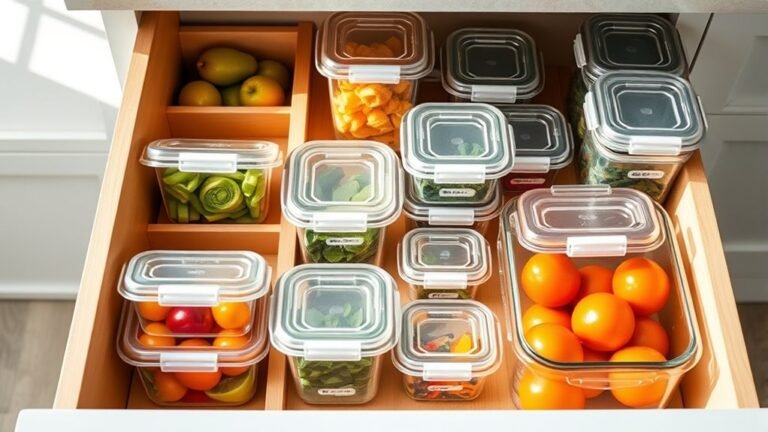
Label each container clearly with contents and expiration dates to streamline food preservation. Organize your storage by food type and establish a rotation schedule so you utilize the oldest items first.
Keep everything in a cool, dark, dry environment to prevent spoilage and maintain quality. Develop an inventory management system to track what you have, set reminders for regular inspections, and reorganize as needed.
This proactive approach guarantees you don’t overlook expired items and helps maintain a reliable food supply. By combining proper storage methods with disciplined rotation and labeling, you maximize shelf life and reduce waste.
That way, your long-term food storage stays fresh and ready whenever you need it.
Frequently Asked Questions
What Is the Best Way to Store Food for Long-Term Storage?
The best way to store food long-term is using airtight, moisture-proof containers like Mylar bags with oxygen absorbers or food-grade cans.
Keep them cool, dark, and dry, and check regularly to maintain freshness and safety.
This way, your food stays good for a long time without losing quality. Just remember to give it a quick look every now and then!
What Is the 2 2 2 Rule for Food?
The 2-2-2 rule means you keep 2 days, 2 weeks, and 2 months of food supplies.
Don’t worry about complexity—it’s simple and helps you prepare for emergencies without feeling overwhelmed or overstocked.
It’s a straightforward way to make sure you have what you need, whether it’s short-term or longer-term situations.
Plus, it keeps your stockpile manageable and easy to rotate.
Do I Need to Start Stockpiling Food?
Yes, you should start stockpiling food to guarantee you’re prepared for emergencies. Begin small with essentials like rice and canned goods.
Then, gradually build your supply while rotating items for freshness and peace of mind. It’s easier than you think once you get started!
How to Preserve Food for 25 Years?
They say, “A stitch in time saves nine.” You’ll preserve food for 25 years by sealing it airtight in Mylar bags with oxygen absorbers.
Then, store it somewhere cool, dark, and dry. Make sure to regularly check and rotate your supplies too. That way, your food stays fresh and ready when you need it!
Conclusion
By choosing the right foods and containers, you set yourself up for success in long-term storage. Organize your supplies carefully and rotate them regularly to keep everything fresh and ready when you need it.
Remember, a stitch in time saves nine—taking a little extra care now prevents bigger problems down the road. With these steps, you’ll have peace of mind knowing your food supply is secure and prepared for whatever comes your way.
Proper food storage for long-term use isn’t just about packing away items; it’s about planning and maintaining your supplies smartly. When you store food correctly, you extend its shelf life and reduce waste, ensuring you always have nutritious options on hand.
By following these food storage tips, you create a reliable food supply that supports your needs during emergencies or everyday life. So, take the time to choose quality foods, use airtight containers, and rotate your stock regularly. This way, your food storage system stays fresh, safe, and ready whenever you need it most.