How to Use Polypropylene Safely for Food Storage
To use polypropylene safely for food storage, start by choosing containers labeled with recycling code 5. Make sure they are BPA-free and microwave-safe to keep your food healthy and avoid any harmful chemicals.
It’s also important to pick ones with tight-sealing lids so you don’t have to worry about leaks or contamination.
Always keep an eye on your containers and check for cracks, brittleness, or discoloration. If you spot any damage or if your containers are from before 2012, it’s best to replace them.
When reheating food, never go beyond the container’s melting point and let hot food cool down a bit first. These simple steps help keep your food safe and your storage containers reliable.
There’s more helpful info ahead to keep your storage safe and sound!
Key Takeaways
- Choose FDA-approved, BPA-free polypropylene containers labeled with recycling code 5 for safe food storage. This helps ensure the containers are food-safe and free from harmful chemicals.
- Use only microwave-safe containers when reheating food. This prevents melting and chemical leaching, keeping your food safe and your container intact.
- Regularly inspect containers for cracks, brittleness, or discoloration. If you notice any damage, be sure to discard those containers promptly to avoid contamination.
- Clean containers gently with warm, soapy water. Avoid abrasive scrubbers because they can wear down the container and reduce its lifespan.
- Make sure your containers have tight-fitting lids. This helps prevent leaks and keeps your food fresh and protected from contamination during storage.
Choosing Safe Polypropylene Containers for Food Storage
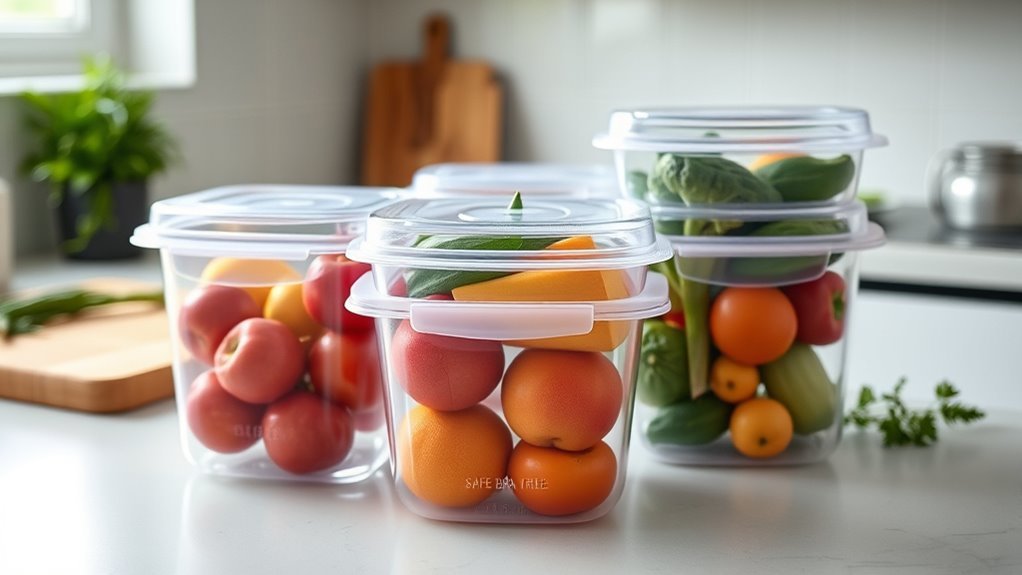
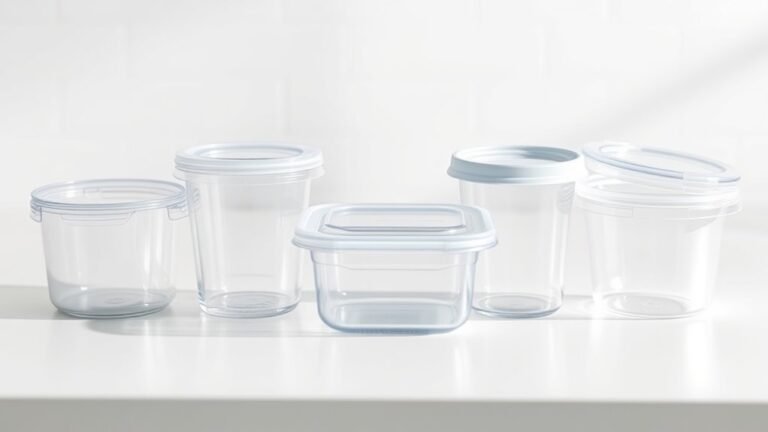
When choosing polypropylene containers for food storage, make sure they’re labeled with the recycling code 5 (PP). This guarantees they’re food-safe and BPA-free.
These FDA-approved food containers reduce the risk of chemical leaching, so your food stays uncontaminated. Always pick containers explicitly marked as microwave-safe if you plan to reheat food in them.
Avoid using older polypropylene containers made before 2012. They might contain BPA and pose higher chemical leaching risks.
Check that the containers have tight-fitting lids with secure seals. This helps prevent leaks and contamination during storage.
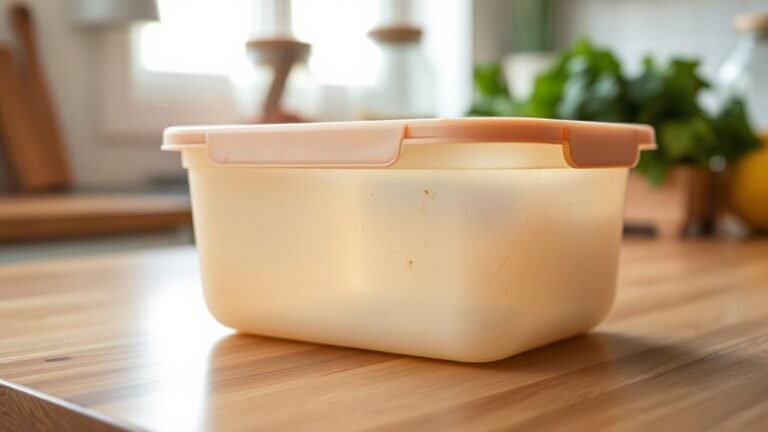
Be mindful of any signs of container deterioration, such as brittleness, cracks, or discoloration. These indicate the plastic’s integrity has weakened, which could compromise safety.
Cleaning and Heating Polypropylene Food Containers Safely
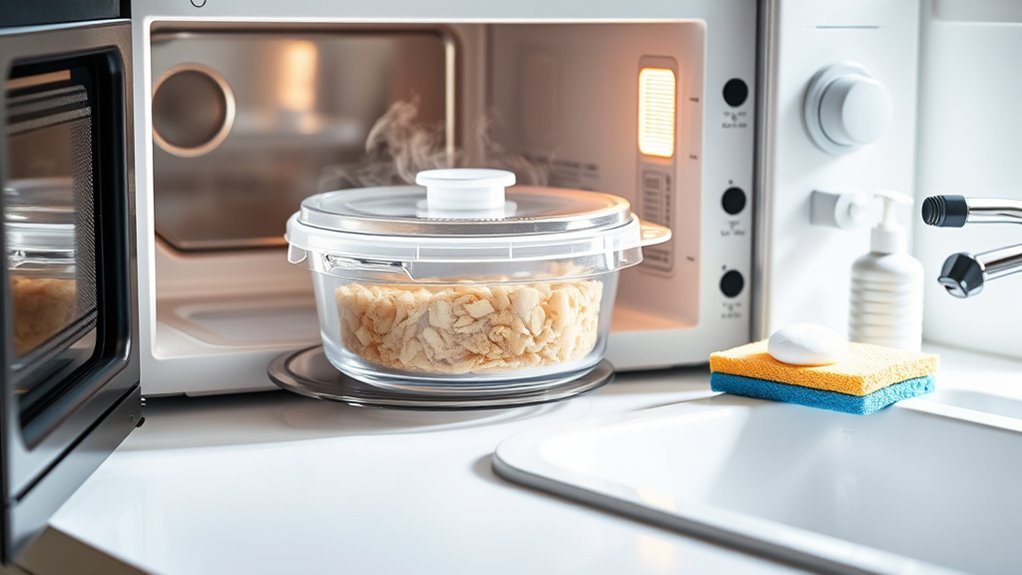
Although polypropylene containers are durable and convenient, you should always confirm they’re labeled microwave-safe before reheating food in them. Heating containers that aren’t microwave-safe can cause warping or chemical migration, compromising food safety.
Avoid heating polypropylene above its melting point, around 130–170°C (266–338°F), to prevent damage. Let hot foods cool slightly before placing them in containers to reduce thermal stress and avoid cracking.
When cleaning, use warm, soapy water and steer clear of abrasive scrubbers that can scratch or weaken the plastic. Also, avoid using old or cracked containers, especially those made before 2012, as they may leach BPA or other harmful chemicals.
Regularly check your containers for damage to maintain safety. By following these guidelines, you minimize risks like melting, warping, and chemical leaching, ensuring your food stays safe and fresh every time you store or reheat it in polypropylene containers.
Frequently Asked Questions
Is It Safe to Store Food in Polypropylene?
Yes, you can safely store food in polypropylene containers, especially if they’re labeled food-safe and microwave-safe. Just avoid damaged or old containers, and always check for recycling code 5 to guarantee proper use and safety.
It’s pretty simple, really. When you see that code 5 on your container, it means it’s made from polypropylene and is generally safe for food storage. Just keep an eye out for any cracks or wear before using them again.
Does Polypropylene Release Toxins When Heated?
Think of polypropylene like a trusty knight—it won’t betray you with toxins when heated properly. You won’t get harmful chemicals if you avoid overheating or open flames.
Does Polypropylene Give off Microplastics?
Yes, polypropylene can release microplastics, especially when heated or scratched. You should avoid using old or damaged containers and limit heating to reduce microplastic shedding.
This helps keep your food safer from contamination. So, it’s a good idea to handle polypropylene containers with care and replace them if they show signs of wear.
What Are the Disadvantages of Polypropylene?
Polypropylene’s downsides hit you like a hidden crack in glass: it can become brittle in cold or sunlight, leach chemicals over time, and isn’t biodegradable, so it adds to pollution if you toss it carelessly.
It’s kind of sneaky when you think about it. One minute it’s tough and useful, and the next, it’s breaking down or causing environmental issues. Not the best if you’re looking for something super eco-friendly.
Conclusion
Think of polypropylene containers like trusted lunchboxes — when you choose the right one, they keep your food safe and fresh, just like a good friend protects your secrets. Studies show polypropylene is microwave-safe and durable, but only if you clean and heat it properly.
By treating your containers with care, you’re not just storing food; you’re preserving the flavors and nutrients. This way, every meal feels like a warm, reliable hug from home.
Using polypropylene safely for food storage means paying attention to how you use and maintain your containers. Always clean them thoroughly and avoid overheating. When done right, polypropylene containers offer a convenient, safe, and eco-friendly way to keep your food fresh and tasty. So, with a little care, polypropylene can be your go-to option for long-lasting, safe food storage.