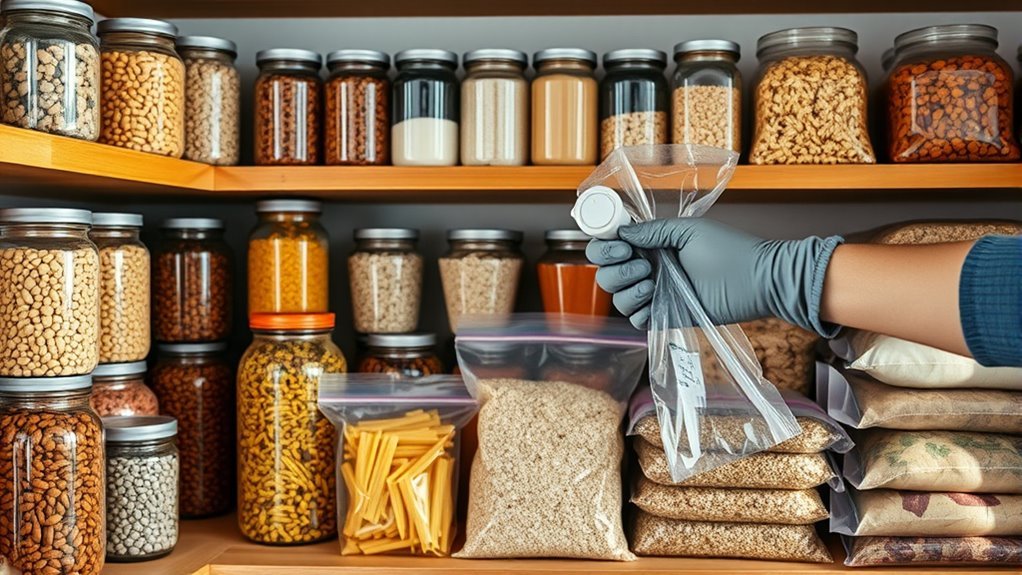
How to Store Food for Long Term Storage Step by Step
To store food long-term, start by choosing low-moisture items like rice, beans, and pasta. These foods last longer because they don’t spoil easily.
Using airtight containers such as Mylar bags with oxygen absorbers or food-grade buckets with gamma lids is key to keeping moisture and pests out.
Next, store your containers in a cool, dark, and dry place to help preserve the food’s quality over time.
Label and organize your containers with expiration dates so you always know what to use first.
Rotating stock to use older items before newer ones helps prevent waste.
Follow these easy steps closely, and you’ll find managing and maintaining your long-term food storage system is much simpler than you might think.
With a bit of planning, you can keep your food fresh and ready whenever you need it.
Key Takeaways
- Choose high-quality, low-moisture foods like rice, beans, and pasta for long-term storage. These foods tend to last longer and maintain their nutritional value.
- Store foods in airtight containers, using Mylar bags with oxygen absorbers or food-grade buckets with gamma lids. This helps keep out moisture and pests, so your food stays fresh.
- Keep storage in a cool, dark, dry, and well-ventilated environment to prevent spoilage and pests. A stable environment really makes a difference in how long your food lasts.
- Label containers with expiration dates and organize storage for easy inventory management and rotation. That way, you’ll always know what you have and when to use it.
- Regularly inspect supplies, rotate older items first, and replenish stock before expiration to ensure freshness. Staying on top of this helps avoid waste and keeps your food supply safe.
Choosing the Right Foods and Containers for Long-Term Storage
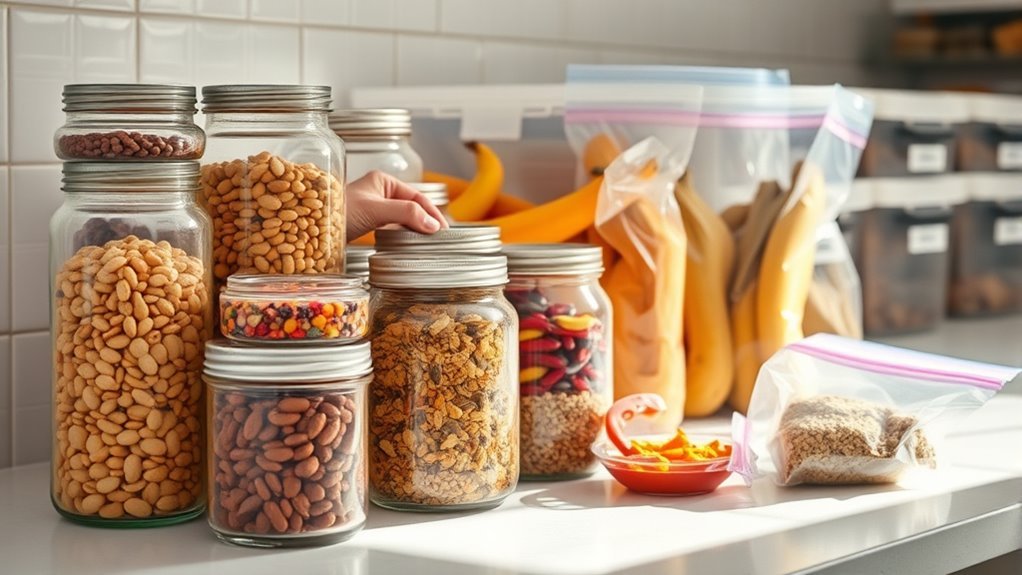
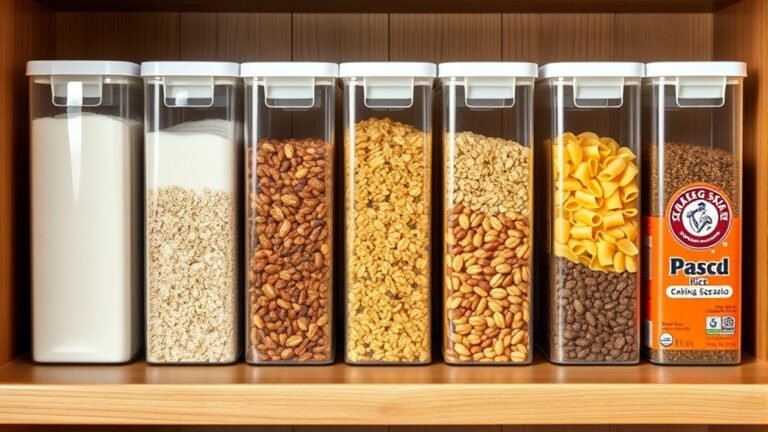
When you choose foods for long-term storage, focus on high-quality, low-moisture items like rice, beans, oats, and pasta. Store them in airtight containers to prevent spoilage.
Using Mylar bags combined with oxygen absorbers creates an ideal environment by removing oxygen. This markedly extends the shelf life of your dry goods.
Alternatively, food-grade buckets with gamma lids offer durable, moisture-proof protection. These food storage methods ensure your supplies stay fresh and free from insects.
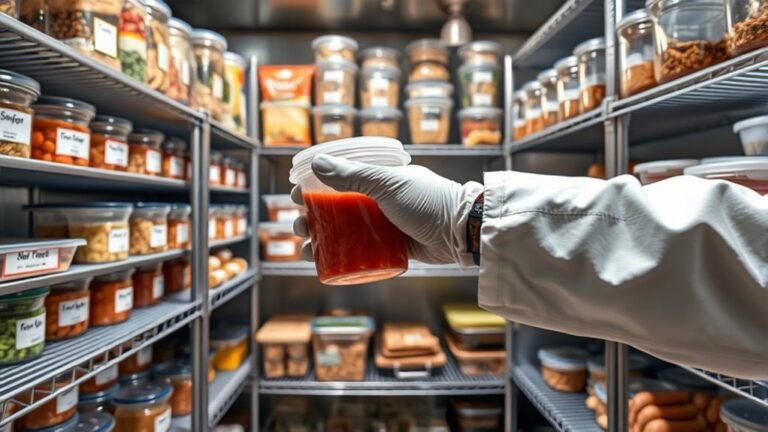
Label each container clearly with expiration dates and storage details. This helps you manage your inventory and track food preservation effectively.
Treating grains with oxygen absorbers or dry ice before sealing further prevents insect hatching. It can even extend shelf life up to 30 years.
Always store your foods in a cool, dark, and dry location to maintain quality. By selecting the right low-moisture foods and using proper airtight containers, you’ll optimize your long-term food storage system for maximum longevity and safety.
Setting Up, Rotating, and Maintaining Your Long-Term Food Storage System
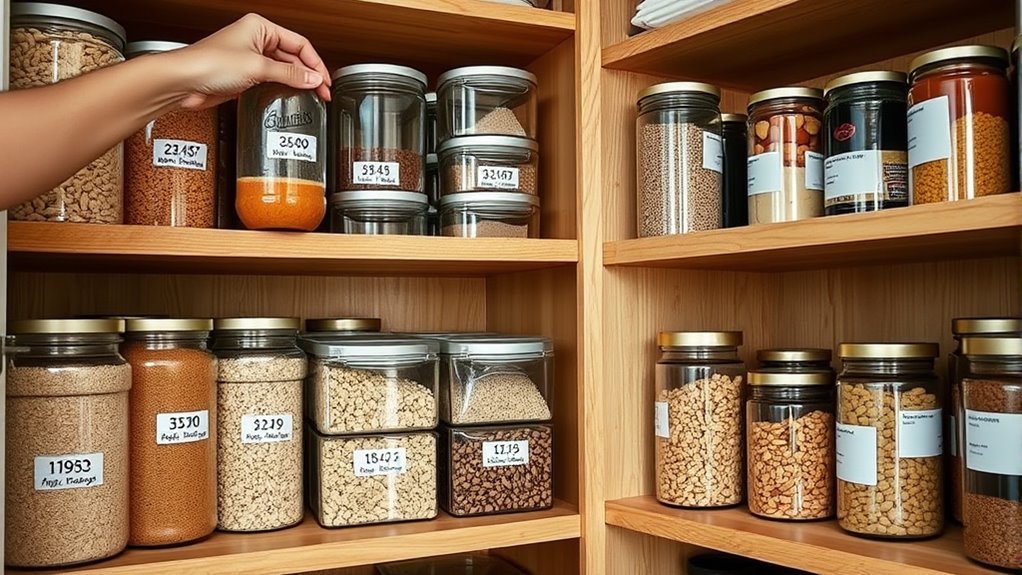
After selecting the right foods and containers, you’ll want to focus on setting up an organized storage system that keeps everything accessible and in good condition. Use airtight containers like Mylar bags with oxygen absorbers, stored in a cool, dark, and dry storage environment to maximize shelf life.
Label all items with expiration dates and maintain an inventory system to track and manageability. It really helps to keep things neat and know exactly what you have on hand.
Follow these steps:
- Break down large quantities into manageable portions for easy rotation. This way, you won’t have to dig through big containers every time you need something.
- Regularly perform pest inspections and check for spoilage. It’s a small effort that can save you a lot of trouble later.
- Rotate supplies by using older items first, ensuring nothing expires unnoticed. Think of it like using the first-in, first-out rule.
- Replenish supplies before expiration dates and update your inventory system accordingly. Staying on top of this keeps your storage fresh and ready for anything.
Frequently Asked Questions
What Is the Best Way to Store Food for Long-Term Storage?
The best way to store food long-term is by sealing it in airtight, moisture-proof containers like Mylar bags with oxygen absorbers.
You should keep it in a cool, dark, dry place and regularly check for freshness.
This helps make sure your food stays safe and lasts as long as possible.
What Is the 2 2 2 Rule for Food?
The 2-2-2 rule means you store enough food for 2 people, for 2 weeks, with 2 servings per day.
It helps you plan a basic emergency supply that’s manageable and guarantees you have enough calories and nutrients.
Basically, it’s a simple way to make sure you’re covered without going overboard. Easy to remember and even easier to follow!
Do I Need to Start Stockpiling Food?
Yes, you should start stockpiling food to guarantee your family’s safety during emergencies. It gives you peace of mind, saves money, and reduces reliance on store availability.
Start gradually to build a sustainable, reliable supply. That way, it won’t feel overwhelming, and you can manage it easily over time.
How to Preserve Food for 25 Years?
You should seal your food like a time capsule, using Mylar bags with oxygen absorbers. Store them in cool, dark places, and treat grains beforehand.
Check regularly, rotate stock, and use airtight containers to preserve for 25 years. It might sound like a lot, but these steps really help keep your food safe and fresh over time.
Conclusion
By choosing the right foods and containers, you’re planting the seeds of security for your future. Setting up and rotating your storage is like tending a garden—nurturing it regularly guarantees it flourishes over time.
With each careful step, you build a fortress of nourishment, ready to weather any storm. Keep your system maintained, and your long-term food storage will become a reliable companion, standing strong through the seasons ahead.
Remember, long-term food storage isn’t just about putting food away; it’s about creating a sustainable plan. Rotate your supplies regularly to keep everything fresh and safe. Proper containers and food choices are key to preserving nutrients and preventing spoilage. By following these steps, your food storage will provide peace of mind and nourishment whenever you need it most. In the end, a well-maintained long-term food storage system is your best defense against uncertainty, ensuring you and your loved ones stay prepared through any challenge.