Which Plastic Containers Are Safe for Food Storage?
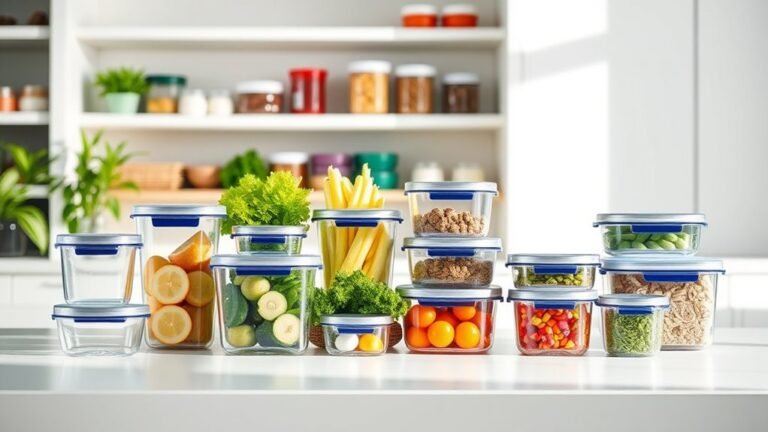
You should choose plastic containers labeled #1, #2, #4, or #5 for safe food storage since they’re FDA-approved and BPA-free. These plastics resist heat well, making them ideal for storing and reheating food. Using the right plastic containers helps keep your meals safe and fresh.
Avoid plastics #3, #6, and #7 as they may leach harmful chemicals. Always pick containers designed specifically for food use.
If you plan to reheat your food, make sure your container is microwave-safe.
Also, replace any scratched or stained containers. Damaged plastics can harbor bacteria and affect food quality.
Following these tips keeps your food safe and fresh—there’s more to learn about proper use and safety.
Key Takeaways
- Use plastic containers labeled with recycling codes #1 (PET), #2 (HDPE), #4 (LDPE), or #5 (PP) for safe food storage. These are generally considered safe and less likely to leach harmful chemicals.
- Choose containers marked as BPA-free and food-grade to ensure safety and reduce chemical leaching. It’s a smart way to keep your food safe and your mind at ease.
- Avoid plastics #3 (PVC), #6 (PS), and #7 (polycarbonate) because they may release harmful substances into your food. Better safe than sorry, right?
- Only reheat food in microwave-safe containers that are specifically designed for reheating. This helps prevent any unwanted chemical contamination.
- Also, discard scratched, stained, or odorous containers. Regularly cleaning and disinfecting your containers before use is a good habit to keep things hygienic.
Which Plastics Are Safe for Food Storage?
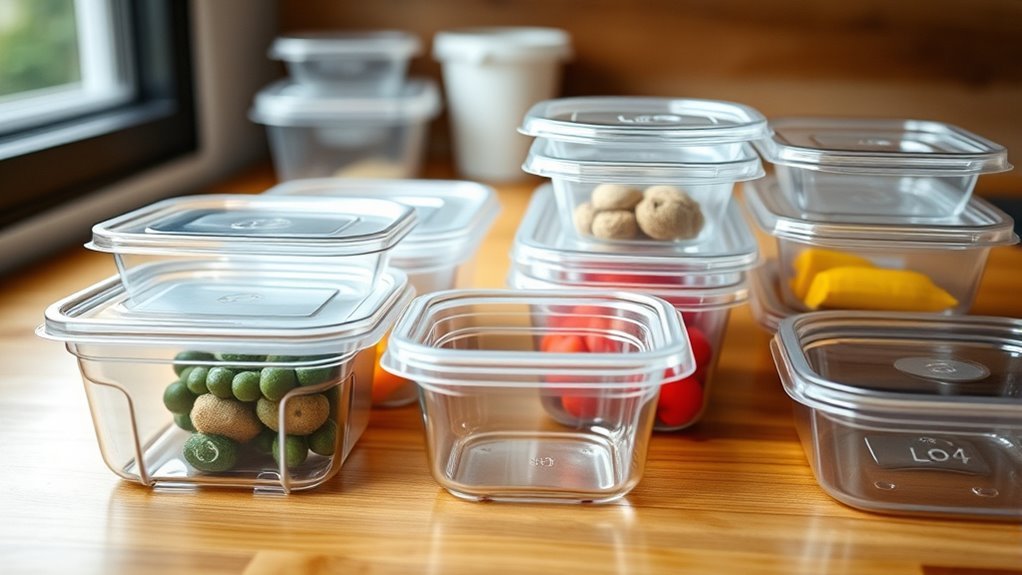
When choosing plastic containers for storing food, you’ll want to stick with those labeled #1 (PET), #2 (HDPE), #4 (LDPE), or #5 (PP), as these are generally safe when used properly. These plastic numbers indicate food-grade plastics that meet FDA certification standards, guaranteeing they don’t leach hazardous chemicals into your food.
Containers made from these materials are BPA-free and often have high heat resistance, making them suitable for various storage needs. On the other hand, plastics labeled #3 (PVC), #6 (PS), and #7 (polycarbonate) may contain harmful substances, so they’re less safe for food storage.
Using plastic containers with clear recycling codes helps you identify which options are best for food safety. Always choose plastics that are easy to clean, free from scratches or odors, and originally designed for food use.
How to Identify and Use Safe Plastic Containers
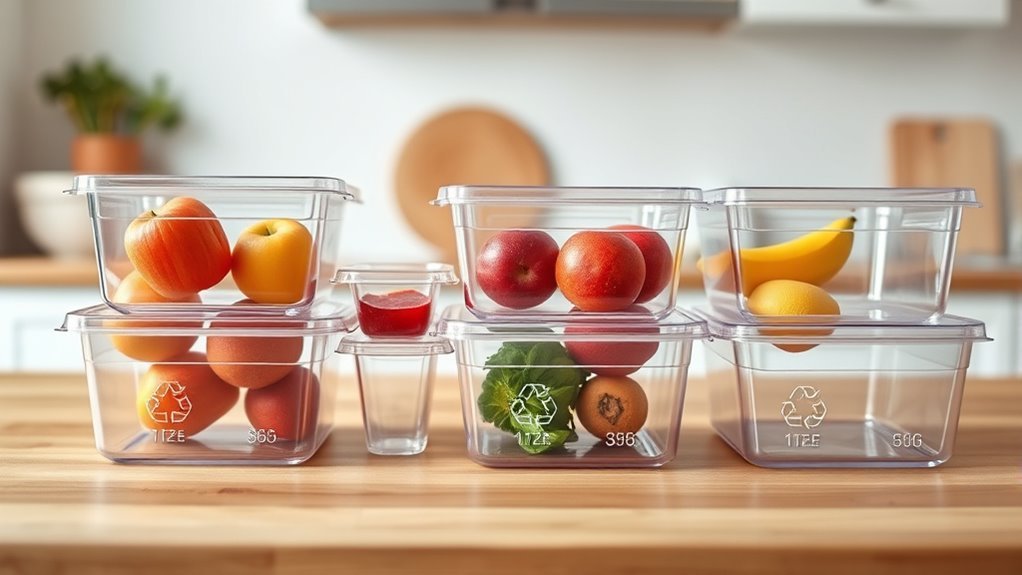
Although identifying safe plastic containers might seem straightforward, you need to pay close attention to specific details to guarantee food safety. Start by choosing food-grade plastic marked with recycling codes #1 (PET), #2 (HDPE food), #4 (LDPE), or #5 (PP). These plastic numbers indicate safer food contact material and reduce the risk of chemical leaching.
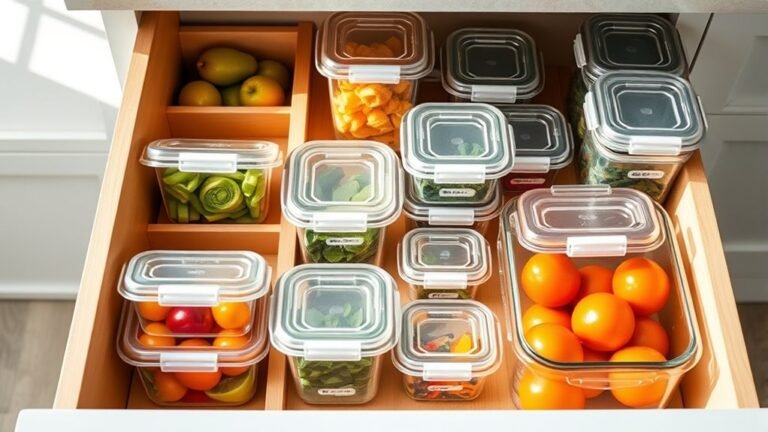
Always opt for BPA-free containers to avoid harmful chemicals. Make sure your reusable containers are free of scratches, stains, or odors. These imperfections can harbor bacteria and compromise food storage safety.
When reheating, use only microwave-safe containers that are specially labeled for this purpose. Avoid reusing single-use plastics since they aren’t designed for repeated use and may release toxins.
Before using any container, disinfect it thoroughly to eliminate bacteria and prevent cross-contamination. By following these guidelines, you’ll confidently select and use plastic containers that protect your food and health.
Frequently Asked Questions
Do All Plastic Containers Leach Into Food?
No, not all plastic containers leach into food. You’ll find that plastics labeled #1, #2, #4, and #5 are safer.
That is, especially if you avoid heating or damaging them. Doing those things can increase the chance of chemicals leaching.
What Are the Best Non-Toxic Food Storage Containers?
Like choosing Excalibur, you want containers made of glass, stainless steel, or FDA-approved silicone.
These non-toxic heroes protect your food without leaching chemicals, keeping your meals safe and fresh every time you store them.
It’s all about picking materials that won’t mess with your food’s flavor or safety.
Trust me, your kitchen—and your health—will thank you!
Do Ziploc Bags Leach Microplastics Into Your Food?
Yes, Ziploc bags can leach microplastics into your food, especially when heated or reused.
It’s a good idea to avoid microwaving food in them. Also, be sure to replace scratched bags to cut down your exposure to these tiny plastic particles.
Is Number 2, 4, or 5 Plastic Safe?
Yes, you can safely use number 2, 4, and 5 plastics for food storage. Just make sure they’re intact and used properly.
These types are FDA-approved and free from harmful chemicals like BPA when handled correctly. So, it’s all good as long as you take care of them!
Conclusion
So, next time you’re rummaging through your kitchen cabinets, don’t just grab any plastic container like it’s a treasure chest of eternal freshness. Remember those recycling codes—they’re your food’s secret bodyguards.
Avoid the sneaky villains like #3, #6, and #7 unless you want your leftovers to come with a side of mystery chemicals. Play it safe, use the right plastic, and keep your food—and your sanity—intact.
Because toxic leftovers? Yeah, no thanks! Choosing the right plastic containers for food storage is essential to avoid harmful chemicals leaching into your meals. Stick to containers labeled #1, #2, #4, and #5 as they’re generally considered food-safe.
In the end, being mindful about plastic types protects your health and keeps your food fresh and safe. So next time you’re storing leftovers, check those recycling codes and pick the safe options for peace of mind and tasty meals!