How Will Cleaning Sanitation and Storage Protect Food Contact Surfaces?
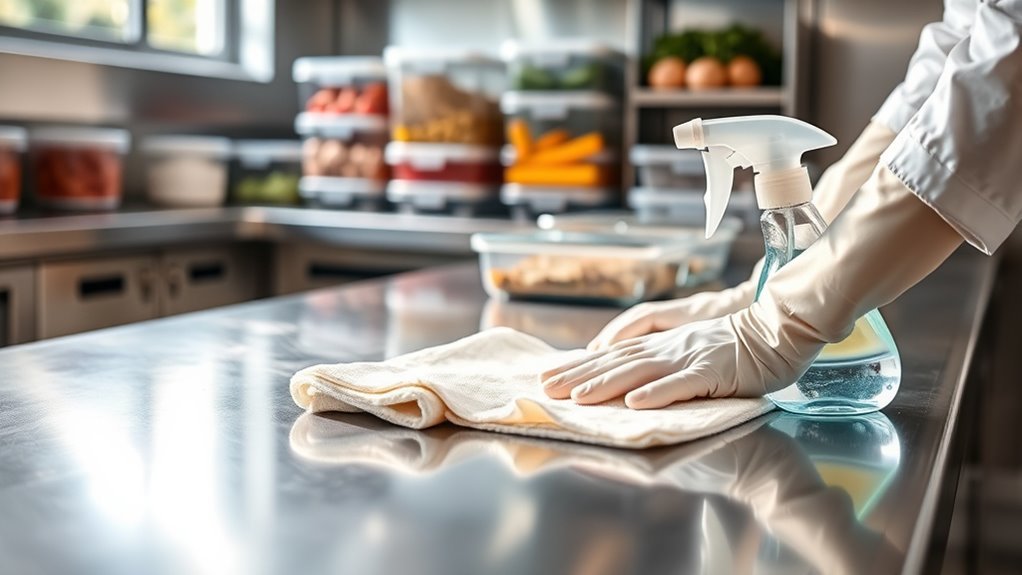
You protect food contact surfaces by cleaning away food residues and dirt. This removes bacteria that cause illness.
Then, you sanitize using hot water or approved chemicals to reduce harmful bacteria to safe levels.
Proper storage is key, too—it prevents cross-contamination by keeping raw and ready-to-eat foods separate. It also helps by keeping storage areas clean.
Together, these steps maintain hygiene and keep surfaces safe.
Keep going to uncover more about how these practices work together for food safety. It’s all about making sure the food you prepare stays safe from harmful germs.
Key Takeaways
- Cleaning removes food residues and bacteria. This helps prevent harmful microbial buildup on food contact surfaces.
- Sanitizing cuts down bacteria to safe levels. That way, surfaces stay hygienic and safe for handling food.
- Using the right sanitizing methods, like hot water or approved chemicals, makes sure bacteria are effectively eliminated.
- Proper storage stops recontamination and cross-contamination between raw and ready-to-eat foods.
- Keeping items off the floor in labeled, sealed containers helps maintain cleanliness and food safety over time.
How Cleaning and Sanitizing Remove Harmful Bacteria From Food Contact Surfaces
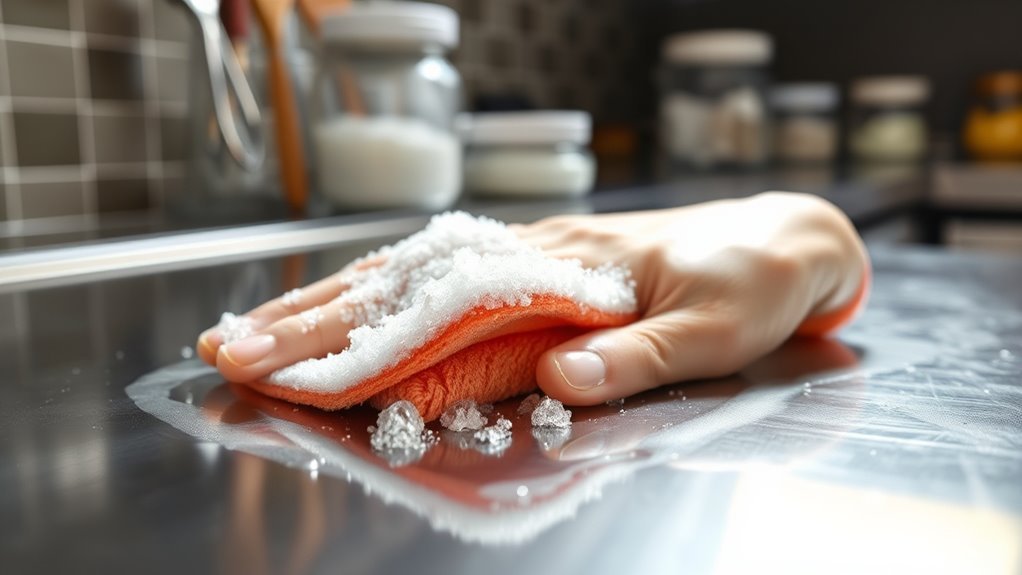
Although it might seem simple, cleaning and sanitizing food contact surfaces play an essential role in keeping harmful bacteria like Salmonella and E. coli at bay. When you clean, you physically remove food residues and dirt that can harbor bacteria that can cause illness.
But cleaning alone isn’t enough; you need to sanitize to reduce harmful bacteria to safe levels. Proper cleaning followed by sanitizing ensures effective bacteria removal, considerably lowering the risk of foodborne illness.
To sanitize properly, use hot water at least 171°F or approved chemical sanitizers, and make sure you allow enough contact time for the sanitizer to work. Adhering to these sanitizing practices keeps the bacteria from multiplying to dangerous levels, maintaining food safety.
How Proper Storage Prevents Cross-Contamination on Food Contact Surfaces
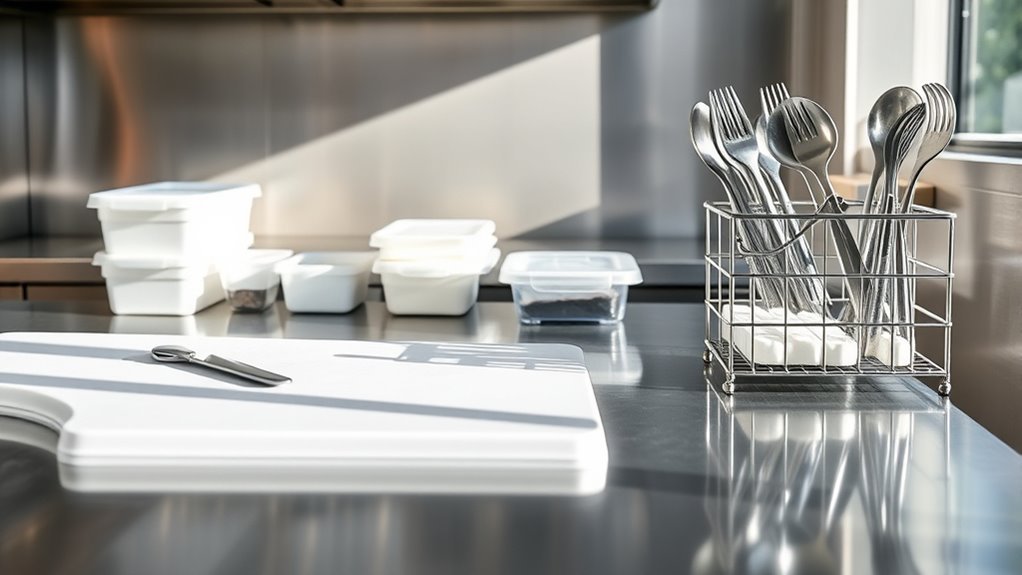
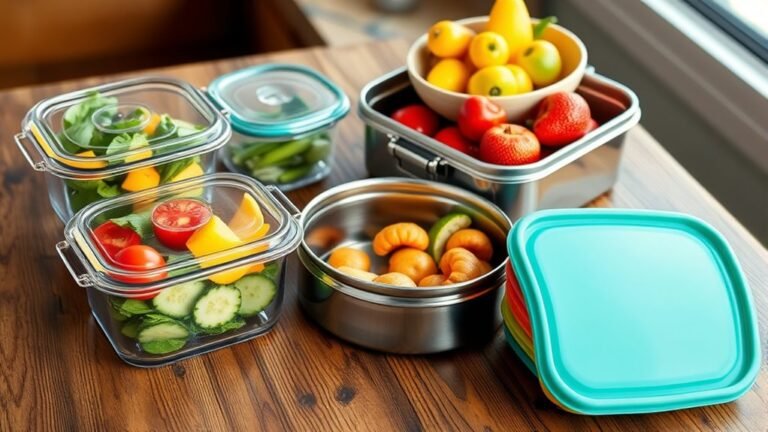
After thoroughly cleaning and sanitizing your food contact surfaces, proper storage plays a key role in preventing bacteria from making their way back. Following strict storage guidelines ensures contamination prevention and enhances food safety by reducing cross-contamination risks.
Here’s how you can maintain proper storage:
- Store raw ingredients separately from ready-to-eat foods to avoid bacterial transfer onto food contact surfaces.
- Elevate all stored items at least six inches off the floor to prevent contamination from pests, dust, and spills.
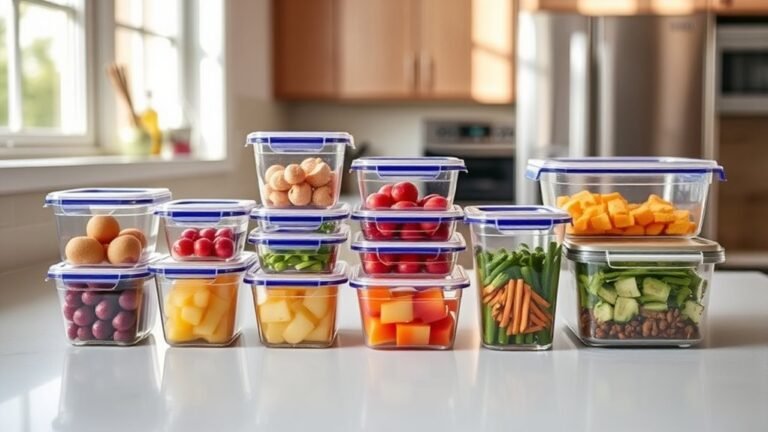
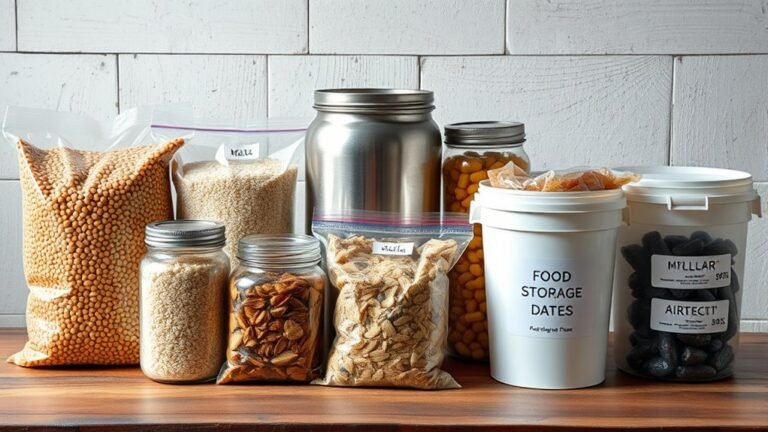
- Use labeled, food-grade containers with tight-fitting lids to block contamination and prevent microbial buildup.
- Regularly inspect and clean storage areas to eliminate debris that could harbor bacteria and compromise surfaces.
Frequently Asked Questions
What Will the Cleaning, Sanitation, and Storage of Food Contact Surfaces of Equipment and Utilities Help Prevent?
Cleaning, sanitation, and proper storage help you prevent harmful bacteria, cross-contamination, and foodborne illnesses. They keep surfaces safe by removing residues, killing pathogens, and avoiding contamination from pests, dust, or flavor transfer between foods.
It might seem like a lot, but these steps are key to keeping everything clean and safe. When you do them right, you’re protecting everyone who eats the food. Plus, it helps your equipment last longer and keeps your kitchen running smoothly.
How Do You Clean and Sanitize Food Contact Surfaces?
You clean food contact surfaces with hot, soapy water, then rinse thoroughly. After that, sanitize using a chemical sanitizer or hot water above 171°F.
Finally, let the surfaces air dry completely before using them again. This step is important to guarantee safety.
What Will the Cleaning, Sanitization, and Storage of Food Contact Surfaces of Equipment and Utensils Help Prevent Quizlet?
Cleaning, sanitizing, and storing food contact surfaces properly help you prevent cross-contamination, foodborne illnesses, and bacterial growth.
You’ll also protect equipment integrity, guarantee safety, and comply with health regulations by maintaining hygiene consistently. It’s all about keeping things safe and clean in the kitchen!
How Does Cleaning and Proper Storage Help in Food Safety?
Cleaning and proper storage help you prevent harmful bacteria growth and cross-contamination. They keep surfaces hygienic, reduce pest risks, and guarantee your food stays safe and fresh.
This not only protects your customers but also your reputation. Keeping things clean and stored right really makes a big difference in food safety.
Conclusion
When you clean and sanitize food contact surfaces, you’re wiping away harmful bacteria that could make food unsafe. This step is crucial because those germs can easily transfer to your meals and cause illness.
Proper storage plays a big role too. It keeps raw and cooked foods separate, preventing cross-contamination before it even starts. That way, you’re not mixing anything that could spoil or spread bacteria.
Imagine preparing a meal on a spotless, germ-free surface—doesn’t that give you peace of mind? Taking these simple steps not only protects your food but also keeps your kitchen a safe place for everyone to enjoy.
By focusing on cleaning, sanitation, and proper storage, you effectively reduce the risk of foodborne illnesses. These practices protect food contact surfaces and ensure your kitchen stays hygienic and safe, making every meal healthier and more enjoyable.