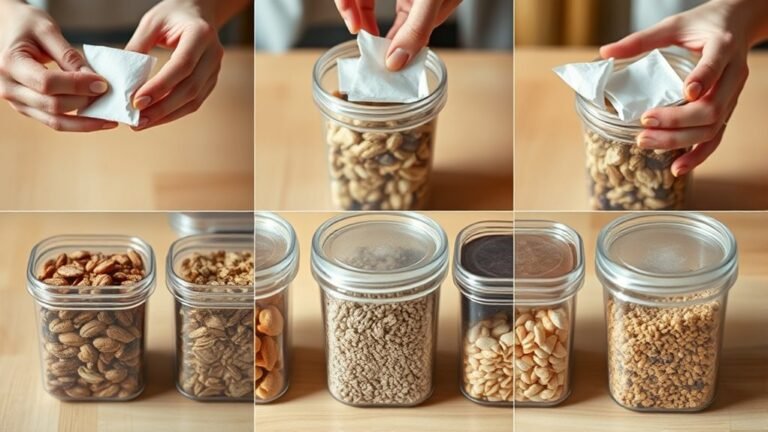

5 Tips to Keep Mice Out of Food Storage
To keep mice out of your food storage, start by sealing all cracks and openings with steel wool and caulk or fine-mesh cloth to block their entry. Mice are tiny but sneaky, so don’t give them even the smallest chance to slip inside.
Using metal, rodent-resistant containers with tight-fitting lids instead of plastic is a smart move that can really make a difference.
Store food off the floor on elevated shelves to limit access. This simple step keeps your supplies out of reach and makes it harder for mice to get to your goods.
Also, keep your storage areas clean and crumb-free to avoid attracting mice. Nobody wants to deal with pests, so a tidy space is key.
Regularly inspect containers and storage spots for chew marks or damage, so you catch issues early. Staying on top of things helps you stop problems before they get out of hand.
Stick around to discover even more effective ways to protect your supplies.
Key Takeaways
- Seal all cracks and openings around shelves, doors, and utility entries using steel wool and caulk or fine-mesh hardware cloth. This helps block any tiny spots where mice might sneak in.
- Use metal containers with tight-fitting lids to store dry goods. Avoid plastic containers since mice can easily chew through them.
- Store food off the floor on elevated racks or shelving. This makes it harder for mice to get to your food and helps prevent chewing.
- Keep storage areas clean and crumb-free by regularly sweeping and wiping surfaces. Getting rid of food residue makes the space less inviting for mice.
- Inspect storage areas frequently for chew marks, holes, and damaged packaging. Catching signs of mouse activity early means you can take action before it gets worse.
Seal All Openings and Cracks to Block Mice

To keep mice out of your food storage, start by sealing every opening and crack around shelves, doors, and utility entries. Use steel wool backed with caulk for these gaps—mice can chew soft materials but struggle with steel wool.
Cover any larger gaps, especially where pipes and wires enter, with fine-mesh hardware cloth to block even tiny openings. Check container lids carefully; if you spot gaps where the lid meets the rim, add a tight-fitting seal like a rubber gasket to keep mice from sneaking in.
Inspect your storage regularly for fresh chew marks or dust near seams, and fill any new cracks immediately. Finally, don’t push items against walls or place them on dusty floors until you’re sure all wall-to-floor and wall-to-shelf seams are sealed tightly.
Pick Mouse-Resistant Containers for Dry Goods

Selecting rodent-resistant containers is essential for safeguarding your dry goods from damage and contamination. Opt for metal containers, like metal buckets with tight-fitting metal lids, to keep mice out.
Unlike plastic containers, which mice can chew through in just 1–2 weeks, metal containers provide a sturdier barrier that’s much harder to penetrate. Make sure the lid seals tightly, leaving no gaps where mice can squeeze in and spoil your food.
For winter stock, metal containers are especially important since you need your supplies intact during the cold months when access is limited. Also, keep your food in its original packaging inside the metal container for an added layer of protection.
This way, you reduce the risk of mice reaching and ruining your dry goods.
Store Food Off the Floor to Keep Mice Away

When you store food off the floor, you make it much harder for mice to reach and chew through your containers. Use stable, elevated racks or shelving to keep every sealed container above the ground and away from walls where mice often travel.
Make sure your containers have tight-fitting lids—metal buckets with metal lids work well—and that none can be pulled down from their elevated spots. Regularly check your storage for signs of gnawing or opened packaging, so you catch mouse activity early.
During winter, when monitoring is tougher, elevated storage acts as a significant barrier, protecting your supplies. Keeping food off the floor isn’t just about organization; it’s a practical step to keep mice from damaging your stockpiled dry goods and winter pasta.
Keep Storage Areas Clean and Crumb-Free
Although storing food properly is essential, keeping your storage areas clean and crumb-free plays an equally important role in deterring mice. Sweep every shelf, floor, and container area regularly to remove pasta, grains, and dust—tiny leftovers can attract mice.
Store dry goods in sealed containers and promptly clear away any packaging debris or spilled food to prevent odor trails. Wipe down storage bins and nearby surfaces with a suitable cleaner to eliminate food residue, especially in corners and around lids.
Don’t forget to check pantry doors, shelving legs, and corners for dropped crumbs, since mice can survive on minimal scraps. Finally, reduce clutter in storage spaces so you can spot and clean food scraps quickly, stopping mice from establishing feeding spots.
Inspect Storage Areas for Signs of Mice and Damage
Because mice can quickly damage plastic containers and packaging, you should inspect your storage areas regularly for signs of their presence. Check plastic containers every 1–2 weeks for chew marks, holes, or warped lids. Focus on rims and gaps where lids meet bins—these are common entry points.
Look inside packages for torn corners or partial consumption. This helps confirm mice have reached your food. Scan winter stockpiles for fresh droppings, gnawing debris, or scattered food near containers to spot active access points.
Don’t forget to re-check hard-to-access storage spots like shelves, corners, and sealed rooms before cold seasons begin. That way, breaches don’t go unnoticed. Regular inspections help you catch infestations early and protect your stored food effectively.
Frequently Asked Questions
What Keeps Mice Away From Storage?
You keep mice away from storage by using metal containers with tight metal lids, sealing all food packaging, and regularly checking for damage.
Avoid relying on plastic alone, and promptly replace any compromised storage to protect your supplies. It’s all about making it hard for those little critters to get in!
What Is the 5 Day Mouse Rule?
You might think five days isn’t enough to stop mice, but the 5 day mouse rule means you assume they’ll return within that time.
Unless you seal entry points, remove food, and check traps regularly, they’re likely to come back.
Do Mice Store up Food?
No, mice don’t store up food like squirrels do. Instead, they eat what they find immediately.
Is It Common for Storage Units to Have Mice?
Yes, it’s common for storage units to have mice, especially if they’re not truly mouse-proof. You’ll want to use sturdy, rodent-resistant containers like metal buckets to keep them out and protect your food.
Mice can sneak in through tiny gaps, so don’t underestimate their ability to get inside. Keeping things sealed tight really helps!
Conclusion
If you want to keep mice from turning your food storage into their personal buffet, you’ve got to stay vigilant. Seal every crack, choose sturdy containers, and always store food off the floor.
Keep things spotless and check for any signs of those sneaky invaders regularly. Ignoring these tips is like inviting a mouse army to feast on your supplies!
Taking action now means you’ll protect your food—and peace of mind—like a pro. By sealing cracks, using durable containers, and maintaining cleanliness, you create a strong defense against mice. Remember, regular inspections and proper storage habits are key to keeping your food storage mouse-free. Stay proactive, and you’ll save yourself from unwanted pests and wasted food, ensuring your supplies stay safe and fresh.