
10 Tips on Where to Store Food Storage Containers
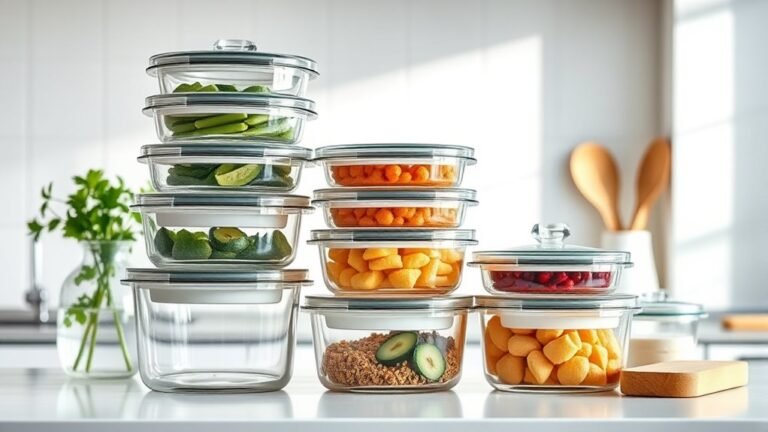
You can cut kitchen clutter by storing your food containers with lids on to keep sets together and nesting them for easy stacking. This simple trick helps you save space and keeps everything neat.
Choose matching containers to simplify organization and limit how many you keep. When all your containers look alike, it’s easier to find what you need and avoid keeping extras.
Use drawer organizers or clear bins to keep items upright and visible. This prevents tipping and lost lids, making your kitchen more functional and less frustrating to use.
For kids’ containers, designate a labeled drawer with sections for quick cleanup. It makes it easier for little ones to put things away and keeps the space tidy.
Regularly declutter orphan lids to save space—there are plenty more smart storage tricks ahead. Keeping lids and containers paired up is a game-changer in kitchen organization!
Key Takeaways
- Store containers with lids on to keep sets together and simplify access without searching for matching pieces. It just makes life easier when everything is in one place.
- Use drawer organizers or bamboo dividers to keep containers upright, prevent tipping, and separate lids efficiently. This way, you won’t have to dig around or worry about spills.
- Choose matching container sets with standardized sizes to maximize stacking and nesting in cabinets or drawers. It saves space and looks neat too!
- Designate clear bins or dedicated storage zones labeled by container size or use for quick identification and return. Labeling really helps everyone know where things belong.
- Regularly declutter by discarding orphan lids or containers and keeping only frequently used, matched sets to reduce clutter. Trust me, less mess means less stress!
Why Food Storage Containers Cause Kitchen Clutter

Although food storage containers are essential in every kitchen, they often cause clutter because mismatched lids and bases become “orphans” that you can’t use together. When you don’t keep your food storage organized into matching sets, containers waste valuable cabinet space and force you to overfill shelves and drawers.
Storing lids separately only adds friction to your cleanup routine, making you spend extra time searching for pairs instead of simply putting everything away. Overstuffed cabinets increase the risk of containers sliding or falling, discouraging you from maintaining order.
Plus, holding onto too many containers can lead to “sticking” items in the fridge, causing food waste and repeat clutter cycles. Smart storage helps you avoid these problems and keeps your kitchen efficient.
Store Containers With Lids On for Easy Access
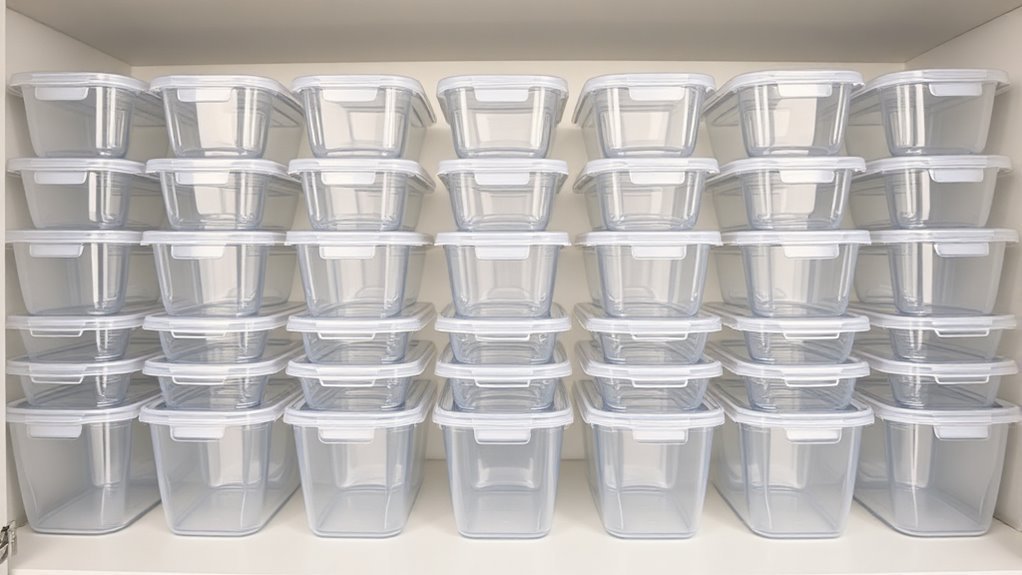
When you store food containers with their lids on, you make it easier to grab a complete set without hunting for matching parts. Keeping lids paired with their containers means you won’t waste time searching during busy kitchen cleanups.
It also helps prevent orphaned lids from cluttering your cabinets. To maximize space and access, nest or stack containers with lids on, creating a tidy, contained setup.
Just make sure containers are completely dry before securing lids to avoid sticking, odors, or residue that can slow you down next time. Following a simple rule like “lids on in the drawer or cabinet” streamlines retrieval, letting you focus on storing or grabbing food without extra steps or frustration.
Choose Matching Food Storage Container Sets to Simplify Stacking

Choosing matching food storage container sets usually makes stacking and organizing far easier. When lids and bases are interchangeable, you avoid awkward gaps and wobbling stacks.
Opt for sets with standardized square sizes that nest neatly—same shape and height—so you can maximize vertical space in your cabinet or drawer. Always keep each lid paired with its base to prevent “orphan” lids, which only add clutter and disrupt stacking.
If you have mismatched containers, start fresh by purchasing a few consistent small and large sets. Then, remove extras that don’t fit your new stacking system.
Use Drawer Organizers to Keep Containers Upright
Use bamboo drawer organizers to keep your containers upright and prevent them from tipping when you open the drawer.
Choose compartments that fit each container’s base to keep lids from sliding around. You can even separate lids efficiently within the same section.
This way, everything stays neat and easy to grab without having to rearrange. It really makes finding what you need a breeze!
Bamboo Organizer Benefits
Although food storage containers can easily become a cluttered mess, bamboo drawer organizers keep them upright and separated to prevent tipping over when you open the drawer or cabinet. These organizers help containers stay put as a single system, cutting down on rummaging and mess caused by sliding pieces.
You can separate lids from containers inside the same organizer, pairing them by design to avoid losing lids and speed up grab-and-go access. Organizing containers in matching-sized sections keeps stacks stable and visible, making it easier to find the right size without disturbing others.
Just remember to dry containers completely after washing before storing them to prevent sticking or odors. Bamboo organizers combine functionality with natural style, making your kitchen neater and more efficient.
Prevent Container Tipping
When you store your food containers upright in drawers with bamboo organizers or dividers, you’ll ensure them from tipping over every time you open the drawer. Make sure the organizer fits your drawer’s depth and width perfectly—any empty space lets containers lean and fall.
Keep lids paired with their matching containers inside the same organizer; a heavier, stable set reduces sliding and spilling during quick grabs. Place containers and lids in one organized section instead of scattered stacks, which lowers friction and tipping risk.
Before putting containers back, ensure they’re completely dry to avoid sticking, which causes uneven stacking and tipping. Using drawer organizers this way keeps your containers stable, easy to access, and protected from accidental spills every time you reach in.
Separate Lids Efficiently
If you want to keep your food storage lids from getting lost or damaged, organizing them separately in bamboo drawer organizers makes a big difference. Store your containers upright in these organizers, using slots or dividers to keep lids separated and stable.
Pair each lid with its matching container within the organizer, so you avoid hunting for lids later. Dedicated organizer strips work well to keep lids dry and prevent sticky or warped plastic by allowing airflow before storage.
To maintain order and prevent drawer overflow, stick to containers that fit your organizer layout—matching square sets work great. This system keeps lids upright, aligned, and easy to grab while ensuring your storage area stays neat and functional without lids sliding or mixing up.
Use Clear Bins to Keep Containers and Lids Visible
Clear bins make it super easy to spot which food storage containers and lids you have without having to dig through your cabinets. When you use clear bins, you can quickly find what you need and keep everything organized.
Here’s how to make the most of clear bins:
- Store containers and their matching lids together to avoid losing pairs.
- Dedicate each bin to a specific container size or type to reduce clutter.
- Place bins at a convenient cabinet height for quick grab-and-go access.
- Label each bin clearly, like “Lunch,” “Leftovers,” or “Snacks,” so everyone knows where to return items.
This simple system keeps your containers visible and accessible. It really saves you time and frustration in the kitchen!
Create a Dedicated Food Storage Drawer
A dedicated food storage drawer keeps all your containers and lids in one easy-to-access spot. This makes cleanup and meal prep faster.
Reserve one kitchen drawer for only matched container-and-lid sets to avoid missing parts. Use drawer dividers or bamboo organizers to separate sizes and keep stacks upright. This helps prevent a messy jumble.
| Benefit | Tip | Reason |
|---|---|---|
| Faster cleanup | Use one drawer | Grab-and-return in one place |
| Easy for kids | Give them access | They return containers properly |
| Avoid mildew buildup | Store dry containers only | Prevent sticking and odors |
This setup simplifies your kitchen routine. Plus, it keeps everything neat and ready for use.
Use Pegboards in Drawers to Secure Containers and Lids
When you install a pegboard inside a deep drawer, you keep your food storage containers and lids from sliding around while creating a consistent, organized layout. Pegboards let you customize spacing so containers nest neatly and lids have nearby matching spots.
This setup prevents orphaned lids and speeds up grabbing the right set. Make sure everything’s secure when the drawer opens or closes to avoid tipping.
Here’s how to do it effectively:
- Mount the pegboard so container bases fit into pegged positions.
- Store lids close to their matching containers to keep sets complete.
- Adjust peg placement to maximize drawer space and stacking.
- Test stability by fully opening and closing the drawer, ensuring nothing shifts.
Set Up Kids’ Food Storage for Faster Cleanup
Set up a dedicated drawer just for your kids’ food storage to keep lids and containers organized and easy to find.
Encourage your kids to pack their lunches and clean up independently by using labeled bins and shelves at their height.
This simple system makes tidying up faster and helps your kids build good habits.
Designate Kids’ Storage Drawer
By designating a specific drawer for kids’ food storage, you empower your children to put away their cups and small containers independently. This speeds up cleanup and reduces your stress.
Choose a drawer near where they grab snacks or pack lunches, and keep it clearly labeled. Using a simple organizer inside the drawer helps separate cups, lids, and containers so nothing gets mixed up.
Limit the storage to an age-appropriate set to avoid overflow. It makes things easier for everyone!
- Pick a convenient, labeled drawer close to snack and lunch areas.
- Use drawer organizers with separate sections for cups, lids, and bases.
- Store only enough containers for school days plus extras.
- Encourage kids to return items to their labeled spots after use.
Encourage Independent Cleanup
Encourage your kids to take charge of their own cleanup by creating a dedicated drawer filled with their food storage containers and cups. Give them access to a clear bin inside this drawer, so everything stays organized and clutter-free.
Teach a simple rule: when they’re done, lids stay with their containers in the same spot. Label the drawer and specific put-away locations to cut down on questions during busy times.
Let your kids handle age-appropriate tasks like matching lids with bases and returning items to the bin. This setup not only speeds up cleanup but also builds their independence and responsibility.
Keeping their items separate from the main container cabinet prevents unnecessary rummaging and keeps your kitchen tidy. It’s a small change that makes a big difference!
Simplify Lunch Packing
When lunch packing feels chaotic, organizing a dedicated drawer just for your kids’ food storage containers can make mornings run smoother. You’ll save time sorting and make cleanup easier by keeping everything in one spot.
Try these tips to set up a kid-friendly lunch drawer:
- Create a labeled “kids’ lunch” drawer where containers and cups live together for quick access.
- Use drawer organizers or bins to keep items upright and contained, speeding up reset after school.
- Pair each container with its lid to avoid lost lids and eliminate morning hunts.
- Stock only the containers that fit the drawer to prevent overcrowding and messy spillover.
This setup helps your kids pack and clean up independently, cutting down your busy morning stress.
It’s a simple change that can make a big difference!
Choose the Right Number of Food Storage Containers for Your Space
To keep your food storage organized, only keep as many containers as fit comfortably in your chosen cabinet or drawer. Avoid buying duplicates and focus on what you actually use weekly.
Standardize on a few sizes and match lids to containers for efficient stacking and nesting. This reduces clutter and keeps sets manageable.
Regularly Declutter Orphaned Lids and Unused Containers
Once you’ve settled on the right number of containers, make it a habit to sort through them regularly. Decluttering orphaned lids and unused containers keeps your storage efficient and clutter-free.
Here’s how to do it:
- Remove all containers and lids, then match pairs first—discard anything without its mate.
- Clean out spoiled leftovers from your fridge to gauge your actual container needs.
- Keep only the sizes you use most during a typical week; recycle or donate extras.
- Return matched sets to the cabinet, ensuring only standardized, consistently fitting containers remain.
Frequently Asked Questions
How to Organize Food Storage Containers?
You should match containers with lids, stack them neatly, and use clear bins or drawer dividers. Label everything by size, remove orphans, and dedicate a drawer or pegboard for easy access and clutter-free storage.
It really helps to keep things organized when you can see what you’re grabbing. Plus, having a specific spot for each container makes your kitchen feel less chaotic. Give it a try—you’ll notice the difference!
Are Bamboo Lids Airtight?
No, bamboo lids aren’t truly airtight. They work best for light covering or short-term storage.
If you want a tight seal, choose lids with silicone gaskets. These are especially good for liquids or keeping things fresh for a long time.
Is It Better to Store Food in Glass or Plastic?
You’d think plastic’s convenience wins, but glass actually beats it for long-term storage—no stains, no odors, and safer with heat.
Still, grab plastic if you need lightweight, kid-friendly containers that won’t shatter on impact.
What Are Safe Food Storage Containers?
Food storage containers are BPA-free, food-contact approved, and undamaged. You should select glass or high-quality, BPA-free plastic that’s microwave, freezer, and dishwasher safe.
Always ensure containers have tight, leakproof seals to avoid spills and odors. That way, your food stays fresh and your fridge stays clean!
Conclusion
You might not realize it, but keeping your food storage containers organized can actually save you time and frustration every day. When you store containers with lids on, use clear bins, and regularly declutter, you’ll find yourself reaching for what you need without the usual chaos.
It’s funny how a simple change in storage can make your kitchen feel more welcoming—and make cleanup feel less like a chore and more like a breeze!
By following these tips on where to store food storage containers, you create a more efficient and tidy kitchen space. Organized storage not only helps you find containers quickly but also keeps your kitchen clutter-free. So, take a little time to sort and store your containers smartly—you’ll thank yourself every time you open your cabinets or drawers. After all, a well-organized kitchen makes meal prep and cleanup easier, turning everyday tasks into simple, stress-free routines.